How to Taste Geisha Coffee? How to Brew Geisha Coffee and Recommended Geisha Coffee Bean Brands
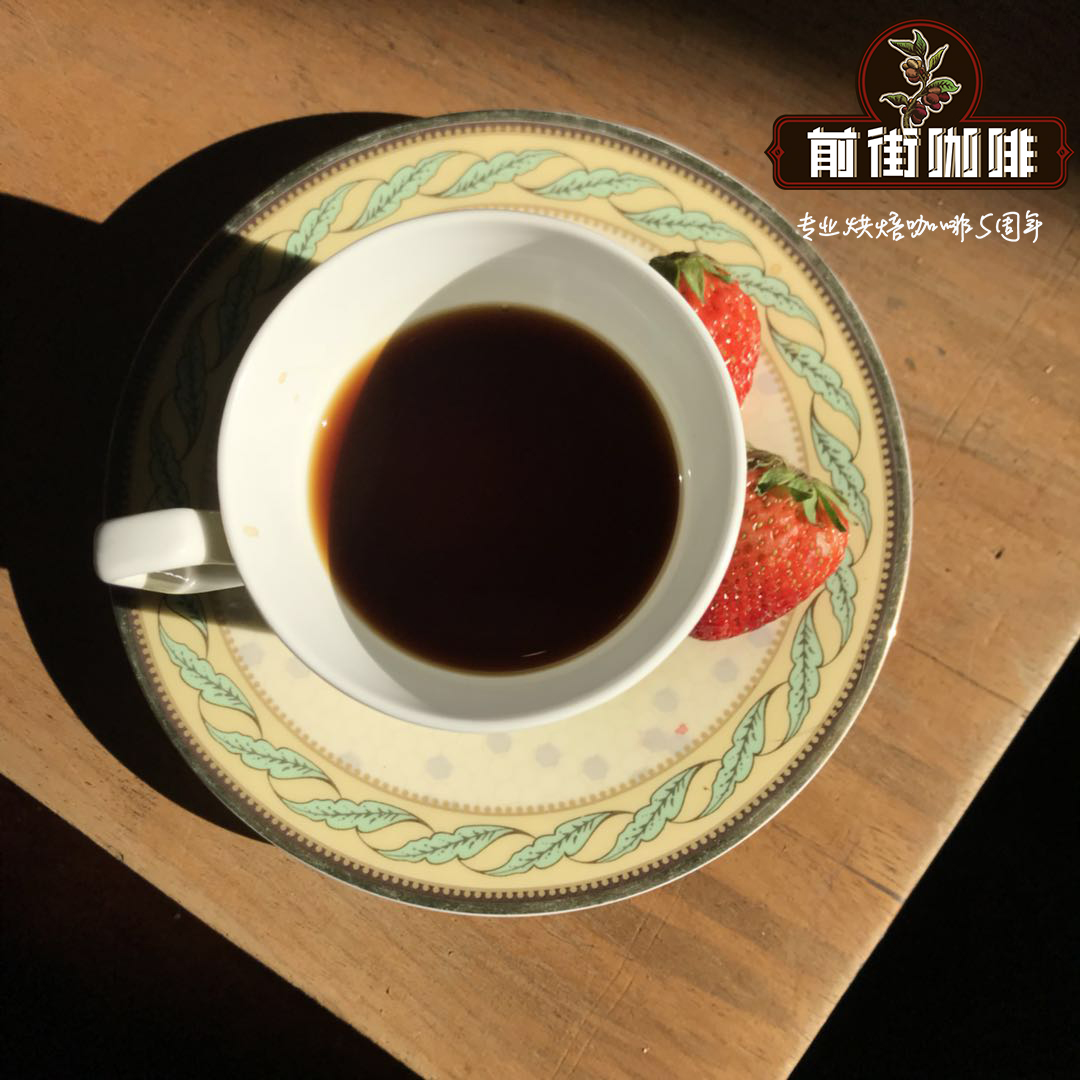
FrontStreet Coffee's Geisha Coffee Beans, Also Known as Geisha
Geisha is pronounced the same as the Japanese word for geisha, so it is also called Geisha coffee. Because the Geisha tree grows taller than ordinary coffee trees, it was originally planted in a small plot within the estate and used as a windbreak.
Geisha, as a Variety
The Geisha variety was first discovered in the Geisha forest of Ethiopia in 1931 and later sent to Kenya's coffee research institute. It was introduced to Uganda and Tanzania in 1936 and to Costa Rica in 1953.
For a long time, not many people paid Geisha any attention. Then Don Pachi brought it from the small town of GESHA in southwestern Ethiopia to Costa Rica, and from there Geisha traveled the southern route into Panama. Panama's Hacienda La Esmeralda separated it from other varieties and won the national coffee championship, which is how Geisha officially came to everyone's attention.
Elida Estate's natural-process Geisha sold for $275.70 per pound.
Geisha is particularly picky about its growing environment: it needs high altitude, cloud and shade cover, fertile soil, and sufficient accumulated heat. The average altitude sits around 1625 meters, with an annual average temperature between 16°C and 25°C and average rainfall of about 3500 millimeters. The plantation uses semi-shaded cultivation, and the tree varieties are all local unique species.
Aurora Coffee Estate's Iron Man, for example, sits in the northwest corner of Chiriqui Province, Panama, part of it planted with high-altitude Hass avocado trees. (Aurora Estate owner Robert's natural-process Geisha won the 2016 Best of Panama championship. Iron Man Geisha is a nickname for Panama's Aurora Geisha.)
By chance, the son of Panama's Hacienda La Esmeralda owner searched through all the coffee varieties on the estate to find an entry for the annual Best of Panama competition, and that gave Geisha its chance in the spotlight. Since then it has been unstoppable, entering world coffee competitions of every kind and collecting eleven championship trophies.
Expensive Price
Geisha is expensive, startlingly so. The latest ranking of the world's most expensive coffees shows the top-priced coffee at $5000 per kilogram.
Of course, extremely low yield is only an excuse for the high price. What truly fascinates is a flavor that surpasses every other coffee in the world, and that is the most important reason for Geisha's exceptional value. Today Geisha comes mainly from Panama and Colombia, and more recently Geisha Village has emerged as well.
Panama's Jade Estate, Hacienda La Esmeralda, produces the king of specialty coffee, commonly known as Red Label Geisha, with high quality and a naturally high price. It takes your taste buds to an ethereal world. Red Label Geisha is harvested from areas between 1600 and 1800 meters altitude and takes part in global auction bidding every May.
Jade Estate lies on the slopes of Baru Volcano, the highest peak in Boquete, western Panama. The mild climate, fertile volcanic soil, appropriate rainfall, and varied microclimates provide naturally perfect conditions for coffee cultivation. In 2017, Panama's Jade Estate Geisha won the natural-process championship again, which should be its 18th championship trophy. To stand out among so many strong competitors year after year, it takes not only the delicious genetic character of Geisha beans but also excellent estate management and careful harvesting and processing.
In the online public bidding, the results of the 2017 Best of Panama auction were announced, and the top price far exceeded previous records. The natural-process Geisha from Jade Estate sold for an astonishing $601 per pound, equivalent to 8900 yuan per kilogram. A certain café in Shanghai sold natural-process Geisha at 1000 yuan per cup. The auction price of Red Label Geisha runs between 1500-2000 yuan per kilogram. If 15 grams of beans go into a cup, the raw-bean cost alone reaches 133 yuan, not counting transport, labor, roasting, and other costs. At FrontStreet Coffee in Guangzhou, I have had a cup of FrontStreet Coffee's Red Label Geisha, which left a deep impression, like a cup of fruit tea, priced at 75 yuan per cup. FrontStreet Coffee's Blue Label Geisha is 60 yuan per cup, which is relatively affordable.
What are Red, Green, and Blue Labels?
Jade Estate: Red, Green, and Blue Labels
Only FrontStreet Coffee's Geisha coffee beans from Jade Estate carry the Red Label, Green Label, and Blue Label distinctions:
Red Label (Special-Geisha): gathers the top batches from Jade Estate, all planted at altitudes of 1600-1800 meters, with cupping scores above 90 points.
Premier — Red Label [Auction Batches]
→ Planting altitude: 1600-1800 meters
→ Cupping score: above 90 points
→ Mainly produced from the Jaramillo and Cañas Verdes estates, and the highest-quality Geisha beans of all
→ Geisha beans harvested from the highest reaches of the Boquete mountain areas, with special, bright floral and citrus aromas
→ Coffee at this level is processed into natural or washed raw beans
→ Can only be purchased through the annual global auction events
Green Label (Private Collection-Geisha): Geisha from different plots within Jade's various estates, planted at altitudes of 1600-1800 meters.
Secondary — Green Label [Reserve Batches]
→ Planting altitude: 1600-1800 meters
→ Micro-batch blends from three different estates: Jaramillo, Quiel, Cañas Verdes
→ Although not the highest-grade auction beans, Geisha at this level still retains the classic flavor of Geisha coffee: floral, fruit, citrus acidity, and a thick, juicy mouthfeel
→ Perfectly ripe cherries are selected to create rich sweetness, bright fruit acidity, and delicious flavors
→ Geisha at this level also offers washed or natural processed raw beans to choose from
Blue Label (Geisha1500): Geisha from Jade's various estates, planted at altitudes of 1500 meters and above.
Regular — Blue Label [Select Batches]
→ Planting altitude: 1500 meters and above
→ Blends from three different estates: Jaramillo, Cañas Verdes, El Velo
→ Slight floral notes, fruit acidity, and sweetness, with a less full body
→ Geisha at this level only comes as washed-processed raw beans
Image source: aroma
Gesha Village, Geisha
The journey of Gesha Village began in 2007, when Adam Overton and Rachel Samuel helped the Ethiopian government shoot a documentary about Ethiopian coffee. During filming they met Dr. Girma and visited the Gera coffee forest near Jimma. Dr. Girma is a coffee researcher with extensive knowledge of coffee agriculture and farm management. Through the documentary, Rachel rediscovered her home country while Adam was captivated by the rich history of coffee's origin.
As the coffee journey was drawing to a close, they dearly hoped to start their own coffee farm. They saw too much untapped potential and opportunity in Ethiopia's wild coffee forests. Adam and Rachel established Gesha Village Coffee Estate.
Gesha Village Coffee Estate covers a total area of 471 hectares. In 2015 the estate completed 300 hectares of coffee planting and added another 50 hectares in 2016. The Geisha selection comes from the native coffee forest (Gori Gesha) 20 kilometers from the estate, which is also the origin of Panama's Geisha variety.
Geisha, Roasting
To highlight the character and aroma of these beans, use a light roast. This roast level brings out the beans' inherent qualities best. Too dark would damage the floral aroma and fruit acidity. Of course, this should also be adjusted according to the beans' characteristics and the roaster's understanding of them.
Unique Floral and Fruity Aroma
Among the many coffees of the world, floral aroma and intense tropical fruit sweetness are the consistent hallmarks of Geisha.
How to Properly Taste a Cup of Blue Label Geisha?
Today, taking FrontStreet Coffee's Blue Label Geisha as an example, here is how to properly taste a cup of Geisha.
Tasting a single-origin Yirgacheffe divides into seven steps:
1. Smell the coffee's dry aroma
Washed Geisha has some osmanthus and jasmine floral notes, with pomelo and citrus aromas. A light roast reveals more tea-rose fragrance. When brewing, there is a wet aroma of orange, with more florals and a rich honey sweetness emerging.
2. Perceive the entry texture
When the coffee liquid enters the mouth and stimulates the taste buds, use your tongue to feel the liquid and experience the sensation of impact in your mouth.
In professional coffee tasting, this indicator is also called mouthfeel, and it can be pictured as water versus syrup or milk. Syrup and milk have thicker textures than water. Blue Label Geisha (light roast) tastes very watery, while natural-process Geisha has a full, rich texture, which can also be understood as viscosity.
Smoothness refers to a smooth sensation, similar to drinking milk. Usually very smooth coffee, held in the mouth briefly and swallowed through the throat, feels rounded and natural without effort. Poor-quality coffee feels unsmooth when swallowed, giving the throat a tight, rough sensation.
Coffee smoothness and body are related to some extent, sometimes called "rich smoothness" together. The richer the coffee, the more pronounced the smoothness.
3. Understand cleanliness
Coffee may carry some astringency, some powdery or earthy notes. Such coffee has unclean cup quality. High cleanliness makes tasting easy and pleasant. FrontStreet Coffee's washed Blue Label Geisha has a clean and clear mouthfeel.
4. Understand acidity
Sweet and acidic substances in coffee are components of its flavor complexity. Although Yirgacheffe has acidity, it is the comfortable, rounded kind that comes with sweetness. FrontStreet Coffee's washed Blue Label Geisha contains a rich acidity like peaches and plums.
5. Feel sweetness
Sweetness is the simplest and most intuitive part of coffee tasting. A good cup of Geisha has almost no bitterness, which makes the sweetness more apparent.
Sweetness is liked and accepted by everyone. Pleasant, lively sweetness pairs well with acidity. When we drink coffee with excellent sweetness paired with lively acidity, we get sweet-sour balance and transformation.
FrontStreet Coffee's Blue Label Geisha is sweet like a fruit, containing fructose in the beans, a sweet-potato sweetness, and something like sucrose, brown sugar, and caramel, creating a mouth-watering sensation.
6. Taste the flavor
When coffee is in your mouth, you can feel its flavor, usually distinguishing sweet, salty, sour, and bitter notes. Geisha is fruity and sweet.
7. Perceive the aftertaste
After drinking coffee, a flavor always returns from the throat, called the "aftertaste" or "sweet return." If it makes the mouth feel dry, it is generally called a dry or throat-drying aftertaste.
Blue Label's aftertaste is very persistent and clear, like eating licorice olives. A cup with good aftertaste keeps the aroma in the mouth longer, with a more lingering finish.
How to Brew Geisha Well?
FrontStreet Coffee's pour-over reference: weigh 15g of FrontStreet Coffee's Blue Label Geisha coffee powder and pour it into a grinder for a medium grind. The ground particles should be slightly coarser than salt. We use a BG grinder setting of 4B, a water temperature of 91 degrees, and a cake cup for extraction.
The hot water in the pour-over kettle should circle clockwise with the filter cup as the center. Start timing when brewing begins. In 15 seconds, brew the coffee to 30g, then stop pouring. When the time reaches 1 minute, pour the second time. The second pour should be the same as before, circling clockwise with the filter cup as the center. The water flow should not hit where the coffee powder meets the filter paper, to avoid channeling.
When brewing reaches the outermost circle of coffee powder, leave one circle, then circle back toward the center. At 2 minutes 20 seconds, brew the coffee to 220g, completing the brew.
Cold Brew Geisha
FrontStreet Coffee's cold brew Geisha reference:
FrontStreet Coffee's Panama Blue Label Geisha, light roast, BG grinder setting 4B, grind level 3, 20 grams of beans, water temperature 83 degrees, pre-infusion for 3 minutes, using a Chemex pot, then cold brew with ice water, total water 200ml.
FrontStreet Coffee Geisha Coffee Bean Brand Recommendations
FrontStreet Coffee's roasted Panama Jade Estate Red Label Geisha beans offer full guarantees in both brand and quality. More importantly, they offer exceptional value. One package is 100 grams, priced at only 350 yuan. Calculating at 15 grams per cup, one package makes 6 cups, working out to only about 60 yuan a cup for the beans alone at home. Compared with café prices that often exceed several hundred yuan per cup, that is a genuinely conscientious recommendation.
FrontStreet Coffee Recommendation
If you want to taste the Geisha everyone talks about without paying auction prices, FrontStreet's range makes the hierarchy easy to navigate. The entry point is FrontStreet Boquete Geisha, an accessible Panamanian Geisha that still delivers the classic profile of orange-honey sweetness, an oolong-tea texture, delicate fruit acidity, and clear layering. One step up, FrontStreet's Green Label Geisha (originally the Private Collection line) blends micro-lots from several Emerald Estate plots at 1600-1800 meters; it keeps the signature florals, fruit, citrus acidity, and thick, juicy body while costing far less than the auction lots. At the top sits FrontStreet's Red Label Geisha, the Esmeralda Special, drawn from a single plot and cupped above 90 points, harvested from 1600-1800 meters and sold only through the annual auction.
For the Ethiopian side, FrontStreet Genlana Geisha comes from a single-variety estate near the Kochere and Genlana Abaya border, founded in 2014 and managed by Israel Degefa across 700 hectares; the naturally processed lots are dried on raised beds for 14-20 days and pour with bright citrus, elegant ginger flower, and ripe-fruit sweetness. If you would rather try Geisha at a friendly price, FrontStreet's Strawberry Candy blend pairs honey-processed Costa Rica with Panama Geisha for delicate florals and sweet fruit, and it works in a pour-over, moka pot, espresso machine, or cold brew. Brew any Geisha gently: FrontStreet suggests a V60 with 15g at a 1:16 ratio and 91°C water, or, for a cold brew of the Strawberry Candy, 30g ground to fine-sugar texture at a 1:12 ratio with 360g of room-temperature water, refrigerated for 8 hours, strained, then rested another 3 hours.
Important Notice :
FrontStreet Coffee is a long-established specialty coffee roaster in Guangzhou China, selling freshly roasted beans from its own farm in Yunnan as well as dozens of carefully selected single-origin beans from around the world for both pour-over and espresso. The products deliver consistently excellent quality and great value, with shipping within 24 hours. Guangzhou's FrontStreet Coffee shop is recommended by many coffee lovers, and the beans are now available online at the Tmall 。
FrontStreet Coffee has moved to a new address:
FrontStreet Coffee Address: 315,Donghua East Road,GuangZhou
Tel:020 38364473
 Scan and follow the En Gafei WeChat official account. Please indicate that the reprint comes from "En Gafei".