How to Brew Sumatran Coffee Beans for the Best Taste? What Are the Recommended Sumatran Coffee Beans?
An Introduction to Mandheling Coffee
Mandheling is the coffee produced on Sumatra, Indonesia — hence its other common name, "Sumatran coffee." Indonesian coffee also grows on Java and Sulawesi, but the Mandheling of Sumatra is the most famous. The finest traditional Arabica from northern Sumatra is marketed under the names Lintong and Mandheling.
Specifically, Lintong refers to coffee grown in a small zone southwest of Lake Toba, in the Lintong administrative region, where farms are scattered across a high, rolling clay plateau covered with ferns. Lintong coffee is grown without shade and without chemicals, almost entirely by small private farmers.
In the cup, Mandheling is rich and solid with a pleasant acidity: a mellow aroma, moderate acidity, abundant sweetness and intriguing complexity. It takes dark roasting beautifully, releasing a deep fragrance. This is coffee close to life itself — bitter, yet sweet; only by appreciating its bitterness can you enjoy its distinctive sweetness.
Our Roasting Philosophy
Guided by our roaster's understanding of the bean and a preference for the tastes of most drinkers, we aim to express Mandheling's flavors to the fullest. Specialty coffee has its own character and will never taste quite like anyone else's; our own understanding of coffee leads us to highlight Mandheling's signature smoothness.
Testing Different Roast Levels
We tested Mandheling at light, medium-dark and dark roast levels, using pour-over extraction as the standard method, one serving at a time, with grind size and water temperature adjusted slightly for each roast.
Test Parameters
1. Light roast: Fuji "ghost tooth" grinder at 3.5, water temperature 90°C, coffee-to-water ratio 1:15
2. Medium-dark roast: Fuji "ghost tooth" grinder at 4, water temperature 88°C, ratio 1:15
3. Dark roast: Fuji "ghost tooth" grinder at 4.5, water temperature 86°C, ratio 1:15
Test Results
1. Light roast: Heavier fruit acidity with a slight bitterness. The acidity is comfortable in the mouth and produces a salivating sensation along the sides of the tongue, though the smoothness is only average.
2. Medium-dark roast: Excellent balance — rich and mellow, with more evident bitterness, prominent chocolate notes and subtle sweetness, plus a clear licorice aroma. Fruit acidity recedes, smoothness improves over the light roast, and the aroma is strong.
3. Dark roast: Almost no acidity, very heavy bitterness. If direct-fire roasting is slightly off, burnt flavors can creep in.
Understanding Coffee Extraction
At its core, whether espresso or pour-over, brewing is simply water passing through coffee grounds and carrying soluble compounds into the cup.
Brewing techniques do not change flavors — flavors are fixed by the bean's origin, processing and roast. What techniques control is the speed and proportion of water moving through the grounds, and therefore how much flavor is released. The quality of extraction depends on:
1. The speed of water passing through the grounds (equipment choice)
2. Water temperature
3. Grind size and condition of the grounds
4. Roast depth
5. Bloom time
Where Over- and Under-Extraction Happen
Over-extraction: the coffee turns overly bitter and astringent, caused by water sitting in the grounds too long.
Under-extraction: the cup tastes thin, as if the coffee and the water never quite met.
Brewing Methods for Sumatran Coffee
Pour-Over
Flavor: Multi-layered, clean and balanced, with persistent caramel sweetness in the finish.
Parameters:
1. Equipment: Hario V60
2. Water temperature: 88°C
3. Grind size: Fuji grinder setting 4
4. Roast level: Medium-dark
5. Bloom time: 25 seconds
Technique: A three-stage pour suits Mandheling well. Use 15g of coffee, Fuji "ghost tooth" grinder at setting 4, V60 dripper, water at 88–89°C. First pour 30g of water for a 25-second bloom. Second pour to 104g, then pause. Once the water level drops to half, continue pouring slowly to 220g total, and discard the final 5g. Coffee-to-water ratio 1:15, extraction time around 2:00.
Mandheling also extracts beautifully with the volcano, flannel, or Kono methods.
Technique: High-temperature extraction at 90–92°C. Start with a small water flow, pouring in a coin-sized area: pause, bloom, pause, bloom — keeping the grounds continuously in a blooming state for a total bloom of 1:30. Finish with a large, fast flow for quick extraction, total extraction time 2:30.
AeroPress
Flavor: Rich and complex, with prominent spice notes and a fresh forest aroma.
Parameters:
1. Equipment: AeroPress
2. Water temperature: 85°C
3. Grind size: Fuji grinder setting 3.5
4. Roast level: Medium-dark
5. Blooms: 2 — first 20 seconds, second 50 seconds
Technique: Standard AeroPress setup, 20g of coffee, coffee-to-water ratio 1:17. Pour 100g of 85°C hot water, stir 3–5 times to fully wet the grounds, and let it sit for 20 seconds. Add the remaining hot water to 240g, let it sit 40 seconds, stir for 5 seconds, and at 1:50 insert the plunger and press. Total time 2:05.
Siphon
Flavor: Round and rich, with prominent herbal and bitter notes and strong caramel sweetness.
Parameters:
1. Equipment: Hario siphon pot
2. Water temperature: 90°C
3. Grind size: Fuji grinder setting 3.5
4. Roast level: Medium-dark
5. Brew contact time: 30 seconds
Technique: Halo-burner extraction, 20g of coffee for 2 servings, coffee-to-water ratio 1:12, water level at mark 2, post-addition method (add grounds after the water boils). Add the grounds once bubbles appear, stir 4–5 times, extract about 30 seconds, then turn off the heat. Stir twice more and let the coffee draw down naturally.
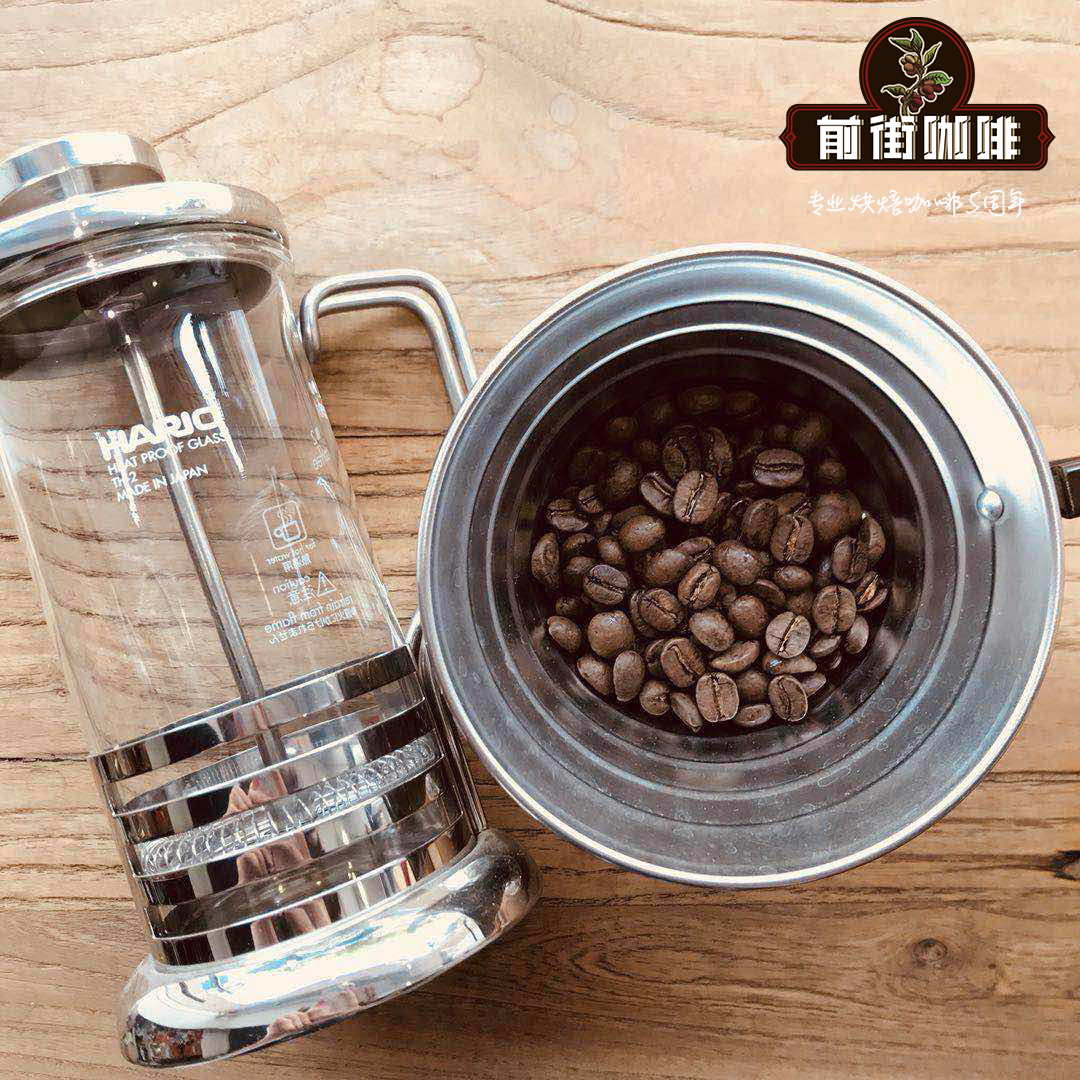
French Press
Flavor: Balanced and rich, with good texture and oils and a gentle sweetness.
Parameters:
1. Equipment: French press
2. Water temperature: 92°C
3. Grind size: Fuji grinder setting 4.5
4. Roast level: Medium-dark
5. Steep time: 2 minutes 30 seconds
Technique: Use 20g of coffee. Pour hot water (about 92–93°C) into the French press to the 300ml mark and start timing. Put the lid on with the filter plunger held at its highest position, wait 2.5 minutes, then press the filter slowly to the bottom.
Conclusion
We recommend the pour-over and AeroPress methods to show off Mandheling's rich, mellow character. Siphon and French press more easily tip into over-extraction — and once that happens, all you taste is sourness and bitterness.
FrontStreet Coffee Recommendation
For the best expression of this style, FrontStreet Coffee suggests its PWN Golden Mandheling — the benchmark for top-grade Mandheling. It comes from PWN, a company specializing in premium Sumatran lots, with standards strict enough for obsessive drinkers: beans of 18 screen or larger, fewer than 3 defects per 300g sample to meet the highest G1 grade, followed by three rounds of hand selection that raise both cleanliness and sweetness. Sumatra's coffee has a particular story: with humidity of 70–90% year-round, typhoons, and rainfall topping 2,000mm, long African-style sun drying is impossible — so since the 1970s growers have used the wet-hulled (giling basah) method, stripping the parchment while the beans are still half-dry to speed drying, which gives Mandheling its wild, earthy, herbal character. Aceh's Gayo mountains near Lake Tawar produce the brighter, more delicate style, while the traditional Lintong region around Lake Toba delivers the dense, intense classic: clove and woody aromatics, low acidity, and a strong, lasting sweetness after a medium-dark roast.
Brew it pour-over at 87–88°C with 15g of coffee, a coarse-sugar grind and a 1:15 ratio in three stages — 30ml to bloom and degas, 100ml to lift the bed and bring out the golden crema, then a gentle center pour of 95ml to build sweetness — for a thick body with caramel, chocolate and nut flavors. For espresso drinkers, FrontStreet's most-ordered classic blend adds medium-dark Mandheling to Brazilian cream and nut flavors, with a touch of Robusta for crema: sandalwood, roasted chestnut, caramel, and spice in a cup that pulls gorgeous lattes and Dirty espresso with equal ease.
Important Notice :
FrontStreet Coffee is a long-established specialty coffee roaster in Guangzhou China, selling freshly roasted beans from its own farm in Yunnan as well as dozens of carefully selected single-origin beans from around the world for both pour-over and espresso. The products deliver consistently excellent quality and great value, with shipping within 24 hours. Guangzhou's FrontStreet Coffee shop is recommended by many coffee lovers, and the beans are now available online at the Tmall 。
FrontStreet Coffee has moved to a new address:
FrontStreet Coffee Address: 315,Donghua East Road,GuangZhou
Tel:020 38364473
 Scan and follow the En Gafei WeChat official account. Please indicate that the reprint comes from "En Gafei".