How to Drink Burundi Coffee? Pour-Over Burundi Coffee Beans Tutorial & Price Guide
Introduction to Burundi Coffee Growing Regions
Professional coffee knowledge exchange and more coffee bean information, please follow Coffee Workshop (WeChat public account: cafe_style).
Burundi - The Heart of Africa
According to World Bank statistics from 2011, approximately 600,000-800,000 households in Burundi depend on coffee for their livelihood, making coffee the core of the country's economy.
Burundi is a beautiful landlocked country on the steep East African Rift Valley, with complex terrain. The dramatic ridge that rises suddenly from the eastern shore of Lake Tanganyika forms the watershed between Africa's two great river systems, the Nile and the Congo, earning the country the lovely title "Heart of Africa." Coffee growing was introduced through Belgium in 1930, with varieties mostly from the Bourbon family, similar to neighboring Rwanda. The coffee grows at high altitudes between 1750 and 2000 meters.
The first Arabica coffee trees in Burundi were introduced by Belgium in the 1930s. Today, more than 800,000 Burundian families depend on coffee cultivation for their livelihood. Most are small coffee gardens intercropped with other crops and worked by hand without mechanized equipment. The trees are mostly Bourbon, along with Jackson and Mibirigy, which belong to the Bourbon line. Processing methods include both washed and semi-washed. In the past, most coffee was exported to Belgium, Germany, the Netherlands, Japan, Australia, and the United States.
Coffee exports have become an important economic source for Burundi. Burundian coffee beans come mainly from the following five producing regions, the most famous being Kayanza, Ngozi, Mumirwa, Buyenzi, and Kirimiro. Burundi's production model is closer to Ethiopia's, mostly smallholders, and farmers from the Nyarunasi Cooperative send their harvested ripe cherries to processing stations for unified processing.
Although there are other smaller producing regions, the coffee from these areas is the most famous.
Buyenzi
The largest coffee producing region in the country, bordering Rwanda. Two specific areas within it, Kayanza and Ngozi, are the most famous.
The Kayanza region has an extremely mild climate with an average temperature of 18°C. Most small farms sit between 1700 and 2000 meters, and summer is the dry season. In the 2015 Cup of Excellence competition, coffee from Kayanza scored a high 91.09.
Ngozi lies in northeastern Burundi at an altitude similar to Kayanza. Although its production is less than Kayanza's, it has shown excellent quality potential in recent years. In the 2015 Cup of Excellence, its best batch scored a high 88.92, and other batches from the region also scored above 85.
Kirundo, Bugesera
Northeastern Burundi, with lower production but good development potential; altitude is approximately 1400-1700 meters. The best COE score for this region is 86.62 points.
Muyinga, Bweru
Another producing region in northeastern Burundi, bordering Tanzania. Average altitude is 1800 meters, with typical Burundian characteristics: a mild climate, volcanic soil, and high rainfall.
Gitega, Kirimiro
Located in the central mountainous region of Burundi, with average temperatures between 12-18°C. Annual rainfall is about 1,100mm, lower than other producing regions.
Besides COE award-winning coffee, this region also has a professional coffee laboratory focused on monitoring export coffee quality.
Bubanza, Mumirwa
Located in northern Burundi, bordering Rwanda and the Democratic Republic of Congo, altitude 1100-2000 meters, average temperature 12-18°C, annual rainfall about 1,100mm.
Burundi Coffee Bean Processing Methods
Burundi's production model is closer to Ethiopia's, mostly smallholders who send their harvested ripe cherries to processing stations for unified processing. This batch from the Rutana region comes from a cooperative of family-like small coffee farmers, with 539 small coffee farming families, of which 148 are women. Each family plants 10-200 coffee trees on average, although at least 1000 coffee trees can be planted per hectare, showing their weak annual income and the typical profile of poor coffee farming families.
Coffee harvested by smallholders is processed using traditional washed methods. After pulping, the cherries are soaked and cleaned in water tanks, then placed on racks for sun drying.
Like other East African countries, Burundi has its own special processing method, double washing, or double fermentation. Coffee processed this way always has an exceptionally clean taste and bright flavors.
The coffee beans have almost no defects, with very uniform size and moisture content. After a high-maturity roast, the bean surface consistently shows a bright roasted color. The taste is wild, with strong flavors and aromas. The rich aroma differs from most high-quality, mild coffees on the market and receives high marks in Europe. The dry aroma is very strong, not inferior to Kenya. On entry you feel richness, like vanilla, with a bit of wildness. The coffee is rich, with lower acidity than Kenya, a slightly thicker texture than Kenya, and a lighter aftertaste than Kenya. It carries the inherent characteristics of East African beans while remaining quite unique.
Burundi Coffee Bean Analysis
Burundian coffee beans are generally Bourbon, with some other variants such as Jackson and Blue Mountain. They are grown at altitudes ranging from 700-2,700 meters. High altitude produces brighter acidity and lemon notes, with passion fruit, pineapple, floral, and honey flavors, and quality reaching SCA 86 points or above. Low-altitude coffee has a slightly thinner texture, with more chocolate and hazelnut flavors.
Region: Bubanza
Variety: Bourbon
Altitude: 1400 to 1700 meters
Soil: Volcanic rock soil
Grade: AA Grade
Processing: Washed
Harvest Period: March to August
Flavor: Honey, kumquat, violet floral aroma, light acidity, smooth mouthfeel, saturated aroma, rich and persistent aftertaste.
Burundi Coffee Bean Roasting Analysis
The green beans have high density, so heat adjustment must be handled with particular care. To highlight fruit flavors and sweetness, a medium roast is chosen to express the beans' uniqueness fully. After 1 minute, the initial heat is relatively high, until the early dehydration stage, when heat is adjusted early to keep the coffee's taste and aroma uniform.
Yang Family 800N, green beans 550g, specific operation:
Heat the roaster to 200°C, damper open 3. After 1 minute of steaming, adjust the heat to 160°C, damper unchanged. At 160°C, adjust the heat once to 130°C. Roast to 5'35", temperature 152°C, the bean surface turns yellow, the grass smell completely disappears, dehydration is complete, and the damper is adjusted to 4.
At the 9th minute, ugly wrinkles and black spots appear on the bean surface, and the toast smell clearly changes to coffee aroma, which can be defined as the prelude to first crack. At this point, listen carefully for the sound of first crack. First crack begins at 9'10", small heat unchanged, damper fully open to 5, and heat adjustment must be very careful, not so small that the cracking sounds stop. At 196.5°C, discharge from the roaster.
Cupping Burundi Coffee Beans
The dry aroma is very strong, not inferior to Kenya: citrus, cream, caramel.
On entry you feel richness, like vanilla, with some straw smell and a bit of wildness. Acidity is lower than Kenya, texture slightly thicker than Kenya, aftertaste lighter than Kenya. It carries the inherent characteristics of East African beans while remaining quite unique.
Flavor characteristics: Berries, kumquat, lemon, dried fruit, caramel, light acidity, smooth mouthfeel, saturated aroma, rich and persistent aftertaste.
Burundi Coffee Bean Brewing Analysis
Hand Brew Burundi Coffee Bean Reference
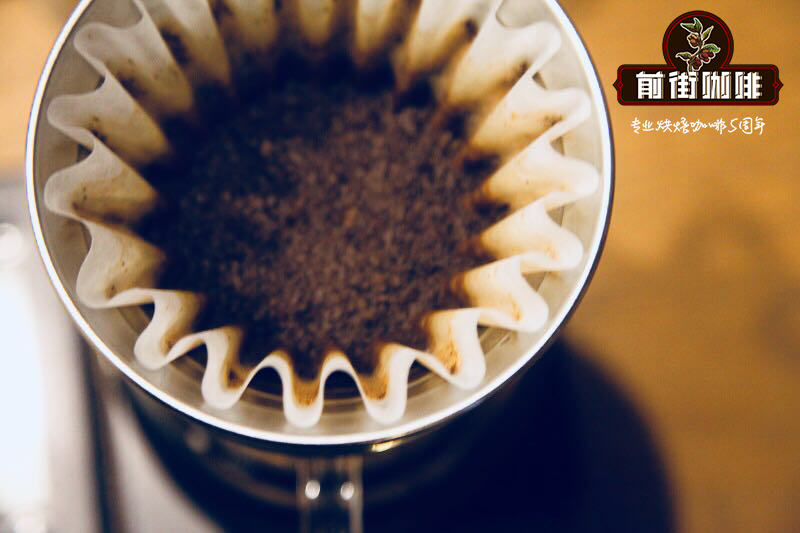
Use a V60 dripper, 15g of coffee with 30g of water for a 35-second bloom, then extract with 89-90°C water at a 1:15 ratio, using a medium-fine grind at Fuji 4. For the second pour, add water to 140ml then pause. Wait for the water to drop before slowly adding more. Keep the speed uniform and the water level not too high. Add water again to 225ml and stop. Extraction time is 2:15.
During brewing, the attractive citrus aroma quickly emerges, and after tasting you feel a sensation of citrus tea.
Burundi Coffee Bean Brand Recommendations
FrontStreet Coffee's roasted Burundi coffee beans are fully guaranteed in both brand and quality. More importantly, the value is exceptional. One package of 227 grams costs only 85 yuan. At 15g per cup, one package makes 15 cups, putting each cup at less than 6 yuan, a conscientious recommendation next to cafe prices that often cost dozens of yuan per cup.
FrontStreet Coffee Recommendation
Burundi belongs to the same East African belt as Ethiopia, and if this clean, bright, wild-edged style appeals to you, FrontStreet Coffee's Ethiopian single origins are the closest place to explore further. The FrontStreet Washed Yirgacheffe is the classic starting point, with white jasmine, bright citrus and lemon acidity, and a tea-like body at a welcoming price. For something more specific, the FrontStreet Gudibe Cooperative coffee comes from the Worka area at the southeastern edge of Yirgacheffe; it was once part of the Worka cooperative under the YCFCU alliance and later became a single-origin lot, and its traditional washed processing yields clean citrus and lemon acidity with jasmine fragrance.
On the natural side, the FrontStreet Natural Red Cherry is dried in the fruit for three to five weeks, layering classic Yirgacheffe flavors with tropical fruit, citrus acidity, berry juice, honey sweetness, and a creamy mouthfeel. For a more delicate cup, the FrontStreet Hamasho 74158 from Sidamo brings out strawberry, star fruit, and green grape sweetness, and the FrontStreet Kaffa Forest, grown under shade from 1,400 to 2,100 meters and roasted medium-light, gives white florals, bright lemon acidity, sweet orange, bergamot, and a green-tea finish.
Important Notice :
FrontStreet Coffee is a long-established specialty coffee roaster in Guangzhou China, selling freshly roasted beans from its own farm in Yunnan as well as dozens of carefully selected single-origin beans from around the world for both pour-over and espresso. The products deliver consistently excellent quality and great value, with shipping within 24 hours. Guangzhou's FrontStreet Coffee shop is recommended by many coffee lovers, and the beans are now available online at the Tmall 。
FrontStreet Coffee has moved to a new address:
FrontStreet Coffee Address: 315,Donghua East Road,GuangZhou
Tel:020 38364473
 Scan and follow the En Gafei WeChat official account. Please indicate that the reprint comes from "En Gafei".