How to Best Roast Ethiopian Guji Coffee Beans for Optimal Flavor? Is Guji 2.0 Coffee Bean Cost-Effective?
Professional Coffee Knowledge Exchange
For more coffee bean information, please follow Coffee Workshop (WeChat official account: cafe_style)
Discovering the Queen of Coffee Beans
Recently, we've fallen in love with a particular coffee bean: the Queen of Coffee Beans.
The Origin of the Name
So how did the Queen of Coffee Beans get its name?
In 2017, Ethiopia's DW green coffee company sent their beans to the TOH (Taste of Harvest) competition hosted by the African Fine Coffees Association. Their natural-process batch won the championship in TOH Ethiopia, and as champion, this batch of green beans was named "Queen."
Geographic Origins
Queen is located in Hambella, part of Ethiopia's Guji zone, administratively under Oromia Regional State. Hambella sits west of Yirgacheffe's Kochere, across the mountains, and borders the Guji sub-regions of Shakiso, Uraga, and Kercha to the southeast and north. It is Ethiopia's highest-altitude coffee sub-region (Harrar being the highest-altitude main producing region).
Today there are about 20 processing plants of various sizes in the Hambella area. DW operates four estate processing plants in Hambella's core Dimtu area: "Buku Abel," "Buku Saysay," "Haro Soresa," and "Tirtiro Goye."
"Good Coffee Doesn't Come Easy": Deep Mountains Above 2000 Meters
Most coffee estates in Ethiopia remain close to their natural state. Local farmers venture into the mountains to harvest, selecting only fully red, completely mature cherries by hand. Raised African drying beds are used, with a limited fruit layer thickness and scheduled turning around the clock to ensure even drying and ventilation, more precise fermentation control. Most local plants still rely on experience-based traditional natural processing, so quality can be inconsistent.
Red-brown organic soil, annual rainfall exceeding 1200mm, high altitude, wide day-night temperature swings, hand-picked pure red cherries, and low-temperature fermentation all shape the estate's unique environment.
The red-cherry harvesting areas are more concentrated, and the newer processing facilities sit closer, ensuring faster collection and processing. The entire process simply involves more refined management under scientific measurement—no radical "tradition-breaking" changes. Sun-drying begins only when the cherry sugar content measures above 21, which is why the sweetness is so high.
At night, thick plastic sheeting protects against sudden rain, letting the cherries ferment and dehydrate at relatively low temperatures. After 18 days of sun-drying, when the green bean moisture drops to around 13%, drying stops. The beans are packed in jute bags and rested in warehouses at 12-22°C and 40-50% humidity for about 50 days of resting and further moisture loss.
The Roaster's Perspective
As roasters, when we get beans this good, how should we roast them? How should the Queen's roasting curve be adjusted?
First, I check the flavor description from the green bean supplier, then the beans' moisture content. Freshly received, these beans carry a fermented, wine-like aroma of coffee blossom—completely different from the grassy smell of typical green beans. Queen beans vary in size and many have pointed ends (Ethiopia Heirloom native varieties), with good moisture around 11%, but they are not the very hard SHB type. Because of their density and hardness, I extend the dehydration phase early on and raise the temperature into first crack to preserve small-molecule aromatics like florals.
For daily production I chose a 550g batch (full drum capacity). Here is my experience:
Bean drop-in temperature: 190°C
Only by adjusting the drop temperature and development time can the curve be tuned:
First batch: yellowing point at 150.3°C, 5 minutes 55 seconds; dropped at 196°C; first-crack development 1 minute 40 seconds; first crack at 9'55
Second batch: yellowing point at 151°C, 5 minutes 51 seconds; dropped at 193°C; first-crack development 1 minute 30 seconds; first crack at 9'50
Cupping Results
First roast: the wet aroma shows distinct, strong green tea and floral notes. On slurping, green tea, jasmine, lime, and cane sugar aromas. The mouthfeel is light and clean, with gentle fresh acidity—but the aftertaste is thin, leaving only some sweetness. It drinks very lightly, more like tea than coffee.
Second roast: the wet aroma shows yellow lemon, florals, and black tea with clear citrus tones. On slurping, black tea, yellow lemon, caramel, and jasmine. The flavors become richer and more substantial at this roast level. The upfront acidity is more elegant, sweetness arrives faster and registers higher. Fermented wine notes, cream, tropical fruits, and jackfruit create a more balanced profile.
Optimized Roasting Profile
After further adjustments on a Taiwan-made Yang Jia 800N machine and repeated cupping, I settled on profile #2, which I am quite happy with:
Charge the beans at 190°C; complete dehydration and yellowing in close to 6 minutes (yellow point around 150-153°C)
First crack begins around 9 minutes 50+ seconds (the Queen cracks later than typical beans, and the sound is very weak)
Development after first crack should be neither longer than 1 minute 30 seconds nor shorter than 1 minute (open the damper and reduce heat to control the pace)
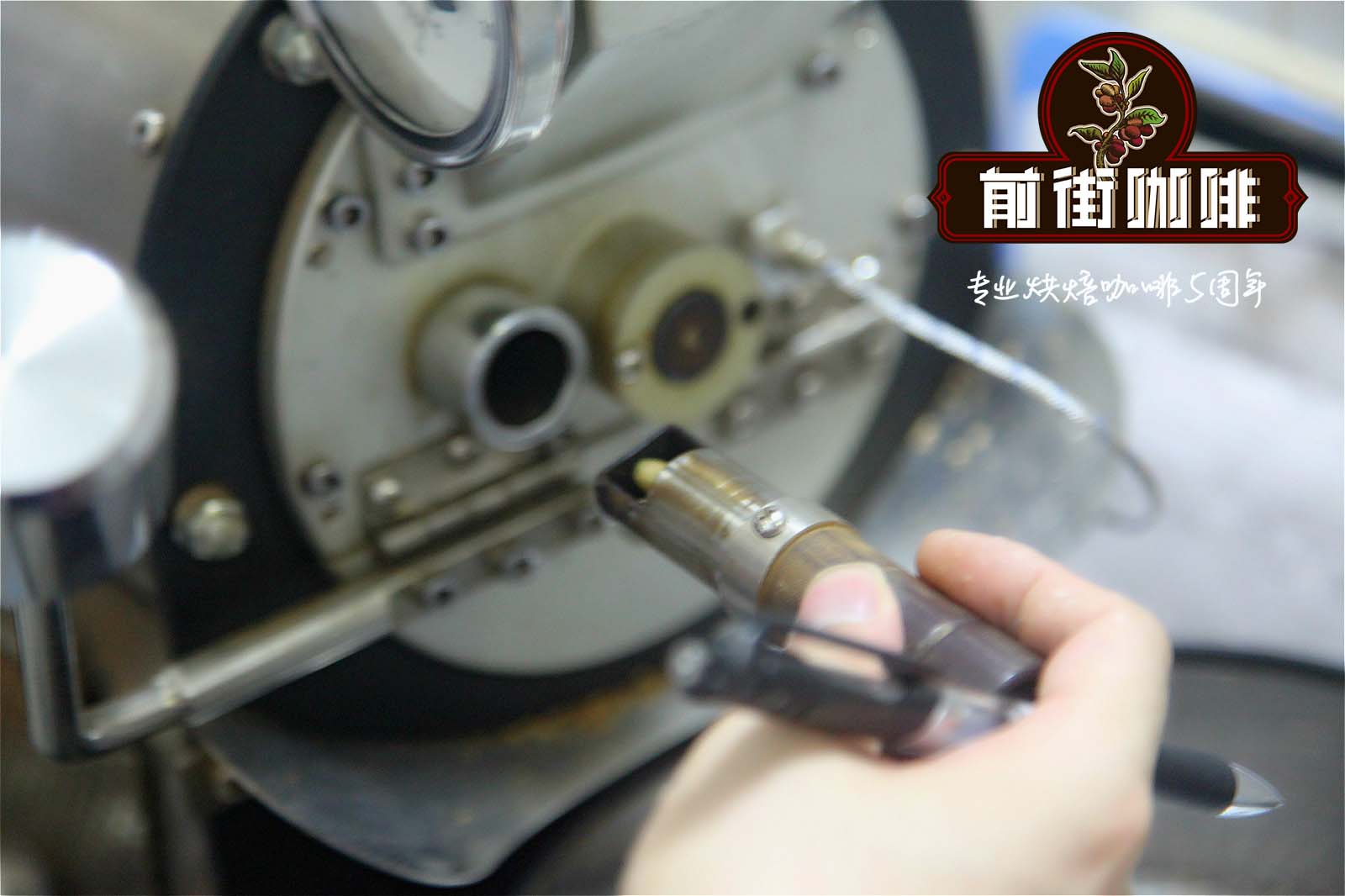
When you can smell strawberry jam on the sample spoon around 193°C, the beans are ready to drop
Total roast time should ideally stay within 11 minutes.
Brewing Methods
For brewing, pour-over and siphon are optimal. When grinding, you can smell the intense natural fruit aroma and a noticeable sweetness.
Elegant and refined, sweet and charming—this coffee emits remarkably complex aromas with an exceptional mouthfeel that is hard to put into words.
Using a Wave dripper: 15g of coffee, water temperature 89°C, grind setting 3.5
Water-to-coffee ratio close to 1:15
30g water to bloom, bloom time 35s
Segmented pour: 30-105-90, total time 2:03 (timing starts from the bloom)
Mouthfeel: smooth, with layered complexity and enhanced fermented berry sweetness
The wet aroma of fermented berries and fruit wine is astonishing. The entry is extremely smooth, unfolding into a delicate body with the sweet-tart notes of ripe fruit—truly impressive. The sweetness is prominent and clean, and the aftertaste performs very well.
Recommended Queen Coffee Bean Brands
FrontStreet Coffee's roasted Queen Coffee Beans carry full guarantees in both brand and quality. More importantly, they offer exceptional value—only 98 yuan for a 227-gram package. At 15g per cup, one package makes 15 cups, working out to about 6 yuan per cup. Compared with the price of a single pour-over in a café, this is genuinely good value.
FrontStreet Coffee Recommendation
If you love the Queen's floral-and-fruit character and want to explore more of this style, FrontStreet Coffee's washed Yirgacheffe lineup is the natural next stop. Yirgacheffe is a small town in Ethiopia's Sidama zone at roughly 1700-2100 meters, with coffee planted above 1800 meters—one of the world's highest coffee regions. Since 2010, when the Ethiopian Commodity Exchange separated Yirgacheffe from Sidama as its own appellation, its signature white florals and lemon-citrus acidity have become a byword for Ethiopian specialty coffee.
The FrontStreet washed Yirgacheffe staple bean is the classic gateway: white jasmine, bright citrus and lemon acidity, and a tea-like finish at a friendly price. For something more traced, the FrontStreet Guodingding Cooperative comes from Guodingding village in the Worka zone at Yirgacheffe's southeastern edge—once part of the Worka cooperative under the YCFCU union, now celebrated as a single-origin lot. Its washed process delivers clean, bright citrus and lemon acidity with jasmine fragrance and none of the traditional bitterness.
For the natural-process fan, the FrontStreet sun-dried Red Cherry uses only fully ripe, defect-free cherries dried on raised beds—turned every 2-3 hours in the first days to prevent uneven heating and over-fermentation—then dried for three to five weeks. Because the cherries dry whole with the fruit attached, it combines classic Yirgacheffe character with tropical fruit: citrus acidity, berry juiciness, honeyed sweetness, and a cream-smooth body.
FrontStreet's recommended brew for these Ethiopian beans: V60, 15g dose, 90-91°C water, 1:15 ratio, EK43s setting 10 (fine sugar, 80% pass on a #20 sieve). Bloom with 30g of water for 30 seconds, pour to 125g in about a minute, then finish with 100g more (around 225g total) at 1'35"; extraction completes at 2'00"-2'10".
Important Notice :
FrontStreet Coffee is a long-established specialty coffee roaster in Guangzhou China, selling freshly roasted beans from its own farm in Yunnan as well as dozens of carefully selected single-origin beans from around the world for both pour-over and espresso. The products deliver consistently excellent quality and great value, with shipping within 24 hours. Guangzhou's FrontStreet Coffee shop is recommended by many coffee lovers, and the beans are now available online at the Tmall 。
FrontStreet Coffee has moved to a new address:
FrontStreet Coffee Address: 315,Donghua East Road,GuangZhou
Tel:020 38364473
 Scan and follow the En Gafei WeChat official account. Please indicate that the reprint comes from "En Gafei".