What Brewing Equipment is Best for Guifei Coffee Beans? Hambella Guifei 6.0 Coffee Story Characteristics Flavor Description
Ethiopian Sidamo Shakisso Natural - Flower Champion Coffee Beans
01 | The Growing Region of Flower Champion
Hambella (generally transliterated as Hambella) lies in Guji, Ethiopia's largest coffee-producing region, and administratively belongs to the Oromia region. To the west, a mountain barrier separates Hambella from Yirgacheffe's Kochere region: a 3,200-meter-high, 30-kilometer-wide plateau sits between the two. To the southeast, east and north it borders Guji's Shakiso, Uraga and Kercha sub-regions respectively, making it the highest-altitude coffee sub-region in Ethiopia (Harrar remains the highest-altitude main coffee-producing region in the country).
Today there are close to 20 processing plants of various scales in Hambella. DW Company operates four estate processing plants in the Dimtu core area of Hambella: Buku Abel, Buku Saysay, Haro Soresa and Tirtiro Goye.
Of all these estates and processing stations, only the sun-dried coffee from the Buku Abel estate and processing plant is called "Flower Champion coffee beans."
Buku Abel is a small village ringed by mountains at an altitude of 2,280 meters. December is its coffee harvest season each year, when the hillsides are covered in bright red, ripe coffee cherries laid out neatly on African drying beds in the village; this is where Flower Champion coffee beans are processed.
Green Bean Information
Product Name: Ethiopia Natural Sidamo G1 Flower Champion Coffee Beans
Coffee Origin: Africa, Ethiopia
Coffee Estate: Guji, Hambella Wamena region, Dimtu city, Buku Abel estate
Coffee Varieties: Heirloom, Ethiopian native varieties
Production Altitude: 2250-2350m
Quality Grade: G1
Processing Method: Natural sun-dried (African drying beds)
Awards
2016/2017 harvest season: Champion of the Ethiopia National Taste of Harvest Competition
2017 Regional Africa Taste of Harvest Competition: Runner-up
02 | How Flower Champion Is Processed
During the harvest and processing season (December to January), the unique growing environment and natural climate shape Flower Champion's distinctive flavors. Sun-drying only begins once the sugar content of the harvested red cherries reaches above 30. Over the first two days of drying, the moisture in the cherries is managed so their fructose can fully kick off fermentation. Meanwhile, the high altitude lets nighttime temperatures at the processing plant fall to around 12°C, preventing the over-fermentation off-odors that excess heat would cause. When noon temperatures climb higher, shade is provided promptly so the red cherries are not damaged by the sun.
From the very beginning of cultivation, Flower Champion was given a rarefied "family environment": humus-rich reddish-brown soil and shade protection from Enset trees, allowing the coffee to receive ample sunlight and develop rich flavors without spending excessive nutrients, so more of its essence stays inside the cherry.
Only fully red, completely ripe cherries are selected. Everything is hand-picked and dried on African raised beds, with a limited fruit-layer thickness and turning every 24 hours to ensure even drying and ventilation, and to control the degree of fermentation more precisely.
At night, thick plastic sheeting is wrapped over the beds to guard against sudden rain. This lets the red cherries ferment and dehydrate at relatively low temperatures. After 18 days of sun-drying, once the moisture content of the green coffee drops to around 13%, drying stops. The beans are then packed into jute bags and stored under natural conditions at 12-22°C and 40-50% humidity for about 50 days of resting and further dehydration. When the green bean moisture content reaches around 10%, they are sent to the processing plant for hulling, screening and sale.
03 | Green Bean Analysis
The variety is a set of local native types, small-seeded in style, fairly round in shape and very small, mostly between 14 and 15 screen.
Natural Sidamo: beans are smaller than Longberry and greenish-yellow, with significant variation in size.
Washed Sidamo: green beans are slightly bluish-green, also with significant variation in size.
[Natural Flower Champion roasted beans]: light roast level, lighter color, no silver skin.
[Washed Flower Champion roasted beans]: slightly darker roast level, darker color, with silver skin remaining along the center line.
04 | Roasting Analysis
Beans with such magnificent flavors are certainly not suited to a medium-dark roast. This coffee is best prepared with a light, slow roast to bring out its rounded sweetness and its rich floral and fruit aromas.
The beans are relatively small and hold moisture, so they absorb more heat during roasting and move through the Maillard reaction relatively quickly.
For the first roast I used a higher drop temperature, holding 160 before the beans dehydrated and turned yellow, to ensure enough heat to carry through first crack and develop directly toward second crack, which set the shape of the development curve.
On the second, third and fourth roasts I used the same entry temperature of 200 and the same heat, gradually reducing heat during the roast as needed.
This batch was a quick-stir light roast:
Cupping:
Roast profile 2: toast, hay
Roast profile 3: berries, nuts
Roast profile 4: fermented wine aroma, cream, tropical fruit, jackfruit
We therefore chose profile 4.
Roast Profile 4, Step by Step:
Using a Nordic roast approach, heat the drum to 200°C with the damper at 3.5. After one minute, adjust the heat to 160°C with the damper unchanged. Adjust once more at 140°C, reducing to 140°C. Roast to 5'18", temperature 154°C, when the bean surface turns yellow, the grassy smell disappears completely and dehydration is complete; then adjust heat to 105°C and open the damper to 4.
At 8 minutes the bean surface shows ugly wrinkles and black streaks, and the toast smell clearly turns to coffee aroma, which can be read as the prelude to first crack. Listen carefully for the sound of first crack; first crack begins at 8'37". Reduce heat to 80°C and open the damper fully (adjust the heat very carefully, not so low that the cracking sounds stop), then drop at 198.1°C.
04 | Brewing Analysis
Flavors of Flower Champion Coffee Beans
Recommended Brewing Methods - Pour-Over and Siphon
As for brewing methods, pour-over and siphon are optimal. When grinding, you can already smell the overwhelming sun-dried fruit aroma, with noticeable sweetness.
Elegant and refined, sweet and charming. Flower Champion beans give off an extremely complex aroma and display an outstanding mouthfeel that is hard to put into words.
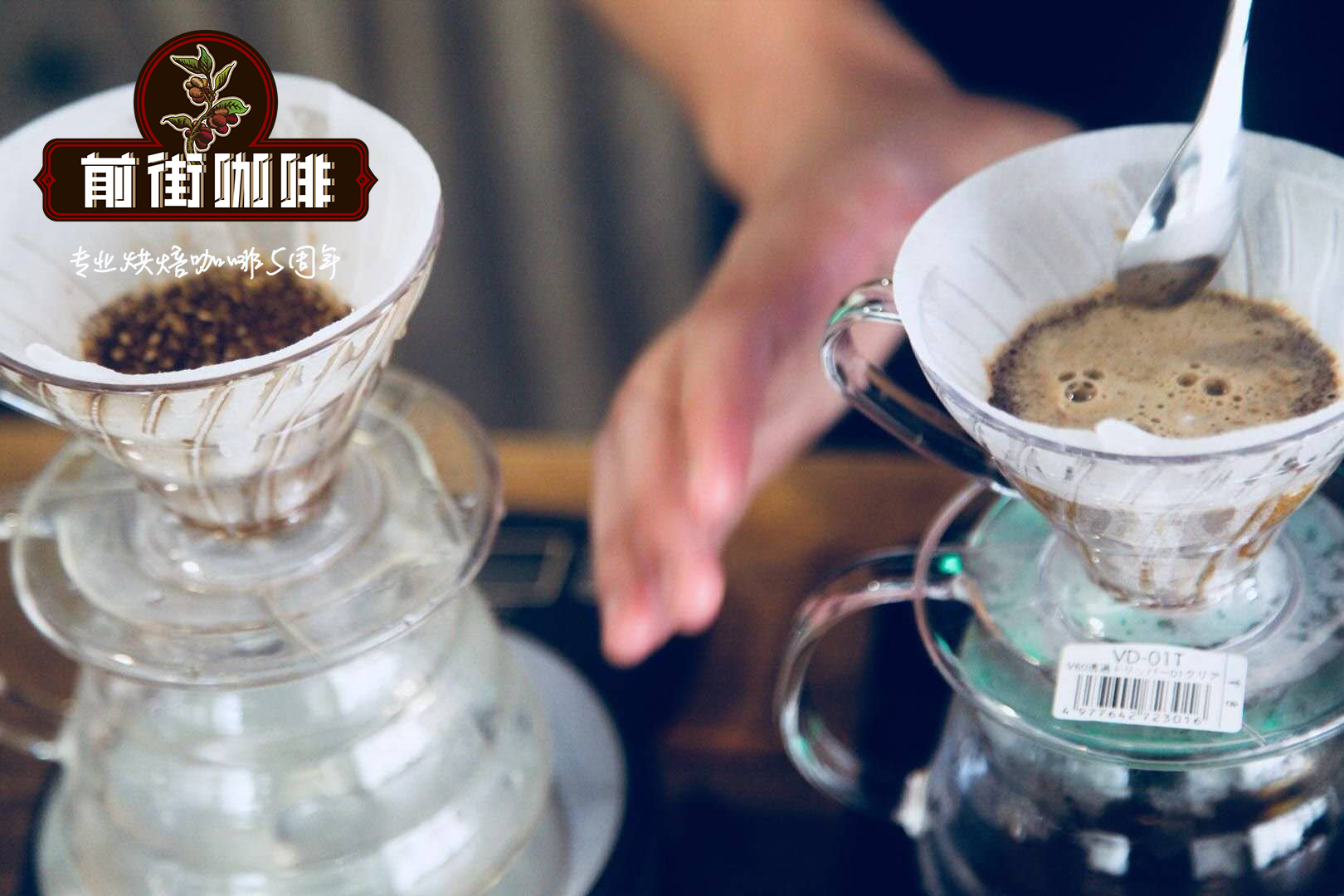
V60 dripper, 15g of coffee, water temperature 89°C, grind setting 3.5.
Water-to-coffee ratio close to 1:15.
30g of water for the bloom, bloom time 28 seconds.
Pour stages: 30-105-90, total time 2:03 (timing starts from the bloom).
Mouthfeel: smooth and layered, with amplified fermented berry sweetness.
The wet aroma of fermented berries and fermented fruit wine is surprising. The entry is extremely smooth, moving into a delicate body, and the sweet-sour lift of ripe fruit is genuinely striking: prominent sweetness, clean, with an excellent aftertaste.
Flower Champion Coffee Bean Brand Recommendations
FrontStreet Coffee's roasted Flower Champion beans offer full guarantees in both brand and quality. Just as important, they deliver extremely high value: a 227-gram bag costs only 98 yuan. At 15g per cup, one bag makes fifteen cups of coffee, working out to only about 6 yuan a cup. Compared with café prices that often reach tens of yuan per cup, that is a truly conscientious recommendation.
FrontStreet Coffee Recommendation
Flower Champion's naturally processed, berry-and-wine profile has a clear cousin in FrontStreet Coffee's naturally processed Yirgacheffe Red Cherry. Only fully ripe red cherries are picked, dried on raised beds and turned frequently, giving citrus-like acidity, a juicy berry character, honeyed sweetness and a creamy smoothness.
If you lean toward the cleaner floral side of Ethiopian coffee, the FrontStreet washed Yirgacheffe is the classic choice, known for white jasmine, bright citrus and lemon acidity, and a tea-like finish.
Important Notice :
FrontStreet Coffee is a long-established specialty coffee roaster in Guangzhou China, selling freshly roasted beans from its own farm in Yunnan as well as dozens of carefully selected single-origin beans from around the world for both pour-over and espresso. The products deliver consistently excellent quality and great value, with shipping within 24 hours. Guangzhou's FrontStreet Coffee shop is recommended by many coffee lovers, and the beans are now available online at the Tmall 。
FrontStreet Coffee has moved to a new address:
FrontStreet Coffee Address: 315,Donghua East Road,GuangZhou
Tel:020 38364473
 Scan and follow the En Gafei WeChat official account. Please indicate that the reprint comes from "En Gafei".