Is Sidamo Hua Guai SOE Bitter or Sour? Which Tastes Better: Hua Guai SOE Americano or Latte?

In recent years, many coffee enthusiasts have taken a particular interest in the SOE Guji launched by Luckin Coffee. After trying it, they discovered that it isn't bitter at all — instead it shows fruity acidity and a very distinctive character. So they come to ask FrontStreet Coffee which beans are used and whether it can be recreated at home. FrontStreet Coffee will take this opportunity to explain what "SOE Guji" actually means and how to properly prepare a Guji SOE Americano and a Guji SOE latte.
What Does SOE Guji Mean?
First, SOE stands for Single Origin Espresso — espresso made from coffee grown at a single origin. That differs somewhat from the traditional idea of espresso.

Traditional espresso has almost always relied on dark-roasted blends of beans from multiple regions, aiming to keep every cup stable and balanced, though often with a fairly intense taste. SOE espresso, by contrast, sets the roast depth according to each bean's characteristics and uses coffee from a single origin, so the resulting shot is no longer the familiar balanced bitterness and intensity we expect from espresso.
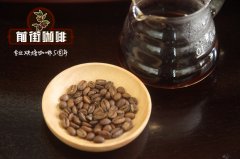
"SOE Guji," then, is espresso made with Ethiopia Sidamo Guji beans. Add hot water in proportion and you get a Guji SOE Americano, sweet, tangy, and refreshing. Add fresh milk to the Guji espresso and you get a Guji SOE latte — aromatic and sweet with a long finish. So what exactly are these Ethiopia Sidamo Guji beans, and why are they so popular?

Why is Guji Coffee So Famous?
In coffee shops, "Guji" refers to a naturally processed coffee from the Hambella region of Sidamo, Ethiopia, with the full English name "Ethiopia Guji Hambella Buku Abel." Broadly speaking, it is a champion bean from Ethiopia; more specifically, it is a specialty natural lot processed and produced at the Buku Abel washing and drying station in the Hambella region.
The memorable nickname "Guji" was actually coined by green coffee merchants after the bean won the TOH championship in the natural category — a name meaning "the finest among flowers." Backed by vigorous marketing, it also earned the reputation of being "comparable to Geisha." With its famous name, excellent quality, juicy fruit-forward flavors, approachable price, forgiving extraction (easy to brew), and pleasant branding, Guji has not only stood out among Ethiopian coffees but has also become the first choice for many people trying single-origin coffee for the first time.

Search for "Guji coffee" on shopping platforms and you'll notice it often carries a number, such as Guji 5.0 or Guji 7.0, which leaves many people wondering what that number means.
As FrontStreet Coffee mentioned, before this bean was called "Guji" it went only by its English name, "Hambella." Simply put, what we call "FrontStreet Coffee Ethiopia Sidamo Guji" is a traditional natural-process G1 grade bean from the Hambella region of Sidamo, with the Buku Abel station providing finer traceability — it is located in Dimtu town.

After "Guji" shot to fame overnight, DW Company expanded the number of independent coffee drying stations in the Hambella Wamena Wereda to 5 to meet the surge in demand, all located within the core production area around Dimtu town. Besides the original Buku Abel, four small villages — Buku Saysay, Haro Soresa, Tirtiro Goye, and Seke Bokosa — also joined the production of natural-process beans. DW's annual output of "Guji" reportedly reached tens of thousands of tons at this point.
Starting from the 2018 harvest season, Guji beans (natural G1) from the same growing area and the same station began showing changes in taste. Through cupping, FrontStreet Coffee found that although the 2018 and 2019 Guji lots had flavors similar to the 2017 crop, they fell short of the "first-generation Guji" in body and aftertaste.

To keep selling this Hambella natural coffee while distinguishing later lots from the original version, green coffee trading companies began appending an X.0 suffix to each batch from 2017 onward. The 2018 batch became "Guji 2.0," the 2019 harvest "Guji 3.0 and 3.1"... last year's release was "Guji 7.0," and by extension, this year's newest version is naturally "Guji 8.0." The suffix also lets you easily tell which year's batch the Guji you purchased belongs to.

How to Make Delicious SOE Coffee with FrontStreet Coffee's Sidamo Guji 8.0
Preparing an SOE is a real test of a barista's extraction skills, requiring attention to the bean's roast level and the careful adjustment of extraction parameters to bring out the best flavor and texture. If you don't choose good beans and aren't familiar with the espresso-making process, the odds of failure are higher, and the resulting shot will be either bitter or overly sour. In FrontStreet Coffee's view, choosing a bean well suited to SOE extraction makes it easy to pull a delicious shot — and makes preparing an Americano or latte with water or milk twice as effective.

Take the FrontStreet Coffee Sidamo Guji we're discussing today. Because buyers use different brewing methods at home, FrontStreet Coffee's roasters offer two roast curves: a medium-light roast suited to cold brew and pour-over, and a medium roast suited to espresso machines and moka pots. If you like things simple and choose cold brew, or prefer the ritual of pour-over, go with the medium-light roast; if you're after golden crema or want to pour delicate latte art, FrontStreet Coffee recommends the SOE roast curve.

FrontStreet Coffee's SOE Guji Espresso Extraction Parameters
Coffee beans: FrontStreet Coffee Ethiopia Sidamo Guji 8.0
Coffee grounds: 20g
Coffee liquid: 40g
Grounds-to-liquid ratio: 1:2
Extraction time: 26-32 seconds
Grinder setting: Galileo 2.0, scale 2.0

FrontStreet Coffee uses a double basket, dosing 20 grams of grounds per shot at a 1:2 grounds-to-liquid ratio — meaning 40 grams of espresso extracted within a reasonable time. Extraction time depends on the flow rate through the puck. Generally a single extraction is kept between 20 and 35 seconds: under 20 seconds and the shot tends to taste thin and weak; over 35 seconds and over-extraction brings burnt bitterness. FrontStreet Coffee therefore keeps the shot time within 26-32 seconds.

Before extraction, dry the portafilter basket first, then grind a double dose, weigh it on a scale, and adjust until it reaches 20 grams. Use a distributor to level the grounds, then tamp straight down to compact the puck evenly, which keeps extraction stable.
Then flip on the extraction switch and run water for 1-2 seconds to warm the group head and flush away any stuck grounds. Place a scale under the cup that will catch the espresso, tare it to zero, and slide it under the group head for the shot.

Lock the portafilter gently into the group head and start the extraction. Watch the stream as it develops. When the scale reads 40 grams of espresso and roughly 30 seconds have elapsed, cut the switch. The parameters will shift subtly with daily humidity and the state of the beans, so you'll need to adjust the dose, grind setting, and yield up or down accordingly.

The finished Guji SOE can be enjoyed straight — remember to keep a glass of water alongside to cleanse your palate so you can appreciate the dense crema and the rich tropical fruit aroma of the coffee beneath it. If the intensity of straight espresso isn't for you, add ice water or warm water at a 1:4 ratio for a refreshing Guji SOE Americano, or add steamed fresh milk at a 1:6 ratio to soften the texture into a delicious Guji SOE latte.
FrontStreet Coffee Recommendation
FrontStreet Coffee's natural Guji comes from the Hambella region of Sidamo, where the estate spans 200 hectares and the coffee is processed using the traditional natural method. To keep the cherries from molding or picking up earthy taints while drying, workers spread the ripe cherries on raised beds to sun-dry for 21 days, raking them constantly so they dry evenly, and hand-sorting out defective or moldy beans every three to five days. Once the skins have dried hard, they are milled off, and the green beans go through density and color grading plus a final hand sort before shipping. Because the cherries dry whole, fruit and skin intact, a medium-light roast reveals a light fermented wine note, florals, citrus, and mango — a noticeably richer and more complex cup with honeyed sweetness, cocoa undertones laced with a hint of spice, full body, and a long finish.
Important Notice :
FrontStreet Coffee is a long-established specialty coffee roaster in Guangzhou China, selling freshly roasted beans from its own farm in Yunnan as well as dozens of carefully selected single-origin beans from around the world for both pour-over and espresso. The products deliver consistently excellent quality and great value, with shipping within 24 hours. Guangzhou's FrontStreet Coffee shop is recommended by many coffee lovers, and the beans are now available online at the Tmall 。
FrontStreet Coffee has moved to a new address:
FrontStreet Coffee Address: 315,Donghua East Road,GuangZhou
Tel:020 38364473
 Scan and follow the En Gafei WeChat official account. Please indicate that the reprint comes from "En Gafei".