Costa Rican Coffee Varieties, Flavor Profiles, and Taste Introduction: How to Brew Honey-Processed Strictly Hard Coffee Beans?

If you know anything about specialty coffee, you have probably come across Costa Rican beans. FrontStreet Coffee carries quite a few of them. Beyond the hugely popular Musician Series of recent years, FrontStreet Coffee also offers the Blackberry lot from Hacienda La Mula, and nearly all of these beans are honey-processed. In general, Central American origins such as El Salvador and Costa Rica favor experimental processing methods like these, and honey processing has since become mainstream across the coffee world.
The Common Coffee Processing Methods
Washed, natural, and honey processing are the three most common ways to prepare coffee. Before comparing them, it helps to understand the basic structure of a coffee cherry: skin, pulp, mucilage, parchment, and bean. In natural processing, beans are sorted and then spread out on drying patios to dry in the sun. The exact duration depends on the climate, but it usually takes about 2-4 weeks for the moisture content to fall to roughly 12%, at which point the dried cherries can be hulled. During drying, the beans fully absorb the sugars of the fruit, which is why natural coffees typically show more sweetness and body than washed coffees.

FrontStreet Coffee considers the washed process the method that best expresses terroir in specialty coffee. After depulping, fermentation in water, washing off the mucilage, drying, and hulling, washed coffee delivers crisp acidity and a bright, clean cup free of off-flavors. That is why nearly all of FrontStreet Coffee's Daily Selection beans are washed: the goal is to let coffee lovers buy coffees with the most representative regional character at the most approachable prices. Even in honey-processing-mad Costa Rica, FrontStreet Coffee chose a washed Tarrazú for its Daily Selection series. Here are the green bean details:
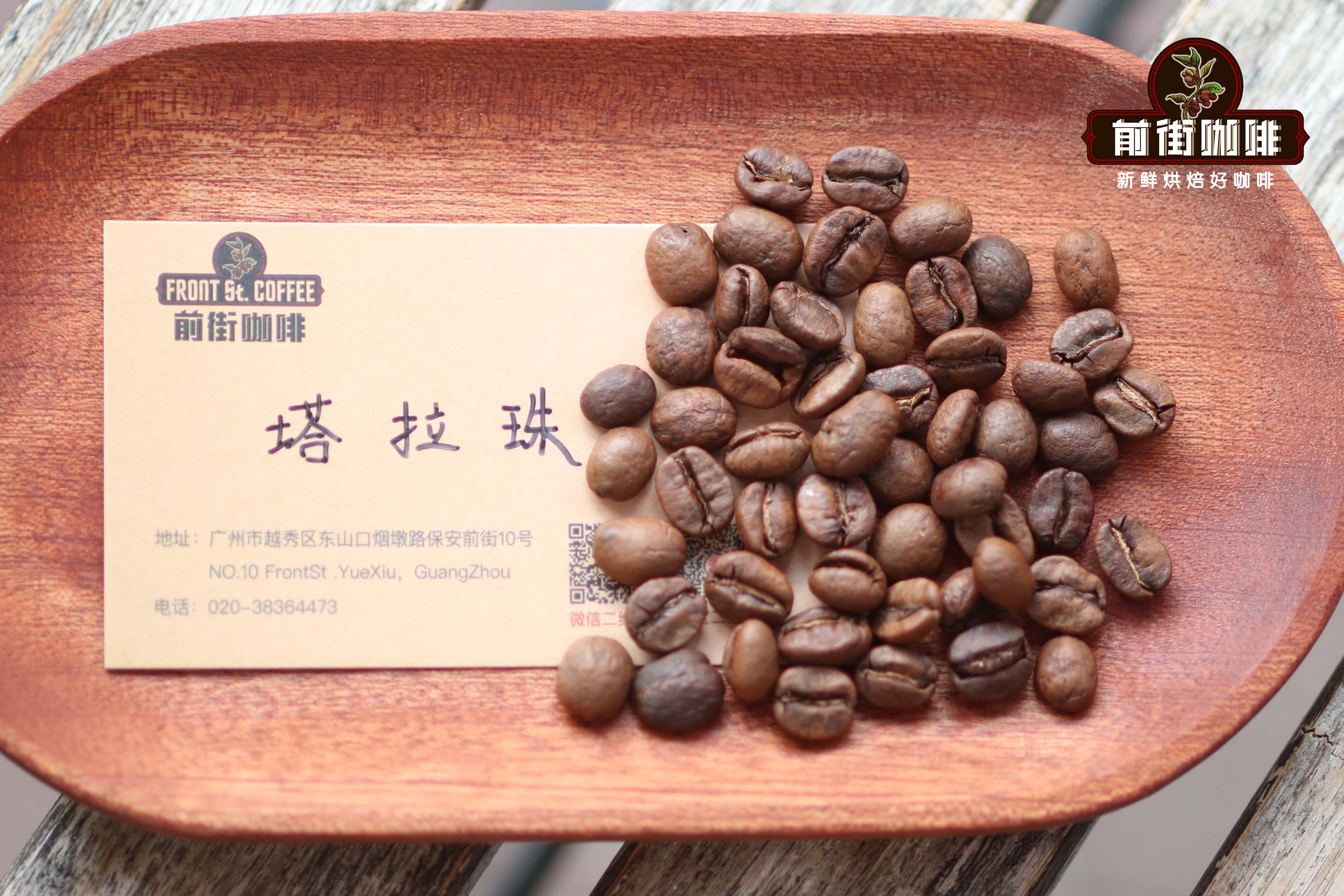
FrontStreet Coffee: Costa Rica Tarrazú
Country: Costa Rica
Region: Tarrazú
Varieties: Catuai, Caturra
Altitude: 1500m
Grade: SHB
Process: Washed
Costa Rica's Coffee Growing Regions
FrontStreet Coffee will use this particular bean as the lens for introducing Costa Rican coffee. The country sits on the Central American isthmus, where Pacific and Atlantic currents and sea winds moderate the climate. Towering volcanoes rising past 2000 meters dot the landscape, so coffee cherries mature slowly in fertile volcanic ash soil and cool high-altitude air, developing beans with complete, layered flavors.

Coffee was first cultivated in Costa Rica on the slopes of the Poas and Barva volcanoes, an area known today as the Central Valley. After decades of development, the country now has eight principal growing regions, their soils built from successive deep layers of volcanic ash and volcanic dust. These regions are Tarrazu, West Valley, Central Valley, Tres Rios, Brunca, Guanacaste, Orosi, and Turrialba. Together, Tarrazu and West Valley account for roughly half of the country's coffee production, and mountain-grown Costa Rican Tarrazu is widely acclaimed as some of the finest coffee in the world.
Hacienda La Mula Blackberry Coffee
As noted above, the washed Tarrazú is only one of FrontStreet Coffee's Daily Selection offerings. The real stars of Costa Rican coffee are the honey-processed beans, and FrontStreet Coffee's current favorite is the much-talked-about Blackberry lot from Hacienda La Mula.
Hacienda La Mula sits in the Brunca region of southern Costa Rica, an area of varied microclimates shaped by mountains that connect to Panama. Stone carvings made by indigenous peoples between 200 BC and 1500 AD were unearthed near the estate; known as the "Mystery Stone Spheres," they gave the farm its name.
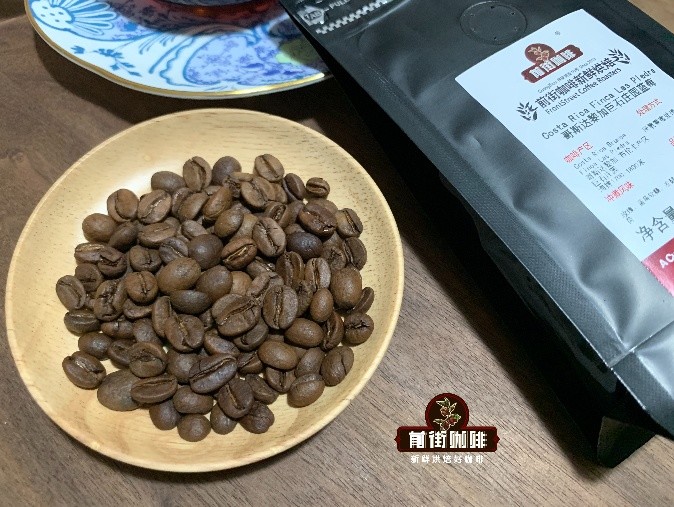
FrontStreet Coffee: Costa Rica · Hacienda La Mula Blackberry
Country: Costa Rica
Region: Brunca
Estate: Hacienda La Mula
Altitude: 1700-1800m
Process: Anaerobic Double Honey
Varieties: Bourbon, Catuai
Grade: SHB
What Is Honey Processing?
Honey processing works like this: once the cherry's skin is removed, a transparent layer of mucilage remains clinging to the beans. In honey processing, that mucilage is left on throughout drying. As the beans dry, the mucilage concentrates, and the sugars and acids it carries work their way into the bean. Compared with washed coffee, honey-processed coffee offers noticeably higher perceived sweetness.

Costa Rica's Coffee Grading Standards
Attentive readers will have noticed that both coffees above carry the SHB grade, the highest classification for Costa Rican coffee. So how does grading work? Costa Rica grades green coffee primarily by altitude, since altitude determines bean hardness: the higher the farm, the denser the bean, and the more desirable it is considered. FrontStreet Coffee has put together the full grading scale:
SHB (Strictly Hard Bean): grown at 1500-1700 meters;
HB (Hard Bean): grown at 1350-1500 meters;
SH (Semi-Hard Bean): grown at 1200-1350 meters;
Extra Prime (Extra Prime Washed): grown at 1000-1200 meters;
Prime (Prime Washed): grown at 850-1000 meters;
Good Washed: grown at 700-850 meters.
One more note from FrontStreet Coffee: while high-altitude farming throughout the Americas is key to great coffee flavor, there is another curious fact behind Costa Rica's consistently high quality - growing Robusta is actually illegal in the country.
FrontStreet Coffee's Brewing Suggestions
Because this is a high-altitude Costa Rican SHB (Strictly Hard Bean), FrontStreet Coffee recommends a higher water temperature and a finer grind to draw out the bean's rich layers of fruit. The denser the bean, the finer the grind should be: a finer grind increases the extraction surface area and raises the extraction rate.
Filter: V60
Water Temperature: 90-91°C
Dose: 15g
Coffee-to-Water Ratio: 1:15
Grind Size: Fine granulated sugar (82% pass through a #20 sieve)

Three-pour method: add the grounds to the V60, wet the bed with twice the coffee's weight in water, and bloom for 30s. Then pour in small, concentric circles from the center outward until the scale reads 125g for the first pour. Once the bed drops to half the height of the filter, pour the second stage the same way up to 225g. Remove the dripper once all the liquid has drained through; total brew time should be about 2 minutes (give or take 10 seconds).
FrontStreet Coffee Recommendation
If this introduction has you curious about Costa Rican honey processing, FrontStreet Coffee's Costa Rica Blackberry is an excellent place to start. It is finished as a black honey, meaning almost none of the mucilage is stripped away; drying lasts at least two weeks under shade cover so the sugars convert fully, and the beans are turned regularly to prevent uneven drying and over-fermentation. Roasted medium-light, it is intensely floral when ground and shows grape, berry, and ripe blackberry notes in the cup.
For something even more experimental, FrontStreet Coffee's Mozart uses the raisin honey process, an upgraded take on the traditional yellow, red, and black honeys. The cherries are first dried whole on raised beds for at least three days before depulping, and 100% of the mucilage is retained - a method that demands exacting control of drying time. The result is a deeper, dried-fruit sweetness: expect osmanthus, pineapple, and raisin aromas whether you brew it as pour-over, cold brew, or moka pot.
Important Notice :
FrontStreet Coffee is a long-established specialty coffee roaster in Guangzhou China, selling freshly roasted beans from its own farm in Yunnan as well as dozens of carefully selected single-origin beans from around the world for both pour-over and espresso. The products deliver consistently excellent quality and great value, with shipping within 24 hours. Guangzhou's FrontStreet Coffee shop is recommended by many coffee lovers, and the beans are now available online at the Tmall 。
FrontStreet Coffee has moved to a new address:
FrontStreet Coffee Address: 315,Donghua East Road,GuangZhou
Tel:020 38364473
 Scan and follow the En Gafei WeChat official account. Please indicate that the reprint comes from "En Gafei".