Costa Rican Coffee Bean Brand Recommendations How Much Does a Cup of Costa Rican Black Honey Process Coffee Cost
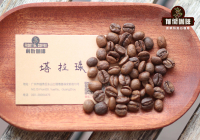
Costa Rica Sumava de Lourdes Black Honey
Costa Rica coffee beans. Sumava Estate. Caturra. Black honey.
01 | Introduction to the Growing Region
Coffee cultivation in Costa Rica first began in 1779 with coffee introduced from Cuba, and the first coffee exports occurred in 1820. Today there are approximately 32,000 coffee farmers in Costa Rica, with an average plantation area of less than one hectare (10,000 square meters) per farmer. Costa Rica has a population of 4.1 million (2006), with coffee cultivation covering 82,500 hectares. Annual production reaches 1.7 million bags (60 kg each), with domestic annual consumption of 380,000 bags. Average annual consumption per person is 5.5 kg, higher than Japan's 4 kg, while Taiwan's current average consumption is only slightly above 1 kg.
Costa Rica was the first country in Central America to introduce coffee cultivation, with a long history and a complete system from production to sales. Located on the Central American isthmus, the country is dotted with volcanoes and enjoys the natural advantages of sunshine and land. Its climate is moderated by Pacific and Atlantic ocean currents and sea breezes, producing coffee with the unique characteristics of the local microclimate and terroir. In both quality and quantity, Costa Rican coffee has consistently received global recognition and is ranked among the world's high-quality coffees. Many towering volcanoes reaching 2,000 meters in altitude let coffee cherries grow slowly in fertile volcanic ash soil and a cool high-altitude environment, cultivating coffee beans with complete and rich flavors.
Costa Rica began coffee cultivation two hundred years ago, with the earliest planting sites on the slopes of the Poas and Barva volcanoes, now known as the Central Valley region. After years of development, Costa Rica currently has eight major growing regions: Guanacastes, West Valley, Central Valley, Turrialba, Orosi, Tres Rios, Tarrazu, and Brunca.
According to ICO statistics, Costa Rica produces approximately 1.6 million bags of Arabica coffee annually. Although production is lower than Central American countries such as Guatemala and Honduras, the quality and price are far superior to theirs.
Costa Rica has two seasons: the dry season from December to April, which is the coffee harvest time, and the rainy season from May to November. In recent years, micro-mills have been established one after another, requiring only 5% of the water consumption of traditional washed processing plants and no large water tanks or drying fields, so investment needs are relatively small. "Honey processed coffee," with low acidity, increased complexity, and a rich sweet aroma, has become the competitive target in the coffee industry in recent years; among it, outstanding performers have shined in major competitions, greatly enhancing the international reputation of various estates.
Sumava Estate Coffee Beans from Costa Rica
Costa Rica has seven coffee growing regions, with Tarrazu, Central Valley, and West Valley being the three most famous and highest quality. Sumava Estate (Finca Sumava de Lourdes) is located in Costa Rica's West Valley region, near the city of Naranjo, at an altitude of 1,700 meters. The planted varieties include 10 hectares of Villasarchi and Caturra, 2 hectares of SL28, 1 hectare of Geisha, and other varieties. The estate owner Francisco Mena and estate manager Jose Ordonez lead a full-time work team. In addition to growing diverse coffee varieties, the estate keeps a large area of land as a forest reserve, providing natural habitat for wildlife, making it a high-quality coffee estate in Costa Rica.
Costa Rica's Sumava Estate is a very young estate. Francisco Mena, originally in the coffee trading business, bought this land and kept most of the original forest, developing only a small part as a coffee cultivation area to maintain the estate's natural ecological balance.
The altitude of Sumava Estate is approximately 1,670-1,790 meters. Located in another famous Costa Rican region, West Valley, with large temperature differences and fertile soil, it is very suitable for coffee cultivation.
Estate owner Francisco Mena introduced a high-quality variety that entered the top 13 in the Cup of Excellence: Villasarchi, a natural mutation of Bourbon. It is a rare variety cultivated by hybridizing Red Bourbon trees. It resists strong winds, prefers high-altitude environments, and has excellent acidity with various fruit notes. It has high sweetness, a bright and delicate citrus acidity, and deeper raisin and nutty aromas, with quite high complexity and excellent balance.
Most of the estate is left as forest to maintain the natural environment. Considerable thought has gone into estate management: for broken wood, rotten wood, and weeds, traditional burning is not used. Instead, wood is shredded into fragments and mixed with organic fertilizer for use on the farm. From the El Chayote Reserve in West Valley, in the fertile volcanic soil of Poas, facing Pacific convection currents and humidity, plus considerable temperature differences between morning and evening and an excellent microclimate, this small area within a 1-kilometer radius has produced four champion estates. Truly a place of outstanding natural and human excellence.
Coffee Bean Processing Method - Honey Processing
Honey processing, called Honey Process or Miel Process, produces Honey Coffee. Coffee estates in Costa Rica, Panama, Guatemala, and other regions have adopted this method. Honey processing refers to making green beans by sun-drying the coffee with the mucilage still intact.
Estate owner Mena uses a unique sweet-juice honey processing method, which he calls "sweet sugar process." The juice produced during coffee cherry processing is used to soak the parchment beans. Because the cherry juice contains high sweetness and unique enzymes, the processed parchment beans contain richer flavors and very complex positive notes.
The typical harvest season is from January to April each year. Since the estate temperature is only 10-20°C, freshly ripe coffee cherries are often still waiting to be picked in April. Simply put: processing methods that retain more pectin result in coffee with richer final flavors and higher sweetness. Here is a comparison of several honey processed styles:
The pectin mucilage is the highest-sugar part of the coffee fruit and an important component of coffee processing fermentation. It can be said that this part determines 80% of the nutrient supply during processing. Yellow honey retains 60% of the pectin, red honey retains 75% of the pectin, and black honey removes almost no pectin.
Green Bean Analysis
Green Bean Information:
Region: West Valley
Estate: Finca Sumava de Lourdes
Variety: Caturra
Altitude: 1,700 meters
Processing: Black honey processing
Soil: Volcanic geology
Harvest: December to March of the following year
Flavor Description: Brown sugar, floral notes, citrus, pomelo, sweet spices, sweet mouthfeel
Caturra, varietal Caturra, Coffea arabica var. caturra.
First discovered in 1937 in Sao Paulo state, Brazil, it is a natural mutation of Bourbon. It is now widely cultivated in Central and South American regions such as Brazil and Colombia.
Roasting Analysis
Yang's 800N, 550 g green beans input, specific operation:
Heat the roaster to 200°C, air damper at 3. After 1 minute of steaming, adjust heat to 160°C, keeping the air damper unchanged. At 160°C, adjust heat once to 135°C. Roast to 5'40", temperature 154.9°C, at which point the bean surface turns yellow, the grassy smell disappears completely, dehydration is complete, and the air damper stays unchanged.
At the 9th minute, ugly wrinkles and black spots appear on the bean surface, and the toast smell clearly turns to coffee aroma, which can be defined as the prelude to first crack. At this point, listen carefully for the sound of first crack. First crack begins at 9'21"; adjust heat to 80°C and open the air damper fully to 5, adjusting heat very carefully so the crackling sound doesn't stop. At 50°C, unload at 193.4°C.
Cupping Notes
Brewing Analysis
Hand Brew Reference
Use a Key filter cup, 16 g of coffee to 32 g of water, steam for 30 seconds, extract with 89-90°C water at a 1:15 ratio, medium-fine grind with Fuji 3.5. Second pour to 110 ml, stop, wait for the water level to drop, then slowly pour again, maintaining an even speed and keeping the water level from getting too high. Third pour to 233 ml and stop. Extraction time 2:15, for a rich sun-dried sweetness. Adjust slightly according to your own taste.
Brand Recommendations
FrontStreet Coffee Recommendation
Black honey is the most intense of the honey processes, and if this Sumava lot's depth appeals to you, FrontStreet Coffee's honey-processed Costa Rican coffees are the perfect follow-up. The FrontStreet Costa Rica Blackberry uses a true black honey process, drying for at least two weeks under shade and turning the cherries regularly so the sugar converts fully, then a medium-light roast that brings out floral aromas and the grape, berry, and ripe blackberry flavors that give the coffee its name. If you prefer a brighter, more floral cup, the FrontStreet Strawberry Candy Gesha Blend combines a Panama Geisha with a raisin-honey-processed Costa Rican coffee, keeping 100% of the pectin for notes of grape, blueberry, and a soft fruit acidity with an almond finish. For a coffee that is intensely sweet and aromatic, the FrontStreet Costa Rica Mozart, also raisin-honey processed, delivers grape, pineapple, and osmanthus aromas in a cup that works as pour-over, cold brew, or moka pot.
Important Notice :
FrontStreet Coffee is a long-established specialty coffee roaster in Guangzhou China, selling freshly roasted beans from its own farm in Yunnan as well as dozens of carefully selected single-origin beans from around the world for both pour-over and espresso. The products deliver consistently excellent quality and great value, with shipping within 24 hours. Guangzhou's FrontStreet Coffee shop is recommended by many coffee lovers, and the beans are now available online at the Tmall 。
FrontStreet Coffee has moved to a new address:
FrontStreet Coffee Address: 315,Donghua East Road,GuangZhou
Tel:020 38364473
 Scan and follow the En Gafei WeChat official account. Please indicate that the reprint comes from "En Gafei".