Honduran Coffee Bean Origin Characteristics and Flavor Profile - Honduras Lychee Orchid Coffee Roasting and Pour-Over Taste Description

For professional coffee knowledge exchange and more coffee bean information, please follow Coffee Workshop (WeChat public account: cafe_style).
The beans offered by FrontStreet Coffee fall into three main categories, following the three great coffee-growing regions: Asia, Latin America, and Africa. Whether in the online Taobao store or the physical shop in Guangzhou, you will find a wide range of beans on display. Today, FrontStreet Coffee introduces a Latin American lot: the Honduras Lychee Lan coffee bean, with its surprising wine-like aromas and rich nutty chocolate flavors.
FrontStreet Coffee specializes in freshly roasted beans. You can order a pour-over for 30 yuan in the store, or buy freshly roasted beans directly. FrontStreet Coffee packages them uniformly in half-pound portions so they can be consumed within the beans' optimal flavor window. Some customers ask for pre-ground coffee; FrontStreet Coffee will grind according to the intended use (pour-over or espresso), but we recommend drinking it as soon as possible, since ground coffee loses its flavor quickly.
FrontStreet Coffee: Honduras Mocca Estate Lychee Lan Coffee Bean
- Country: Honduras
- Origin: Masaguara
- Estate: Mocca Estate
- Altitude: 1500-1700m
- Variety: Caturra, Catuai
- Processing: Refined washed + brandy barrel fermentation

Honduras Coffee Beans
Honduras lies in northern Central America, bordered by the Caribbean Sea to the north and the Gulf of Fonseca in the Pacific to the south, with Nicaragua and El Salvador to the east and south, and Guatemala to the west. Mostly mountainous plateau with a tropical climate, mild temperatures, and abundant rainfall — an ideal place to grow coffee.
Honduras has 280,000 hectares of coffee plantations, mostly small farms with plots typically under 3.5 hectares; these smallholders account for sixty percent of the country's total green bean production.
Honduran coffee has seen many improvements in processing and logistics, achieving significant growth in the coffee market over the past 20 years. On the mountainous plantations, cherries are picked by hand and then carefully processed to yield higher-quality beans. Honduras harvests three million bags of coffee a year, mostly specialty grade, and is now one of the world's top ten coffee-exporting countries.

Honduran Coffee Growing Regions
Honduras has six main growing regions: Copán, El Paraíso, Comayagua, Opalaca, Montecillos, and Agalta. Beans are grown at average altitudes of 1000-1600m, with main varieties including Bourbon, Caturra, Typica, Catuai, and Pacas.

Honduran beans are large, uniform in shape, and evenly colored with a lustrous appearance. For harvesting convenience, farmers prune the trees to no more than 150cm — taller trees would need ladders, which is time-consuming and can damage the trees by bending branches. Because each cherry ripens at its own pace, quality depends on manual picking and selecting the ripe red fruit; cherries on the same branch often take several weeks to finish harvesting.
Honduran beans are characterized by rich, mellow flavors that are neither astringent nor sour, with high body and aroma — quite distinctive. FrontStreet Coffee can bring out multi-layered flavors by adjusting roast levels.

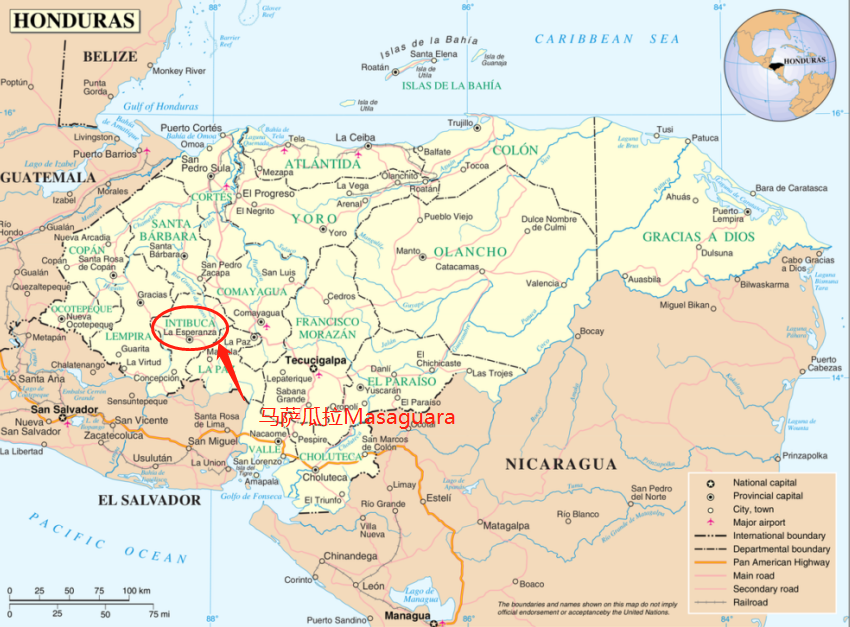
Masaguara
The Lychee Lan beans come from Masaguara, a municipality in the Intibucá department of Honduras, in the southern part of the Jesús de Otoro valley. Surrounded by mountains and hills, it is devoted mainly to coffee growers, who drive the local economy; the valley floor is given over to basic grains and livestock. As for the name: according to Mr. Alberto Membreño, the indigenous name Masaguara means "place where there are deer."
Honduran Coffee Varieties
Caturra is a natural mutation of Bourbon, discovered in Brazil in 1937. The plant is more compact than Bourbon. Inheriting Bourbon's lineage, it has relatively weak disease resistance but higher yields. Although discovered in Brazil, Caturra is not well suited to growing there and was never widely planted; instead it became popular in Central and South American countries such as Colombia, Costa Rica, Nicaragua, and Honduras. For Caturra, the higher the altitude, the better the quality — but the lower the yield.
At the roaster, FrontStreet Coffee can clearly feel Caturra's obvious acidic aromas and overall brightness at a light roast. Handled well, its sweetness performs very nicely, but the body is relatively lower than Bourbon's and the flavor cleanliness somewhat lacking. Caturra is typically a red-fruiting variety, but in a few rare areas there are yellow Caturras, such as the very few grown in Hawaii.
Catuai is an artificial hybrid of Caturra and Mundo Novo, with good resistance to natural stresses — especially wind and rain. Catuai trees are relatively low-growing, and their fruit attaches more firmly than on other varieties, making it harder to pick. The fruit comes in both red and yellow forms.
Honduran Coffee Bean Processing Method
Barrel fermentation borrows from winemaking. In wine, moderate oxidation through the barrel stabilizes the wine's structure and incorporates the barrel's aromas; it plays a similar role in coffee fermentation.
The barrel lets very small amounts of air pass through its walls, causing moderate oxidation of the beans. The right amount of oxygen also accelerates fermentation, smoothing the tannins while gradually transforming fresh fruit aromas into rich, complex mature wine notes. The wood's density ensures good waterproofing and storage safety. The barrel also contains tannins which, during the time the green beans spend inside, penetrate the beans and give the coffee layered complexity and rich wine aromas.

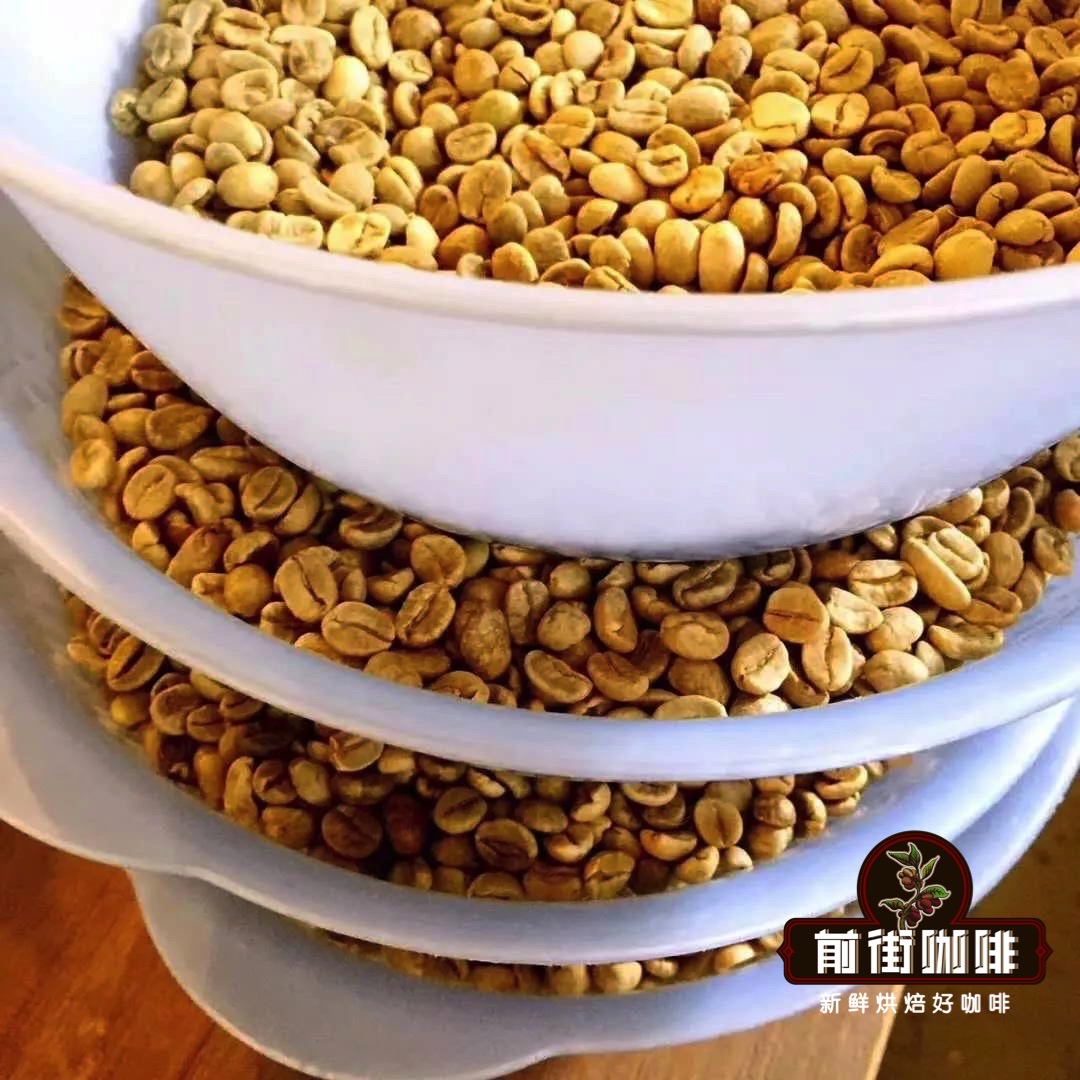
This refined washed, brandy barrel-fermented Lychee Lan starts with freshly picked cherries put through refined washing, then rests in brandy oak barrels for low-temperature fermentation of 30-40 days (around 15-20°C) so the green beans absorb the barrel's flavors, and is finally shade-dried.
After brandy barrel fermentation, the beans carry soft lychee and honey sweetness, interwoven with full-bodied brandy aromas and oak fragrances.

Roasting Recommendations
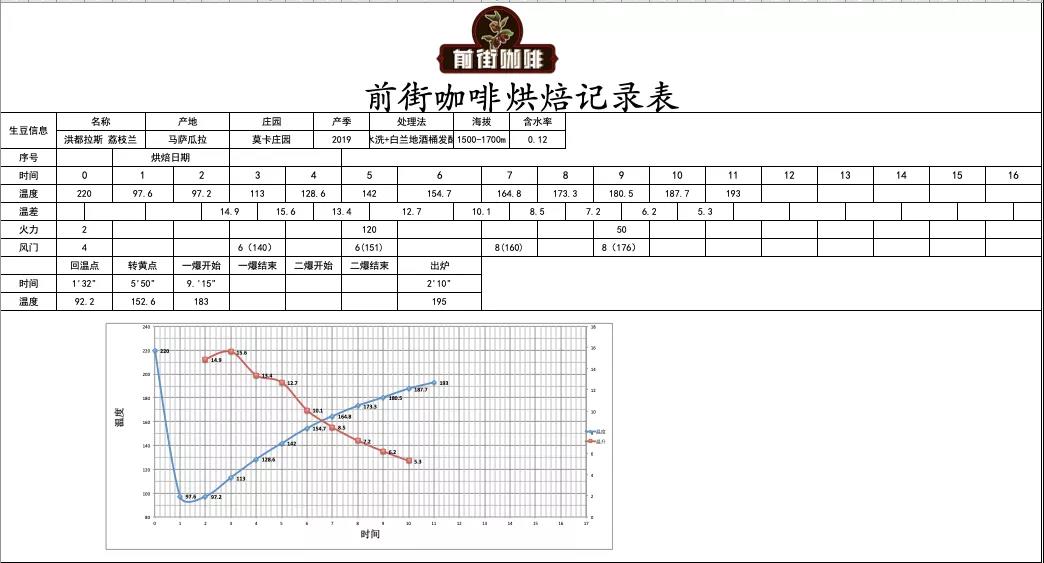
This FrontStreet Coffee Honduran bean has a distinct creamy aroma. To showcase its character, our roasters built two roast curves for comparison.
[Curve One] Bean drop-in temperature: 220°C, yellowing point: 6'30" at 151.6°C, first crack: 9'53" at 183°C, development after first crack: 1'40", discharged at 196°C.
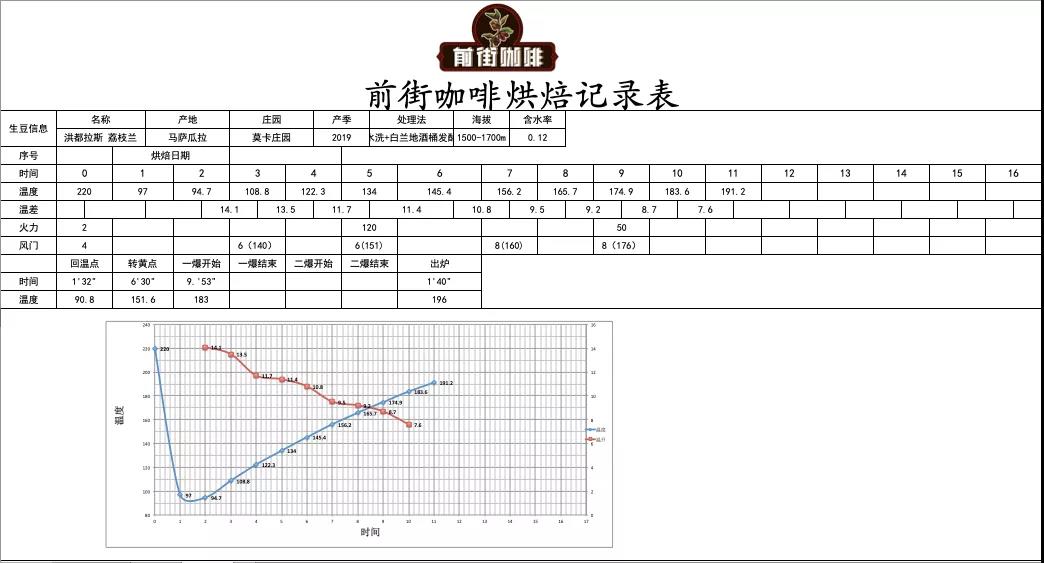
[Curve Two] Bean drop-in temperature: 220°C, yellowing point: 5'50" at 152.6°C, first crack: 9'15" at 183°C, development after first crack: 2'10", discharged at 195°C.
Cupping Flavors
[Curve One] Flavors: floral, berries, dark chocolate, honey, lychee. The palate shows distinct berry acidity, with subtle wine aromas emerging as the cup cools during slurping.
[Curve Two] Flavors: cream, dark chocolate, honey, lychee, brandy. The palate is fuller with obvious sweetness, and distinct wine flavors emerge as the temperature changes.
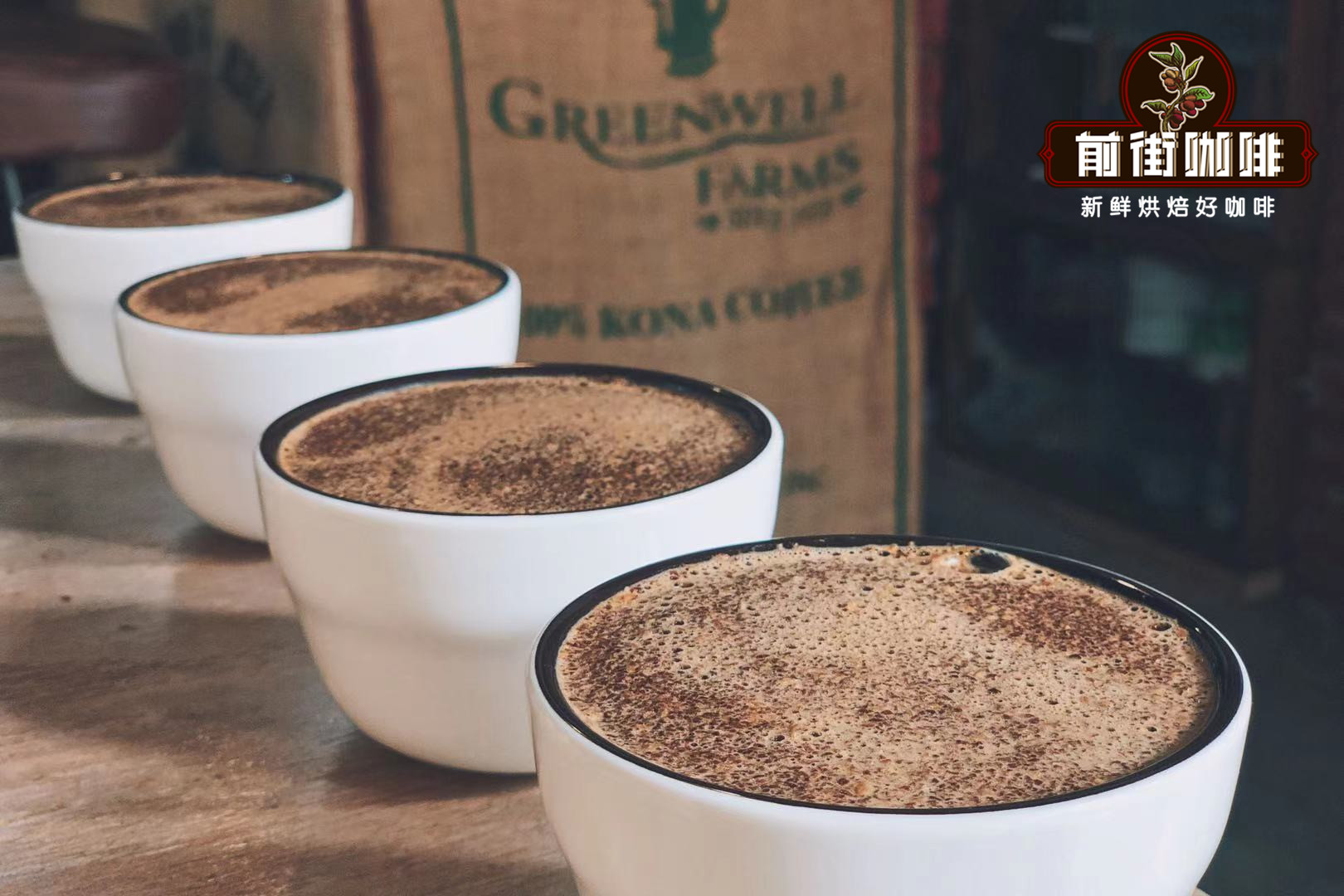
Brewing Flavors
FrontStreet Coffee's brewing parameters: Hario V60 dripper, 90°C water, 1:15 coffee-to-water ratio, grind size fine sugar (80% pass-through on the China standard #20 sieve).
Brewing method: segmented extraction. Pour 30g of water for a 30-second bloom, then pour in small circles to 125g and pause. When the water level drops and the coffee bed is about to be exposed, pour again to 225g and stop. When the bed is about to be exposed once more, remove the dripper (timing starts from the bloom). Extraction time: 2'00".
FrontStreet Coffee kept the parameters and technique consistent when brewing the two curves.

[Curve One] Entry shows berries, florals, and honey, gradually developing brandy wine aromas and creamy flavors as the temperature changes. Hot, the berry acidity is obvious but carries a green astringency.
[Curve Two] Entry shows lychee, brandy, dark chocolate, and cream; as the temperature changes, the wine notes and dark chocolate become distinct. The mouthfeel is full-bodied with an obvious sweet aftertaste.
Comparing the two curves of the Honduras Lychee Lan: although Curve One has decent sweetness and berry aromas with bright acidity on entry, its cleanliness is poorer with astringency and an insufficient aftertaste. The obvious fruit acidity shows the bean's wine aromas are not fully developed — proof that this bean is not suited to light, fast roasting.

Curve Two, however, outperforms Curve One in wine flavors and sweetness, with distinct flavors and a thick, smooth mouthfeel. From entry to aftertaste, the wine aromas and dark chocolate are clear, with some honey sweetness.
Because Curve One came out fruit-forward and green-astringent with the bean's character underdeveloped, FrontStreet Coffee's roaster extended the development time in Curve Two to build more flavor, making the bean's overall performance far more balanced.
FrontStreet Coffee Recommendation
If you're new to pour-over and ask a seasoned hand to recommend a practical, easy-to-use, good-looking dripper, odds are they'll point you to the V60. It was designed by Hario, the Tokyo glassware maker founded in 1921 that originally built heatproof laboratory glass — the glass server that so often accompanies pour-over coffee is one of its best-known products. Hario redesigned the V60's prototype in 2004 into the form we know today, naming it for its distinctive 60° cone angle and "V" shape, and launched it the following year. The cone and 60° angle force the water to travel to the center before dripping through, extending the contact between water and grounds so aroma and flavor extract fully, while the signature single large hole leaves the flow rate almost entirely to the brewer's control.
Before the new millennium, coffee was mostly roasted medium-dark, and brewing prized body, high sweetness, and caramelized notes — chocolate, maple, nuts, vanilla — traits the siphon pot and cloth filters showed off beautifully; FrontStreet Coffee's Blue Mountain No. 1 and PWN Golden Mandheling were the era's favorite specialty beans. With the third wave, drinkers began chasing origin character — Ethiopia's white florals, Kenya's berry acidity — and roasting turned lighter. The V60's fast extraction gives coffee a more three-dimensional aroma and livelier acidity, which is why floral-fruity beans suit it so well: FrontStreet Coffee's Idido (Yirgacheffe), the tropical-fruit-forward Hirsi "Huakui," the Geisha-like Strawberry Candy, and the raisin-scented Mozart.
For light roasts, a great starting point is FrontStreet Coffee's Yirgacheffe Idido — often the first stop for newcomers to specialty coffee, with vivid citrus, berries, and florals plus a green-tea-like sweetness. Good Yirgacheffe acidity is gentle and bright, like the natural sweetness of fruit rather than a sharp sourness, and the natural-processed Ethiopia Hirsi is even more striking: strawberry, passion fruit, jackfruit, even lychee aromas, an obvious sweetness with almost no bitterness, and a juicy entry that many describe as "the coffee that doesn't taste like coffee."
If you prefer a medium-dark, low-acid cup, FrontStreet Coffee's PWN Indonesian Golden Mandheling is a great match for the V60's versatility as well: deeply aromatic with herbs and dark chocolate, a faint earthiness, and a long, mellow body for those who like their coffee strong and not sour. Pair it with a 1:15 ratio and segmented pouring, and it will reward you with a thick, sweet, caramel-laden cup.
Important Notice :
FrontStreet Coffee is a long-established specialty coffee roaster in Guangzhou China, selling freshly roasted beans from its own farm in Yunnan as well as dozens of carefully selected single-origin beans from around the world for both pour-over and espresso. The products deliver consistently excellent quality and great value, with shipping within 24 hours. Guangzhou's FrontStreet Coffee shop is recommended by many coffee lovers, and the beans are now available online at the Tmall 。
FrontStreet Coffee has moved to a new address:
FrontStreet Coffee Address: 315,Donghua East Road,GuangZhou
Tel:020 38364473
 Scan and follow the En Gafei WeChat official account. Please indicate that the reprint comes from "En Gafei".