What are the best Kenyan coffee brands, how to brew Kenyan coffee, and how much do Kenyan coffee beans cost
Kenya Coffee Bean - Kamoini Refined 72-Hour Washed
Country: Kenya
Region: Kirinyaga
Altitude: 1700~1800 meters
Soil: Volcanic soil
Varieties: SL-28, SL-34
Processing: 72-hour washed
01 | Processing Factory Introduction
The Kiangombe factory is located 2 kilometers from the town of Kimunye in Kirinyaga. It was named by the Kikuyu people, Kenya's largest ethnic group, because a large cattle market once stood in this village.
The Kiangombe factory was built in 1998 and belongs to the Karabe Cooperative Society. The entire cooperative has over 6,000 members, with more than 600 small farmers registered at the Kiangombe factory.
The water for washing at the Kiangombe factory comes from the Mukengeria River, and the beans are dried on raised beds for about 20 days, depending on weather conditions.
02 | Kenya Coffee Bean Growing Region Introduction
Kirinyaga
The Kirinyaga region lies on the slopes of Mount Kenya, near Nyeri. It is renowned for coffee with intense flavors, rich layers, and a solid mouthfeel, and it is recognized alongside Nyeri as one of the two best coffee-growing regions in Kenya. Most producers here are small farmers who belong to cooperatives. The cooperatives play a unifying role by providing washing stations, where farmers deliver their coffee cherries for processing.
"Kirinyaga" is the name of the highest peak of Mount Kenya, the country's highest mountain and Africa's second-highest, and it is also the local name for Mount Kenya itself.
Europeans are said to have called it "Mount Kenya" because they could not properly imitate the local pronunciation of "kirinyaga."
Kirinyaga comes from the Kikuyu tribe and means "white mountain," considered the dwelling place of the supreme deity. The Kikuyu are Kenya's most populous ethnic group, accounting for one-fifth of the total population.
03 | Green Bean Analysis
SL-28 and SL-34 are two of the most esteemed varieties developed by Kenya's Scott Laboratories in the 1930s. Although Scott Laboratories no longer exists, it is now the National Agricultural Laboratories, part of the Kenya Agricultural and Livestock Research Organization. Both varieties are Bourbon derivatives, though from different lineages. SL-28 was developed from drought-resistant varieties originally planted in Tanganyika (part of modern Tanzania) and is generally considered the highest quality, though less high-yielding than other commercial Arabica varieties. SL-34 is a variant originally discovered near Kabete that performs well at lower altitudes. Both SL varieties show bronze-colored young leaves.
04 | Kenya Coffee Bean Processing Method Introduction
The Kenyan washed processing method involves repeated cycles of fermentation followed by washing. The best-quality coffee cherries are selected on the day of harvest for pulping and fermentation, which lasts 24 hours. After 24 hours they are washed with clean river water, then fermented for another 24 hours in clean river water, and washed again. This cycle is repeated 3 times, totaling 72 hours, which is why it is called the Kenyan 72-hour fermented washed process, or K72 for short. This method lets the beans ferment for a long time at low temperatures, producing brighter, cleaner, yet fuller flavors!
05 | Kenya Coffee Bean Roasting Analysis
This rich Kenyan coffee bean, grown at high altitude, has relatively hard beans. Start with a high temperature rise, with the yellowing point at around 5 minutes, then reduce heat to enter the Maillard reaction. When the temperature reaches 168°C, reduce heat again to prolong the Maillard reaction. When the first crack begins, the endothermic reaction is strong, so it is best to hold the heat at this stage to prevent stalling. Spending more time on first-crack development helps reduce acidity and develop flavor.
Roaster: Yangjia 600g semi-direct flame
Preheat the roaster to 200°C before loading, with the damper set to 3. Ignite after 30 seconds, adjust heat to 140, keep the damper unchanged. The return temperature point is at 1'28"; hold the heat. Yellowing at 4'50", the grassy aroma disappears, entering the dehydration stage; reduce heat to 110, open the damper to 4.
At 7' dehydration is complete; reduce heat to 80. At 7'30" wrinkles and black spots appear on the bean surface, the toast aroma turns to coffee aroma, a prelude to first crack, so listen carefully for the sound. First crack starts at 8'10", damper fully opened to 5. Post-first-crack development time is 2 minutes; when the temperature reaches 188°C, reduce heat to 50, flatten the rise, and unload at 193°C.
This is a classic Kenyan coffee bean, with ripe tomato and floral notes in the wet aroma. Cherry tomato and apricot enter on the palate, with bright acidity and a clean mouthfeel. Medium body, prominent almond notes in the mid-section, a juicy texture, berry fruit and caramel sweetness in the aftertaste, and a hint of orange aroma.
06 | Kenya Coffee Bean Brewing Data
Dripper: V60
Water-to-coffee ratio: 1:15
Grind size: Small Fuji 3.5
Water temperature: 91°C
Brewing method:
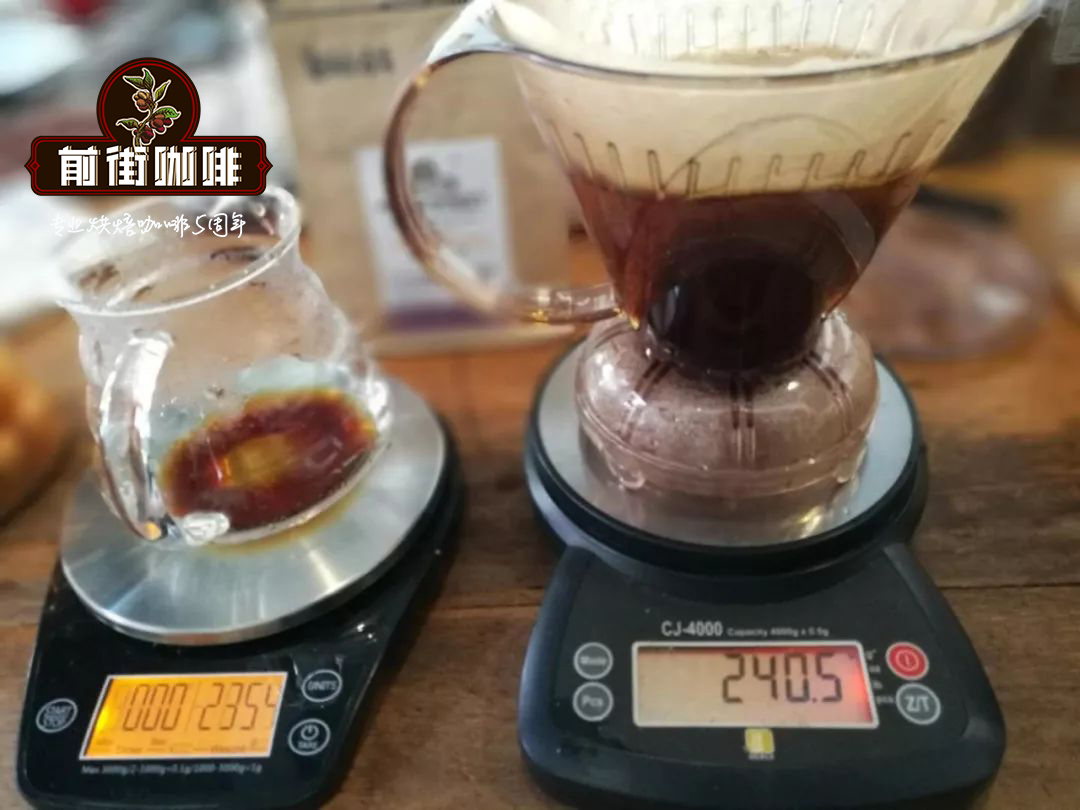
Use 30g water to bloom for 30s, slowly pour with a small water flow to 120g for the first segment, then increase the flow slightly to brew slowly to 225g.
Total time: 2'15"
Sweetness: ☆☆
Acidity: ☆☆
Bitterness: ☆
Body: ☆☆
Aftertaste: ☆☆
Other drip brewing recommendations:
French press: recommended grind size 3.5-4 / water temperature 90°C
AeroPress: recommended grind size 2.5, water temperature 88°C
Kenya Coffee Bean Brand Recommendations
Kenyan beans are at their best when they are clean, juicy, and brightly acidic, and FrontStreet Coffee roasts a Kenyan single origin that captures that character exactly. FrontStreet Kenya Cherry Tomato comes from the Thika region in Kenya, grown at 1,550-1,750 meters from the classic SL28 and SL34 varieties and processed with Kenya's signature 72-hour double washed fermentation. The result is a vivid cherry tomato and smoked plum acidity, full and juice-like, with pear and black plum in the mid-palate and a clean, lingering finish of brown sugar and green tea.
If you enjoy that washed clarity but want a softer, more floral cup, FrontStreet Gedeb Cooperative is a fine companion, with jasmine, bright citrus, and a green-tea-and-honey finish. For a rounder, more classic profile, FrontStreet Jamaica Blue Mountain No. 1 is washed and balanced, offering hazelnut, cream, chocolate, and caramel with no single note overpowering the others.
FrontStreet Coffee Recommendation
FrontStreet Coffee's Kenyan single origin is the natural place to start for anyone drawn to bright, structured acidity. FrontStreet Kenya Cherry Tomato is grown at 1,550-1,750 meters from SL28 and SL34, given a 72-hour double washed fermentation, and lightly roasted to preserve its cherry tomato, smoked plum, and black plum flavors with a long brown-sugar and green-tea finish.
Pair it with FrontStreet Gedeb Cooperative for a jasmine-and-citrus washed Yirgacheffe, or FrontStreet Jamaica Blue Mountain No. 1 for a smooth, balanced cup of hazelnut, cream, chocolate, and caramel.
Important Notice :
FrontStreet Coffee is a long-established specialty coffee roaster in Guangzhou China, selling freshly roasted beans from its own farm in Yunnan as well as dozens of carefully selected single-origin beans from around the world for both pour-over and espresso. The products deliver consistently excellent quality and great value, with shipping within 24 hours. Guangzhou's FrontStreet Coffee shop is recommended by many coffee lovers, and the beans are now available online at the Tmall 。
FrontStreet Coffee has moved to a new address:
FrontStreet Coffee Address: 315,Donghua East Road,GuangZhou
Tel:020 38364473
 Scan and follow the En Gafei WeChat official account. Please indicate that the reprint comes from "En Gafei".