Flavor Profile and Taste Characteristics of Cerrado Coffee Beans from Brazil | Pour-Over Brewing Techniques and Parameter Recommendations
Brazil Coffee: From Quantity to Quality

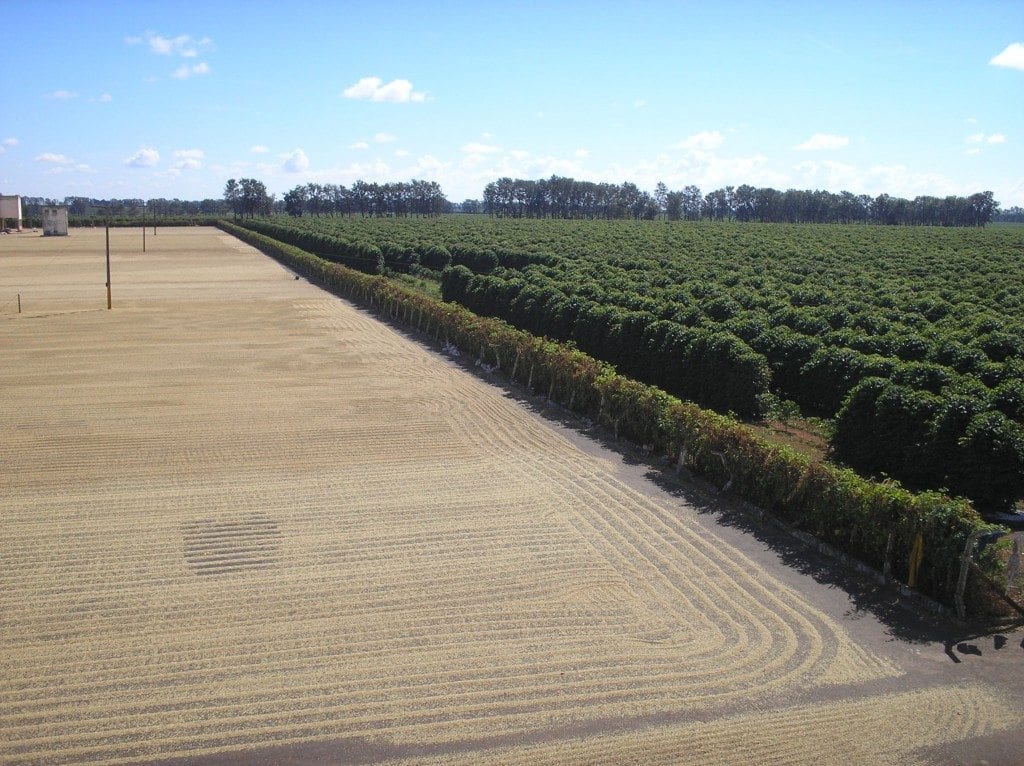
Which country produces the most coffee? FrontStreet Coffee has no doubt: Brazil. With an annual total output of about 2.7 million metric tons, it accounts for one-third of the world's coffee bean production. Yet Brazil's geography is not especially suited to coffee. Its topography is monotonous and the climate extremely dry, and the altitude is generally low - Brazilian plantations average about 1,000 meters. In the past, to raise output, Brazil often used semi-mechanized machines to strip ripe and unripe cherries together, producing low-quality green beans. But once coffee became Brazil's main cash crop, the country staged a comeback through soil improvement and variety development.
Brazil's Major Coffee Growing Regions
Brazilian coffee today is concentrated in the central and southern regions, spread across 7 states and about 14 producing areas: South Minas, Minas Mountains, Chapada de Minas, Matas de Minas, Mogiana, Centro-Oeste de São Paulo, Montanhas do Espírito Santo, Conilon Capixaba, Cerrado, Planalto da Bahia, Atlantic Baiano, Paraná, Rondônia, and Cerrado. Among them, the most representative is unquestionably Cerrado. The South Minas and Cerrado regions have contributed immeasurably to the rise of Brazilian coffee.
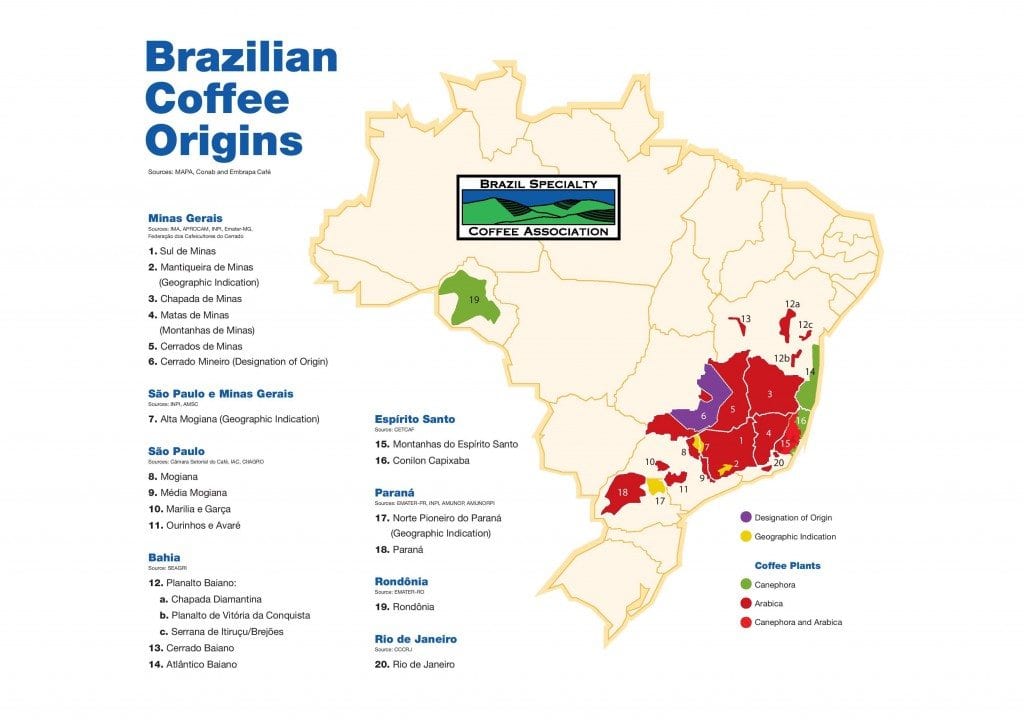
The Cerrado Region: Brazil's Premium Coffee Heartland
Cerrado lies in the mountainous southern part of the "Cerrado grassland climate zone," which spans eight provinces of central Brazil over about two million square kilometers. This Cerrado grassland is South America's largest tropical savanna (or tropical steppe), with rich native flora and fauna, and its climate and ecology differ sharply from the Amazon basin to the north.
Coffee in Cerrado is mostly grown at altitudes around 1,000 meters, with fertile, mineral-rich soil. Local beans are mostly processed washed or semi-washed, giving cleaner flavor profiles with a distinctive genmaicha tea note in the finish, sometimes with nutty sweetness or creamy aromas.

The so-called Cerrado Coffee Region refers to where the great savanna extends into the plateau regions of Minas province, at 850-1,200 meters. This distinguishes it from South Minas (Sul de Minas), also in Minas province. The flat, open savanna terrain suits large estates, and the distinct wet and dry seasons and relatively cool plateau climate let the cherries ripen more uniformly. That is why Cerrado stands out among Brazil's many producing areas and can be considered a quality choice for Brazilian beans.
FrontStreet Coffee's Brazilian Selections
As a quality coffee harvester, FrontStreet Coffee could hardly overlook this region. The FrontStreet Brazil Bourbon beans come from Brazil's Cerrado region. This coffee has a balanced flavor and a very typical Brazilian style: prominent nutty notes, distinct chocolate, and low acidity. Like many full-bodied coffees, it is roasted medium to reduce unpleasant acidity while enhancing body, making the whole cup smooth.
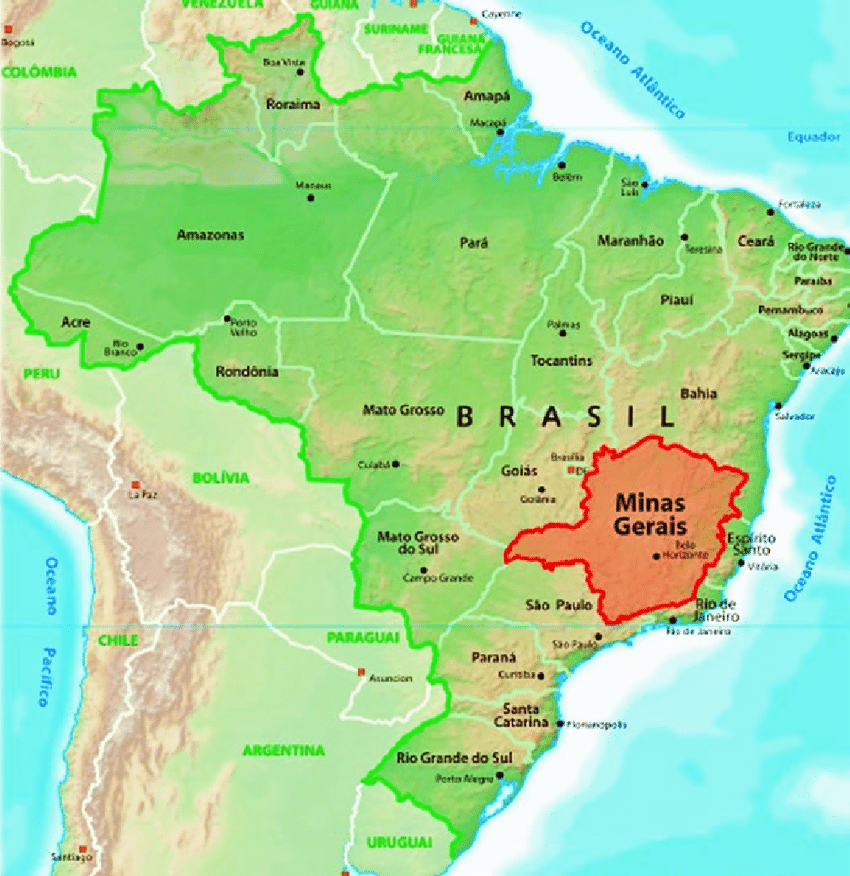
South Minas has dry winters and abundant summer rain; the distinct wet and dry seasons support both yield and quality. The only drawback is excess iron in the soil and a lack of needed minerals such as nitrogen and calcium. Brazilian authorities have invested heavily in technology to tailor soil mineral improvements for farmers and have built large-scale irrigation systems to overcome dryness and poor soil. Coffee from Minas Gerais can reach almost 50% of Brazil's total production, making it the main source of Brazilian coffee.
Brazil's Coffee Varieties
In 1927, the first coffee variety introduced to Brazil was Typica. Because Typica yields poorly and resists disease very badly, it was uneconomical and was eliminated by Brazilian growers. By 1869, Brazil had introduced Bourbon coffee from Bourbon Island or Yemen, which quickly replaced Typica thanks to its higher productivity. In 1935, a mutation of Bourbon was discovered in Brazil and named Catuai, but its growth quality at the time kept it from becoming Brazil's main variety. Today Brazil's main varieties are Bourbon, Catuai, Mundo Novo, and Maragogype.
Queen's Farm: Premium Yellow Bourbon
Take FrontStreet Coffee's Brazil Yellow Bourbon as an example. This time FrontStreet Coffee selected Yellow Bourbon beans from Queen's Farm in the Mogiana region of São Paulo state. Queen's Farm has 280 hectares of coffee, of which 200 hectares are Yellow Bourbon. Thanks to the advantages of terrain and climate, it has become a unique site for Brazilian specialty coffee.

FrontStreet Coffee: Brazil · Queen's Farm Coffee Beans
Region: Mogiana
Variety: Yellow Bourbon
Processing: Natural
Altitude: 1400-1950m
The hallmark of this FrontStreet Brazil Queen's Farm Yellow Bourbon is a very distinct sweet aftertaste. It is roasted medium to enhance the nutty aroma and increase body. As it cools, this FrontStreet Brazil coffee shows slight acidity with a hint of fermented fruit.
The Rise of Brazilian Specialty Coffee
After 2000, with the international auction held by the COE (Cup of Excellence) cupping competition, farmers had an incentive to work toward high-quality coffee. Beans from the higher-altitude south received excellent praise, especially from farms around the Minas highlands. Their quality leads among Brazilian beans, and their production is also the largest. Cerrado in western Minas, Matas in eastern Minas, northern Bahia, and small farms in the south - Minas has become almost synonymous with Brazilian specialty coffee.

In recent years, coffee has been precisely categorized by processing method (washed, semi-washed, semi-natural, natural). These methods have enhanced Brazilian coffee's characteristics, developing flavors, textures, and finishes quite different from traditional Brazilian coffee. Semi-natural, semi-washed, and natural processing perform best, making the coffee cleaner, lower in acidity, and more fruity, while reducing the heavy chocolate flavor. Recently, however, Brazil's weather has been harsh. Because of frost and drought, Brazil's 2022 coffee production is expected to fall significantly.
Brewing Brazilian Coffee: FrontStreet Coffee's Method
Because of the flavor and texture of FrontStreet Brazil coffee, FrontStreet Coffee uses a Kono dripper for daily store preparation. Customers often ask why. Here are a few tips for brewing Brazilian coffee.

FrontStreet Coffee Extraction Parameters: Kono dripper, 88°C water temperature, 15g coffee dose, 1:15 coffee-to-water ratio, medium-coarse grind (70% pass-through rate with Chinese standard #20 sieve)
To enhance Brazilian coffee's body, FrontStreet Coffee uses a Kono dripper. Unlike the V60, the Kono's ribs are very short and can barely drain. During brewing, air pressure compresses the upper part of the dripper and presses the filter paper tightly against the wall, much like a siphon effect. The flow slows, extending contact time between grounds and water and helping raise body. This suits medium-dark roasted beans such as FrontStreet Brazil Queen's Farm, FrontStreet Blue Mountain Coffee, and FrontStreet Golden Mandheling.

To prevent over-extraction, FrontStreet Coffee lowers the brewing water temperature to 88 degrees. At lower temperature, water molecules are less active, which reduces extraction speed. If you are interested, brew FrontStreet Brazil beans in a V60 and a Kono dripper side by side - you may feel a difference.
FrontStreet Coffee Recommendation
To follow the Cerrado thread further, FrontStreet Coffee's Brazil Cerrado Red Bourbon is a classic Brazilian single origin. A semi-washed bean, it shows creamy peanut, toasted bread, caramel, and hazelnut aromas at a medium roast, with a rounded, non-acidic body and a light bitterness. It is versatile enough for pour-over, moka pot, espresso SOE, siphon, and French press.
For something rarer, FrontStreet Coffee's Brazil Queen's Farm Yellow Bourbon comes from Mogiana, close to South Minas, where fertile red volcanic soil feeds the fruit. This rare Yellow Bourbon - a mutation of Red Bourbon - shows a cleaner fruit character with sugarcane-like freshness together with fruit and chocolate notes, whether brewed pour-over, in a moka pot, or on a home espresso machine.
Brazilian beans also anchor FrontStreet Coffee's espresso recipes. Their low acidity, balance, and approachable price make them the first choice in many blends: the crema-rich Classic Blend, the nutty Premium Blend, the balanced Black Cocoa Blend recommended by many baristas, and the shop-oriented Commercial Blend all contain Brazilian beans, which bring chocolate and cream aromas, a soft sweet-sour-bitter balance, and the stability that keeps extraction consistent.
Important Notice :
FrontStreet Coffee is a long-established specialty coffee roaster in Guangzhou China, selling freshly roasted beans from its own farm in Yunnan as well as dozens of carefully selected single-origin beans from around the world for both pour-over and espresso. The products deliver consistently excellent quality and great value, with shipping within 24 hours. Guangzhou's FrontStreet Coffee shop is recommended by many coffee lovers, and the beans are now available online at the Tmall 。
FrontStreet Coffee has moved to a new address:
FrontStreet Coffee Address: 315,Donghua East Road,GuangZhou
Tel:020 38364473
 Scan and follow the En Gafei WeChat official account. Please indicate that the reprint comes from "En Gafei".