Premium Indonesian Kopi Luwak Coffee Beans Introduction - Indonesia Civet Coffee Bean Price Worth Buying
 "Kopi Luwak" comes from the Sumatra Islands of Indonesia, where it has kept its legendary status alive through sheer rarity and uniqueness.
Sumatra is rich in Arabica coffee, and the civets that roam the island love to eat ripe, plump coffee cherries. Once those cherries pass through the civet's digestive system, fermentation sets off a remarkable transformation, yielding a mellow and unusual flavor with a long aftertaste and deep, rounded layers. That singular production process, combined with a very scarce yield, is what makes Kopi Luwak so exceptional and so precious.
How Kopi Luwak Became Famous
Dutch colonists first introduced coffee seedlings to Indonesia in the 17th century. The unique geography and mild climate of the Sumatra Islands nurtured high-quality beans. But a local wild civet species loved to eat the ripe, plump cherries, and during harvest season the plantations were raided again and again. For coffee farmers already burdened with heavy taxes, this was a serious blow, so they drove the animals away and killed large numbers of them.
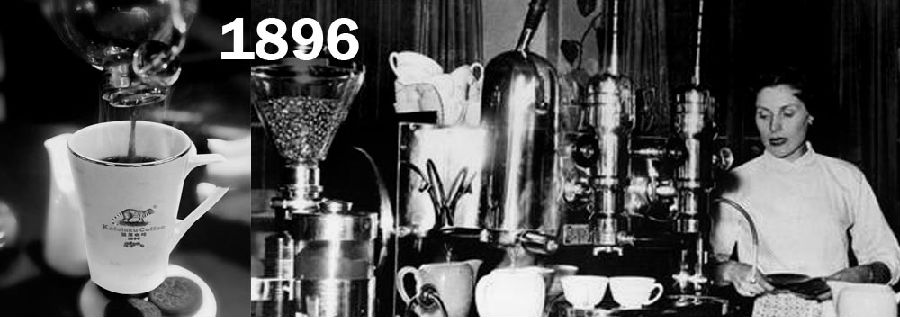
Then one day Captain Willemsen was leading his team on patrol past a farmer's house when he caught a mellow coffee aroma drifting from a distance. He rushed into the yard and found the farmer roasting beans in an iron pan. Willemsen, already anxious about being reprimanded by his superior for not harvesting enough coffee, was furious. Just as he was about to erupt, the farmer handed him a cup of black coffee, and it stopped him in his tracks.
At the first sip, Willemsen was struck by an incredible smoothness and richness, a sweet fragrance hitting his taste buds like nothing he had experienced before. When the farmer showed him the raw beans, he was stunned: they were in fact feces excreted by wild civets. It turned out that local farmers could not keep the coffee harvested from the plantations for themselves. Seeing so many beans on the ground that the civets had eaten but could not digest, they felt it was a waste, so they collected them, cleaned them thoroughly, and drank them themselves, calling the result "Kopi Luwak."
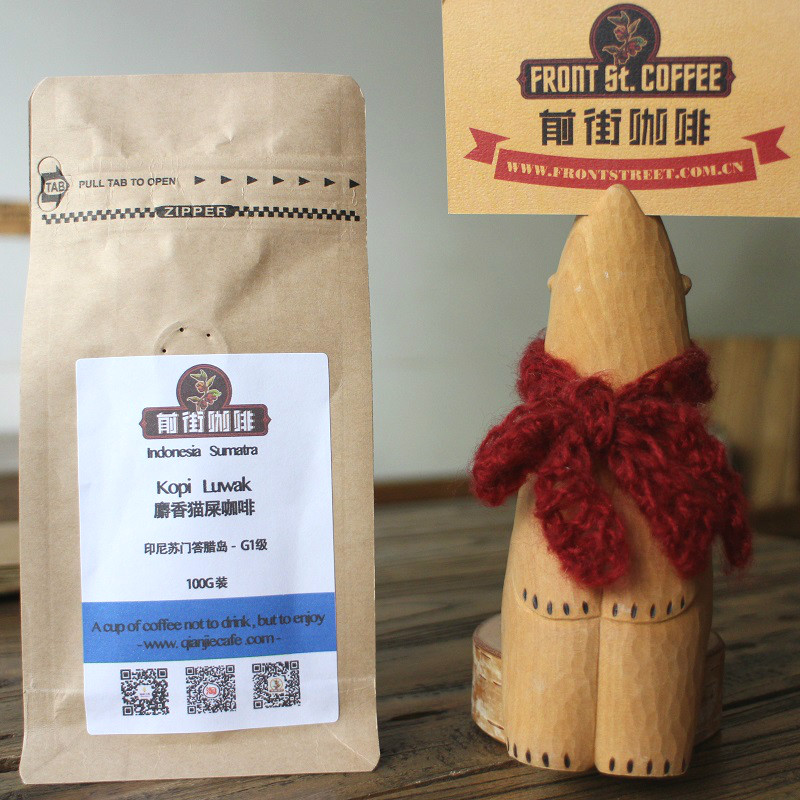
FrontStreet Coffee Indonesia Kopi Luwak
Region: Indonesia, Sumatra
Variety: Arabica
Processing Method: Civet body fermentation
Grade: G1
Civets mainly inhabit tropical rainforests and the margins of subtropical evergreen broadleaf forests in hills and mountains below 2100 meters, choosing rock caves, soil holes, or tree holes as their habitat. The coffee varieties they eat are generally dominated by Robusta, because civets are active in medium to low altitude areas, and most coffee grown there is Robusta. High-altitude Arabica Kopi Luwak is rare.
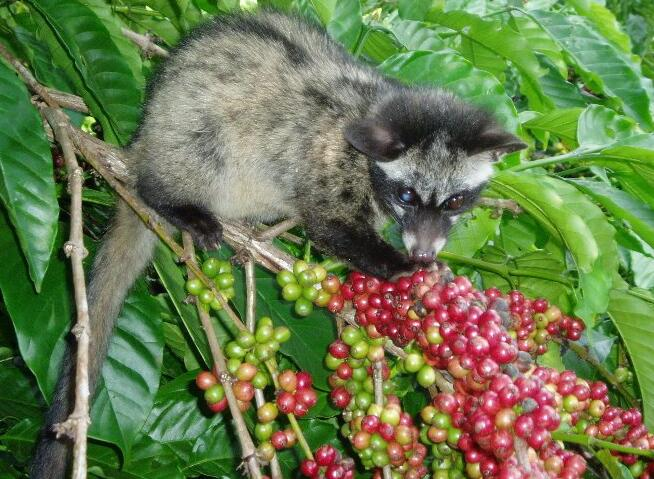
Indonesia's low-altitude Robusta beans naturally carry earthy, herbal-medicine flavors with high viscosity. Civet coffee therefore has the earthy taste of aged beans, a viscosity that approaches syrup, and a very particular aroma. If you enjoy the earthy character of Indonesian aged beans or Indian monsooned beans, you may well fall in love with civet coffee.
FrontStreet Coffee's civet coffee is pure Arabica, collected by local farmers after the feces are cleaned and the beans sorted by variety. This Indonesian Kopi Luwak is Arabica coffee, and Arabica's flavor and richness are higher than Robusta's. Generally, Indonesian Kopi Luwak undergoes animal body fermentation, giving it a flavor that carries special herbal aromas and excellent body. That is why Kopi Luwak became a favorite among the wealthy, and why its price is so high. Expensive as it is, the bean quality is, relatively speaking, poor.
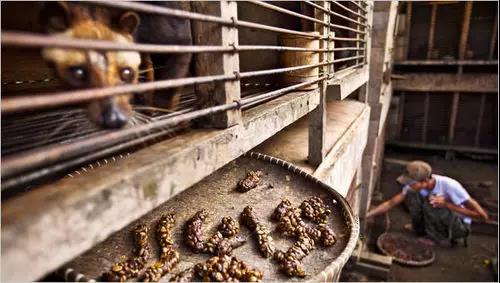
In-Body Fermentation
Civet body fermentation uses the lactic acid bacteria and digestive fluids of the civet's digestive tract to strip away the pulp and pectin clinging to the original bean surface. The beans are finally excreted with the feces, and farmers then head up the mountains at dawn to collect the civet's droppings, cleaning out the precious in-body fermented beans one by one. People believe that civets select the most mature, flawless cherries to eat, which is taken as a guarantee of quality.
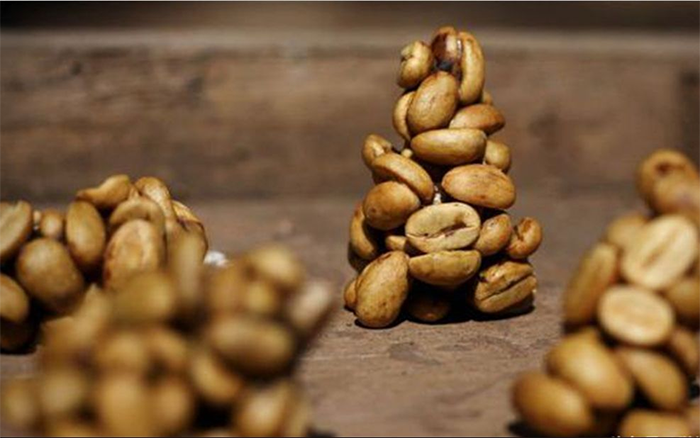
Civets come out at night and rely on sight and smell, specifically choosing the reddest cherries to eat while ignoring half-ripe, raw beans. As a result, the excreted beans are all of superior quality, with no immature or astringent beans among them. These Kopi Luwak beans are cleaned and then roasted, which kills all bacteria, so there is no fecal contamination problem.
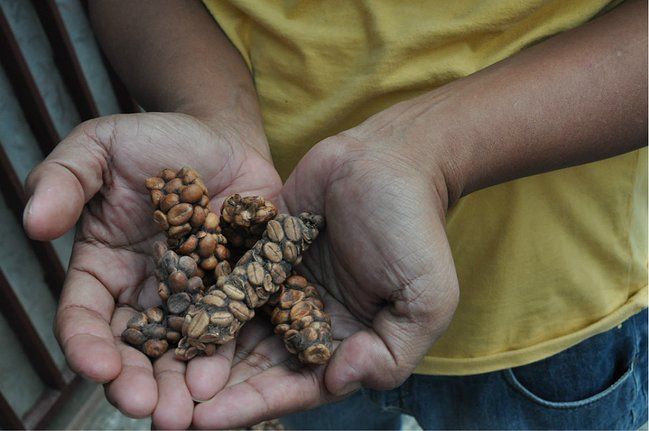
In-body fermented coffee is not limited to Kopi Luwak; there is also South American wattled jacana coffee, Indian monkey coffee, and Sri Lankan elephant coffee.
FrontStreet Coffee's Kopi Luwak is made from Arabica beans, and when brewed, the coffee has a smooth mouthfeel with herbal and nutty flavors.

How Should Kopi Luwak Be Brewed?
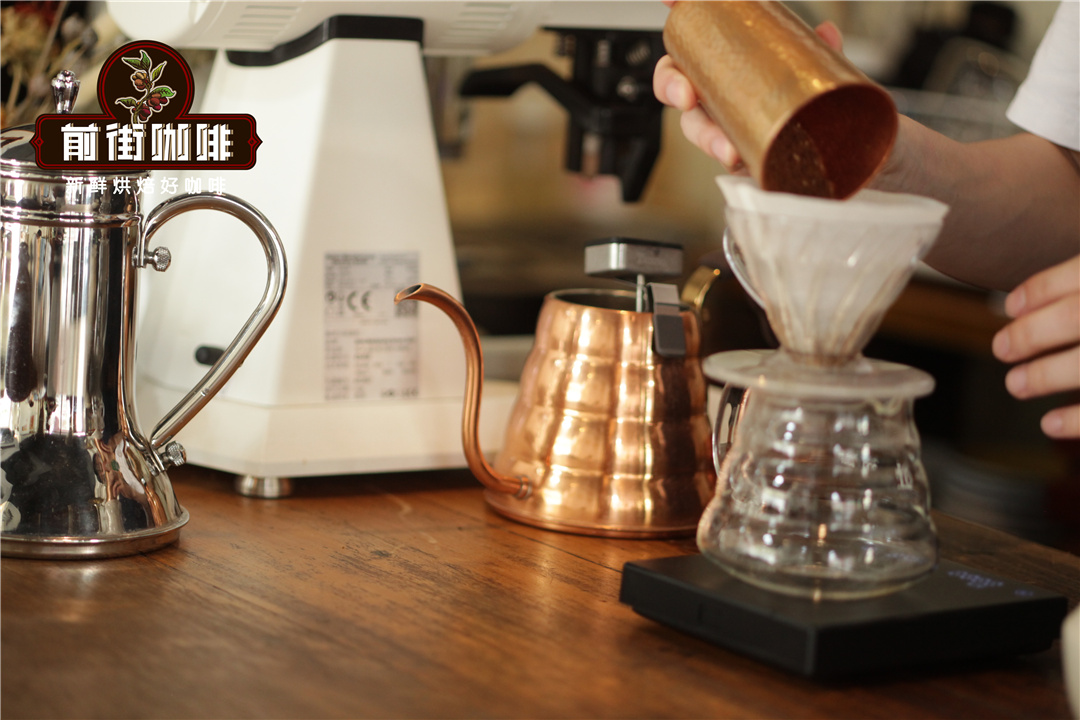
FrontStreet Coffee's Kopi Luwak beans are medium-dark roasted to best express the coffee's herbal flavors, so we brew them in a KONO dripper.
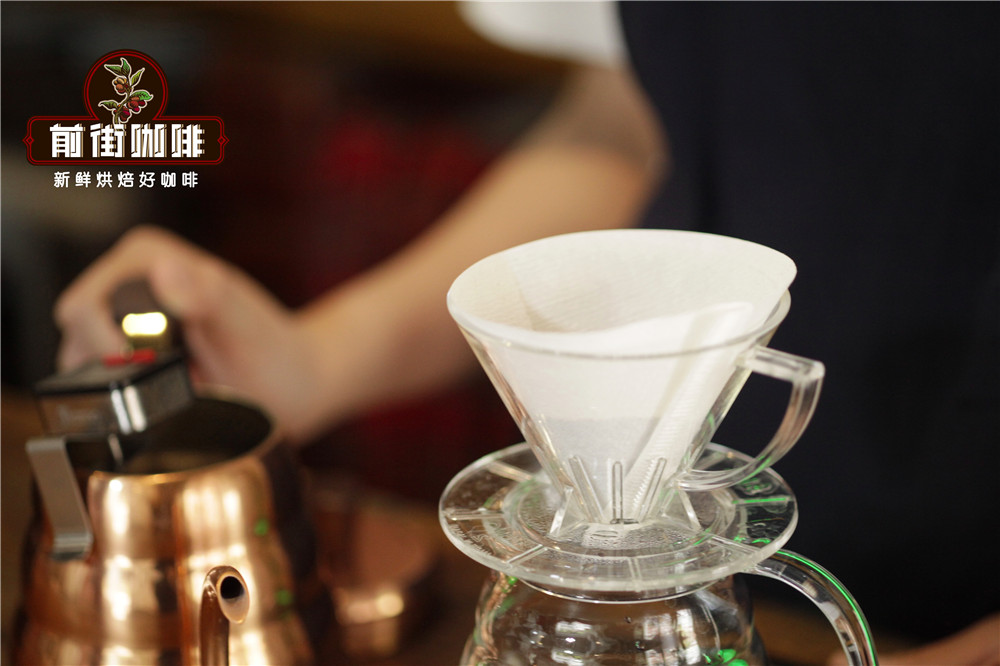
The KONO dripper delivers a more rounded and richer mouthfeel and expresses flavor more directly. Its exhaust effect, however, is relatively poor, because its ribs are straight and extend only one-quarter of the dripper's depth; above that quarter, the surface seals against the cup wall. We chose the KONO precisely because its only exhaust area is those quarter-length ribs. Once the water level passes the rib zone, the water volume keeps rising and creates pressure through its own weight. Since the outlet is fairly small, contact time between coffee particles and water is extended. As the water flow drives the process, soluble substances are extracted more effectively, generally achieving the high richness our customers expect.
To bring out Kopi Luwak's herbal flavors and rich mouthfeel, FrontStreet Coffee uses a medium-dark roast for these beans.
Medium-dark roasted beans generally have a higher dehydration rate and therefore weigh less. During brewing, the grounds do not fully sink; they are absorbed the moment water is first poured. Because degassing is vigorous, bubbles surround the grounds and create channels. The fresher the beans, the longer those channels are maintained, and the faster the water level drops. I generally use a coarse water flow, circling slowly.

Brewing Parameters
Water Temperature: 86-87°C
Grind Size: Granulated sugar
Coffee-to-Water Ratio: 1:15 (15g coffee to 225ml water)

Brewing Demonstration
- First pour 30g of water for a 25-second bloom.
- After the bloom, pour the second stage until the scale reads 125g. Once poured, wait for the water level to drop halfway.
- When the coffee bed is about to be exposed, pour the third stage until the scale reads 225g. Stop extraction when the last 5g remains, with a total time of about 1'50"-2'00".
Kopi Luwak Flavor Description: Herbal, nutty, smooth mouthfeel, rich body.
FrontStreet Coffee's Kopi Luwak Roasting Recommendations
Roasting Machine: Yangjia 800N. Preheat the drum to 200°C, then reduce to 160°C for loading. Open the air damper to 3 and set heat to 130. Return temperature point at 1'28", maintain heat. Turn yellow at 5'40" as the grass aroma disappears, entering the dehydration stage. Increase heat to 140 and open the damper to 4. The surface develops wrinkles and the toast aroma turns to coffee aroma, signaling the first crack prelude. Reduce heat to 100, open the damper to 5, and listen carefully for the first crack. First crack starts at 9'15"; open the damper fully to 5. Post-first-crack development time: 4'25", unloading at 203°C.

Why Does FrontStreet Coffee Choose Kopi Luwak?
After reading about the brewing process, some might wonder why FrontStreet Coffee would choose such a cruelly produced coffee.
FrontStreet Coffee believes there is nothing wrong with Kopi Luwak's natural formation. The civet uses its nose to identify ripe cherries, much as Ethiopian red cherries are also harvested at full maturity. Both reach the same goal by different means.
The origin story of Kopi Luwak has been exploited as a gimmick, and most of it now comes from civets kept in cages.
Those who cage civets force them to eat coffee berries regardless of ripeness, purely to increase Kopi Luwak output, and that is the source of the cruel practices. That no longer falls within the scope of coffee we are discussing.

FrontStreet Coffee's Alternative Recommendations
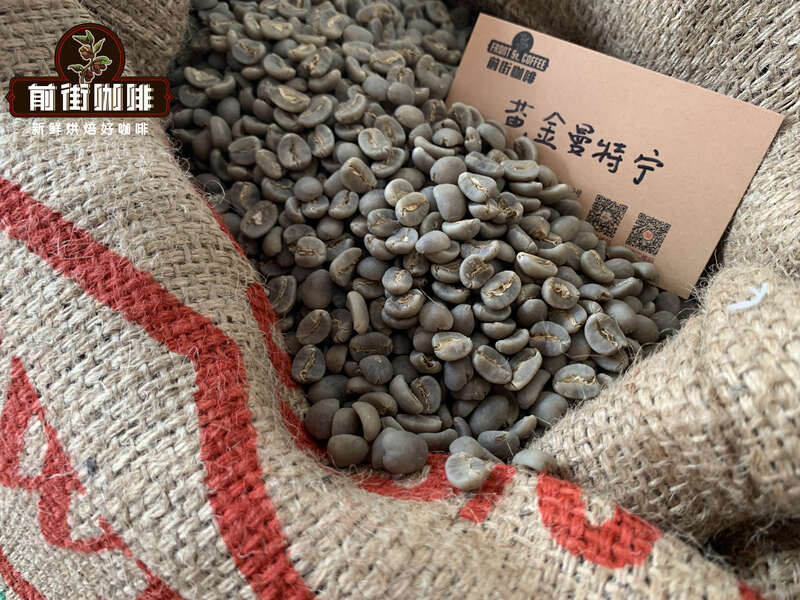
Given the scarcity and the high price, FrontStreet Coffee does not recommend that everyone drink Kopi Luwak. Authentic Kopi Luwak has excellent flavor, but coffee from other producing countries is outstanding too. For those who love floral flavors, FrontStreet Coffee recommends Panama Geisha Coffee, one of the world's most expensive coffees. For those who prefer fresh, acidic coffee, FrontStreet Coffee recommends Ethiopia Flower Queen Coffee Beans, with notes of black tea and berries. For those who like balanced nutty caramel flavors, meaning coffee that is neither acidic nor bitter, FrontStreet Coffee recommends Brazil Coffee Beans. And if you still love the solid, rich mouthfeel of Indonesian coffee, FrontStreet Coffee suggests the highest grade FrontStreet Coffee Golden Mandheling, which undergoes multiple hand-sortings to minimize defects, resulting in a clearer aroma and a better aftertaste.
FrontStreet Coffee Recommendation
If the earthy depth of Kopi Luwak is what draws you in, the most direct way to enjoy that Sumatran character is FrontStreet Indonesian Wet-Hulled Mandheling. Grown around Lake Toba in the Lintong region and wet-hulled in the traditional Giling Basah style, it is medium-dark roasted to a low-acid, full-bodied cup with caramel, dark chocolate, and toasted-bread aromas and a long, sweet finish.
For a more refined take on the same profile, consider FrontStreet PWN Golden Mandheling. PWN screens its lots strictly for density, size, shape, and color, then sorts out defects so the beans stay whole, even, and translucent, giving a cleaner cup with sandalwood, herbal, spice, roasted hazelnut, caramel, and dark chocolate notes.
And if you enjoy Indonesian coffee most as the base of an espresso, FrontStreet Classic Espresso Blend builds on the classic Mamba idea by pairing Mandheling with Brazil for a creamy, nutty cup and a small addition of Robusta for a rich, golden crema, making it an easy choice for lattes and mochas at home.
Important Notice :
FrontStreet Coffee is a long-established specialty coffee roaster in Guangzhou China, selling freshly roasted beans from its own farm in Yunnan as well as dozens of carefully selected single-origin beans from around the world for both pour-over and espresso. The products deliver consistently excellent quality and great value, with shipping within 24 hours. Guangzhou's FrontStreet Coffee shop is recommended by many coffee lovers, and the beans are now available online at the Tmall 。
FrontStreet Coffee has moved to a new address:
FrontStreet Coffee Address: 315,Donghua East Road,GuangZhou
Tel:020 38364473
 Scan and follow the En Gafei WeChat official account. Please indicate that the reprint comes from "En Gafei".