Aged Mandheling | Flavor Characteristics of Aged Mandheling, Unique Processing Method for Aged Coffee Beans
Aged Mandheling
FrontStreet Coffee Indonesian Aged Mandheling
Variety: Caturra, Typica, Sidikalong
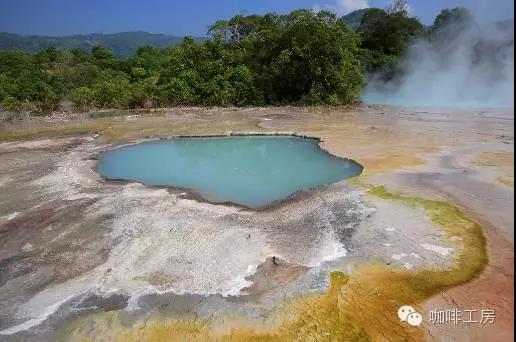
Soil: Volcanic soil
Altitude: 1500m
Processing: Aged bean processing method
01 | Origin Overview
The most famous coffee regions in Asia are the islands of the Malay Archipelago: Sumatra, Java, and Kalimantan. Among them, Sumatran Mandheling from the Indonesian island of Sumatra enjoys the highest reputation. It has two well-known expressions: Sumatran Mandheling DP Grade 1 and Premium Sumatran Mandheling. Sumatran Mandheling DP Grade 1 leaves a long aftertaste with a wild mountain fragrance, the earthy aroma of primeval forest.
Indonesia's main coffee regions are Sumatra, Java, and Sulawesi, and "Mandheling" from Sumatra is the most famous of all.
Mandheling is also called "Sumatran coffee." Coffee from Lake Tawar in the north can be labeled Aceh coffee or Lake Tawar coffee, while coffee from the Lintong and Lake Toba areas may be called Mandheling.
It comes mainly from two producing regions:
One is Aceh, which covers five origins: Lake Tawar, Gayo Mountain, the Gayo people, Aceh Mandheling, and Takengon Mandheling.
The other is North Sumatra, made up of four origins: Lake Toba, Lintong, the Mandailing people, and the Batak people.
02 | Processing Method
Mandheling's Unique Wet Hulling Method
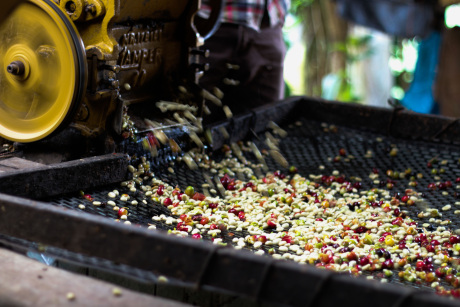
Wet hulling, known locally as "Giling Basah," is a traditional Indonesian method of processing coffee. Judged by name alone it sounds similar to wet processing, or the washed process, but the cupping flavors of the two are entirely different. Coffee processed by wet hulling usually turns out full-bodied and intense, with a character all its own.
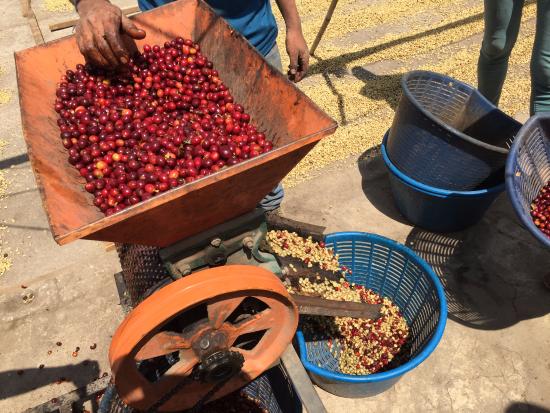
Wet Hulling Processing Steps
1. Remove the skin and pulp, keeping the parchment and mucilage
2. Ferment in water tanks
3. Wash off the mucilage
4. Sun-dry with the parchment for 2-3 days until moisture content reaches 20-24%
5. Hull off the parchment
6. Dry the green beans until moisture content reaches 12-13%
7. Prepare for export
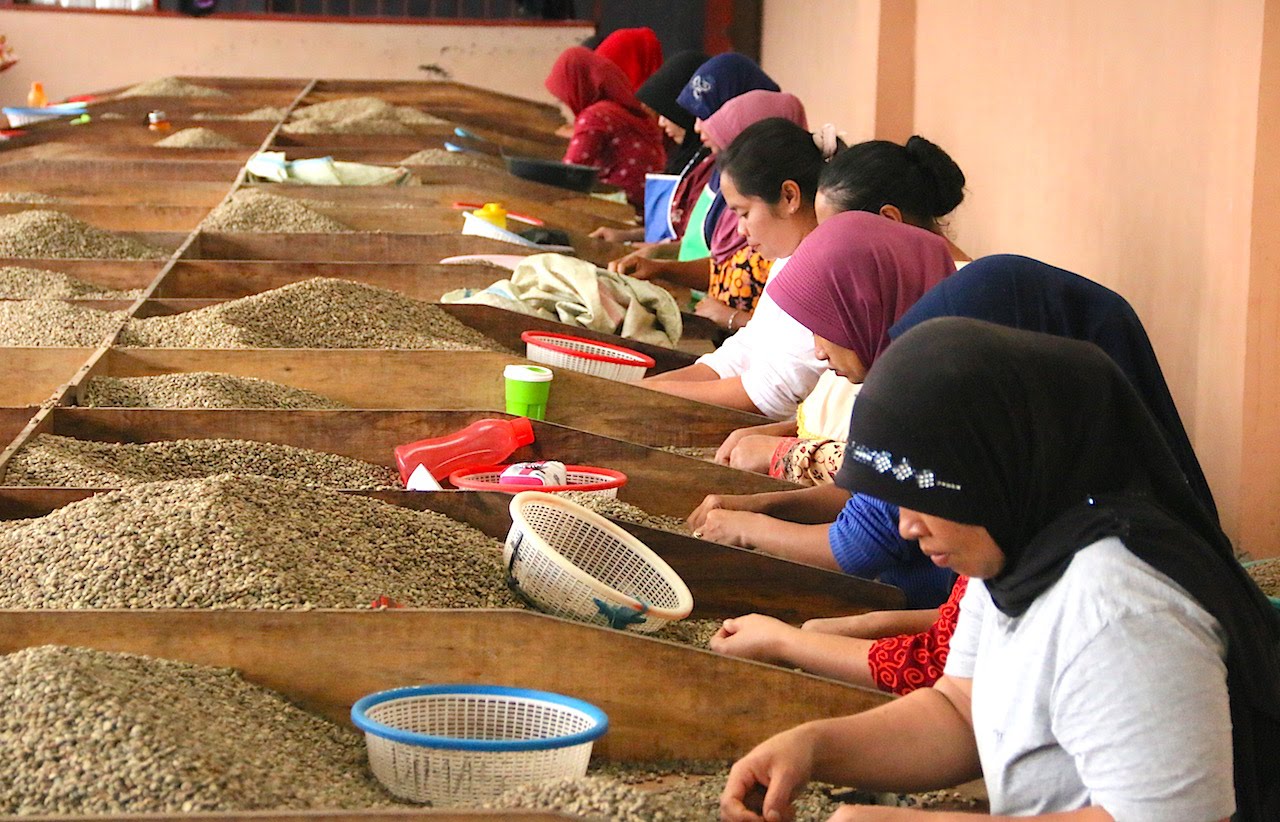
Why Wet Hulling?
a. Climate
Indonesia's tradition of wet hulling grew out of the local weather. Humidity here sits between 70-90% year-round, typhoons are constant, and in some regions annual rainfall can reach 2,000mm. Green beans are especially vulnerable to rain, so how does Indonesia overcome such harsh conditions to produce the rich, full-bodied FrontStreet Coffee Mandheling? The answer is wet hulling.
In a tropical climate, coffee normally takes 2-3 weeks to dry. In Indonesia's extremely humid air, drying becomes a serious problem. It takes far longer, and throughout that time the coffee stays relatively damp, making it easier for bacteria to penetrate the green beans.
In a regular washed process, drying happens with the parchment still on, which shields the bean from external damage to some degree. With wet hulling, by contrast, the parchment is removed before the final drying stage, so direct sunlight reaches the surface of the green bean and the coffee dries 2-3 times faster than it would under a washed process.
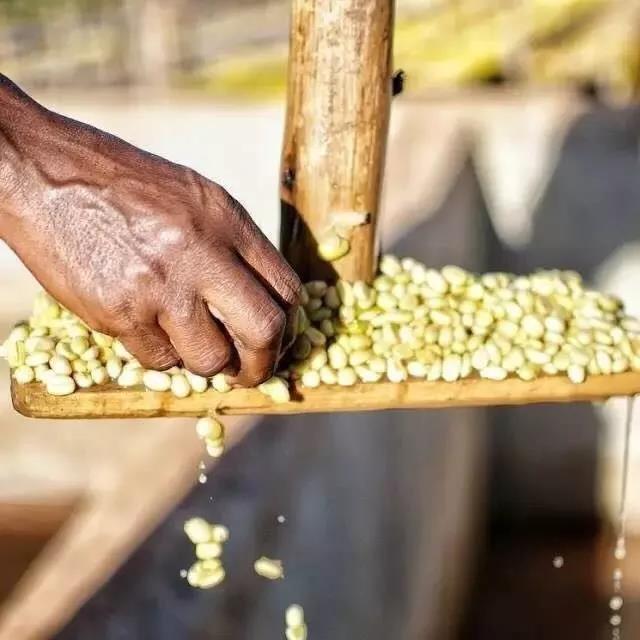
b. Economic Benefit
Dutch colonists first brought coffee to Indonesia in the 17th century, and they were after more and faster returns. Wet hulling cuts the time spent on the farm dramatically and lowers labor costs significantly, which fit perfectly with an investor's instinct for quick profit and lower costs. That is another force behind the method.
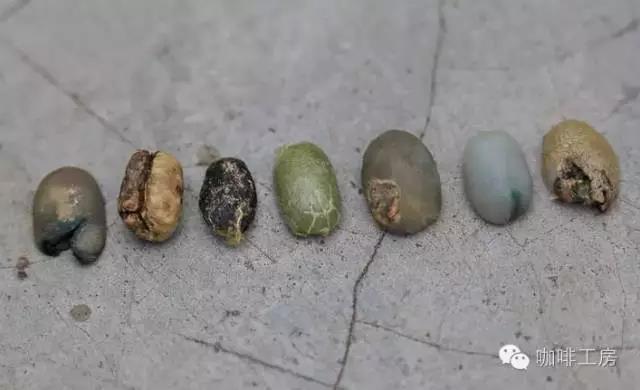
c. Defects and Kuku Kambing (Goat Hoof Beans)
When the parchment is hulled off in wet hulling, the coffee's moisture content is still as high as 20-24%, whereas in regular processing it is hulled only after moisture drops to 10-12%. In this "semi-dry" state the parchment tends to stick to the surface of the green bean, making the hulling harder than it would be when the bean is "fully dry," and requiring greater friction.
On the other hand, semi-dry green beans are very fragile, far softer than fully dry beans, so they crush more easily and pick up small nicks. These are what are commonly called horse hoof or goat hoof beans, known locally as "kuku kambing."
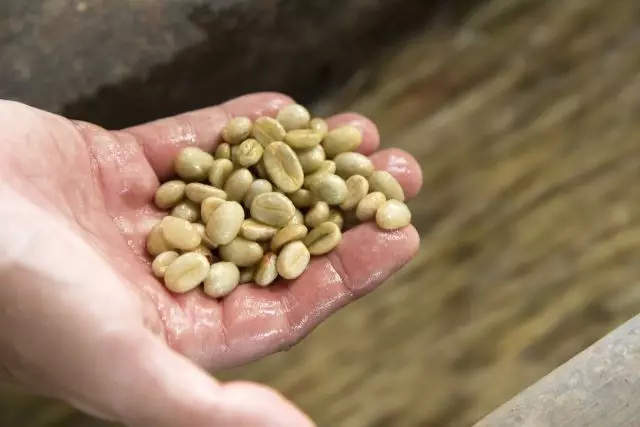
The extremely fast pace of wet hulling also raises the defect rate in Mandheling. Processing plants assign staff to sort defects by hand, usually DP (double picking) or TP (triple picking). FrontStreet Coffee Mandheling that goes through triple picking will show a better defect rate than double picking.
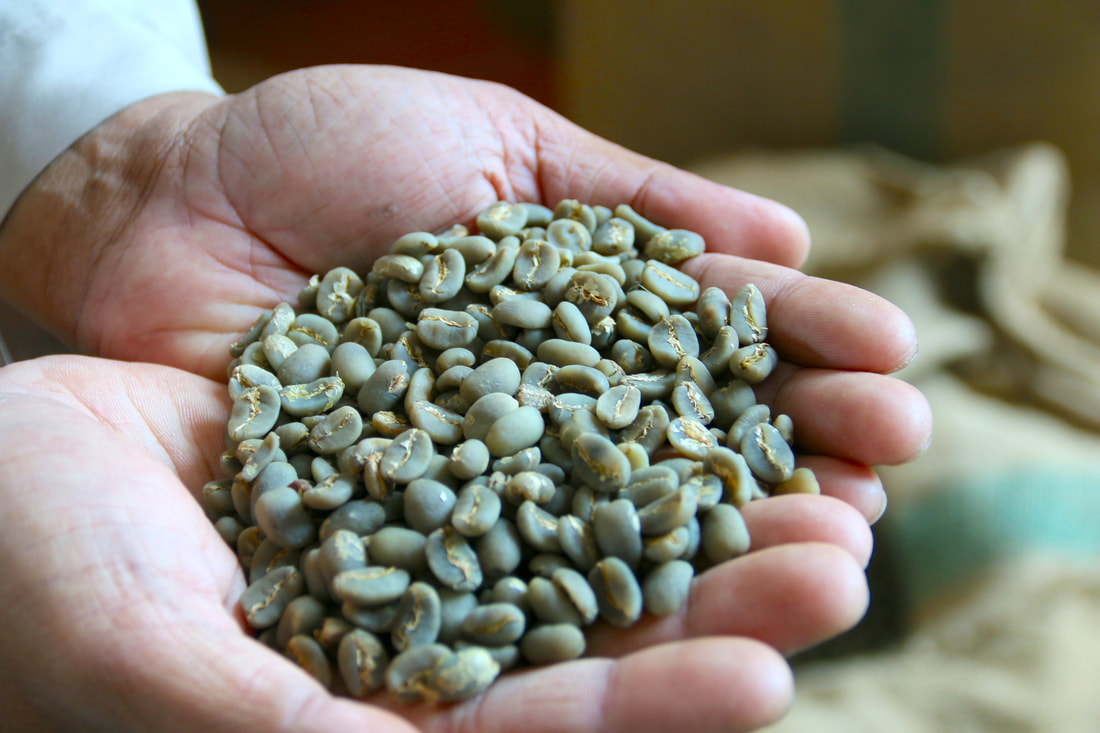
Aged Bean Processing Method
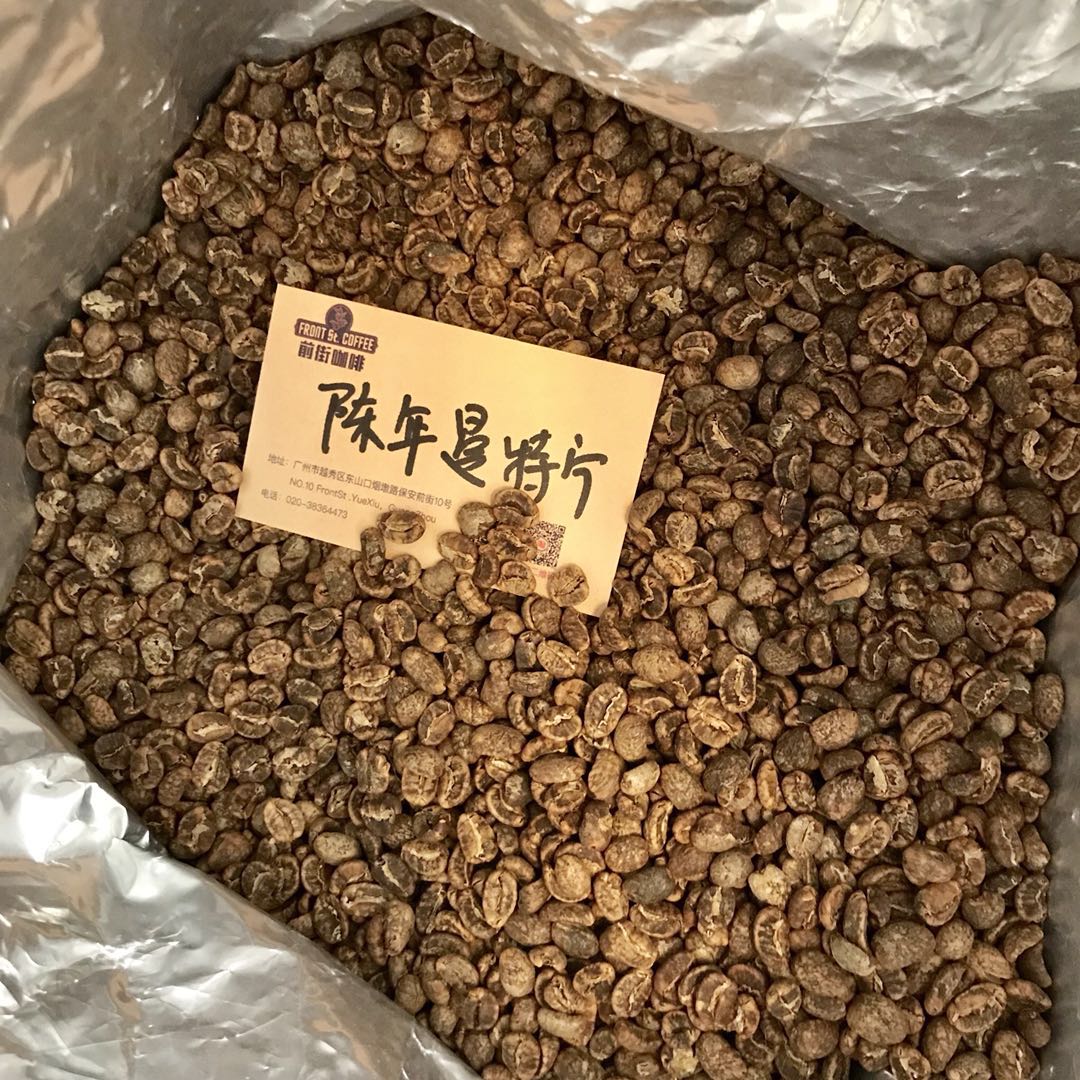
Aged coffee beans are not simply beans that have been stored for a long time, which would not be acceptable at all: green beans spoil over time, shifting from fresh green to white and then to yellow, losing flavor entirely and even attracting insects. Like aged wine, green beans must be properly handled and stored long-term before they can honestly be called aged coffee.
So-called aged beans mean:
Extending the storage time of green beans to achieve natural aging, usually 2-3 years
Changes that include reduced acidity, a shift in color, and a thicker bean body
A storage environment that is cool and well ventilated
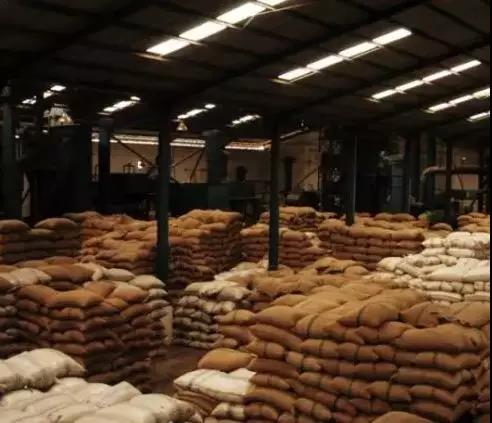
Because the storage environment is relatively dark and the time is longer, aged coffee rarely escapes complex flavors reminiscent of mustiness, or what is often described as burlap and leather.
03 | Green Bean Analysis
Properly stored coffee beans change in both flavor and appearance: acidity drops, the color darkens with less moisture, the mouthfeel grows thicker and better, sweetness takes on a honeyed fragrance, and some of the original defects in the green bean become less obvious. Because the storage environment is relatively dark and the time is longer, aged coffee rarely escapes complex flavors reminiscent of mustiness, or what is commonly called burlap and leather.
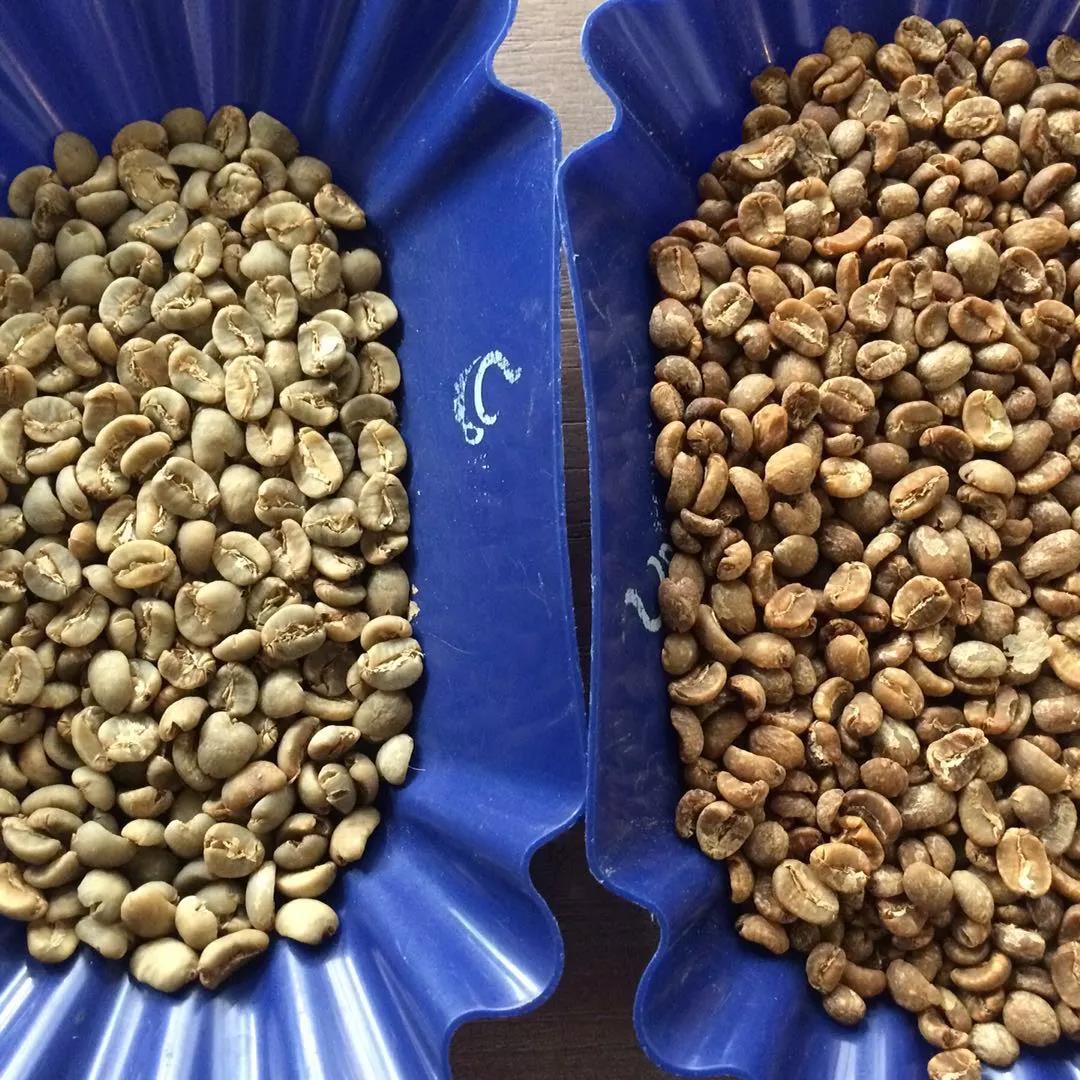
Aged beans must be stored under strictly controlled conditions, with regular and even turning, plus adjustments to humidity and ventilation, to prevent insect infestation and mold.
As a rule, aged beans are not stored in producing regions or on estates. The work belongs to green bean distributors and brokerage companies as a commercial activity.
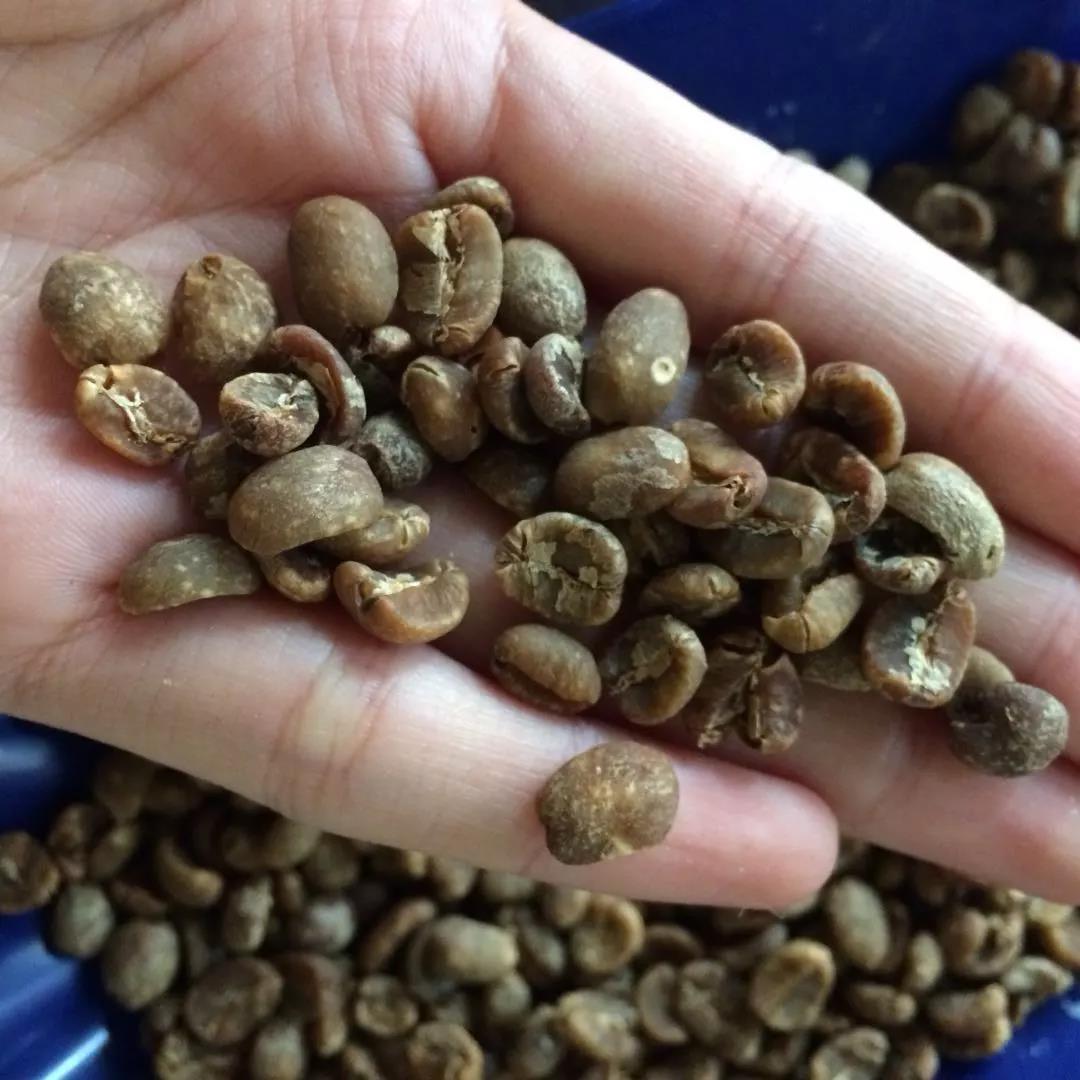
Properly stored coffee beans
change in both flavor and appearance,
such as reduced acidity, a darker color with less moisture,
a thicker and better mouthfeel, sweetness with a honeyed fragrance,
while some original defects in the green bean become less obvious.
04 | Roasting Analysis
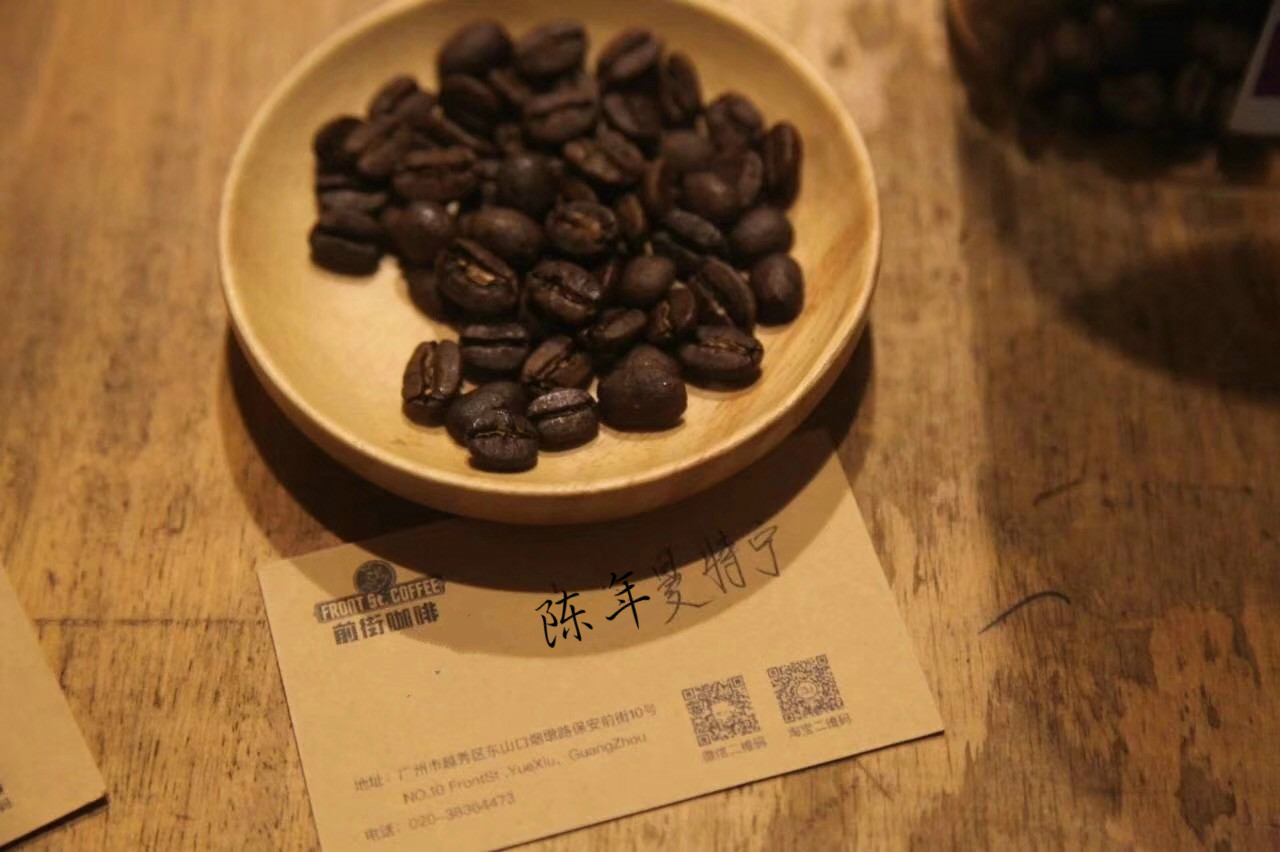
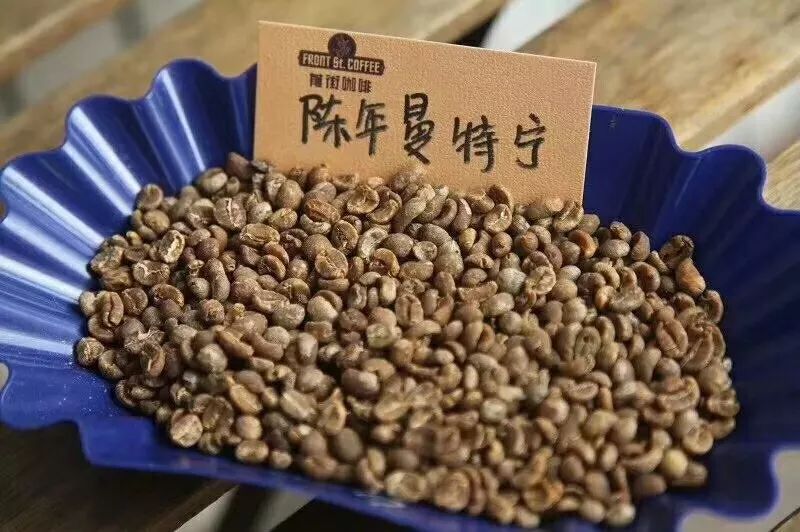
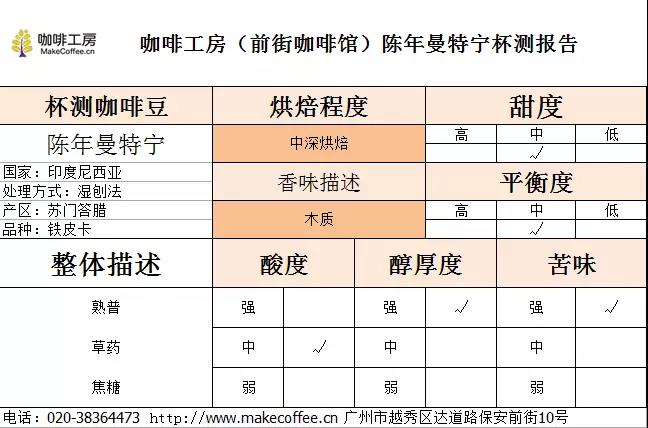
FrontStreet Coffee's Aged Mandheling is not much to look at, but time wears away the acidity of FrontStreet Coffee's Mandheling and raises its purity, while a medium-dark roast rounds it out further.
Because FrontStreet Coffee's Mandheling green beans are dense and the aged moisture content is low, heat adjustments at every stage must be handled with particular care. FrontStreet Coffee's Mandheling must not be allowed to scorch the oils on the surface of the bean.
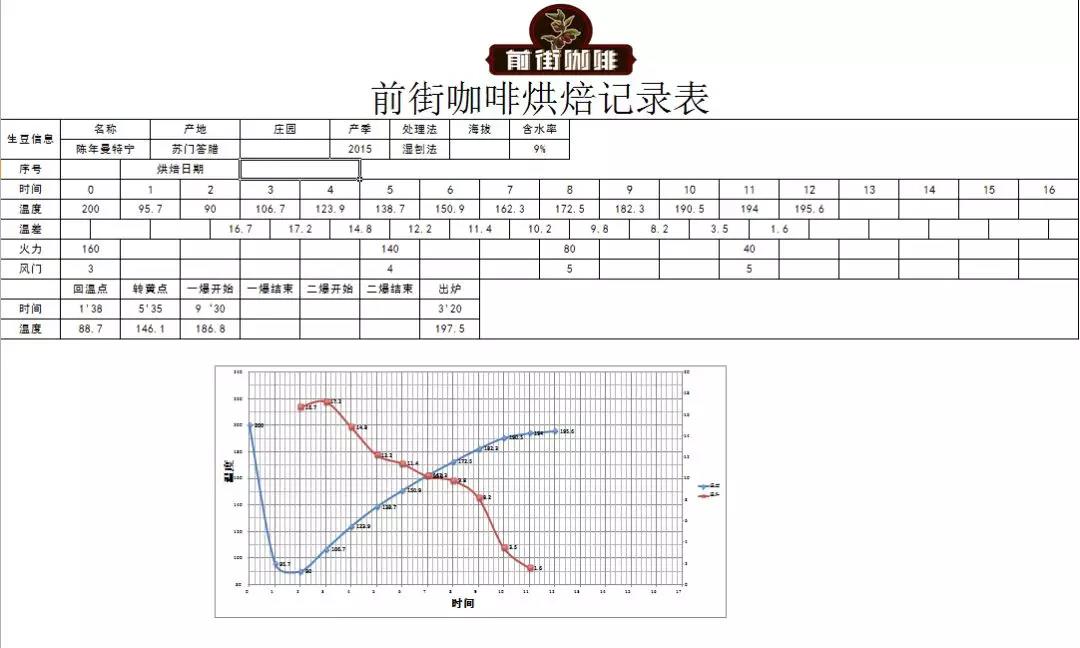
Yangjia 800N, 550g green bean charge, as follows:
Heat to 200°C and start with the damper at 3. After 1 minute of simmering, adjust the heat to 160°C with the damper unchanged. When the drum temperature reaches 165°C, adjust the heat once more, reducing it to 140°C. Roast to 5'35", temperature 146°C, when the bean surface turns yellow, the grassy smell disappears completely, and dehydration is complete, then open the damper to 4.
At 9 minutes the bean surface shows ugly wrinkles and black spots, the toast smell changes clearly into coffee aroma, and this can be defined as the prelude to first crack. At this point you must listen carefully for the first crack. At 9'30" first crack begins, so reduce the heat to 80°C and open the damper fully to 5. The heat adjustment must be extremely careful, and not so small that the crack sound disappears. At 194°C reduce heat, and finish at 197.4°C.
Through the precipitation of time, FrontStreet Coffee Aged Mandheling loses some of Mandheling's wildness and gains mellowness and delicacy in the mouthfeel. After aging, the beans have lower acidity but more body and a thicker texture, giving a mature, steady impression that is completely different from the lively brightness of new beans. Roasted aged coffee needs a longer development time to reveal its richness.
05 | Brewing Analysis
Recommended: Flannel Drip
Step 1
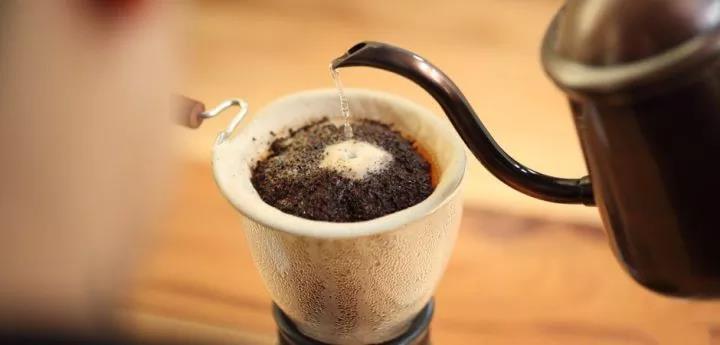
A new flannel filter must first be taken out and soaked in boiling water for 5 minutes, then placed on the metal ring.
Used filters must also be boiled in water for at least 3 minutes to disinfect them.
Step 2
While the filter soaks, grind the beans. Because of the special material of a flannel dripper, hand brewing with flannel requires slightly more coffee than paper filters for the best flavor. Still, load the appropriate amount of coffee for the size of the filter. Two cups, or 240c.c. of coffee, uses 40g of beans. Grind the beans to a fineness between white sugar and fine sugar.
Step 3
Dry the filter. First wring it out by hand, then lay it between clean dry towels to absorb the remaining moisture.
Step 4
Rinse and preheat the filter and dripper with hot water, then discard the water.
Step 5
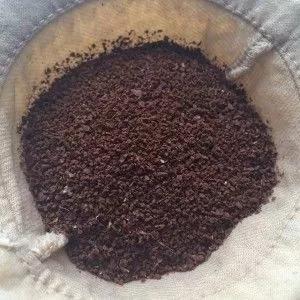
Pour the coffee loosely into the filter, with no need to press it down.
Step 6
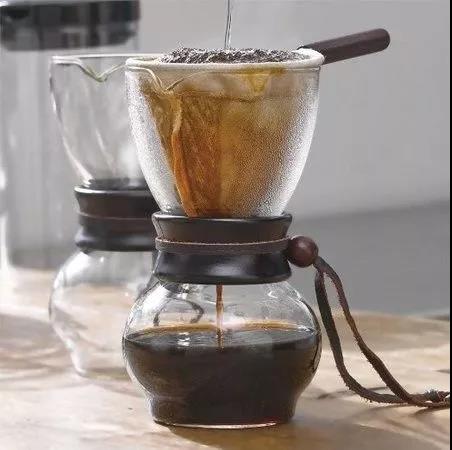
Use a wooden stirring spoon or a cream knife to gently lift the coffee from the bottom upward, then pull the bottom of the bag to adjust its shape.
Step 7
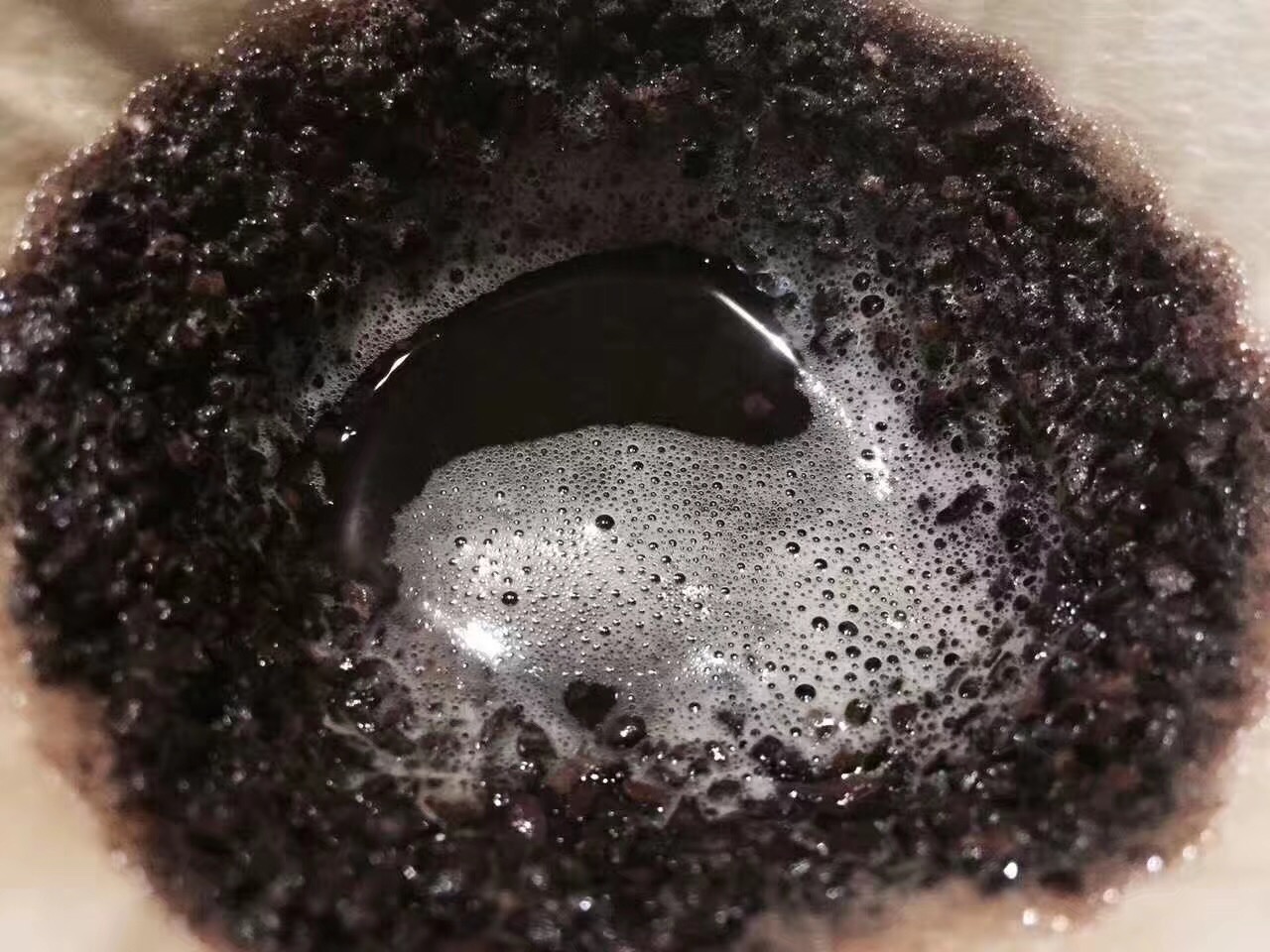
Make a depression at the top of the coffee about one coin wide and one thumbtack deep. Because the coffee layer is deep, this makes it easier for the hot water to spread in all directions and moisten the grounds evenly.
Step 8
Let the hot water stand and cool to about 80-85°C, then begin pouring near the depression, very slowly at first, injecting 60g of water within 30 seconds. There is no need to deliberately moisten every particle; capillary action will spread the water on its own. After pouring, wait about 30 seconds.
Step 9
Begin the second pour, slightly faster this time, injecting 140g of water within 60 seconds. The coffee will now start producing large amounts of bubbles, somewhat like the cosmic explosion scenes in movies. After pouring, wait 20 seconds for the water level to drop a little.
Step 10
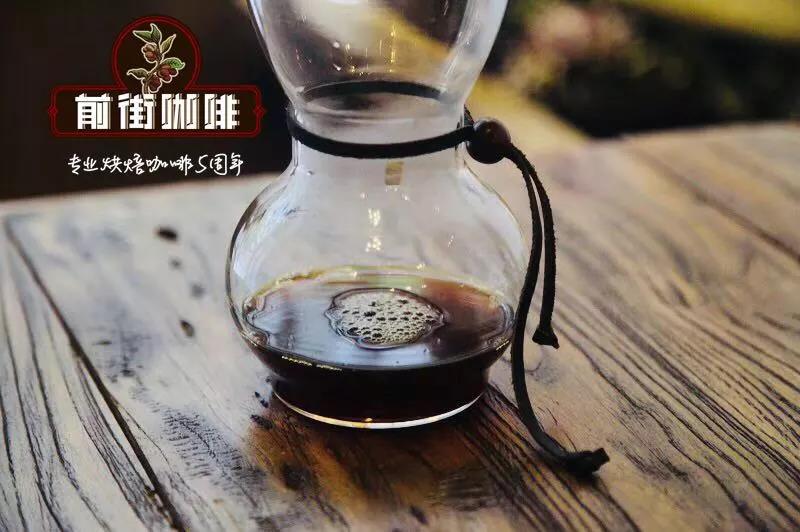
Final pour, injecting 120g of water within 30 seconds. The whole process uses 320g of water over 3 minutes. Because the flannel filter and the coffee absorb roughly twice the weight of the coffee, you can finally collect about 240g of coffee, a coffee-to-water ratio of 1:6.
Making coffee with a flannel filter bag takes time, so the finished coffee is cooler. Preheating the cups can raise the temperature slightly. Never reheat coffee in any form.
FrontStreet Coffee Indonesian Aged Mandheling, Aged Mandheling G1, washed, imported single origin, premium, freshly roasted.
FrontStreet Coffee Recommendation
If this aged, time-softened character appeals to you, the natural next step is FrontStreet Coffee PWN Golden Mandheling, widely regarded as the benchmark for fine Mandheling. It comes from the PWN company in Indonesia, which buys only high-grade green Mandheling and then applies one machine pass plus three rounds of hand selection, reserving beans of 18 mesh and larger, to bring each 300g sample under three defective beans and reach the top G1 standard. The result is uniform, plump, translucent beans with a low defect rate, and after a medium-dark roast it carries a rich roasted aroma, a clean cup, and full body. It is a fine choice for anyone who does not care for acidic coffee.
For a more everyday but still classic expression, FrontStreet Coffee Lintong Mandheling comes from the Lintong region around Lake Toba on Sumatra and, like the Golden Mandheling, is given a medium-dark roast. It is deliberately built to show black chocolate and caramel while keeping Mandheling's wild herbal streak, which is a direct legacy of the region and the wet-hulled process: because the parchment is stripped while the bean is still half wet and the steps take place in air that stays at 70-90% humidity, the exposed green bean picks up extra woody and herbal notes. Mandheling's herbal, spice, and pine profile is exactly why it is so often called "the gentleman of coffees."
And if you would rather taste that Mandheling body in a machine, the FrontStreet Coffee Classic Blend adds a medium-dark Mandheling to the creamy, nutty base of Brazilian coffee, so butter, roasted chestnut, and caramel come forward while the Mandheling lifts the overall body and lends sandalwood, herbal, and spice notes. A small amount of Robusta goes in as well to increase the richness of the crema, which makes it easy to pour latte art or build a layered Dirty.
Important Notice :
FrontStreet Coffee is a long-established specialty coffee roaster in Guangzhou China, selling freshly roasted beans from its own farm in Yunnan as well as dozens of carefully selected single-origin beans from around the world for both pour-over and espresso. The products deliver consistently excellent quality and great value, with shipping within 24 hours. Guangzhou's FrontStreet Coffee shop is recommended by many coffee lovers, and the beans are now available online at the Tmall 。
FrontStreet Coffee has moved to a new address:
FrontStreet Coffee Address: 315,Donghua East Road,GuangZhou
Tel:020 38364473
 Scan and follow the En Gafei WeChat official account. Please indicate that the reprint comes from "En Gafei".