Indonesian Coffee Brands Introduction to Famous Indonesian Coffee Brands
Indonesia: A Global Coffee Powerhouse
Indonesia is one of the world's largest coffee-producing countries, with approximately 2 million farmers and traders relying on coffee for their livelihood. For Indonesians, coffee is not just a beverage; it has become a culture and a way of life. Indonesia boasts many coffee varieties that enjoy international acclaim.
Coffee enthusiasts have surely tasted Indonesian coffee. The best growing regions across the Indonesian archipelago are found on the islands of Java, Sumatra, and Sulawesi.
The Three Major Coffee Islands
These three islands have established three major coffee brands, whose combined coffee bean production accounts for 90% of all Indonesian coffee. They are:
☕ Mandheling Coffee from Sumatra - Moderately acidic with an extremely rich and intense aroma.
☕ Java Coffee from Java Island - An Arabica variety with low acidity, a delicate mouthfeel, and excellent balance.
☕ Sulawesi Coffee (Robusta variety) - Full-bodied beans with rich aroma.
The quality of these three major coffee brands is claimed to be world-class.
Premium and Rare Indonesian Coffee Varieties
Indonesia also offers several precious and rare specialty coffee varieties:
☕ Bali Kintamani Coffee (Kopi Kintanani)
Kintamani coffee grows in the cool mountainous regions of Kintamani, Bali, and is an Arabica variety. Because the people of Bali cultivate Kintamani alongside fruits and vegetables, the resulting beans carry fruity notes with moderate acidity and a smooth, non-astringent taste.
☕ Sulawesi Toraja Coffee (Kopi Toraja)
Toraja coffee is produced mainly in the highlands of central and southwestern Sulawesi and is one of the rarer varieties in the world.
Toraja coffee is challenging to cultivate and harvest, with annual production under 1,000 tons. It offers subtle fruity sweetness, with a rich, thick mouthfeel up front, followed by fading bitterness and a lasting sweet aftertaste.
☕ Aceh Gayo Coffee (Kopi Gayo)
Gayo coffee grows in the Gayo Highlands of Aceh Province, the northernmost region of Sumatra. It is quite famous in Indonesia, with production dominated by Arabica. Gayo Arabica features intense, complex flavours with prominent bitterness.
☕ Flores Bajawa Coffee (Kopi Java)
Flores Bajawa coffee grows in the Bajawa Highlands of Flores Island, East Nusa Tenggara Province, and is an Arabica variety. Locals commonly use traditional wet-hulling methods, resulting in coffee with great body and thickness.
☕ Civet Coffee (Kopi Luwak)
Civet coffee is one of the world's most expensive coffees. Ripe coffee cherries are eaten by civets, fermented through their digestive system, and then excreted, after which they are collected and processed into the highly sought-after civet coffee (also known as cat-poop coffee).
Civet coffee has a unique aroma, low acidity, a relatively mild flavour, and is gentle on the stomach.
☕ North Sumatra Sidikalang Coffee (Kopi Sidikalang)
Sidikalang is a mountainous region west of Lake Toba in North Sumatra Province, producing very typical Mandheling coffee. Sidikalang is a high-quality coffee with rich flavour and aroma, low acidity, and chocolate notes, and is perfect for drinking straight as black coffee.
FrontStreet Coffee's Pour-Over Coffee Suggested Parameters:
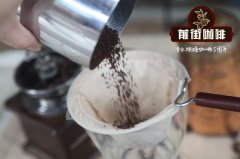
V60 at 90°C, grind setting 3.5 on a Fuji grinder, 1:15 coffee-to-water ratio, total brewing time around 2 minutes.
FrontStreet Coffee Recommendation
Where Indonesian coffee comes from shapes its cup, and FrontStreet's Sumatra range follows that history. Coffee arrived in Java in the late 17th century, and after leaf rust devastated the island in the early 20th century production moved north to Sumatra; today Sumatra is Indonesia's largest source of both Arabica and Robusta, with Aceh and North Sumatra growing Arabica at higher altitudes. FrontStreet's Lintong Mandheling comes from the traditional Lintong region around Lake Toba in North Sumatra, grown at suitable altitude and processed with the region's distinctive wet-hulled method, whose semi-dry hulling accelerates drying and lends the beans their characteristic earthy, herbal, low-acid depth with a persistent, full-bodied sweetness.
FrontStreet's PWN Golden Mandheling is the higher expression, from Indonesia's PWN company. It uses beans of 18 mesh and above, requires fewer than three defective beans per 300 g sample to meet the top G1 standard, and adds three rounds of hand sorting to strip out defects, giving a cleaner, sweeter cup with clearer woody and caramel notes, deep, full, and suited to anyone who dislikes acidity.
To brew it, FrontStreet suggests 87-88°C water, 15 g of coffee, a 1:15 ratio, coarse-sugar grind, and a three-stage pour: 30 ml to bloom and degas, then 100 ml to lift the bed and draw out the golden foam, then a gentle 95 ml centred pour to raise sweetness, ending with a full body and the caramel, chocolate, and nut flavours Mandheling is known for.
Important Notice :
FrontStreet Coffee is a long-established specialty coffee roaster in Guangzhou China, selling freshly roasted beans from its own farm in Yunnan as well as dozens of carefully selected single-origin beans from around the world for both pour-over and espresso. The products deliver consistently excellent quality and great value, with shipping within 24 hours. Guangzhou's FrontStreet Coffee shop is recommended by many coffee lovers, and the beans are now available online at the Tmall 。
FrontStreet Coffee has moved to a new address:
FrontStreet Coffee Address: 315,Donghua East Road,GuangZhou
Tel:020 38364473
 Scan and follow the En Gafei WeChat official account. Please indicate that the reprint comes from "En Gafei".