The Relationship Between Coffee Varieties and Flavor Characteristics - A Guide to Coffee Bean Varieties and Flavor Profile Charts
How Many Common Coffee Bean Varieties Exist in the Market?
FrontStreet Coffee has gathered and analyzed the coffee varieties sold on the market to give readers a clearer grasp of basic coffee concepts. There are more than 500 species of coffee tree and around 6,000 varieties; today we look at the main varieties and their common offshoots.
Four Main Coffee Tree Species
Four coffee species are generally recognized, but only two carry real commercial weight and are widely cultivated: Arabica and Robusta. The other two are Liberica and Excelsa.

Arabica is used mainly for single-origin and specialty coffee, Robusta mainly for instant. It is convenient to call Arabica premium and Robusta secondary, but that split is not absolute; personal taste is the better guide. From a flavor standpoint, the United States and Japan tend toward lighter coffee brewed from Arabica, while Europe favors espresso built from a blend of Arabica and Robusta.
Arabica: Excellent Flavor and Aroma

Arabica was the first coffee variety discovered and is regarded as the best of them, and it remains the most important variety in the world today. It is grown in Central and South America, Brazil, Colombia, Ethiopia and Tanzania in Africa, Yemen and Indonesia. Arabica plants typically grow 2.5 to 4.5 meters tall. They tolerate low temperatures but not frost, and their drought resistance is limited. The beans are relatively large, of excellent quality and mellow flavor, with slight acidity and mild bitterness. Arabica accounts for approximately 85% of world production.
Robusta: Strong Acidity with Rich Flavor

For reasons of quality, Robusta sells for about half the price of Arabica. It is produced mainly in Java, Indonesia; Congo; Uganda; and Ivory Coast. Robusta is easier to grow, yields more and is less sensitive to insects. The beans are round and small, slightly bitter, and they keep their fragrance even when cold. Robusta accounts for about 15% of world production. The beans are plump and oval, the raw beans light brown or yellowish-brown with a grass-green and yellow luster. Compared with Arabica, Robusta is more fragrant but lighter, with less prominent acidity and stronger bitterness.
Liberica
Liberica was discovered in Liberia. Its beans are elongated and large with slightly pointed tips, resembling small boats. The variety typically grows on slopes around 200 meters above sea level. It resists disease and adapts to its environment well, but yields are very low and it is generally used for variety improvement, which means Liberica can be grown in subtropical regions that other species cannot handle. Quality is inferior, with heavy acidity and higher bitterness, low aroma and body, though its concentration is an advantage. It accounts for about 5% of world production.

Excelsa
Excelsa was discovered in 1904 and originates from the Charli River basin in Africa. The cherries are small and single-plant yields are high, and it is particularly drought-resistant. The product has a rich fragrance and slight bitterness, but cultivation is limited.
Coffee Varieties - Typica

Typica is a sub-variety of Arabica. It first grew in Martinique, and Central America, Jamaica, the Kona region of Hawaii, Papua New Guinea and East Timor are now its main growing areas. To get higher yields from a high-quality Typica, the variety is often crossed with others. Typica is famous for its sweetness, and some of the world's best coffees come from the Typica family, among them Blue Mountain, Sumatra and Kona.
Typica raw beans have slightly pointed ends and an oval shape. Seen from the side they look flat and thin, and the side thickness does not vary much even across different growing altitudes.

Sumatra Mandheling
Indonesia's main producing regions include Sumatra, Java and Sulawesi, with Mandheling from Sumatra the most famous, sometimes simply called Sumatra coffee. Coffee from Lake Tawar in the north can be called Aceh coffee or Lake Tawar coffee, while coffee from the Lintong and Lake Toba areas is called Mandheling.
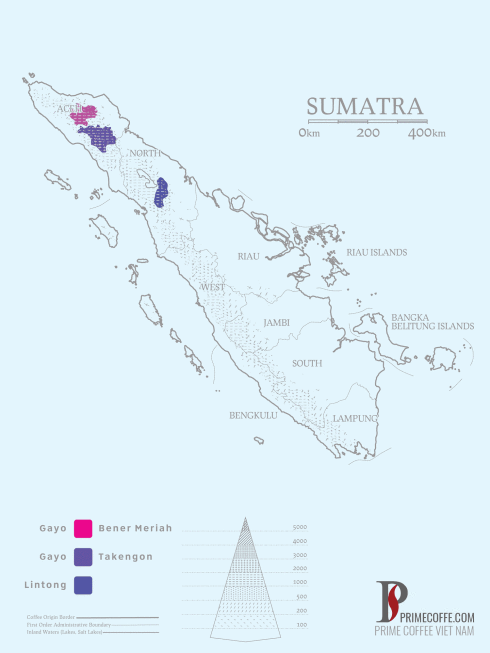
Mandheling has a rich flavor, an intense body and a lively character. It is neither astringent nor acidic, with body and bitterness fully expressed. The beans may look unattractive, but enthusiasts say the less attractive Sumatra beans look, the better, richer and smoother they taste.
Four types of Mandheling are worth knowing: Lintong, Golden, Tiger and Aged.
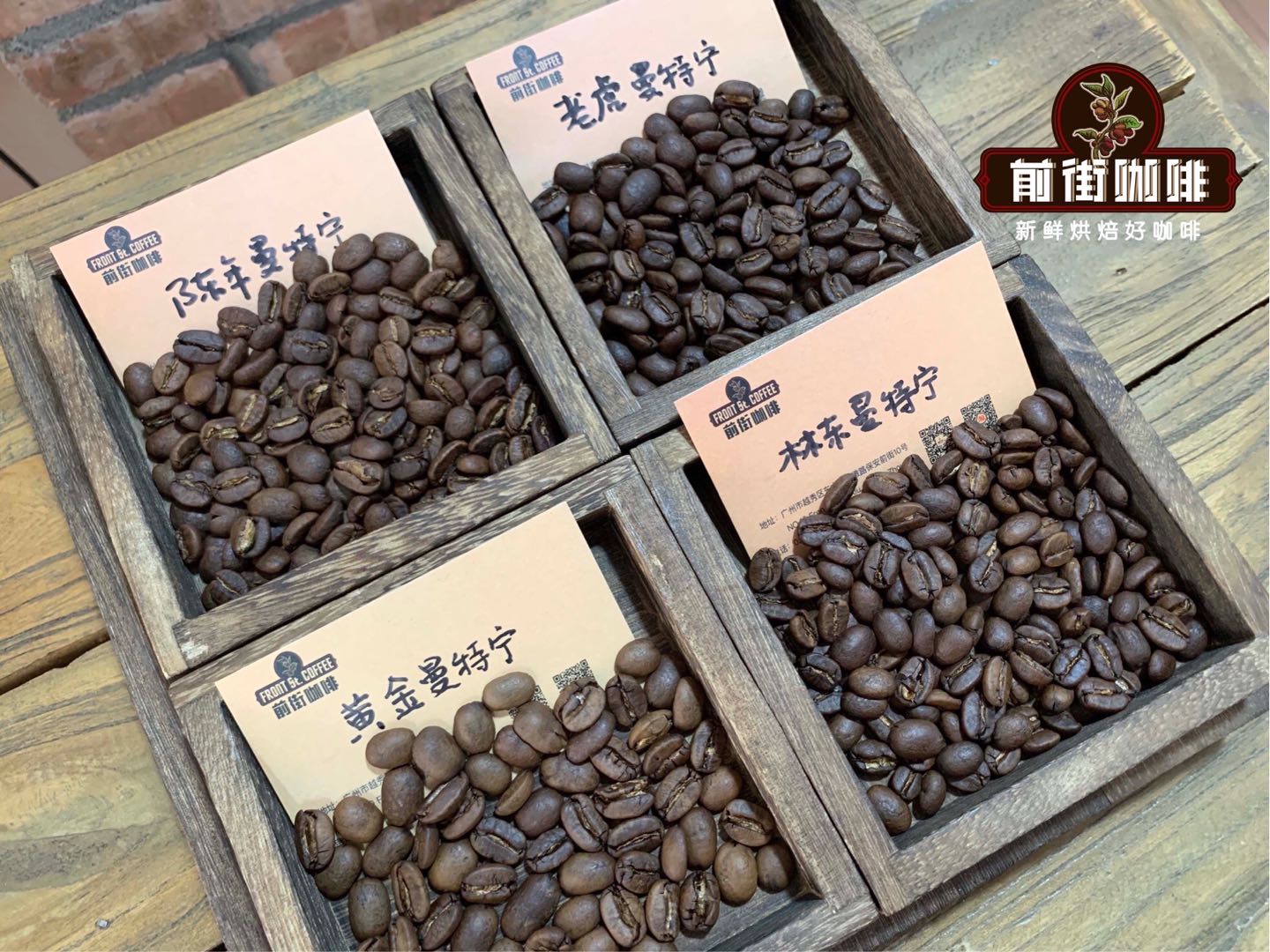
Lintong Mandheling
Indonesian coffee quality varies widely, but what is commonly called Mandheling usually means Typica or its variants grown in the mountains around Lake Toba. Connoisseurs worldwide have called Sumatra Mandheling the coffee with the best texture in the world. The beans are relatively large and hard, and because defects are numerous they require strict selection during processing.

Mandheling is indispensable in blends. It has a rich coffee flavor, sweet fragrance, pure bitterness and a rich body, with a slight sweetness and subtle acidity.
Golden Mandheling
Golden Mandheling is produced in the Lintong region of northern Sumatra. It is a higher grade of Mandheling, processed with more refined technique and hand-picked. Golden Mandheling 19 mesh goes through four manual selections to remove defective beans, and the finished raw beans are complete and uniform in size.

Golden Mandheling has a richer, sweeter flavor than regular Mandheling, with an intense body and rich concentration. It is bitter but complex and layered, and it is considered one of the most mellow coffees in the world.
FrontStreet Coffee's Brewing Guide for Golden Mandheling
Indonesia: Golden Mandheling
Region: Lake Tawar, Sumatra
Altitude: 1100-1600 meters
Variety: Typica
Processing: Wet-hulled

Brewing Parameters:
Filter: KONO dripper (for a richer body)
Water temperature: 85-88°C (a higher temperature brings out more bitterness)
Coffee dose: 15 grams
Coffee-to-water ratio: 1:15
Grind size: Medium grind
Brewing Method: Staged extraction. Bloom with 30g of water for about 30 seconds. Using a small stream, pour in a circular motion at the center with 95g of water, segmenting at 125g. When the water level drops and the bed is about to show, continue pouring to 225g total. Remove the dripper when the bed is about to show again, timing from the start of the bloom. Total extraction time: 2'00".

Brewing Flavor: Multi-layered, clean and balanced, with a persistent caramel sweetness in the aftertaste. High sweetness on the palate, rich and mellow, with notes of toasted bread, pine, caramel and cocoa and a slight earthy edge.
Tiger Mandheling
Indonesian Tiger Mandheling varieties are mainly Catuai, Typica and Sidikalong. Only Mandheling beans above 17 mesh with less than a 4% defect rate can be called Tiger Mandheling.
Tiger Mandheling is relatively balanced with high clarity, showing distinct cream, dark chocolate and nut flavors.
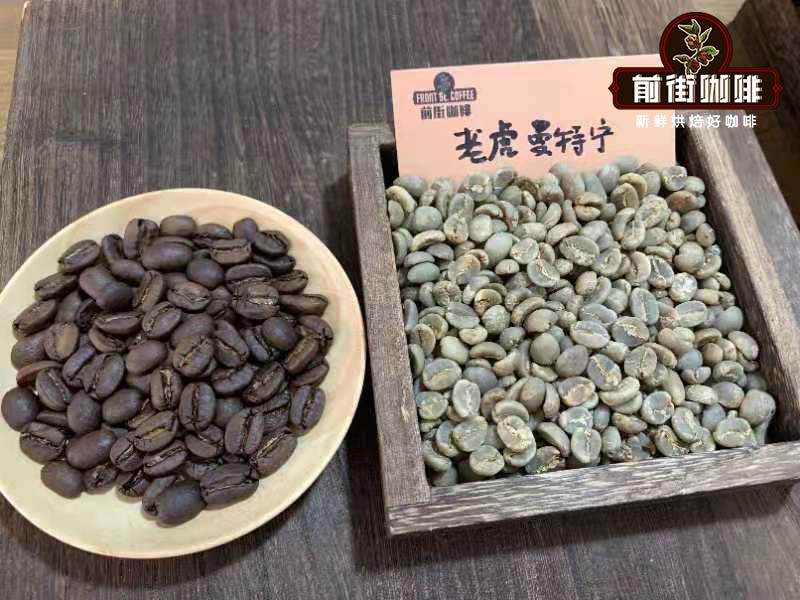
Aged Mandheling
Indonesian aged coffees are most famous for Mandheling and Old Brown Java. Aged Mandheling is coffee that has been processed and then stored for a long time, during which acidic and astringent components settle out and convert to sugars, leaving the coffee smoother. It has excellent sweetness and suits single-origin or espresso use.

The four Mandheling types share one thing: all use the wet-hulled method, which is what creates the distinctive rich, intense flavor of Sumatra coffee.
Typica Variants - Blue Mountain
Blue Mountain beans are the most expensive coffee, clean and aromatic, and among the sweetest in the world. Jamaica's coffee history reaches back to the eighteenth century, when the British introduced coffee trees and planted them in the Blue Mountains. It divides into high-altitude Jamaica Blue Mountain, Jamaica High Mountain and Jamaica Prime, with grade determining price.

Jamaica Blue Mountain Coffee
Both Blue Mountain and High Mountain are divided into four grades each. From top to bottom by quality: NO.1, NO.2, NO.3 and PB, where PB stands for Peaberry. Under CIB standards, only coffee grown above 666 meters can be called Jamaica Blue Mountain coffee.

Jamaica - Blue Mountain No.1 Coffee Beans
Estate: Clifton Estate
Altitude: 1310 meters
Variety: Typica
Processing: Washed
Brewing Parameters:
Filter: KONO dripper
Water temperature: 87-88°C
Coffee dose: 15 grams
Coffee-to-water ratio: 1:15
Grind size: Medium grind

Brewing Method: Staged extraction. Bloom with 30g of water for about 30 seconds. Using a small stream, pour in a circular motion at the center with 95g of water, segmenting at 125g. When the water level drops and the bed is about to show, continue pouring to 225g total. Remove the dripper when the bed is about to show again, timing from the start of the bloom. Total extraction time: 2'00".
Brewing Flavor: Blue Mountain is balanced, with no single flavor overpowering the others. It has a rich body, a pleasant aroma, a persistent aftertaste and sweetness.

Jamaica High Mountain Supreme Coffee Beans
Coffee produced below 666 meters in the Jamaica Blue Mountain region is called High Mountain coffee. It is second only to Blue Mountain in quality and is known in the trade as Blue Mountain's brother variety. Because Blue Mountain production is so limited, High Mountain is the best choice for anyone who wants a Jamaican-flavored cup.

Jamaica Prime Coffee Beans
Coffee grown outside the Blue Mountain region is called Jamaica Prime. A common misconception holds that only coffee grown above 1800 meters in the Blue Mountain area can be called Blue Mountain coffee. In fact there is only one estate above 1800 meters in the range, Amber, owned by a family of Chinese descent whose ancestral home is Guangdong, China. That estate has only 30 hectares of land and very limited production. Blue Mountain coffee is mainly distributed across five mountain areas: John Crow, St. John's Peak, Mossman's Peak, High Peak and Blue Mountain Peak.
Typica Variants - Hawaii Kona
Kona
The Kona region on the island of Hawaii has excellent geographical conditions. The varieties grown there have guaranteed quality and a rich coffee flavor with moderate citrus acidity, a high but gentle body and a clean taste. Coffee from Kona is hailed as the most beautiful coffee bean in the world.

Hawaii Kona
Region: Kona region
Estate: Queen's Estate
Altitude: 1100m
Variety: Typica
Processing method: Washed
Brewing Parameters:
Filter: KONO
Water temperature: 87-88°C
Coffee dose: 15 grams
Coffee-to-water ratio: 1:15
Grind size: Medium grind
Brewing Method: Staged extraction. Bloom with 30g of water for about 30 seconds. Using a small stream, pour in a circular motion at the center with 95g of water, segmenting at 125g. When the water level drops and the bed is about to show, continue pouring to 225g total. Remove the dripper when the bed is about to show again. Total extraction time: 2'00".

Brewing Flavor: Walnut, caramel, berries, plum, nuts and cream, overall clean with rich layers.
Typica Variants - Maragogype (Elephant Bean)

A mutant of Typica, with very large, long and slightly twisted fruit. The plant has long internodes and large leaves and yields relatively little. It was first discovered in 1870 in the Maragogype area of Bahia state in northeastern Brazil. The beans are at least three times larger than regular Arabica, which is where the name comes from. Maragogype has poor flavor at low altitudes but better flavor higher up, with mild acidity and a pleasant sweet fragrance.
Typica Variants - Pacamara
Pacamara
A hybrid of Pacas and Maragogype, with beans second in size only to Maragogype. It is an excellent variety developed in El Salvador in the 1950s that has cupped well in recent years.
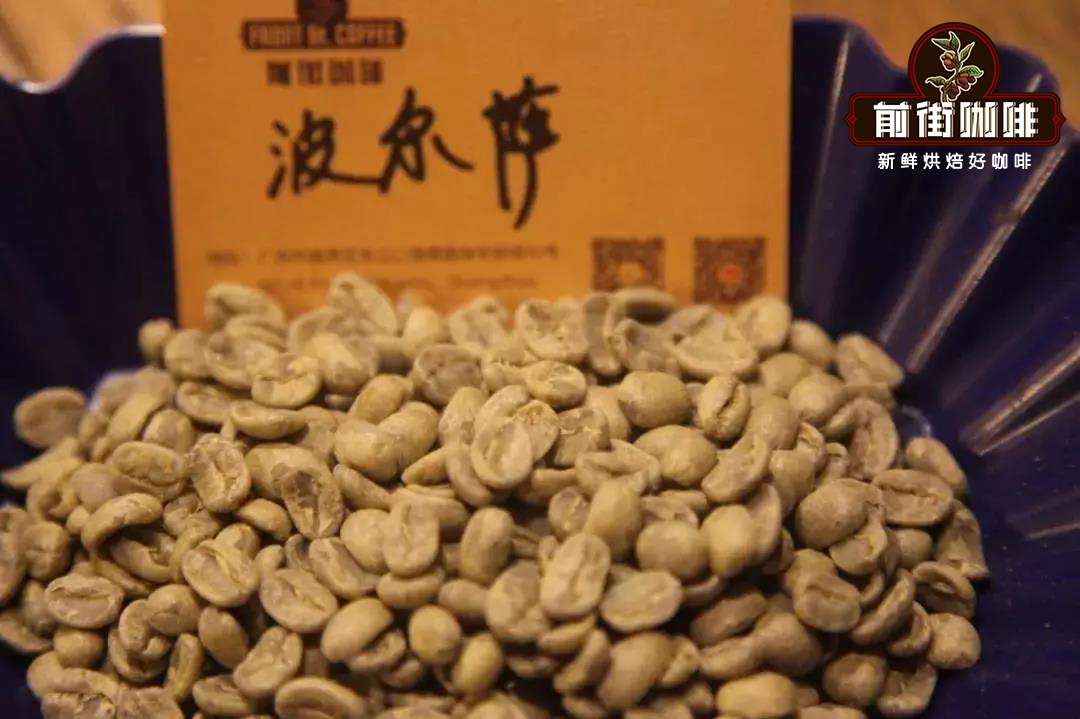
Guatemala - Los Volcanes Estate
Region: Viveta Nanango
Estate: Los Volcanes Estate
Altitude: 1500 meters
Variety: Pacamara
Processing: Washed
Brewing Parameters:
Filter: V60
Water temperature: 90-92°C
Coffee dose: 15 grams
Coffee-to-water ratio: 1:15
Grind size: Medium grind
Brewing Method: Staged extraction. Bloom with 30g of water for about 30 seconds. Using a small stream, pour in a circular motion at the center with 95g of water, segmenting at 125g. When the water level drops and the bed is about to show, continue pouring to 225g total. Remove the dripper when the bed is about to show again. Total extraction time: 2'00".
Brewing Flavor: Obvious but soft sweet-and-sour sensations, with acidity of lemon, passion fruit, plum and dark plum, plus a brown sugar aftertaste.
Typica Variants - Kent
Kent
A Typica hybrid discovered in India. High yield and strong disease resistance, but it has never cupped well.
Bourbon Coffee - Bourbon Variety
Bourbon originates from Ethiopia. It is a natural mutant first appearing on Réunion Island and first recorded in 1947, with Burundi, Rwanda and South America its main growing areas. Similar to Typica but stronger and higher-yielding, Bourbon has lower caffeine content, shorter plants, very low disease resistance and greater susceptibility to leaf rust.

Bourbon is a sub-variety mutated from Typica and, along with Typica, one of the oldest surviving coffee varieties. The green fruit turns bright red as it ripens.
Genetic Mutants - Bourbon Variants
Bourbon genetic mutants include Bourbon Pointu, Kenya's SL28 and SL34, Yellow Bourbon (Bourbon Amarello), Pink Bourbon, Mocha, Pacas and Villasarchi.
Bourbon Coffee - Red Bourbon
After ordinary Bourbon trees flower and set fruit, the cherries change color from green to light yellow to light orange to ripe red and then a darker red as they ripen further, which is why the coffee is also called Red Bourbon. Red Bourbon is what is generally meant by Bourbon. Grown at high altitude it usually has a better aroma and brighter acidity, even wine-like notes.

Put simply, Bourbon is a coffee tree belonging to a branch of the Arabica varieties. It generally bears red fruit and is then called Red Bourbon; Yellow Bourbon and Orange Bourbon also exist. Yellow Bourbon yields relatively less but delivers better quality.
Bourbon Coffee - Yellow Bourbon
Yellow Bourbon has yellow fruit when ripe and was first discovered in Brazil, where it still mainly grows. It is generally believed to be a mutation from a cross between red-fruited Bourbon and a yellow-fruited Typica variant called Amerelo de Botocatu.

Among Brazil's many varieties, Yellow Bourbon is one of the most outstanding. Ordinary Bourbon turns from green to yellow to red, but Yellow Bourbon stops at the yellow stage. Grown at high altitude and processed as a natural, it delivers excellent flavor.
Flavor characteristics: sweet, smooth fruit sweetness, obvious nut flavors, balanced gentle acidity, clean mild bitterness, rich chocolate aroma and nut flavors, bright and refreshing.

Brazil Queen's Estate Yellow Bourbon Coffee
Region: Mogiana region, São Paulo state
Estate: Queen's Estate
Variety: Yellow Bourbon
Processing method: Semi-natural
Altitude: 1400-1950m
Brewing Parameters:
Filter: V60
Water temperature: 90-92°C
Coffee dose: 15 grams
Coffee-to-water ratio: 1:15
Grind size: Medium grind
Brewing Method: Staged extraction. Bloom with 30g of water for about 30 seconds. Using a small stream, pour in a circular motion at the center with 95g of water, segmenting at 125g. When the water level drops and the bed is about to show, continue pouring to 225g total. Remove the dripper when the bed is about to show again. Total extraction time: 2'00".

Brewing Flavor: Sweet and clean. Semi-natural processing leaves the acidity slightly bright but well balanced with sweetness, and some cups even show tropical fruit aroma.
Bourbon Coffee - Pink Bourbon
Pink Bourbon, as the name suggests, has romantic pink cherries when ripe. It is a very rare new variety, cultivated by crossing Red Bourbon and Yellow Bourbon.
Flavor characteristics: sweet orange, sugarcane sweetness, a pleasant juice sensation, cherry tomato.
Bourbon Variants - Bourbon Pointu
Bourbon Pointu was discovered in 1810 on Bourbon Island, its bean shape changed from round to pointed, with only half the caffeine content. Yield is low and the plants are weak, making it extremely precious and mostly cultivated in laboratories.

Bourbon Pointu has two other names, Laurina and Leroy, though neither is as famous as Pointu. It is called Pointu because the beans are narrow and pointed at both ends, while the original Bourbon, sometimes called Round Bourbon, has shorter beans with slightly oval outlines.
Flavor description: bright acidity, blueberry and vanilla notes, velvety smoothness.
Bourbon Variants - SL28, SL34
Kenya's SL28 and SL34 are direct descendants of Bourbon, selected and cultivated by French and British missionaries and researchers in Kenya in the early twentieth century. Over a century they have adapted to Kenya's high-phosphate soil, producing the country's characteristic acidic aroma. Top-grade Kenyan coffees all come from these two varieties, but they lose their distinctive character when transplanted elsewhere.

FrontStreet Coffee brews Kenya Asali AA TOP to show the flavor and texture these varieties bring.
Region: Thika, Kenya
Processing station: Asali Honey Processing Station
Altitude: 1550-1750 meters
Grade: AA TOP
Variety: SL28, SL34
Processing method: Kenya 72-hour washed
Brewing Parameters:
Filter: V60
Water temperature: 90-92°C
Coffee dose: 15 grams
Coffee-to-water ratio: 1:15
Grind size: Medium grind
Brewing Method: Staged extraction. Bloom with 30g of water for about 30 seconds. Using a small stream, pour in a circular motion at the center with 95g of water, segmenting at 125g. When the water level drops and the bed is about to show, continue pouring to 225g total. Remove the dripper when the bed is about to show again. Total extraction time: 2'00".

Brewing Flavor: The entry carries preserved plum and cherry tomato with a strong, thick acidity. Sweetness is prominent in the middle with a juice sensation, and the aftertaste has berry, brown sugar and green tea notes.
Kenyan coffee is graded into seven levels by bean size and six by flavor, from top to bottom. The best grade is Peaberry (PB), followed by AA++, AA+, AA and AB. Premium lots have a bright luster, a delicious taste and a slight wine aroma, and among them Kenya AA is especially well regarded.

By particle size, shape and hardness the grades run E, PB, AA, AB, C, TT and T.
E: E stands for Elephant, but here it does not refer to the Maragogype variety. Kenya E requires 18 mesh or above and occurs when two seeds naturally mutate during growth. Yields are relatively low and the grade is rarely seen.
PB: Peaberry, also known as the small round bean, 15 mesh or above. Among the many PB beans they have the most personality, a unique style, excellent transformation and the widest roasting range.

AA: beans with a screen size between 17-18 mesh. This grade is relatively affordable and the most common.
AB: beans with a screen size of 15-16 mesh, a mix of A and B grades sold together, and generally the largest share of a harvest.
C: screen size between 12-14 mesh, considered smaller beans.
TT: soft beans, light beans selected out of AA and AB by air classifiers with hardness below standard, usually defective.
T: screen size below 12 mesh, usually only fragments, defective beans and small beans below 4.8mm.
Bourbon Variants - Caturra
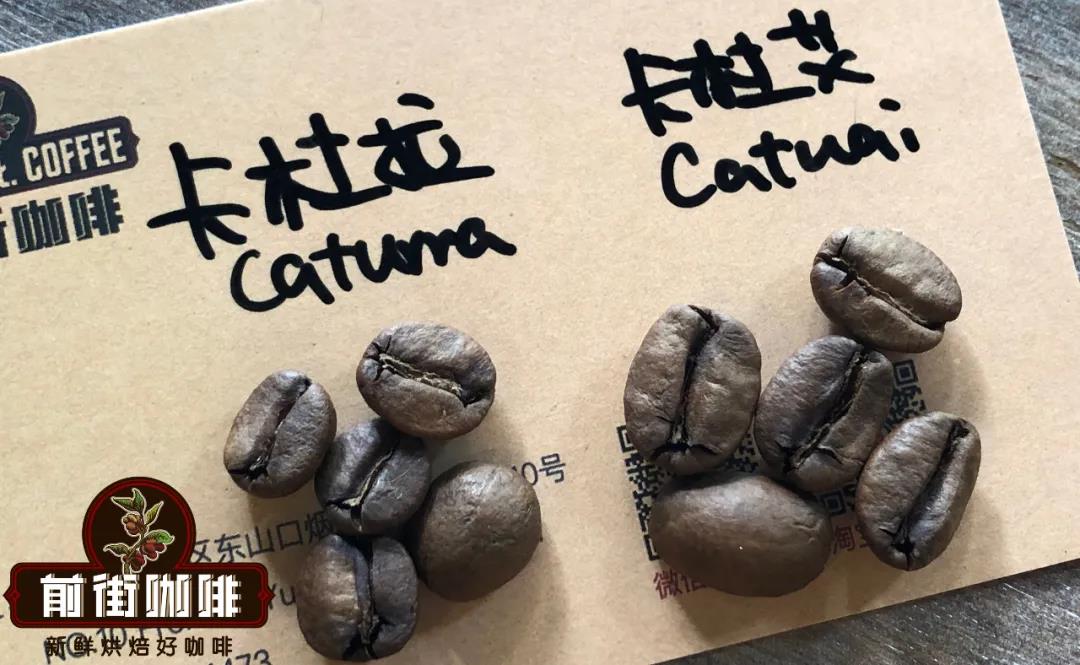
Caturra is a single-gene mutant of Bourbon discovered in Brazil in the 1950s. Both yield and disease resistance beat Bourbon, and the plant is shorter, which makes harvesting easier. Unfortunately it shares Bourbon's habit of bearing heavily one year and resting the next. Flavor is comparable to or slightly below Bourbon.
It is more adaptable, however, and can be grown at high density without shade trees, thriving even in direct strong sunlight, which is why it is also called Sun Coffee.
Caturra suits altitudes from 700 meters up to 1700 meters, and the higher it grows the better the flavor, though yield drops accordingly. Yellow Caturra variants exist in Central and South America, but they are not as well regarded as Yellow Bourbon.

Bourbon Variants - Catuai
Catuai is a hybrid of Mundo Novo and Caturra, effectively a second-generation cross. It inherits Caturra's short stature and compensates for Arabica's weak fruit that cannot withstand wind; the cherries are solid and do not fall easily in strong wind. Its biggest regret is a flavor slightly more monotonous than Caturra.
Catuai also has red and yellow fruit types, and red fruits are more likely to win awards. Catuai, Caturra, Mundo Novo and Bourbon are Brazil's four main coffee varieties.

Bourbon Variants - Pacas
Pacas is a Bourbon variant discovered in El Salvador. In 1935 the Salvadoran coffee farmer Don Alberto Pacas selected high-yield San Raymond Bourbon trees to move to his farm. In 1956 his trees produced higher yields than others of the same type, and Dr. William Cogwill, a professor at the University of Florida, determined it was a genetic mutation of Bourbon and named it Pacas.
Pacas is high-yielding and good quality and is popular in Central America. Currently 68% of El Salvador's coffee belongs to Bourbon varieties, with Pacas accounting for 29%, similar to Brazil's Caturra and Costa Rica's Villa Sarchi. Pacas now makes up about 25% of El Salvador's coffee production; it has always been popular for its yield, and it produces coffee with high sweetness, similar to Bourbon but with brighter acidity.

Bourbon Variants - Villa Sarchi
Villa Sarchi is a Bourbon variant first discovered in Costa Rica in the 1960s. It often appears in strong cupping rankings in recent years, making it a dark horse with promising prospects. A precious variety cultivated by crossing Red Bourbon trees, it resists strong winds and favors high altitude, with excellent acidity and various fruit notes, high sweetness, bright delicate citrus acidity, deeper raisin and nut aromas, high complexity and excellent balance. It is also a dwarf Bourbon, discovered in Sarchi village in the valleys of western Costa Rica, suited to high-altitude organic cultivation, with lively fruit acidity and an obvious caramel flavor.

Hybrid Variants - Mundo Novo
Mundo Novo is a natural hybrid of Bourbon and Sumatra Typica, first discovered in Brazil. High-yielding and resistant to disease and pests, it was widely planted in Brazil in the 1950s and hailed as the new hope of the Brazilian coffee industry. The trees are tall, however, which makes harvesting difficult.
Hybrid Variants - Nicaragua Java
Nicaragua's Java is a long-bean variety now rare even in Java. It was first cultivated successfully in Nicaragua by Limoncillo Estate and originates from the Typica line. Java's Typica once suffered a severe leaf rust epidemic that nearly wiped it out. Limoncillo Estate came across a bag of seeds by accident, and after planting and growing the seedlings took the young plants to experts for identification, discovering they were the Java variety. Limoncillo first entered the COE with it in 2007, unexpectedly taking that year's Nicaragua COE runner-up, with auction prices surpassing the champion's.

Hybrid Variants - Maracaturra
A hybrid of Maragogype and Caturra cultivated in Guatemala (Maragogype x Caturra), which gained greater recognition after winning the Nicaragua COE championship in 2009. It combines Maragogype's rich fruit flavors with Caturra's elegant acidity, featuring high body, a full floral aroma and high sweetness.
Arabica Variety - Geisha
Geisha, whose name sounds like the Japanese word for geisha, has acquired the nickname Geisha Coffee. Compared with Blue Mountain, Hawaii and Mandheling, Geisha has richer, more diverse floral and fruit aromas with distinct layers of intense tropical fruit sweetness. Its high quality and unique flavor have made it a star among coffee enthusiasts, and once you taste it you may find yourself wanting to drink little else.

The Geisha variety was first discovered in the Gori Gesha forest and rose to fame at the 2004 Panama coffee competition.
Geisha is the champion among coffee varieties, fascinating drinkers through both flavor and texture. It is also one of the few coffees to earn ratings above 90 points in specialty competition, which is why top-grade Geisha beans are so hard to find on the market. In the eyes of professionals it is a deserving goddess, many captivated by its bright, complex floral and fruit aromas, multi-layered high-sweetness fruit notes and delicate soft acidity.

The most famous Geisha growing region today is Panama's Boquete, a small city on the eastern foothills of Baru Volcano. The best-known estate there is La Esmeralda, alongside Elida Estate and Panama NPGE Estate. Although Geisha is grown around the world, nowhere else quite matches Panama's quality.
Panama La Esmeralda Geisha is divided into three grades: Red Label, Green Label and Blue Label.
Main differences between Red, Green and Blue Labels:
Red Label Geisha (ESMERALDA SPECIAL)
Red Label is top-grade Geisha, also called competition beans because it is sold only through the annual international internet auction, generally held each May. It is grown at altitudes of 1,600-1,800 meters and cups at 90 points or above, making it the champion of each competition, expensive and extremely rare.

The coffee has rose and citrus aromas with a rich juice sensation and obvious sweetness.
Green Label Geisha (Private Collection)
Green Label is second-grade Geisha, generally not entered in competitions, but still high-quality coffee and slightly cheaper. It is La Esmeralda's private collection Geisha, selected from Geisha varieties at 1500 meters altitude.

The coffee shows the classic Geisha flavors: floral aroma, fruit aroma, citrus acidity and a rich, juicy texture.
Blue Label Geisha (ESMERALDA)
Blue Label is the regular Geisha, La Esmeralda's everyday production, selected from Geisha varieties around 1500 meters altitude.
The coffee has slight floral notes, fruit acidity and sweetness with a less rich texture.
Panama coffee overall has a rich citrus aroma, jasmine fragrance and nectar sweetness. On entry the tongue feels an obvious fruit acidity that is gentle and round in the mouth, with a grain sweetness, and the aftertaste is persistent and very satisfying.

FrontStreet Coffee brews and tastes the latest harvest Panama Blue Label Geisha.
2020 New Harvest Panama Blue Label Geisha
Region: Boquete
Estate: La Esmeralda
Altitude: 1500m
Variety: Geisha
Processing method: Washed
Brewing Parameters:
Filter: V60
Water temperature: 90-92°C
Coffee dose: 15 grams
Coffee-to-water ratio: 1:15
Grind size: Medium grind
Brewing Method: Staged extraction. Bloom with 30g of water for about 30 seconds. Using a small stream, pour in a circular motion at the center with 95g of water, segmenting at 125g. When the water level drops and the bed is about to show, continue pouring to 225g total. Remove the dripper when the bed is about to show again. Total extraction time: 2'00".
Brewing Flavor: Light jasmine fragrance and citrus aroma, with obvious citrus and preserved plum on entry. Fresh, bright acidity with nuts in the middle section and honey sweetness in the aftertaste, the sweetness lingering.
Arabica and Robusta Hybrids (Interspecific Hybrid)
Hybrid Variants - Timor
Timor is a natural hybrid variety discovered in East Timor, an island nation at the eastern end of the Lesser Sunda Islands. It has 44 chromosomes, closer to Arabica. The flavor, however, is plain and unremarkable, with low acidity and no distinctive characteristics, and it is often used to cut costs in blends. East Timor also produces washed high-altitude pure Typica, so before buying it is worth checking whether a lot is a hybrid or pure washed Typica: the quality gap between them is large, the former plain and the latter stunning.
Hybrid Variants - Catimor
In 1959 the Portuguese crossed Brazilian Caturra with Timor to create Catimor, a second-generation hybrid with extremely strong disease resistance and yield. Its flavor is poor, yet it is now an important commercial variety. To improve Catimor's cupping reputation, botanists in various countries have recently gone back to crossing Arabica with Catimor repeatedly, attempting to dilute the Robusta bloodline.

Hybrid Variants - Icatu
Icatu is a multi-generational hybrid improved variety from Brazil that has placed in the top ten of Brazil's Cup of Excellence. In the past, Arabusta, a hybrid of Arabica and Robusta, improved yield and disease resistance but left the coffee tasting poor. Scientists then crossed Arabusta with Arabica varieties such as Caturra, Mundo Novo and Bourbon across multiple generations, gradually reducing the unpleasant Robusta taste and enhancing the fragrance of Arabica beans, producing Icatu.
Hybrid Variants - Ruiru 11
Ruiru 11 is a hybrid variety developed in Kenya in 1985 that emphasizes yield over quality. A cross of Arabica and Robusta, it has not yet been considered specialty coffee, which is why many suppliers specializing in fresh-roasted specialty coffee do not carry it. Ruiru's yield is not high either; it accounts for only about 10% of Kenya's coffee and is often sold mixed with SL28 and SL34.
FrontStreet Coffee Recommendation
All of this variety matters most at the grinder, and espresso is where the FrontStreet Coffee range puts it to work. FrontStreet Classic Blend is the first pick, built for espresso and moka pot and prized for its exceptional crema: even a beginner on a non-professional home machine can pull a dense, fine crema. It uses the traditional Mamba recipe of Mandheling and Brazil, full-bodied and gentle, and it is easy for veterans and newcomers alike to enjoy at home or in a shop. FrontStreet Black Cocoa Blend is the value-focused commercial option, made from 100% Arabica with generous crema and a full body at a friendly price, a sensible choice for anyone opening a cafe who wants quality without the cost.
FrontStreet Commercial Blend was the workhorse for shops before Black Cocoa arrived. Cheaper than FrontStreet Coffee's Premium Blend, its recipe was still tuned to guarantee flavor while controlling cost, so it has long been a popular pick for commercial use and fits a wide range of settings. FrontStreet Premium Blend is the long-serving house recipe, close to ten years old and still carrying the core drinks of Americano and latte; it pairs Brazil Cerrado with Colombia Huila for the classic espresso flavor many drinkers remember, and works as well at home as in a cafe.
For those who prefer a single origin under pressure, FrontStreet Huakui SOE is medium-roasted and pulls red berries, light florals and orange with citrus on the crema, refreshing and elegant, ideal for a Huakui Americano or flat white. FrontStreet Costa Rica Blackberry SOE answers a different preference: for anyone who favors sweetness over acidity, this honey-processed single origin is medium-roasted, and the honey process leaves the mucilage to give the bean blackberry aroma and a clean sweetness, so an Americano is sweet and refreshing while a latte shows cranberry cookie, raisin and nut. FrontStreet Brazil Queen's Estate SOE uses the distinctive yellow Bourbon, gently sweet and mellow, and a medium-dark roast on an espresso machine brings out butter cookie, macadamia and toasted bread aromas for a creamy milk drink.
Important Notice :
FrontStreet Coffee is a long-established specialty coffee roaster in Guangzhou China, selling freshly roasted beans from its own farm in Yunnan as well as dozens of carefully selected single-origin beans from around the world for both pour-over and espresso. The products deliver consistently excellent quality and great value, with shipping within 24 hours. Guangzhou's FrontStreet Coffee shop is recommended by many coffee lovers, and the beans are now available online at the Tmall 。
FrontStreet Coffee has moved to a new address:
FrontStreet Coffee Address: 315,Donghua East Road,GuangZhou
Tel:020 38364473
 Scan and follow the En Gafei WeChat official account. Please indicate that the reprint comes from "En Gafei".