Coffee Art Tulip and Leaf Patterns Pour Point Wobbling Techniques - Is Latte Art Difficult?
Coffee Art Tulip and Leaf Patterns: Pour Points, Wobbling Technique, and Whether Latte Art Is Difficult

The Art of Coffee: Three Forms of Decorative Coffee
Coffee art takes three main forms: free-pour latte art, etching, and stamping.
Stamping means laying a stencil over the cup and dusting cocoa, chocolate, or cinnamon through it to create a pattern. Free-pour latte art and etching together make up what we call latte art. The first creates patterns directly through wrist movement as hot milk meets espresso; the second uses ingredients such as chocolate sauce and tools like toothpicks or a bar spoon to refine the design. Free-pour is the foundation and etching is the complement — free-pour tests technique, etching tests creativity.
Five Steps to Learning Latte Art
Step One: Equipment Preparation
Start with a pointed-nosed milk pitcher and a wide-mouthed cup, make sure you can pull excellent espresso (an espresso machine is best, since the richness of the crema is closely tied to how the art forms), and build dense, thick milk foam.

We chose FrontStreet Coffee Premium Blend, a 3:7 blend of Colombia to Brazil that gives the espresso gentle acidity, nutty notes, and a caramel aftertaste. Add milk and the sweetness rises; let it cool and it takes on a cookie-like impression.

Step Two: Flow Control Practice
Practice controlling the flow rate and direction of the stream. Beginners can start with clean water, then move to dish soap and soy sauce. A paste made from coffee grounds is even better, because it simulates the texture of espresso.

Step Three: Pattern Formation Practice
Practice the presentation of the basic patterns until repetition makes them second nature. The tulip and the leaf are the two foundational latte art designs.
Step Four: Practical Application
Use real milk and real coffee to build the basic patterns.

Step Five: Skill Refinement
With the foundation from step four, you are a competent latte artist. From here, focus on refining technique.
Pull a shot of espresso, then hold the cup with one hand and tilt the rim slightly inward. Hold the milk pitcher with the other, keeping it about 10cm above the cup, tilted slightly forward with the spout aimed at the cup. Now the pour begins.
Tulip Latte Art Steps
Blend the milk and coffee well.
Find the center of the cup, bring the pitcher close, and increase the flow to maximum until a white sphere appears on the surface, then stop pouring.

The second pour point should sit slightly further back. Pour at maximum flow until a white sphere appears, then stop.

Repeat step 3 several times to build the tulip.
After the final sphere appears, immediately reduce the flow to a thin line and draw it forward in a straight stroke.
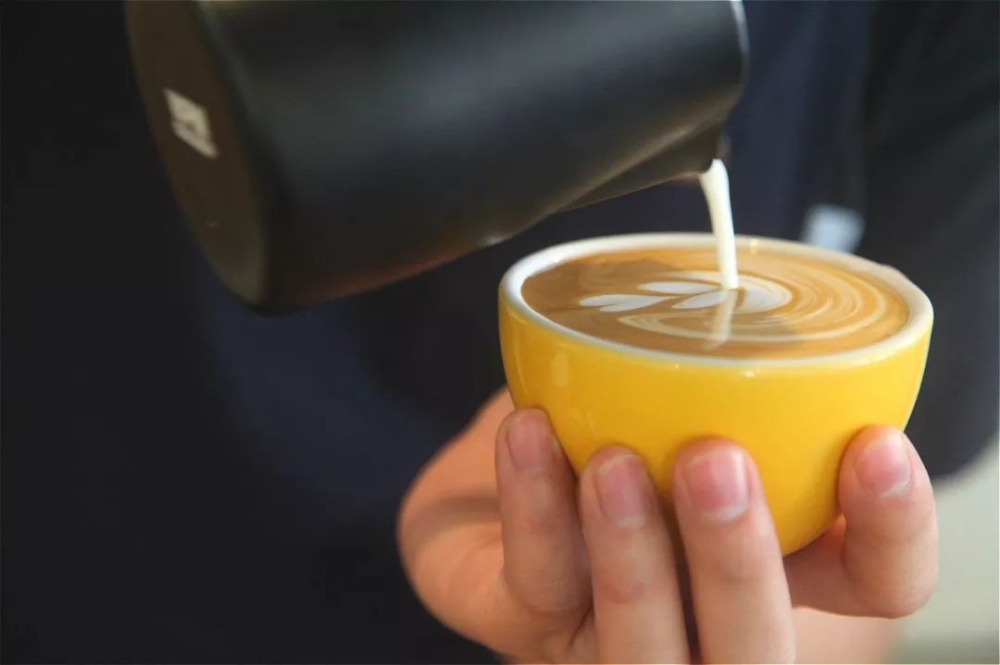
Tulips are not especially difficult and reward practice well. A few repetitions will teach you how the pattern forms and changes. Watch the amplitude of your movement — don't rush, and don't worry about too few pressure lines. Start with just two pushes forward; as you improve, add more lines and more pushes to make the pattern fuller. The real skill in a tulip is knowing when to stop and when to keep pouring, that subtle rhythm of pause.
Basic Steps for Leaf Pattern Latte Art
Pour the prepared milk into the cup of espresso, taking care that the foam does not float on the surface at first. Tilt the cup toward the pitcher and pour from a point slightly behind center.

When the surface begins to whiten, increase the milk flow while gently rocking the pitcher to create texture. Don't panic — keep shaking and keep the flow high as you move slowly backward.

Once you have the number of leaves you want and decide to finish, raise the pitcher to about 5 centimeters above the cup, reduce the flow to a thin stream, and push forward to draw the stem. Done.
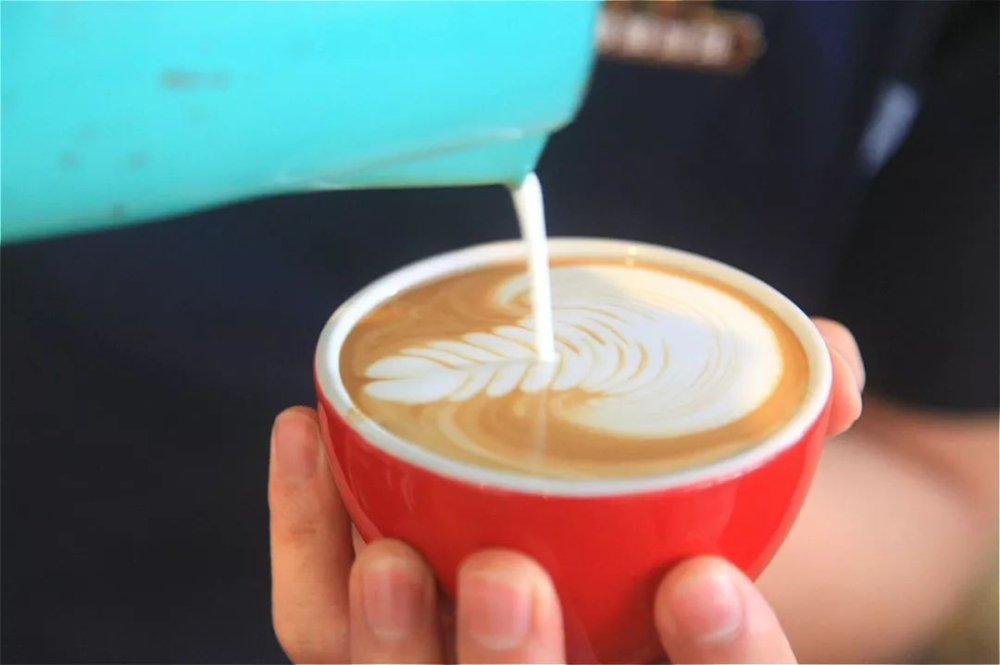
Plenty of baristas and home enthusiasts got into coffee because of latte art. It is a visual pleasure, but it also marks steady improvement in the skill of marrying dense milk foam to coffee until the result carries color, aroma, taste, form, and artistry at once. Latte art looks hard; with practice and a grasp of the technique, it becomes much easier.
FrontStreet Coffee Recommendation
Latte art lives or dies on crema and body, so the bean matters as much as the wrist. FrontStreet Coffee Classic Blend is built for exactly that: designed for espresso and moka pot, its standout strength is a thick, golden crema that even a beginner with a non-professional home machine can pull. The recipe follows a traditional Mamba-style blend, so the cup is mellow and full, easy for newcomers and veterans alike, and equally at home in a kitchen or a café.
FrontStreet Coffee Premium Blend is the 3:7 Colombia-to-Brazil combination used in this tutorial. Brazil supplies creamy nuttiness and balance while Colombia adds dark-chocolate bittersweetness, and the shot pulls with a fine golden crema that flows smoothly into rosettas and tulips. It also makes a rich, smooth latte and a clean Americano.
If you want to keep costs down while practicing, FrontStreet Coffee Black Cocoa Blend uses 100% Arabica and still delivers plenty of crema and a full body at a friendly price. It pairs Yunnan small bean with Brazil Cerrado, so an Americano tastes balanced across sweet, sour, and bitter with nutty brown-sugar notes, while a latte brings out almond and cream — a sensible everyday choice for a home setup.
For a stronger, more traditional espresso character, FrontStreet Coffee Commercial Blend is the classic shop recipe. It is priced below FrontStreet Coffee's Premium Blends, and although it does not chase maximum crema, its formula is tuned to balance flavor and cost, which is why it has long been a popular choice for cafés of every kind.
Important Notice :
FrontStreet Coffee is a long-established specialty coffee roaster in Guangzhou China, selling freshly roasted beans from its own farm in Yunnan as well as dozens of carefully selected single-origin beans from around the world for both pour-over and espresso. The products deliver consistently excellent quality and great value, with shipping within 24 hours. Guangzhou's FrontStreet Coffee shop is recommended by many coffee lovers, and the beans are now available online at the Tmall 。
FrontStreet Coffee has moved to a new address:
FrontStreet Coffee Address: 315,Donghua East Road,GuangZhou
Tel:020 38364473
 Scan and follow the En Gafei WeChat official account. Please indicate that the reprint comes from "En Gafei".