Where Are Blue Mountains Grown - Introduction to the Flavor Characteristics of Jamaica Blue Mountain No.1 Coffee
Blue Mountain coffee has always been remembered for its mellow, smooth taste - because its flavor is not so much like coffee as like a cup of milk tea. Why? Coffee usually reads as either sour or bitter, yet Blue Mountain carries every quality of a good coffee: not only is it rich and mellow, but because its sweetness, acidity, and bitterness are so perfectly balanced, it has no harsh bitterness at all, only a moderate, perfectly judged acidity. At FrontStreet Coffee, washed Blue Mountain has always been the most popular. It is generally drunk as a single origin, and because production is extremely limited, it is remarkably expensive. High-quality fresh Blue Mountain has a particularly lasting flavor - no wonder coffee drinkers say it is endlessly memorable.

Although it is now easier to buy authentic Blue Mountain than it once was, many coffees on the market still carry the Blue Mountain name without being genuine. Blue Mountain comes in several varieties: Jamaica Blue Mountain Coffee, Jamaica High Mountain Coffee, and Jamaica Coffee. Only Blue Mountain coffee grown in Jamaica's Blue Mountains is true Jamaica Blue Mountain Coffee.
The Origin of Blue Mountain Coffee
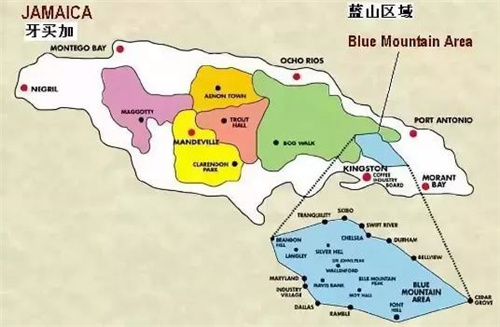
Blue Mountain coffee is produced in Jamaica's Blue Mountains, located in the eastern part of the island. Because the range is surrounded by the Caribbean Sea, whenever the weather is clear the sun strikes the blue sea surface and the peaks reflect the brilliant blue light of the water - hence the name. Not every coffee tree in the Blue Mountain area, however, can produce high-quality Blue Mountain beans. The Jamaica Coffee Industry Board (CIB) has set strict production standards: only Arabica coffee grown at 910-1,700 meters can be called Jamaica Blue Mountain Coffee, while coffee from the remaining lower-altitude areas is classified as Jamaica High Mountain Coffee or Jamaica Prime Coffee.
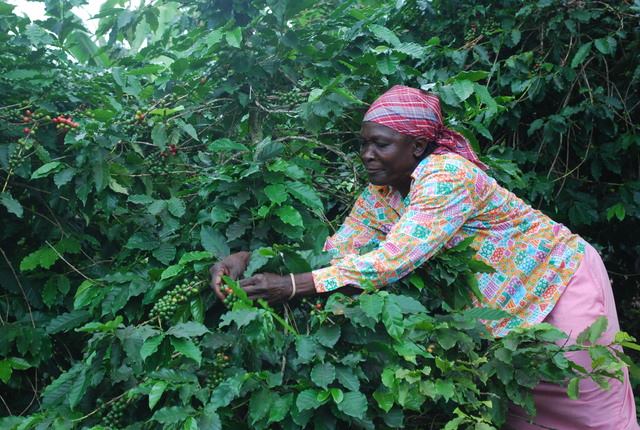
Here the air is fresh and unpolluted and the climate humid, with temperatures around 27°C and frequent cloud and fog that shade the coffee trees. All the trees grow on rugged mountain slopes, which makes harvesting extremely difficult - only local, skilled female workers can manage it. At harvest, selecting perfectly ripe cherries is crucial, since underripe or overripe beans will affect quality. Combined with fertile volcanic soil, this creates exceptionally high-quality Blue Mountain beans.
Types of Blue Mountain Coffee on the Market
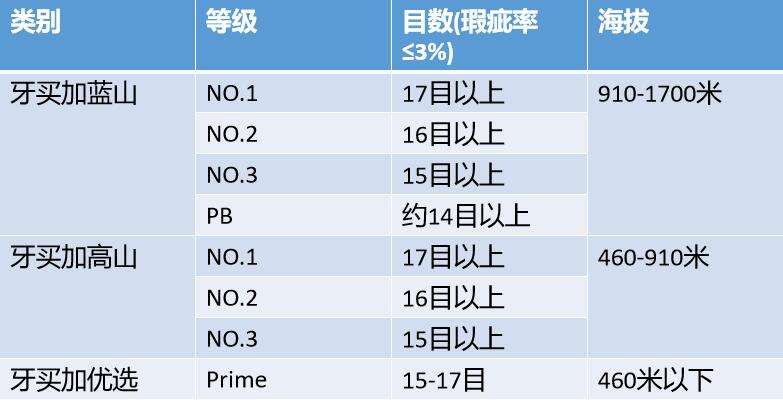
Precisely because Blue Mountain has low production and high prices, many coffees on the market are labeled as Blue Mountain. By growing altitude, Jamaica divides coffee grown in the Blue Mountains into Jamaica Blue Mountain Coffee, Jamaica High Mountain Coffee, and Jamaica Coffee. Only Arabica Typica from altitudes of 910-1,700 meters in regions including St. Andrew, St. Mary, St. Thomas, and Portland can be called Jamaica Blue Mountain Coffee. Coffee grown below 910 meters and above 460 meters is called Jamaica High Mountain Coffee, while coffee below 460 meters is Jamaica Prime Coffee. Jamaica Blue Mountain itself is further divided into four grades, from highest to lowest: NO.1, NO.2, NO.3, and PB (peaberry). The basic standards for the Blue Mountain No.1 green beans that FrontStreet Coffee sources include beans of 17 mesh or larger, a defect rate below 2%, and a moisture content around 13%. They appear full, uniform in size, and blue-green in color. In flavor, they combine pleasant acidity, sweetness, bitterness, aroma, and body.
Blue Mountain Coffee Growing Regions
Jamaica Blue Mountain Coffee has four major growing regions: St. Mary, St. Thomas, St. Andrew, and Portland. Together these four regions cover about 6,000 hectares - one-third of the entire Blue Mountain growing area - with a further 1,200 hectares used for Jamaica High Mountain Coffee and Jamaica Prime Coffee. In recent years, less than 15% of the coffee beans produced in Jamaica can be labeled Blue Mountain Coffee.
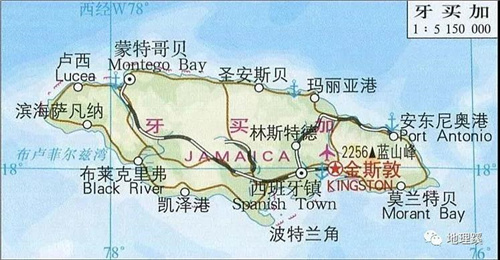
Today St. Andrew is still one of the three major Blue Mountain growing regions, alongside Portland and St. Thomas. Some small estates also grow Blue Mountain coffee, such as Wallenford Estate, Silver Hill Estate, and J. Martinez's Atlanta Estate. Even the largest estate owners in this region are considered small-scale by international standards, and many are smallholders whose families have worked the land for two centuries.
There are currently six symbols that can represent the origin of Blue Mountain coffee, such as M.B.C.E (Mavis Bank Central Factory), M.H.C.C.T. (Mavis Hill Coffee Cooperation Factory), P.X.X.S.H. (Portland Blue Mountain Coffee Cooperation Factory), Coffee Industry Association (Wallenford), Coffee Industry Association (St. John's Peak), and J.A.S (Blue Mountain Coffee), with some estate-level coffees also noted on wooden barrels.
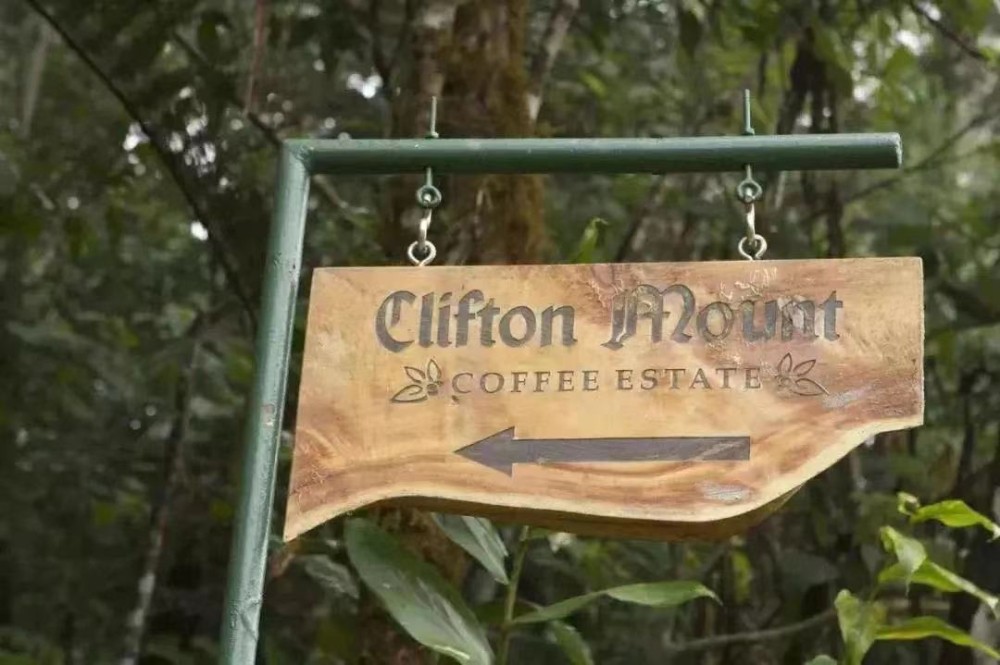
The Blue Mountain No.1 coffee introduced by FrontStreet Coffee comes from Clifton Farm. Clifton is the largest estate in this region, but by international standards it is still small-scale cultivation, with many estate owners being smallholders whose families have worked this land for two centuries. Through comparison, FrontStreet Coffee believes that Clifton Farm's Blue Mountain No.1 performs exceptionally well and can serve as one of the outstanding representatives of Blue Mountain Coffee.
Clifton Estate
Clifton Estate is one of Jamaica's most ancient estates, having begun cultivating and producing coffee in the mid-18th century. By 1900 it had developed into Jamaica's largest estate. In 1978 the Sharp family took over management of Clifton Estate, improved the coffee-growing environment, introduced advanced equipment, and established BMCP, currently Jamaica's largest coffee processing plant.
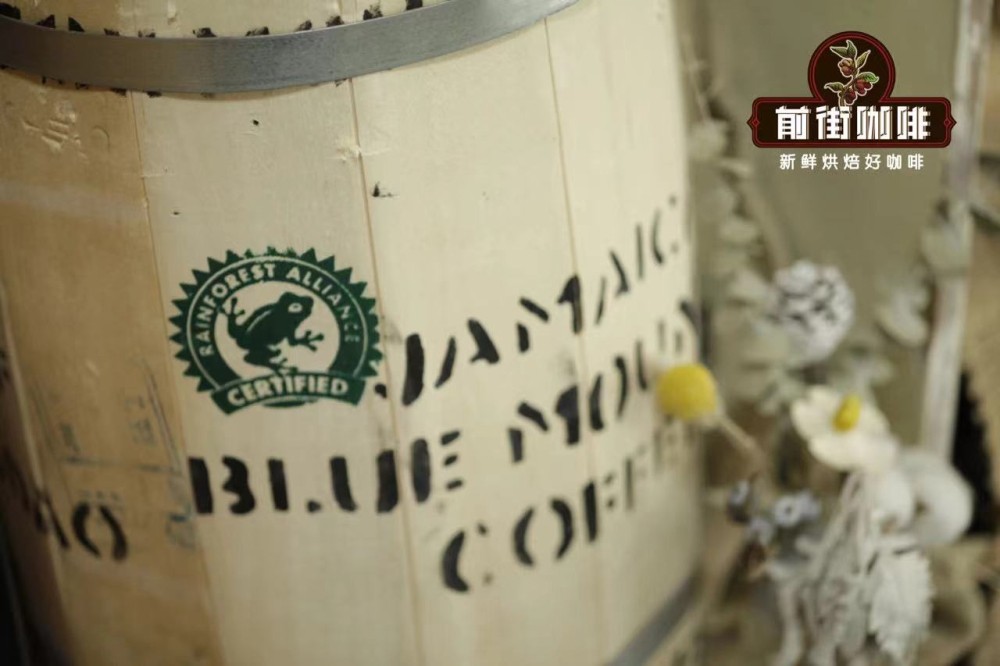
Clifton Estate is one of the estates certified by the Rainforest Alliance. Its entire coffee production process follows sustainable environmental principles, minimizing pollution of all kinds, and the water used in the processing plant is recycled. When FrontStreet Coffee receives Blue Mountain green beans, the wooden barrels are printed with a green rainforest tree frog logo - meaning that among all green coffee beans, only Blue Mountain beans are packaged in wooden barrels, and the barrels carry that green tree frog on the outside.
Blue Mountain Coffee Varieties
Jamaica Blue Mountain Coffee is of the ancient Typica variety, which has the longest history. Typica is no longer widely cultivated because of its weak constitution, poor disease resistance, and very low yield per plant. Typica was introduced to the Blue Mountains in the 18th century and has been there for over two hundred years. Blue Mountain Typica has adapted to the local island terroir and evolved better disease resistance, being notably stronger against coffee berry disease than typical Typica.
Typica has a characteristic bronze-colored leaf tip and is known as red-topped coffee. Its opposite leaves are long-oval with smooth surfaces, the terminal branches are long with few side branches, and the flowers are white, blooming at the base where leaf stems meet the branches. It has a weak constitution, poor disease resistance, and very low yield per tree. The mature cherries look like cherries and are bright red.
Blue Mountain Coffee Bean Processing Methods
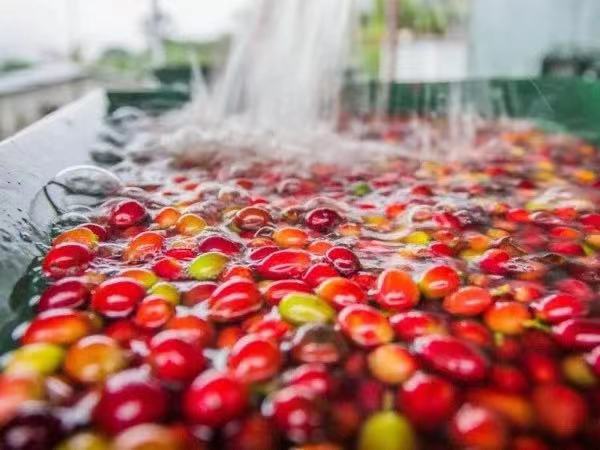
Blue Mountain was once washed-processed only, but as specialty coffee advanced, Clifton Farm attempted a natural-processed Blue Mountain batch for the first time in 2019. Washed processing: after harvesting, the cherries first undergo floating-water screening to remove the skin and pulp, then ferment for 8-12 hours. The fermented beans are placed in pools and moved back and forth, using the friction of the beans and the power of flowing water to wash them until smooth and clean. The washed green beans are then air-dried until the moisture content reaches 12-14%. The dried beans are strictly screened once more before being packaged and stored in warehouses.
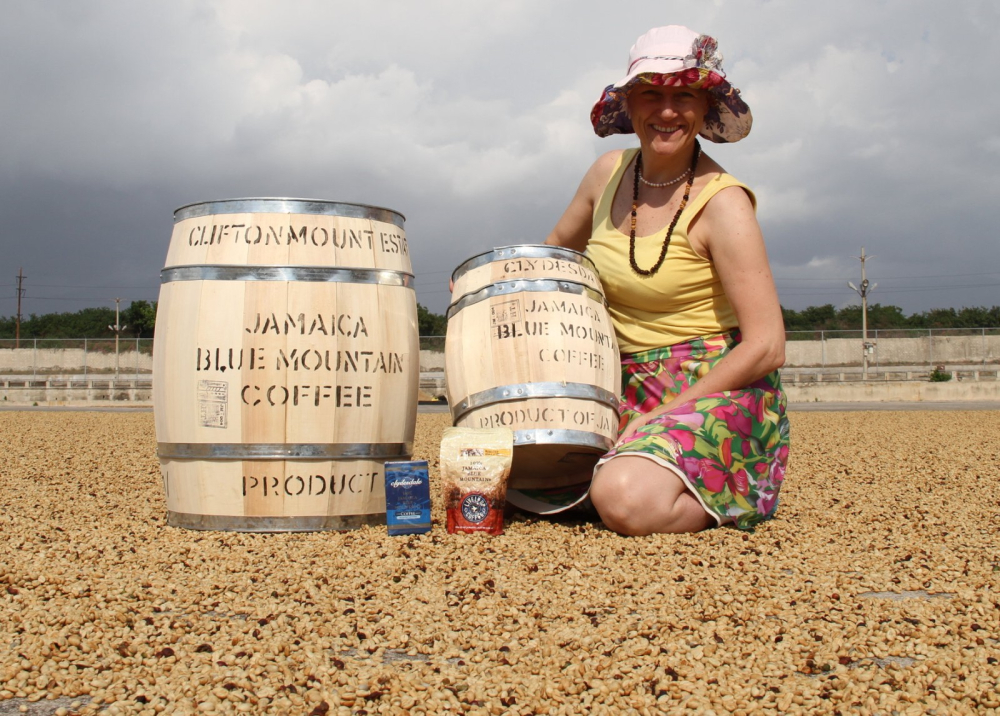
Although the coffee market has diversified and Blue Mountain has tried small batches of natural-processed beans, washed Blue Mountain remains the most classic expression. FrontStreet Coffee believes washed Blue Mountain has a rich aroma, a clean taste, and a balanced acidity, sweetness, and bitterness, and better represents Jamaica's high-quality specialty coffee.
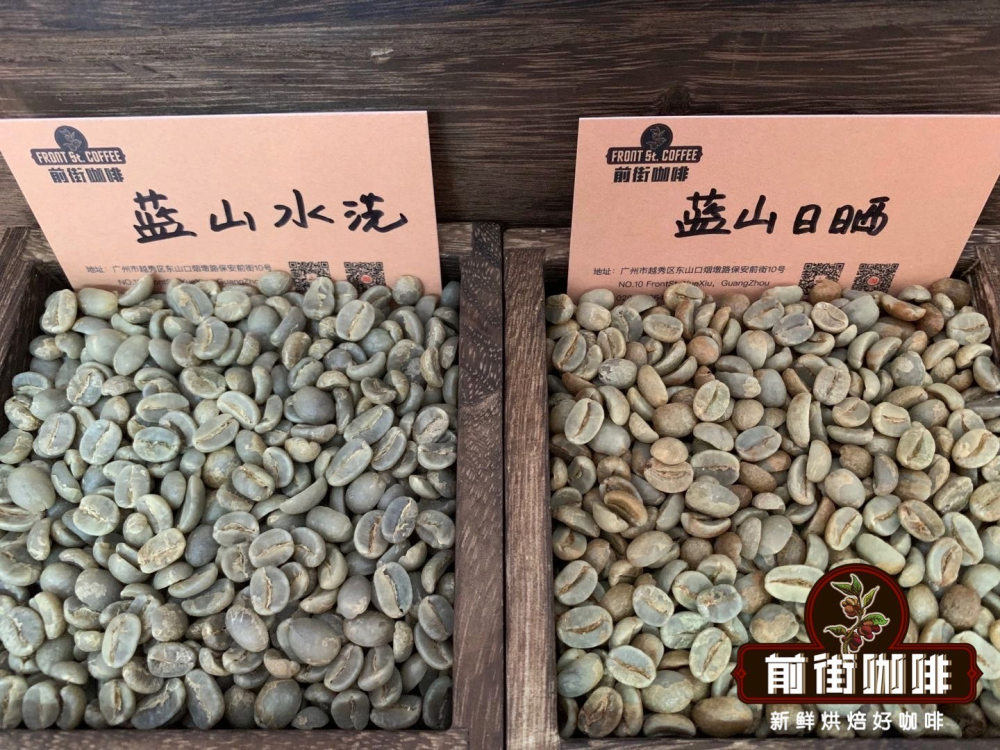
FrontStreet Coffee offers both natural-processed and washed-processed Blue Mountain Coffee.
FrontStreet Coffee Brewing Recommendations
Some drinkers ask how to brew such excellent beans to bring out their flavor. When it comes to brewing, FrontStreet Coffee has always held that the freshness of the beans is a very important factor - fresh beans let you experience the coffee's richness to the fullest. All beans shipped by FrontStreet Coffee are roasted within 5 days, because the roastery understands that freshness greatly affects flavor. Its roasting philosophy, "Freshly Roasted Good Coffee," ensures that every customer who places an order receives the freshest coffee on arrival. The resting period is about 4-7 days, so customers receive their coffee at its peak.
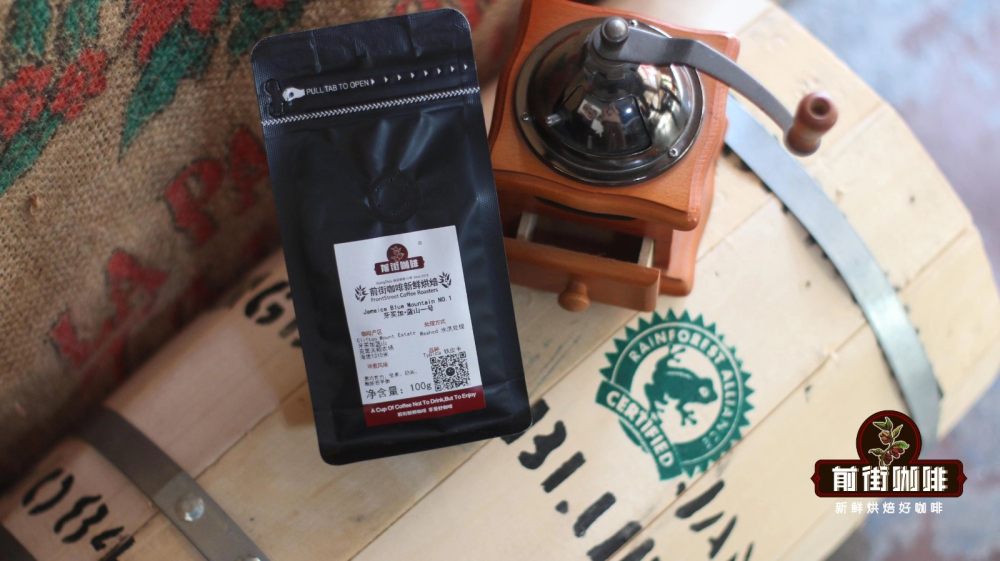
Some customers ask FrontStreet Coffee to grind the beans for them, which is also fine. But a reminder: if the beans are ground in advance, there is no need for a resting period, because during transport the pressure from carbon dioxide building up in the packaging also rounds out the flavor, so you can brew a cup immediately on receiving ground coffee. Ground coffee, however, should be brewed promptly, since it oxidizes relatively quickly when exposed to air, meaning the flavor dissipates faster and the coffee tastes less good. FrontStreet Coffee therefore recommends buying whole beans and grinding fresh for each brew.
FrontStreet Coffee Blue Mountain Brewing Parameters
FrontStreet Coffee believes the excellent flavor of Blue Mountain lies in its balanced acidity, sweetness, and bitterness, high body, and full aroma. For roasting, FrontStreet chose a medium-dark roast to highlight the beans' nutty and cocoa aromas. A KONO dripper provides better body.
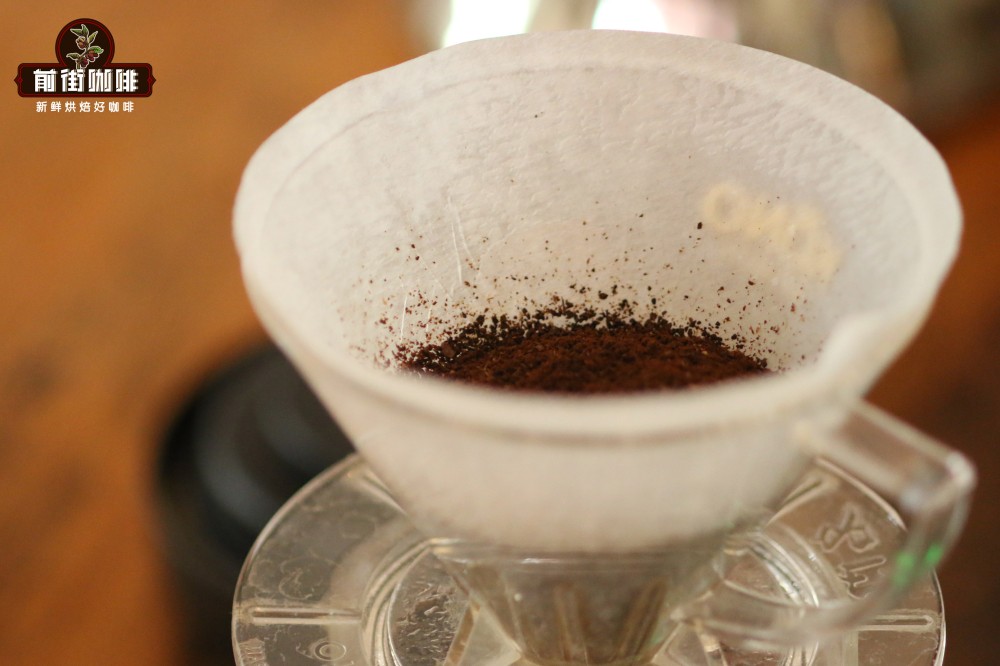
First, wet the KONO dripper so the filter paper fits snugly against it. Pour out the water from the serving pot while adding 15 g of coffee grounds. Use 30 g of water to bloom for 30 seconds, then begin pouring in small circles around the center until reaching 125 g, then pause. When the coffee bed drops to half the dripper's height, pour the second batch with the same technique until reaching 225 g. When dripping is complete, remove the dripper. Time from the start of pouring; extraction is 2'00". Finally, take the whole cup of coffee and shake it well before pouring into cups for tasting.
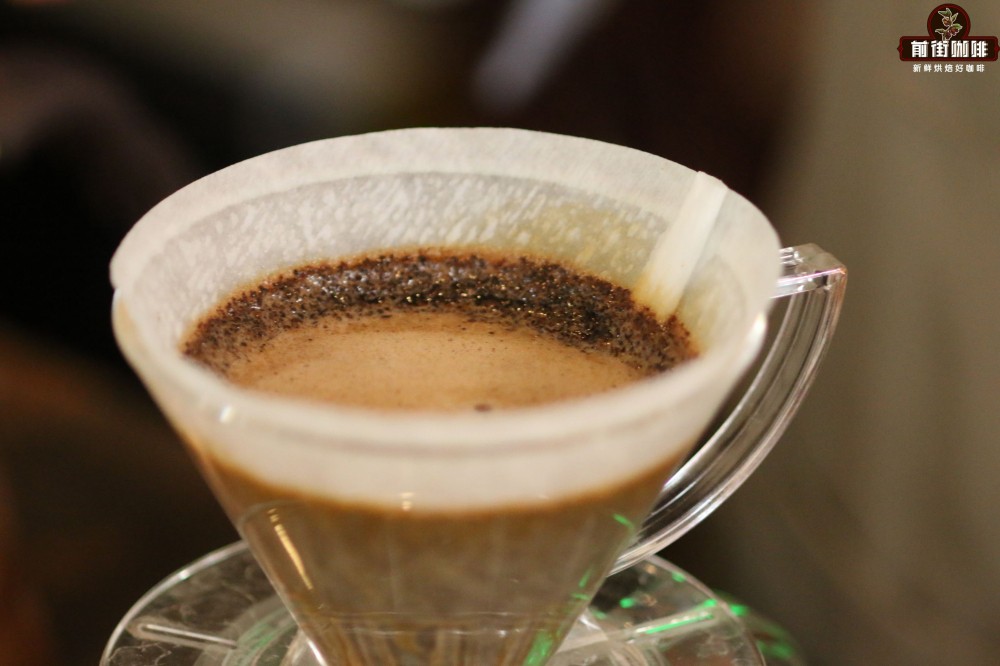
[FrontStreet Coffee Natural Blue Mountain Coffee] Slight berry acidity, reminiscent of dark plums and mulberries, with excellent overall balance, rich dark chocolate and nutty flavors, and a slight fermentation sensation.
[FrontStreet Coffee Washed Blue Mountain Coffee] Rich dark chocolate and nutty flavors, a creamy smooth texture, and balanced acidity, sweetness, and bitterness.
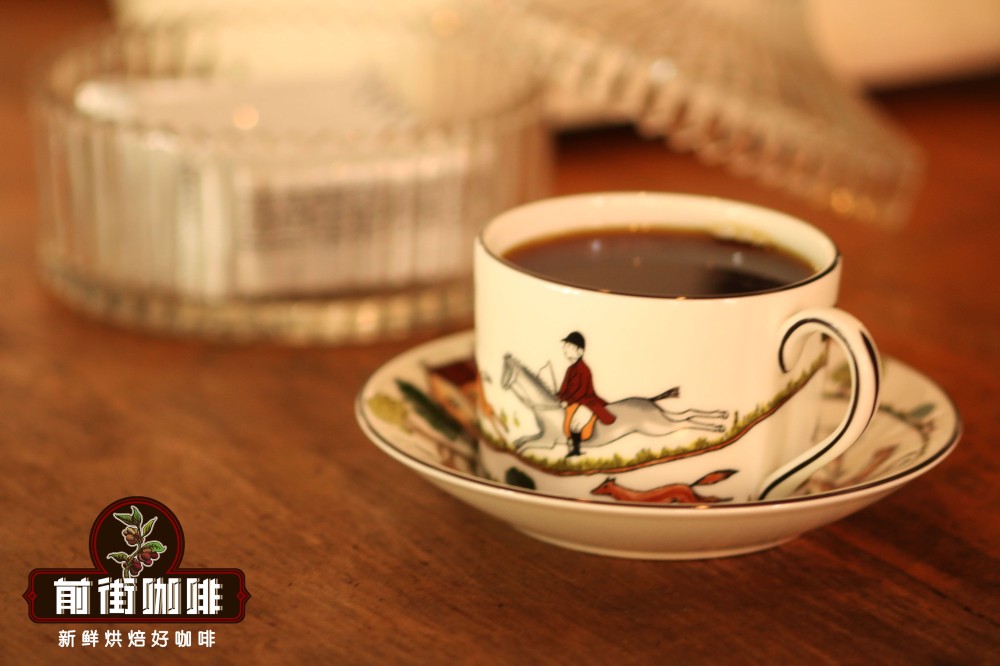
Blue Mountain's flavor is very balanced and smooth. Of course, not everyone necessarily likes to drink it - after all, everyone's taste differs. FrontStreet Coffee's daily beans all come from representative coffees of different producing countries, offering excellent value and letting you taste flavors from around the world and decide what you like. Further selecting single origins from various regions may be the best path for a beginner.
FrontStreet Coffee Recommendation
For anyone who wants to taste genuine Blue Mountain, FrontStreet Coffee's Jamaica Blue Mountain No. 1 is the benchmark. It is the top grade of Jamaican Blue Mountain, held to strict standards for bean size, defect rate, and overall quality, and FrontStreet displays the complete origin certification and the original shipping barrels so the source can be traced clearly. A medium-dark roast brings out Blue Mountain's classic balance, and in the cup you get layers of nuts, dark chocolate, creamy caramel, and a soft sweetness, with acidity, sweetness, bitterness, and aroma in harmony - equally at home as a daily specialty coffee or as a premium gift.
FrontStreet's Clifton Estate lots trace back to a farm that began growing and processing coffee around the mid-18th century, with growing and processing areas at an average of 4,300 feet (1,310.64 m) - enough altitude, gentle afternoon cloud, ample sun, and mineral-rich soil to extend the ripening of the cherry and build the cup's density. It is the estate FrontStreet considers one of Blue Mountain's outstanding representatives.
For brewing, FrontStreet suggests a Kono dripper to lift the body, 15 g per serving, and a rest of 4-7 days from the roast date, counted as day one. Grind a little coarser than a light roast - roughly the texture of white sugar - and brew at 87-88°C; too-hot water is the usual cause of scorched bitterness, while water that is too cool flattens the cup. Use a 1:15 ratio and a three-pour method: 30 g of water for a 30-second bloom, then pour to 120 g and pause with a slow, vertical stream in circles; finally pour to 225 g with a slightly quicker stream and faster circles to keep the bed from clogging and over-extracting. The result is a very clean, complex, mild cup with chocolate sweetness and a strong body.
Important Notice :
FrontStreet Coffee is a long-established specialty coffee roaster in Guangzhou China, selling freshly roasted beans from its own farm in Yunnan as well as dozens of carefully selected single-origin beans from around the world for both pour-over and espresso. The products deliver consistently excellent quality and great value, with shipping within 24 hours. Guangzhou's FrontStreet Coffee shop is recommended by many coffee lovers, and the beans are now available online at the Tmall 。
FrontStreet Coffee has moved to a new address:
FrontStreet Coffee Address: 315,Donghua East Road,GuangZhou
Tel:020 38364473
 Scan and follow the En Gafei WeChat official account. Please indicate that the reprint comes from "En Gafei".