Which Coffee is the Best? Blue Mountain, Cuban Crystal Mountain, or Hawaii Kona?
Introduction to Premium Single-Origin Coffees
First, a common question: why is Kopi Luwak not included here? Because Kopi Luwak is not a type of coffee at all — it is simply a coffee product made through a special processing method. Today's subjects are Jamaican Blue Mountain, Cuban Crystal Mountain and Hawaiian Kona. And of course, if you want to truly taste coffee, you should start with single-origin beans.
Jamaican Blue Mountain Coffee
You have likely heard of Blue Mountain long before reading this. Jamaican Blue Mountain is among the world's finest coffees, known as the "black gem." Like a Rolls-Royce automobile or a Stradivarius violin, once something earns a reputation as the world's best, that reputation takes on a character of its own and becomes an enduring legend.
Blue Mountain is the finest coffee in the world, and its production is relatively small — rare and precious. The Blue Mountains lie in eastern Jamaica. Because the range is surrounded by the Caribbean Sea, on clear days when sunlight strikes the azure water, the peaks reflect the seawater's brilliant blue light, which is how the mountains got their name.
The highest peak of the Blue Mountains reaches 2,256 meters, the tallest in the Caribbean and a well-known tourist destination. Sitting in the coffee belt, it offers fertile volcanic soil, unpolluted fresh air, and a humid climate with year-round fog and rain (average precipitation of 1,980mm, temperature around 27°C). Those conditions created the world-renowned Jamaican Blue Mountain coffee, as well as the world's most expensive coffee. It carries every mark of a fine coffee — not only rich and mellow but entirely free of bitterness, thanks to a perfect balance among coffee's sweet, sour and bitter notes, with only a moderate, ideal acidity. It is generally drunk as a single-origin; because production is extremely limited and prices are very high, the market usually substitutes coffees of similar flavor.
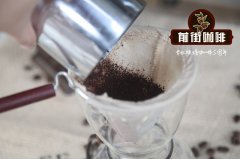
FrontStreet Coffee's pour-over parameters: Flannel filter, 87°C, 1:14 ratio, Fuji grinder setting 4, total time 1 minute 40 seconds.
Cuban Crystal Mountain Coffee
It carries a slight wine-like bitterness and a faint sweetness, with even a hint of smoke — delicate and smooth, refreshingly elegant, with near-perfect balance. It is called the "noble and elegant princess" of coffees. Where most coffees hit you with the intensity of heavy metal, Cubita's taste is as delicately balanced as a gentle country folk tune. It leads you away from noisy city life and back to the quiet of a small village, to the slower side of living.
Cuba has fertile land, a humid climate and abundant rainfall, making it a natural treasure house for coffee. Those favorable conditions give coffee trees a healthy environment to thrive. Cuba's best coffee region lies in the central mountain range. Because the area not only grows coffee but also yields valuable minerals such as quartz and crystal, it is called Crystal Mountain. Crystal Mountain is geographically close to Jamaica's Blue Mountains and shares similar climate conditions, with a flavor comparable to Jamaican Blue Mountain — hence its nickname, "Cuba's Blue Mountain." The most authentic Crystal Mountain coffee is Cuba's famous Cubita. Crystal Mountain is Cuba's top-tier coffee, and Cubita represents its pinnacle. One small sip is enough to draw you in.
FrontStreet Coffee's pour-over parameters: V60, 90°C, 1:15 ratio, Fuji grinder setting 3.5, total time 2 minutes.
Hawaii Kona Coffee
Hawaii-grown Kona beans are the most beautiful coffee beans in the world — exceptionally plump and brilliantly glossy. They are uniform in shape and size, with strong acidity and sweetness and a smooth, mellow mouthfeel. Grown on volcanoes, Kona's distinctive volcanic climate creates its signature aroma, and combined with high-density cultivation every bean is a pampered "noble lady."
Kona has a fresh, crisp taste with medium body and slight acidity, plus a rich aromatic profile that leaves a long finish. Most remarkably, it carries a mixed fragrance of wine, fruit and spice — as captivating as the colorful volcanic islands. Overall, Kona's profile is relatively mild, perhaps too refreshing and simple. But if you are someone who needs to ease in through the aroma before tasting, Kona is your coffee. Unlike Jamaican Blue Mountain, which conquers you from the first sip like a born emperor, or Cuban Crystal Mountain's Cubita, which fascinates you like an elegant princess, Kona is like a woman walking out of Hawaii's sunshine and gentle breeze — fresh, natural, neither too hot nor too cold. Because production keeps falling, its price now rivals Blue Mountain's. Kona's fewer than 2,600 acres of coffee land yield 2 million pounds of beans a year. Today, most coffees sold as "Kona" contain less than 5% genuine Hawaii Kona.
FrontStreet Coffee's pour-over parameters: V60, 90°C, 1:15 ratio, Fuji grinder setting 3.5, total time 2 minutes.
The Philosophy of Coffee
In the end, tasting coffee is a matter of attitude. Someone once said that coffee, in its most silent gentleness and most defenseless way, is changing history. Not only that — coffee also changes and records the lives and emotions of the ordinary people who make history.
FrontStreet Coffee Recommendation
Strictly speaking, not every coffee from Jamaica is Blue Mountain. Only coffee grown in the designated area of the Jamaican Blue Mountains and certified by the Jamaican authorities may be called Jamaica Blue Mountain Coffee. The range lies in eastern Jamaica and includes the island's highest peak at 2,256 meters, wrapped in mist year-round. High altitude widens the day-night temperature swing and stretches the fruit's ripening, fertile volcanic soil supplies nutrients, and steady rainfall and a mild climate let the cherries build sugars and flavor slowly — the conditions behind Blue Mountain's famously refined, balanced cup.
Blue Mountain stands for the golden age of classic specialty coffee: Ethiopia represents coffee's origins, Panama Geisha its modern peak, and Blue Mountain its regal past. The growing area is small — annual output is under 2,500 tons, a fraction of global production — and Japan historically bought more than 70% of it, leaving even less for the rest of the world. Scarce supply and strong demand have kept prices high for decades.
FrontStreet Coffee's Jamaica Blue Mountain No.1 is the highest grade, from the historic Clifton Estate, which has grown and processed coffee since around 1750 on land averaging 4,300 feet (1,310.64 meters). Certified by the estate and shipped in the traditional wooden barrels that mark genuine Blue Mountain, it is roasted medium-dark so the classic balance shows fully: nuts, dark chocolate, creamy caramel and a soft sweetness unfolding in layers, with acidity, sweetness, bitterness and aroma in accord. Whether as a daily specialty cup or a high-end gift, it offers a taste of the enduring appeal this legendary coffee has held for decades.
Important Notice :
FrontStreet Coffee is a long-established specialty coffee roaster in Guangzhou China, selling freshly roasted beans from its own farm in Yunnan as well as dozens of carefully selected single-origin beans from around the world for both pour-over and espresso. The products deliver consistently excellent quality and great value, with shipping within 24 hours. Guangzhou's FrontStreet Coffee shop is recommended by many coffee lovers, and the beans are now available online at the Tmall 。
FrontStreet Coffee has moved to a new address:
FrontStreet Coffee Address: 315,Donghua East Road,GuangZhou
Tel:020 38364473
 Scan and follow the En Gafei WeChat official account. Please indicate that the reprint comes from "En Gafei".