The World's Most Expensive Coffee - Is Blue Mountain Coffee Good? What's the Difference Between Blue Mountain and Regular Coffee?
The Truth About Blue Mountain Coffee
Blue Mountain is arguably the most famous single-origin coffee in the world, with a long and storied history. Even people who have never tasted specialty coffee have almost certainly heard of Blue Mountain.
You might well be thinking: "So few people have actually tried it — Blue Mountain must be incredibly precious. I simply have to try it."
But!! While scarcity often creates value, coffee is no exception, and expensive doesn't necessarily mean delicious. What's more, if the "scarcity" you're encountering is really a market flooded with counterfeits — where genuine articles are hard to find — then the truth behind your insistence on trying it may well be one of the following:
Truth 1: You spend a lot of money and drink genuinely bad coffee.
Truth 2: You spend a lot of money and drink fakes.
Truth 3: You spend little money and drink fakes.
So if you're new to specialty coffee with big dreams about Blue Mountain and want to try this legendary "world's number one" coffee, I suggest you at least use the following methods to reduce your chances of drinking fake or inferior products:
How to Avoid Fake Blue Mountain Coffee
1. Almost all "Blue Mountain" sold through major retail channels is fake. Sellers generally use terms like "Blue Mountain flavor," "Blue Mountain impression," "Blue Mountain blend," and "Blue Mountain style" to confuse consumers. None of these is genuine Blue Mountain.
Even UCC of Japan, which historically imported large quantities of Blue Mountain, sells "UCC Premium Blue Mountain Coffee Beans" through ordinary channels — and rest assured, there are no Blue Mountain beans inside.
As for big-box retailers like COSTCO selling huge bags of "Blue Mountain blend" for 450 yuan — needless to say, if there's real Blue Mountain in there, I'll let you do whatever you want to me.
2. Some channels sell "Premium Blue Mountain" or "National Treasure Blue Mountain." If a half-pound (227g) bag costs less than 1,000 yuan, it's basically lower-grade coffee from around the Blue Mountain area borrowing the name.
3. In coffee shops, if a cup of "Blue Mountain" costs less than 300 yuan, you almost certainly aren't drinking genuine Blue Mountain.
Beyond that, unless you're in an estate-level coffee shop (the kind whose single-origin menu features extremely long, barely pronounceable names), your odds of getting real Blue Mountain are close to zero.
What's more, Blue Mountain's price-to-quality ratio isn't actually that favorable anymore, so specialty coffee shops that truly understand coffee rarely stock much of it. With high costs and a flavor profile that doesn't quite reach the modern ceiling, it is more often used as a status symbol than a daily pour.
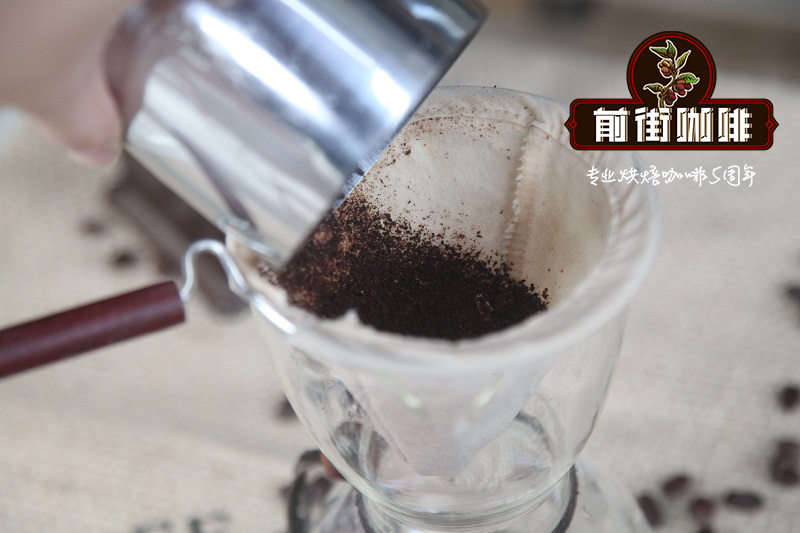
FrontStreet Coffee's pour-over brewing recommendation: Small Fuji 4 roaster, flannel filter cloth, 87°C water, 1:14 ratio, total brew time 1'30".
FrontStreet Coffee Recommendation
Strictly speaking, only coffee grown in the designated area of Jamaica's Blue Mountains and certified by the Jamaican government may be called Jamaica Blue Mountain Coffee. The Blue Mountains, in eastern Jamaica, are among the highest in the Caribbean, with a peak of 2,256 meters whose year-round mists give the range its name. High altitude brings wide day-night temperature swings that stretch the cherries' ripening period, while rich volcanic soil, abundant rainfall, and a mild, stable climate let the fruit slowly accumulate sugars and flavor compounds — the source of Blue Mountain's famously delicate, balanced cup. Genuine Blue Mountain ships in traditional wooden barrels of 15, 45, or 70 kilograms, and certified exporters like FrontStreet Coffee can show the full documentation, including certificates from Jamaica's historic Clifton Mount estate, which has been growing coffee since around 1750 at an elevation of about 4,300 feet (1,310.64 meters).
Blue Mountain's charm lies in near-perfect balance: no harsh fruit acidity, no heavy roast bitterness, but cream, caramel, chocolate, nuts, honey, and a whisper of fruit, with a round, silky body and a clean, lingering finish. FrontStreet recommends Jamaica Blue Mountain No. 1 — the top grade — roasted medium-dark to bring out its classic character. For pour-over, use a 1:15 to 1:16 ratio, water at 85-88°C, and a medium-coarse grind to highlight the cream, caramel, and nut notes; on a moka pot, use a slightly finer grind, start with hot water, heat over a medium-low flame, and remove from the heat just as the coffee finishes flowing to intensify the chocolate, caramel, and nut flavors while preserving that signature balance.
Important Notice :
FrontStreet Coffee is a long-established specialty coffee roaster in Guangzhou China, selling freshly roasted beans from its own farm in Yunnan as well as dozens of carefully selected single-origin beans from around the world for both pour-over and espresso. The products deliver consistently excellent quality and great value, with shipping within 24 hours. Guangzhou's FrontStreet Coffee shop is recommended by many coffee lovers, and the beans are now available online at the Tmall 。
FrontStreet Coffee has moved to a new address:
FrontStreet Coffee Address: 315,Donghua East Road,GuangZhou
Tel:020 38364473
 Scan and follow the En Gafei WeChat official account. Please indicate that the reprint comes from "En Gafei".