Understanding Brazilian Coffee Beans: What Is Brazilian Pulped Natural? Characteristics of Brazilian Coffee Beans
Understanding Brazilian Coffee Beans: What Is Brazilian Pulped Natural?
Brazil: The World's Largest Coffee Producer
As the world's largest coffee producer, Brazil is loved for a rich, low-acidity profile. Among the Brazilian coffees FrontStreet Coffee carries are single-origin Queen's Estate beans, Brazil's place in the value-focused FrontStreet Coffee Daily Bean series, and Brazilian coffee in the current season's drip-bag range. That spread says something: Brazil is indispensable to classic coffee flavor.
Brazilian coffee was introduced in 1729 from French Guiana. Intensive cultivation, improved processing, and better planting techniques can raise quality to a point, but Brazil's natural conditions cannot match the regions that produce the world's finest coffee. The soil is good and the climate humid, but the elevation is not especially high. Even so, some single origins are world-renowned, and Brazil Bourbon Santos is one of them.
Brazil Bourbon Santos has no especially outstanding quality, but neither does it have any obvious flaw. The flavor is mild and smooth with low acidity, moderate body, and a subtle sweetness. All of these gentle elements blend together so smoothly that it is hard to pick them apart, which is exactly why its fans love it. Because it is so gentle and unremarkable, Bourbon Santos suits medium roasting and the most straightforward brewing methods, making it the ideal ingredient for espresso and a wide range of specialty drinks.
Recent Developments in Brazilian Coffee
The Impact of the Pandemic
The title of top producer brings Brazil considerable income, but it also demands enormous human resources. Brazil was the last country in the Western Hemisphere to abolish slavery, precisely because coffee growing and harvesting require so much labor. Now, with COVID-19, Brazil worries that the outbreak could worsen as the harvest season arrives and delay coffee exports, so this year's harvest is expected to be late.
The Benefit of Shade Trees
Global climate change is expected to shrink Brazil's coffee-growing areas significantly in the future. Recent research, however, confirms that shade trees help buffer rising temperatures, which is good news for growers: studies show that covering 50% of growing areas with shade trees can preserve up to 75% of a region's production capacity.
Geographical Conditions
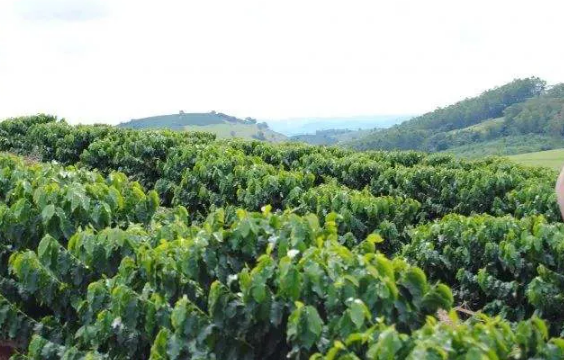
Brazilian coffee is generally grown on relatively flat land. To make the most of those conditions, estate owners developed improved Arabica trees decades ago that need neither high altitude nor shade. These can be planted on plains or grassland in direct sun, unlike the traditional high-altitude shade-grown approach.
Most Brazilian plantations sit only a few hundred meters above sea level, and coffee is even grown on flat ground. Full sun lets cherries ripen faster but develop flavor less completely. Bean density — what the trade calls hardness — is lower than that of high-altitude beans, fruit acidity is markedly lower, and flavor can be monotonous. Coastal Rio coffee can even show iodine and salty notes, thought to be the result of certain microbial activity, though the same soil does not necessarily produce that flavor every year. Most coffee lovers dislike it, but the habit of adding sugar to boiled coffee makes a few Middle Eastern markets well suited to Rio's profile.
The Balance of Brazilian Coffee
Among Central and South American countries, Brazil's altitude is relatively low and it lacks microclimates. Under those conditions the beans develop acidity that is low but soft, a strong nutty flavor, chocolate sweetness, and good body. Some drinkers still criticize Brazilian beans as too ordinary and lacking character, which only shows that coffee culture runs on both praise and criticism. A bean earns its reputation by surviving both.
Brazilian Growing Regions
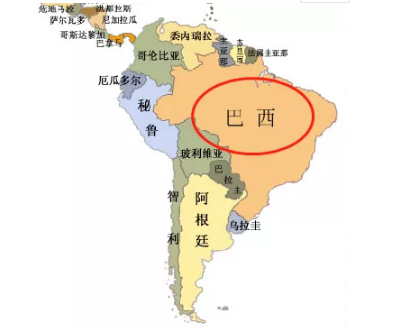
Brazil has 21 states, and 17 of them produce coffee. Seven states account for 98% of national output:
- São Paulo State (Mogiana, Centro-Oeste)
- Paraná State (Norte Pionerio do Paraná)
- Bahia State (Planaltoda Bahia, Cerrado da Bahia, Atlantico Baiano)
- Espírito Santo State (Montanhas do Espírito Santo, Conilon Capixaba)
- Minas Gerais State (Sul de Minas, Cerrado Mineiro, Chapada de Minas, Matas de Minas)
- Rondônia State (Rondônia)
- Rio de Janeiro State (Rio de Janeiro)
Brazilian Coffee Varieties
Bourbon Variety Classification: Red Bourbon, Yellow Bourbon, Orange Bourbon, Pink Bourbon, Blue Bourbon
Bourbon, like Typica, is an old variety of the Arabica species. It was first cultivated on Réunion Island, known as Bourbon Island (le Bourbon) before 1789, which is how the variety got its name.
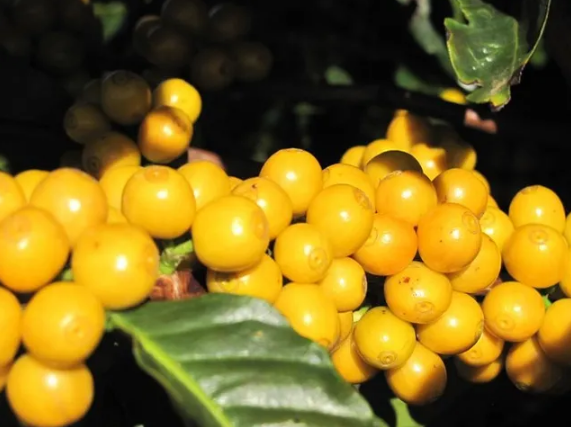
As another old variety, Bourbon differs from Typica in its wider leaves and denser growth, and it yields about 30% more than Typica. The beans are relatively round and short, with rich berry acidity, distinct cream and aroma, and strong fruitiness — but the same poor disease resistance. In red Bourbon, once the trees flower and set fruit, the cherry color moves from green to light yellow to light orange to mature red, then to darker red at full ripeness, which is why it is called "Red Bourbon." Red Bourbon reached Brazil around 1860 by way of Campinas in the south and has become a standard variety there.
To put it simply, Bourbon is a branch of the Arabica species. It generally bears red fruit, called Red Bourbon, but there are also Yellow and Orange Bourbon. Yellow Bourbon yields less but offers better quality.
Brazilian Processing Method: Pulped Natural
The pulped natural method, also called the honey process, differs from traditional natural processing in that the skin and pulp are removed so the fermentation of the mucilage-covered beans can be controlled. Traditional natural processing dries the fruit intact, making mucilage fermentation impossible to monitor. Pulped natural sits between natural and washed, but it drops the tank fermentation and water rinsing of the washed method and goes straight to sun-drying. The steps may look similar, but without fermentation the flavor is completely different.
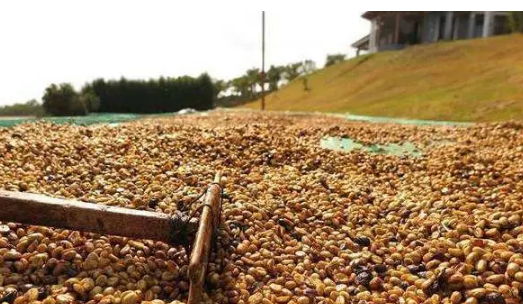
- First, the cherries are placed in large water tanks to remove floating fruit. The sinking fruit goes into a depulper to remove the pulp. This removes unripe cherries and, more importantly, lets the beans dry in the sun with no pulp but still covered in mucilage, which makes the subsequent fermentation controllable.
- After the skin and pulp are removed, the yellow mucilage is visible. The mucilage-covered beans are then sun-dried — after pulping, the beans carry a layer of viscous, gelatinous substance called mucilage.
- Once dried to a moisture content of 10.5%-12%, the beans are hulled.
- Finally, before bagging for export, they are polished and finished.
Characteristics of Pulped Natural Processing
- Suited to large-scale commercial operations, as in Brazil. The method is relatively simple and easy to run, saves water, and protects the environment.
- During pulping, ripe pulp comes away easily while the skin of unripe green cherries does not, which provides a second screening that filters out unripe fruit and standardizes ripeness. Compared with natural processing, the selected cherries are cleaner and more uniform, producing a more consistent flavor.
- Drying time is shortened, saving time and adding value.
- Greater ripeness uniformity makes storage easier and green-bean quality more consistent.
Disadvantages of the Pulped Natural Method:
- The drying stage is susceptible to contamination and mold.
- It requires constant monitoring and continuous turning.
- Drying must be accelerated to avoid unwanted fermentation flavors.
Brazilian Coffee Bean Grades
- Defect Rate: Seven grades from high to low, No2 to No8. The grade is set by the number of defective beans per 300g using a deduction system. A score below 4 qualifies as No2; No1, with zero defects, is rare and cannot be supplied consistently.
- Size: Screen sizes 17 and 18 are the highest grades.
- Cupping Quality: From high to low, Fine Cup, Fine, Good Cup, Fair Cup, Poor Cup, Bad Cup. FC (Fine Cup) and GC (Good Cup) are the most common.
- Flavor Grade: From high to low, Strictly Soft (very smooth), Soft (smooth), Softish (somewhat smooth), Hardish (harsh), Rioy (iodine-like flavor).
FrontStreet Coffee's Representative Brazilian Coffee: Queen's Estate
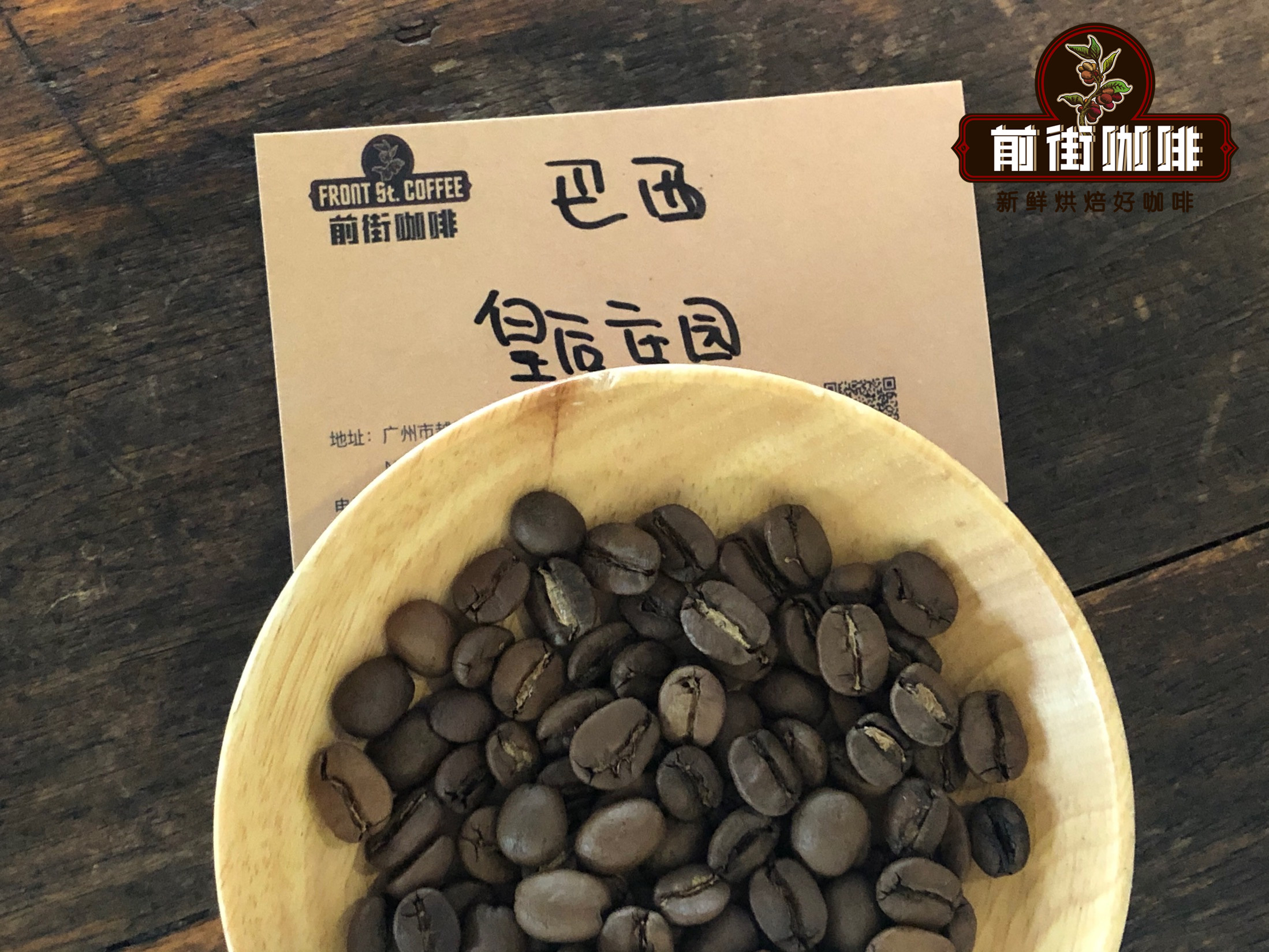
Country: Brazil
Region: Mogiana
Altitude: 1400-1950m
Variety: Yellow Bourbon
Processing: Pulped Natural
Roasting Recommendations
This bean has low moisture content and a solid texture, so it absorbs heat strongly. Roasting time therefore has to be controlled steadily and without rushing. To optimize the flavor and bring out the aroma, a medium roast is used.
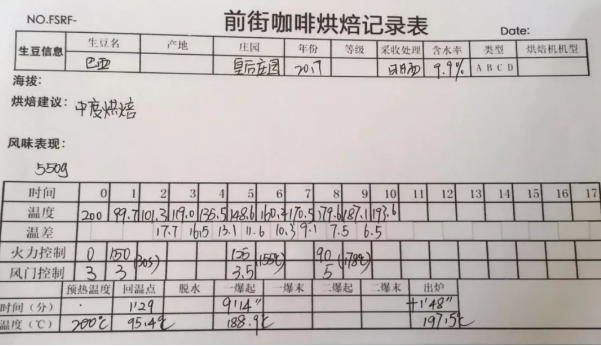
Machine: Yangjia 800N, 550g green beans input
Bean-in temperature: 200°C
First crack: 9'14", 188.9°C
Development after first crack: 1'48", discharged at 197.5°C
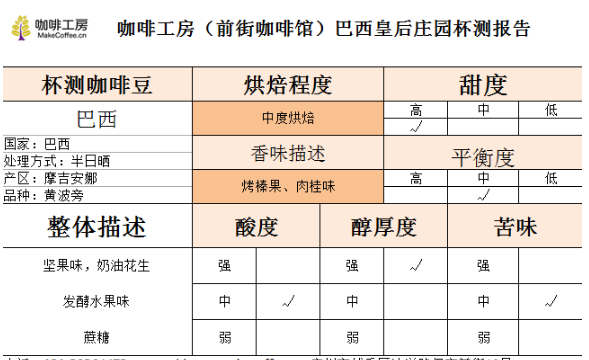
Cupping Report
FrontStreet Coffee's Brewing Recommendations
Dripper: KONO
Water temperature: 88°C
Dose: 15g
Ratio: 1:15
Grind size: White sugar size (BG#6w)
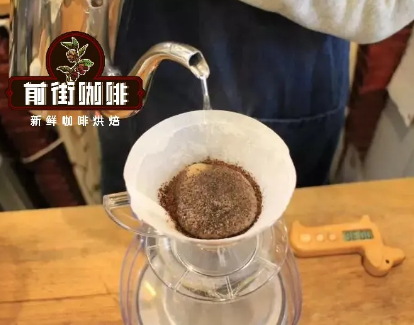
Brewing Method: Staged Extraction
Use 30g of water for a 30-second bloom. Continue pouring to 125g and pause. When the water level drops and the bed is about to be exposed, continue pouring to 225g and stop. When the level drops and the bed is about to be exposed again, remove the dripper. Timing starts from the bloom; total extraction time is 2'00".
Flavor description: Distinct sweetness with subtle lemon aromatics, rich nutty flavors, and prominent dark chocolate on the finish. The overall experience is well rounded, representing the general character of Brazilian coffee while showing a lively personality of its own.
FrontStreet Coffee Recommendation
FrontStreet Coffee Brazil Cerrado Red Bourbon is the most approachable Brazilian single origin on the list. Cerrado is a well-known local growing region, and this lot is the red Bourbon common to South America. Roasted medium, it shows cream, peanut, toasted bread, caramel, and hazelnut, with a round body, no sourness, and a light bittersweet edge. It brews as pour-over but also works in a moka pot, as an espresso SOE, in a siphon, or in a French press.
For the yellow-Bourbon side of the family, FrontStreet Coffee Brazil Queen's Estate comes from Mogiana, near Sul de Minas, where fertile red volcanic soil feeds the fruit. The estate is a mix of farms that keep traditional methods and farms that have adopted modern, standardized management, which has raised quality considerably. Yellow Bourbon is a natural mutation of Red Bourbon with a cleaner fruit character, and through pour-over, moka pot, or a home espresso machine it reveals a sugarcane sweetness that other regions do not offer, alongside fruit and chocolate notes.
Brazil's low acidity, balance, and friendly price also make it the first choice in many espresso recipes. FrontStreet Coffee Classic Blend brings rich crema, FrontStreet Coffee Premium Blend is heavy on nuttiness, and FrontStreet Coffee Black Cocoa Blend is balanced and mellow; all of them include Brazilian coffee, which contributes chocolate and cream aroma and a soft sweet-sour-bitter balance that helps extraction stay consistent.
Important Notice :
FrontStreet Coffee is a long-established specialty coffee roaster in Guangzhou China, selling freshly roasted beans from its own farm in Yunnan as well as dozens of carefully selected single-origin beans from around the world for both pour-over and espresso. The products deliver consistently excellent quality and great value, with shipping within 24 hours. Guangzhou's FrontStreet Coffee shop is recommended by many coffee lovers, and the beans are now available online at the Tmall 。
FrontStreet Coffee has moved to a new address:
FrontStreet Coffee Address: 315,Donghua East Road,GuangZhou
Tel:020 38364473
 Scan and follow the En Gafei WeChat official account. Please indicate that the reprint comes from "En Gafei".