Are Espresso Beans Suitable for Pour-Over Coffee? Deep Roast Flavor and Taste of Italian Blend Coffee Beans
Understanding Coffee Roast Levels
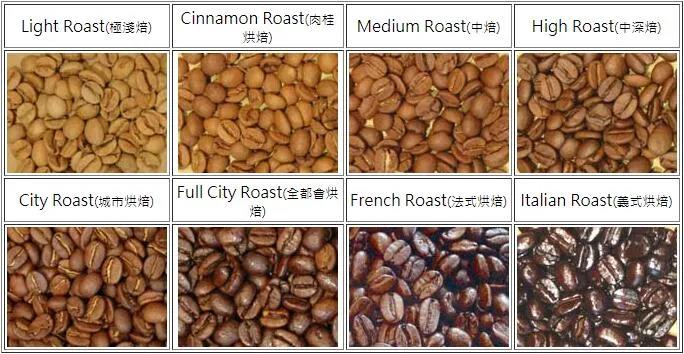
The roast level of coffee largely determines its flavor direction. When we buy coffee, the label indicates the degree of roast, such as light roast or dark roast, and these are easy to understand. Some labels, however, say cinnamon roast or city roast, which can be confusing. This time, FrontStreet Coffee will walk you through the knowledge of coffee roast levels.
Coffee roast levels go by many names, such as French Roast, Italian Roast, and City Roast. Among these, French Roast and Italian Roast refer to the degree of roast, not to the coffee's origin.
French Roast typically refers to a relatively light espresso roast, while Italian Roast belongs to a darker level. In the United States, however, what is called French Roast is usually frighteningly dark, with a bitter, charred coffee flavor and a deep smoky taste, sometimes giving the sensation of drinking a cup of coal. Its strong bitterness and distinctive roasted aroma make it very suitable for European-style drinks such as cafe au lait and Viennese coffee.
City Roast originated in New York. The beans show a bright tea-brown color and have a rich, mellow aroma with balanced bitterness and acidity. This is the roast level commonly consumed in general coffee shops or at home. Italian Roast has the strongest intensity, with beans appearing almost charcoal-black. You can taste a strong bitterness and rich texture, suitable for espresso and cappuccino.
Agtron Color Values and Roast Levels
Agtron Color Value #95: Light Roast
Drop time: When the first crack becomes dense and is about to end
Agtron Color Value #85: Cinnamon Roast
Drop time: Around when the first crack ends
Agtron Color Value #75: Medium Roast
Drop time: After the first crack ends
Agtron Color Value #65: High Roast
Drop time: The quiet period between first and second crack
Agtron Color Value #55: City Roast
Drop time: When the second crack begins
Agtron Color Value #45: Full City Roast
Drop time: Before the second crack becomes dense
Agtron Color Value #35: French Roast
Drop time: When the second crack becomes dense
Agtron Color Value #25: Italian Roast
Drop time: When oil begins to seep to the bean surface
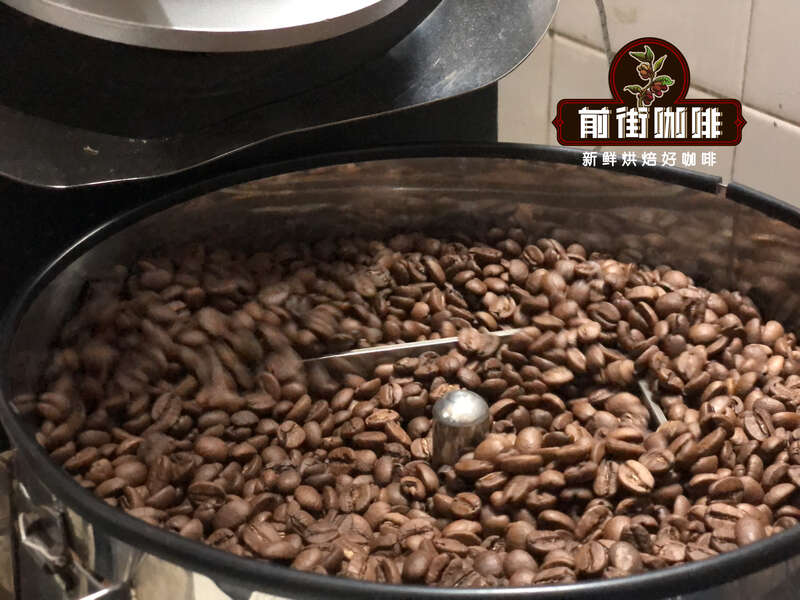
The Art of Dark Roasting
These roast levels can all be categorized as dark roast. Dark roast beans provide abundant mellow flavors and aromas, because the longer the dark roasting time, the more caramelization occurs, forming more oils and obvious sweetness. This rich flavor sometimes has more depth and layers than a light brown cinnamon-style roast, and its sweetness can balance acidity, fully revealing the delicious components in high-quality beans from premium varieties. If you are new to coffee, FrontStreet Coffee suggests choosing beans according to flavor, origin, and brewing method when buying, and it is best to ask the shopkeeper for a recommendation to get a delicious cup.
FrontStreet Coffee's Blend Philosophy
At FrontStreet Coffee, you can find four FrontStreet espresso blend beans: the FrontStreet Sunflower Warm Sun Blend, the FrontStreet Specialty Espresso Blend, the FrontStreet Commercial Espresso Blend, and the FrontStreet Basic Espresso Blend. As FrontStreet's most outstanding blend, let's look at how FrontStreet created the Sunflower Warm Sun Blend with its rich chocolate, wine aroma, and vanilla flavors.
In this warm winter sun season, FrontStreet planned a blend suitable for both pour-over and espresso. In terms of mouthfeel, FrontStreet wanted a pleasant, highly recognizable aroma on entry, a thick mouthfeel with a hint of soft fruit acidity, and a finish with medium to high sweetness.

After much thought and selection, FrontStreet considered beans with prominent aromas and substantial mouthfeel. Beans with special processing methods were also good choices: anaerobic? Barrel-fermented? Ethiopian beans have thousands of varieties with flavors worth exploring. Washed beans have bright fruit acidity and a clean mouthfeel, while natural processed beans have richer tropical fruit flavors with a complex, thick body. When at a loss, FrontStreet recalled that both barrel-fermented beans and natural processed FrontStreet Yirgacheffe beans had been used for SOE before, and the extracted flavors performed excellently: aromas with fruit acidity, a balanced yet not monotonous mouthfeel, and sufficient sweetness.
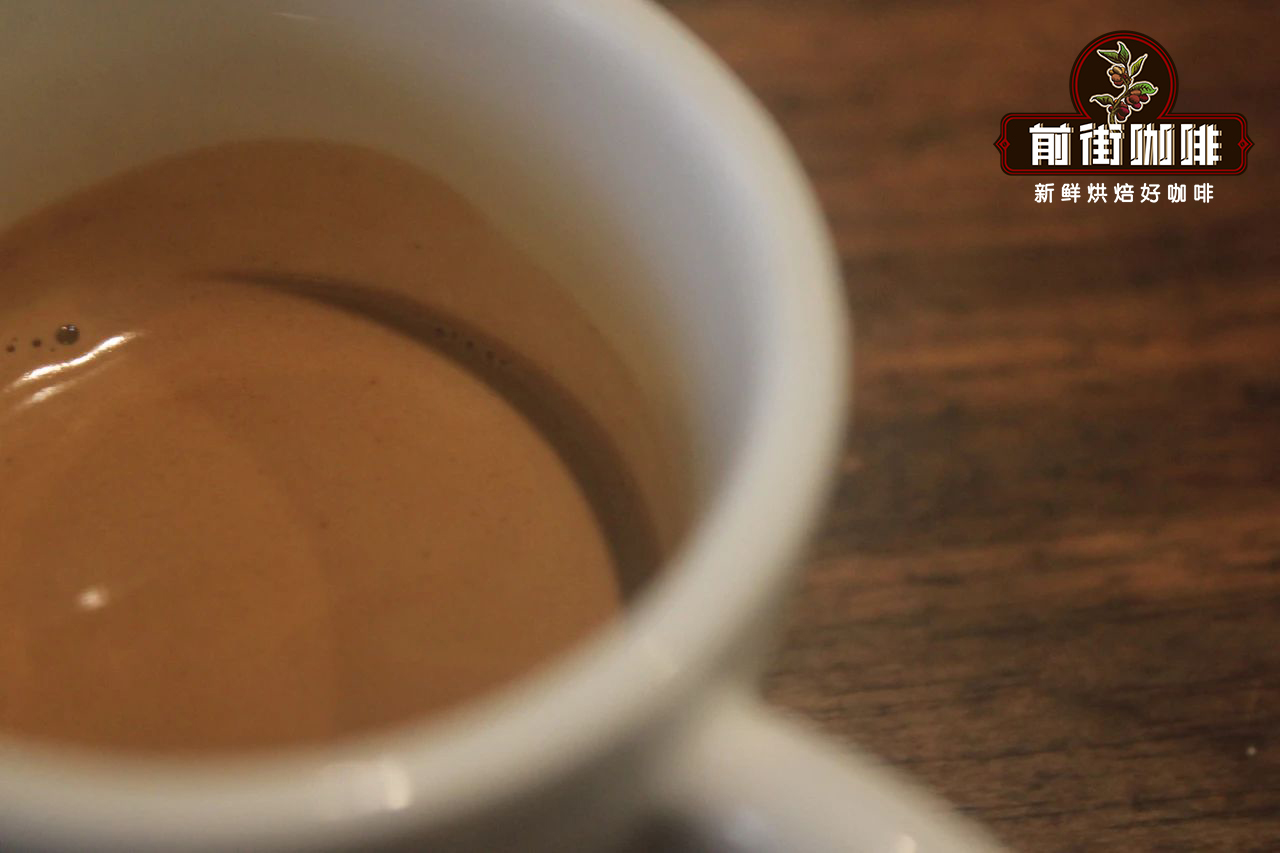
After discussion, we finally decided to use a 6:4 ratio of FrontStreet barrel-fermented sherry beans and FrontStreet natural red cherry beans to blend this FrontStreet Sunflower Warm Day Blend.
FrontStreet Coffee Roasting Curve Analysis
For blended beans, there needs to be body, sufficient sweetness, and overall balance. Considering that mixed blend beans might roast unevenly, FrontStreet adopted a gradual heat-reduction method so the beans develop synchronously through the roast.
Heat the drum to 210°C to load the beans, with the air damper set to 4. Heat at 200, with the return temperature at 1'30" reaching 92°C. When the drum temperature reaches 140°C, open the air damper to 6; at this point the bean surface turns yellow and the grassy aroma disappears completely, entering the dehydration stage. When the drum temperature reaches 180°C, adjust the heat to 10 and the air damper to the maximum of 10.
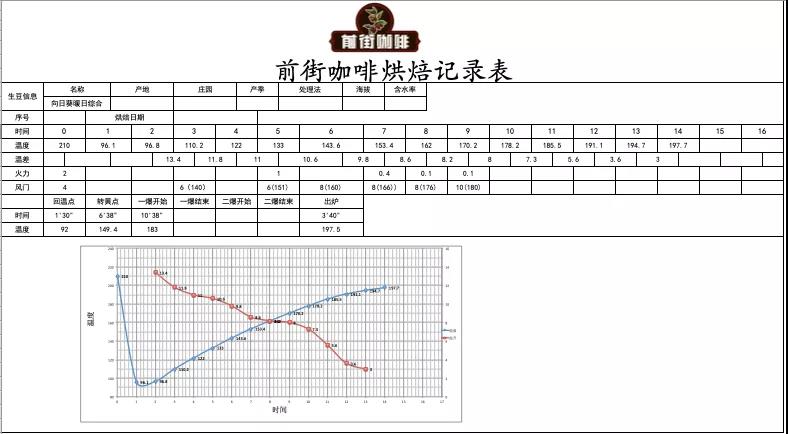
At 9'30", ugly wrinkles and black spots appear on the bean surface, and the toast aroma clearly shifts into coffee aroma, which can be defined as the prelude to first crack. Listen carefully for the sound of first crack. At 10'38" the first crack begins. After first crack, develop for 3'40" and drop at 197.5°C.
After cupping, pour-over, and espresso extraction, this bean shows a soft fruit acidity on entry, a persistent aftertaste, sufficient sweetness, rich chocolate aroma, vanilla, cream, and obvious wine notes, with a clean, smooth mouthfeel and medium body, exactly matching the FrontStreet Warm Day Blend that FrontStreet wanted.
FrontStreet Coffee Espresso Extraction Parameters
Grind setting: Fiocco 600N grinder #1.8, 20g dose, extract 40g of coffee liquid, brew ratio 1:2, extraction time 28s.
Flavor: Smooth mouthfeel, medium body, obvious fruit acidity on entry with a faint berry aroma, wine aroma, and rich chocolate flavor, with an obvious aftertaste.
Americano: Espresso-to-water ratio 1:5, with sherry wine aroma and vanilla cream flavors, the slight intoxication of sherry wine, and cocoa and caramel flavors.
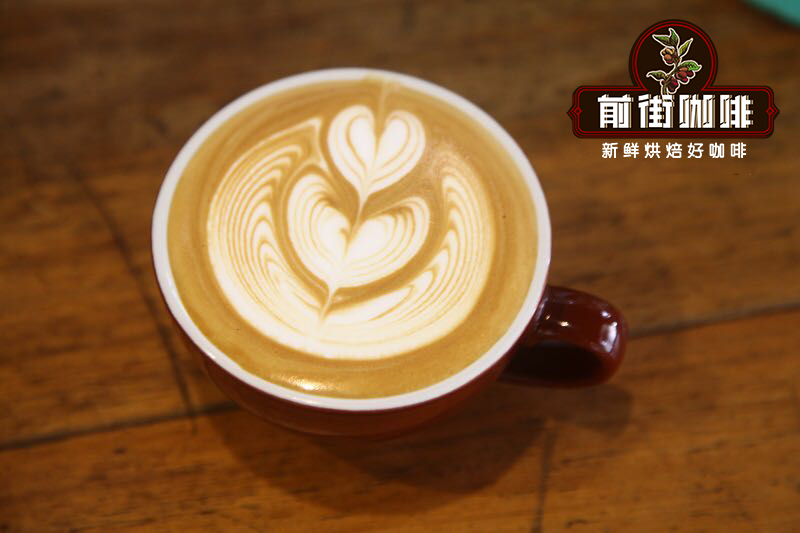
Latte: Espresso-to-milk ratio 1:6, rich chocolate milk, caramel, very high sweetness, smooth.
FrontStreet Coffee Recommendation
To answer the question directly: yes, espresso blends can work for pour-over, and a balanced blend is often the easiest way in. The FrontStreet Sunflower Warm Day Blend is a good example. Built from a 6:4 ratio of FrontStreet barrel-fermented sherry beans and FrontStreet natural red cherry beans, it has soft fruit acidity, lingering sweetness, rich chocolate, vanilla, and cream, plus clear wine notes, a clean, smooth mouthfeel, and medium body. It pulls well as espresso and still tastes round and layered as pour-over.
If you would rather brew a bright, floral cup on a V60, FrontStreet Coffee's Strawberry Candy Gesha Blend brings delicate rose and orange from a Panamanian Gesha together with the grape, raisin, and strawberry-gummy sweetness of a Costa Rican honey-processed coffee, a lively, layered choice for filter.
And for tropical fruit on the pour-over bar, the FrontStreet Sun-Dried Huakui has become a favorite. Its Ethiopian natural processing delivers cream strawberry, mango, jackfruit, citrus, and blueberry, with both excellent flavor and a friendly price.
Important Notice :
FrontStreet Coffee is a long-established specialty coffee roaster in Guangzhou China, selling freshly roasted beans from its own farm in Yunnan as well as dozens of carefully selected single-origin beans from around the world for both pour-over and espresso. The products deliver consistently excellent quality and great value, with shipping within 24 hours. Guangzhou's FrontStreet Coffee shop is recommended by many coffee lovers, and the beans are now available online at the Tmall 。
FrontStreet Coffee has moved to a new address:
FrontStreet Coffee Address: 315,Donghua East Road,GuangZhou
Tel:020 38364473
 Scan and follow the En Gafei WeChat official account. Please indicate that the reprint comes from "En Gafei".