The Story of Flower Queen Coffee: Exploring the New Season Ethiopian Sidamo Hambella Flower Queen 6.0 Characteristics
The Origin of Guanhua Coffee: FrontStreet Coffee's Guide to This Ethiopian Gem
Mention Ethiopian coffee and most people immediately think of FrontStreet Coffee's Yirgacheffe beans. But a few years ago, another Ethiopian Sidamo coffee rose to worldwide fame among enthusiasts on the strength of a single flavor — strawberry cream. That coffee is Guanhua, often translated as "Flower Queen." So why does FrontStreet Coffee call it Guanhua? In this article, FrontStreet Coffee walks through the story and the flavor character behind the name.
Why Is FrontStreet Coffee's Guanhua Coffee Called "Guanhua"?
At first blush, "Guanhua" suggests a bean overflowing with florals. In fact, FrontStreet Coffee's Guanhua isn't intensely floral at all; its fruit aromas lead instead — passion fruit, strawberry, mango, jackfruit, and citrus. In February 2017, a natural-processed coffee from the Buku Abel processing station in Hambella won Ethiopia's national Taste of Harvest competition. Strictly speaking, only that 2017 natural from Buku Abel has the right to the name "Guanhua," which is why the station itself is often called the "Guanhua Estate."
Four months later, at the China regional finals of the World Brewers Cup, Li Jianfei took runner-up with this very Ethiopian natural. The result caused a sensation, because it broke Geisha's monopoly on brewing competitions — suddenly there was one coffee capable of standing toe-to-toe with it. Guanhua thus became linked with Geisha, though after that 2017 encounter the two have never faced off in direct competition again.
Why Are There So Many Versions of Guanhua Coffee?
FrontStreet Coffee wants to be precise here: read narrowly, only the TOH natural-process champion that entered China in 2017 can truly be called Guanhua coffee. But it would be a shame for such a wonderful name to be a one-year wonder. So Beijing's Hongshun company kept importing from the "Buku Abel" station in Hambella, labeling subsequent arrivals Guanhua 2.0, Guanhua 3.0, Guanhua 3.1, and so on, distinguishing them from the original and marking different batches and harvest seasons.
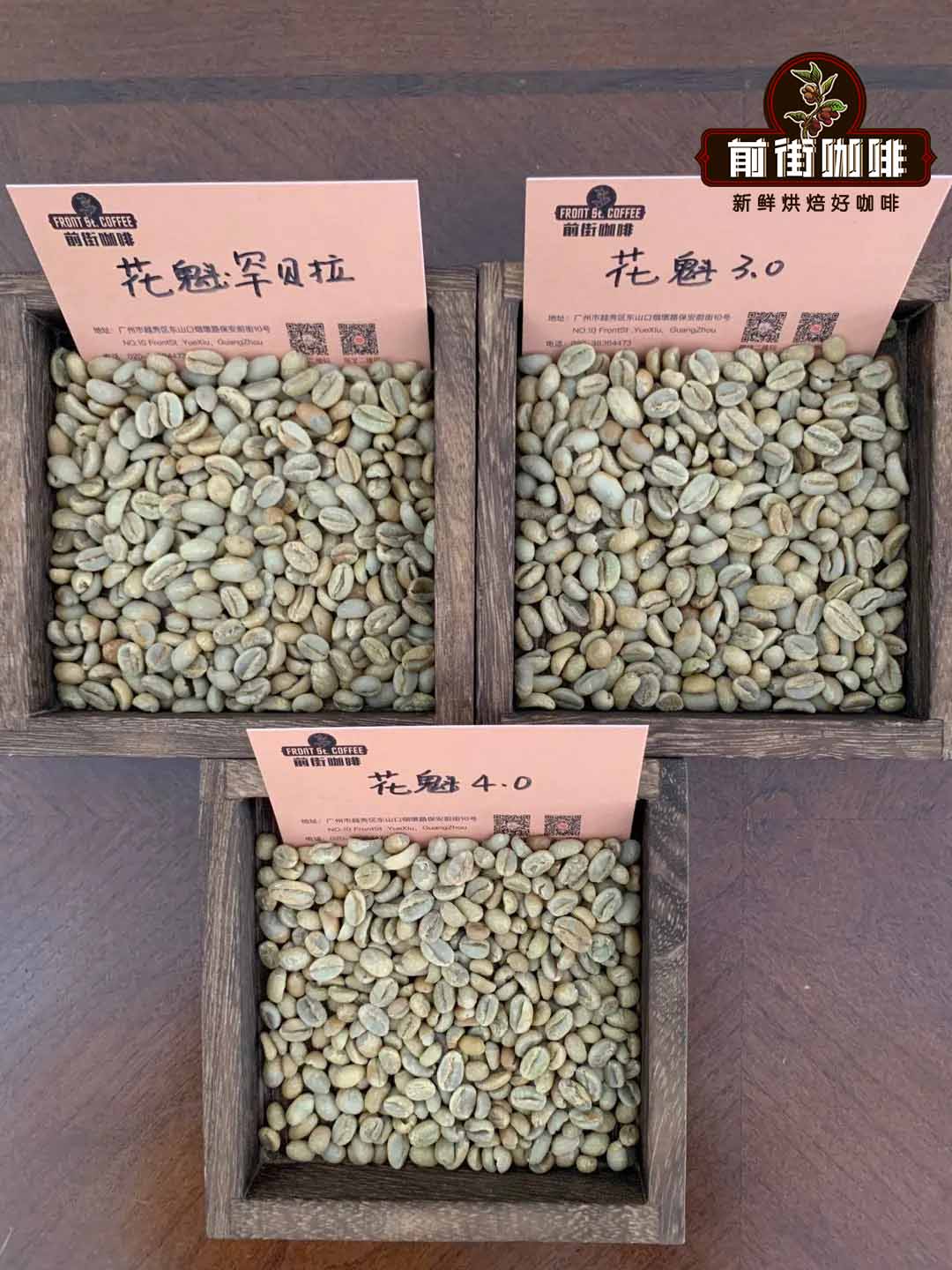
The 2020 harvest was named Guanhua 4.0, and the 2021 harvest Guanhua 5.0. By 2020 — four years after Guanhua first debuted at FrontStreet Coffee — the producing area had grown to several times its original size, making it genuinely hard to tell which lots still came from the Buku station. So from Guanhua 5.0 in 2021 onward, those details are no longer emphasized.
For now, at least, FrontStreet Coffee holds that a coffee counts as Guanhua only if it was imported by the green trader Hongshun. Which explains something curious: follow foreign roasters and you'll notice that internationally, the name Guanhua means nothing — only Hambella is recognized.
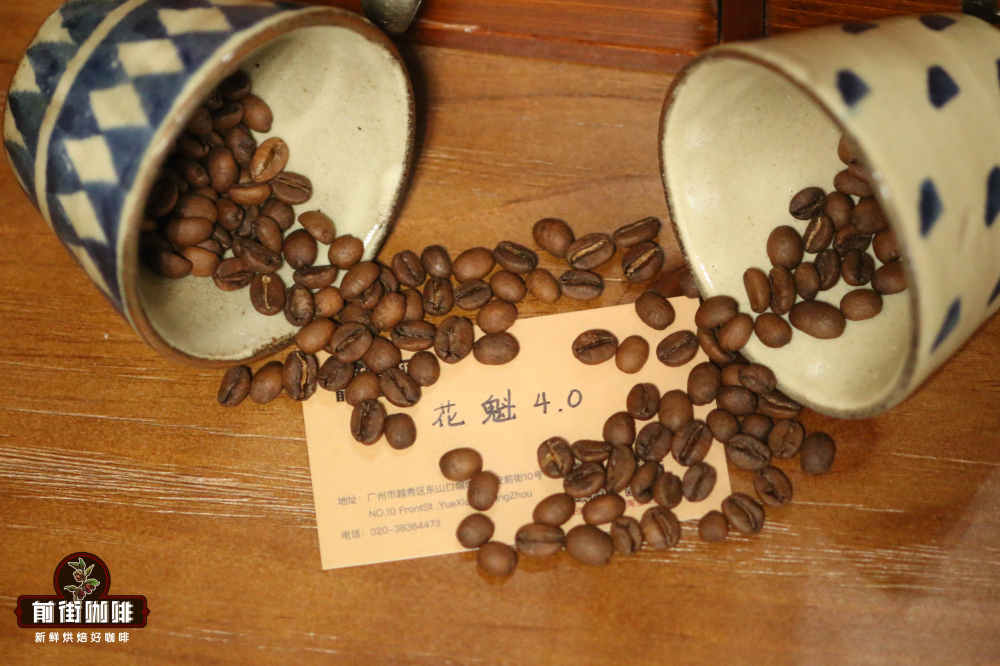
FrontStreet Coffee · Ethiopia Guanhua 4.0
Origin: Ethiopia
Region: Sidamo, Guji, Hambella
Processing Station: Buku
Altitude: 2350m
Variety: Dega
Processing Method: Natural
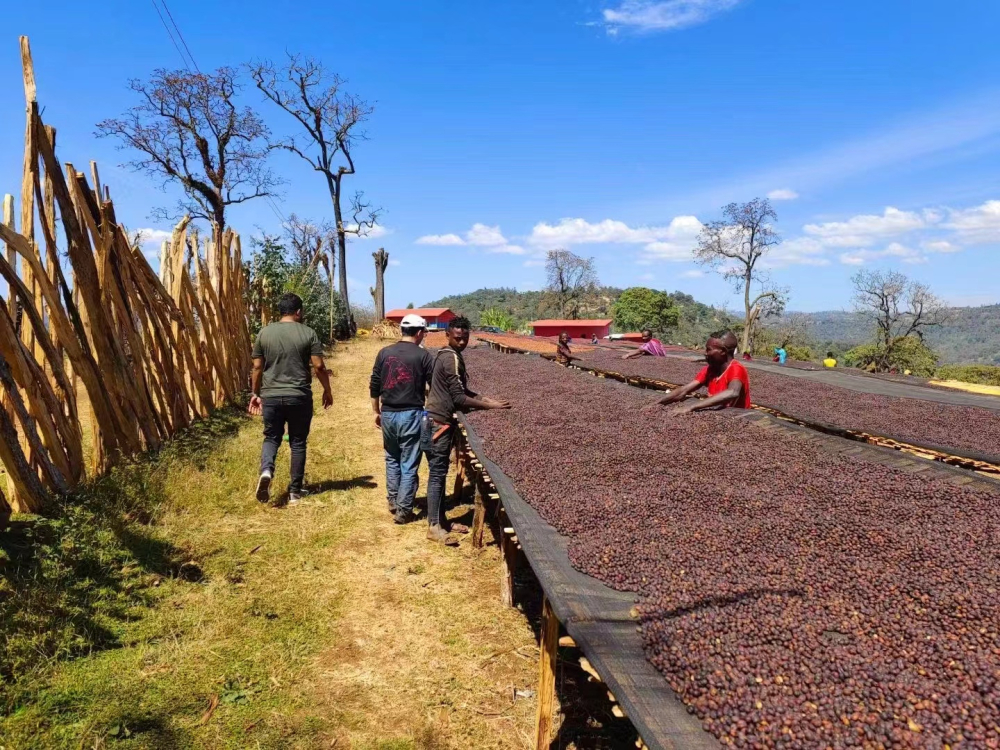
This year's FrontStreet Guanhua still comes from the Buku station. "Buku Abel" means "NEW" in the local Ethiopian language — a new place. In this ancient country of over two thousand years of history and 100 million people, walled off from Asia by the Great Rift Valley, new virgin land is still being discovered on the plateau. Against millennia of culture, this is very freshly opened ground.
Buku Abel sits in southeastern Ethiopia, in the high-altitude tribal territory of Hambella within the Guji region, home to roughly 30,000 people. Like most Ethiopian coffee gardens, this small village grows out of wild primary forest, where farming families have passed down their traditions for generations, cultivating native bananas and tucking indigenous coffee varieties in among the banana trees.
Dega Coffee Bean Variety
This year Ethiopia held its first Cup of Excellence (CoE), and the fine-grained variety classification among the top 28 finalists caught everyone by surprise. The 21st-ranked Dega has two competing origin stories for its name. One holds that it comes from a kind of kindling wood, whose burning aroma resembles Dega's scent during roasting. The other explains that "dega" is the Ethiopian root word for "highland and shady places," fitting for a variety that favors high altitudes. Unfortunately, since Dega missed the CoE top 14, no official flavor description was collected for it. And the lot FrontStreet Coffee secured for Guanhua 4.0 is precisely Dega variety.
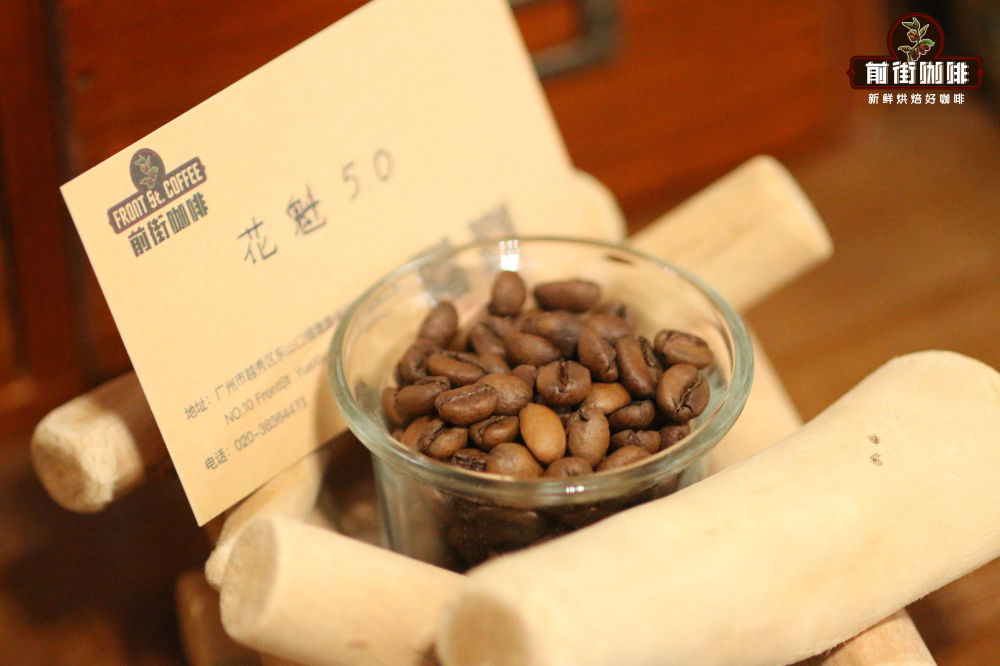
FrontStreet Coffee · Ethiopia Sidamo Guanhua 5.0 Coffee Beans
Region: Sidamo, Guji, Hambella
Processing Station: Buku
Altitude: 2350 meters
Variety: Local Landraces
Processing Method: Natural
FrontStreet Coffee Roasting Analysis
FrontStreet Coffee reviews the flavor notes supplied by the green trader and checks the beans' moisture on arrival. These fresh green beans carry a fermented, wine-like coffee-flower aroma completely unlike the grassy smell of ordinary greens. For new-crop Guanhua, the higher moisture content means FrontStreet extends the drying phase early in the roast and enters first crack on a rising temperature curve, doing everything possible to hold on to the delicate aromatic compounds.
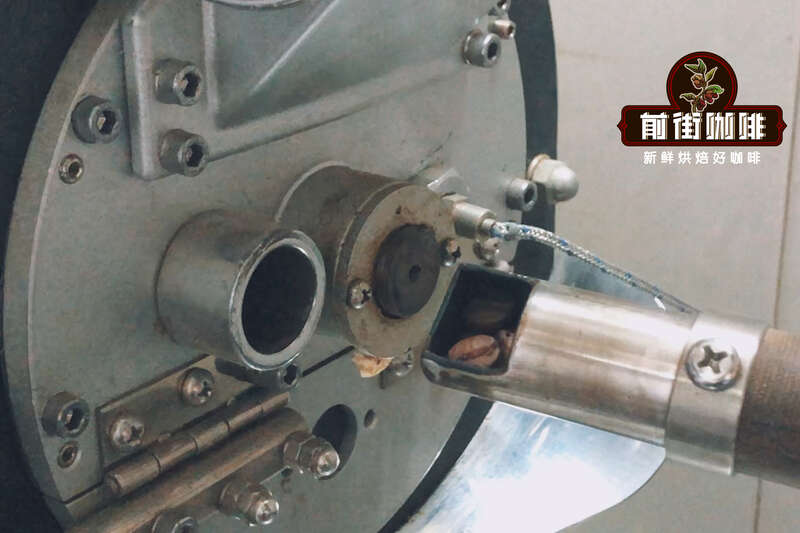
FrontStreet roasts on a Taiwan Yang Jia 800N, charging at 190°C, with drying and yellowing complete in about 6 minutes (yellowing point around 150-153°C). First crack arrives around 9:50 — later than most beans, and quieter, too. Development after first crack should be held to no more than 1 minute 30 seconds, and no less than 1 minute (open the damper and ease off the heat to control the run). When the sampling spoon smells of strawberry jam around 193°C, it's time to drop the beans. Total roast time should land within 11 minutes.
FrontStreet Coffee Brewing Guide
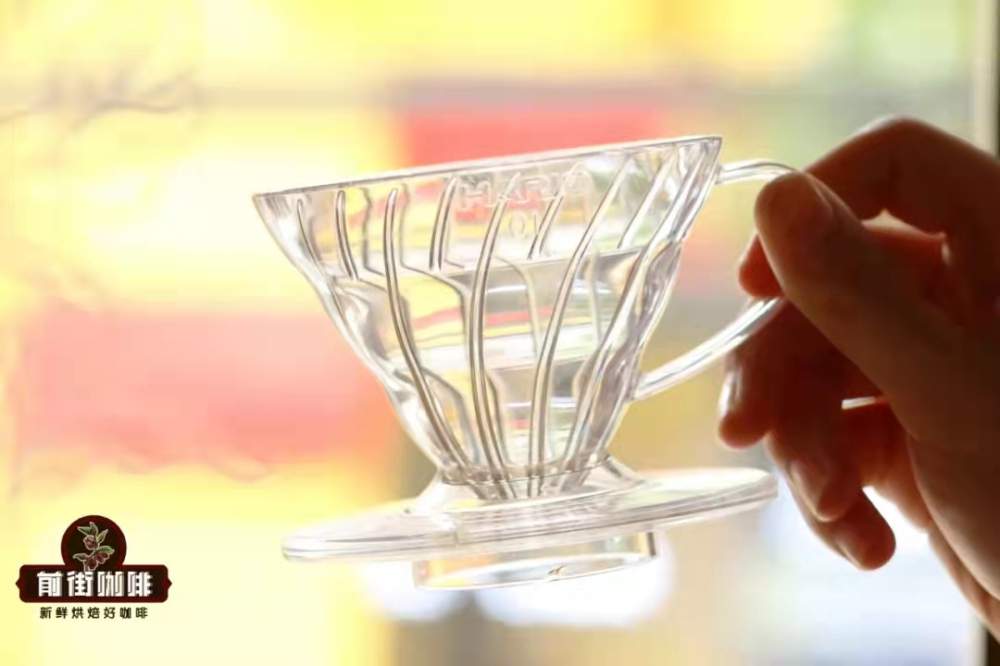
To pull the full layers out of Guanhua, FrontStreet Coffee brews with a higher water temperature and a finer grind — and then uses a fast-flowing V60 to keep the high heat from tipping into over-extraction. The V60's 60-degree cone funnels the grounds toward the center, and during the pour the water naturally converges there, guaranteeing thorough contact between water and coffee and an evenly extracted cup. Its spiral ribs run clockwise from bottom to top, holding the filter paper just off the walls so water moves freely, and the single large outlet at the base makes the V60 faster than most drippers.
FrontStreet Guanhua is at its best 7-30 days after roasting. Freshness drives flavor, and FrontStreet's roasting philosophy — "freshly roasted good coffee" — means every order ships as fresh as possible: all beans go out within 5 days of roasting, arriving at the customer's door right at peak flavor.
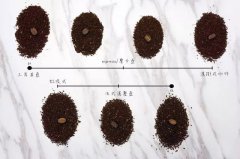
Brewing Parameters: V60 dripper, 90°C water, 1:15 ratio, 15g dose, grind calibrated to 80% pass-through on the China #20 standard sieve
FrontStreet Coffee brews Guanhua in three stages. Preheat the kettle and dripper, add 15g of grounds, and tap gently to level the bed. Pour 30g of water and bloom for 30 seconds — longer blooms are not recommended, as they can pull out astringency.
For the second stage, pour 120g of water in concentric circles from the center outward, completing the pour in about a minute. As the coffee bed begins to show, make the final pour of 90g using the same motion. Once all the water has drawn down into the server, remove the dripper — total brew time, 2 minutes 5 seconds.
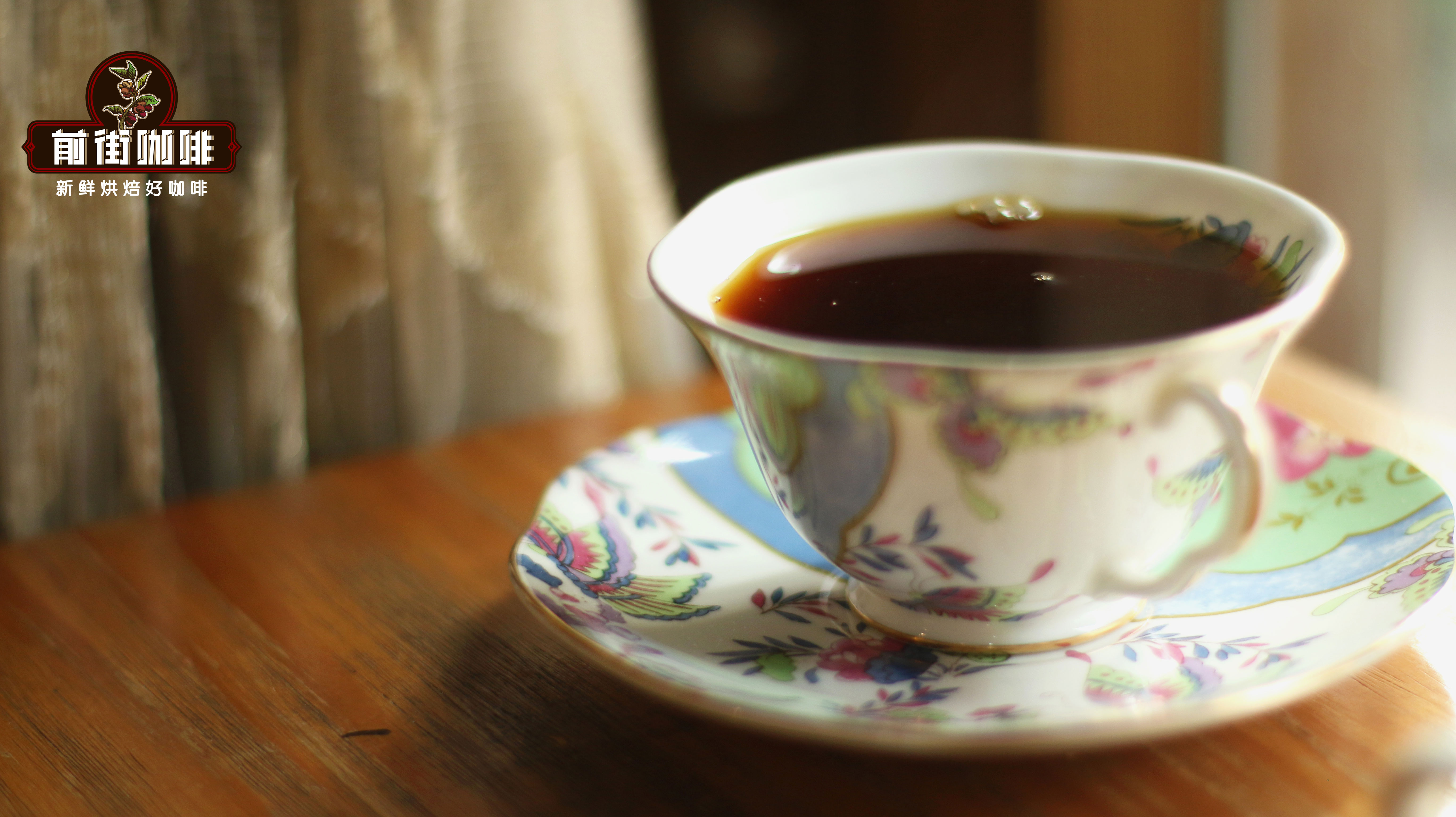
FrontStreet Coffee's Sidamo Guanhua 4.0 Flavor Profile: Citrus acidity, a full-bodied strawberry-juice sensation, lemon black tea character, and persistent sweetness.
FrontStreet Coffee Recommendation
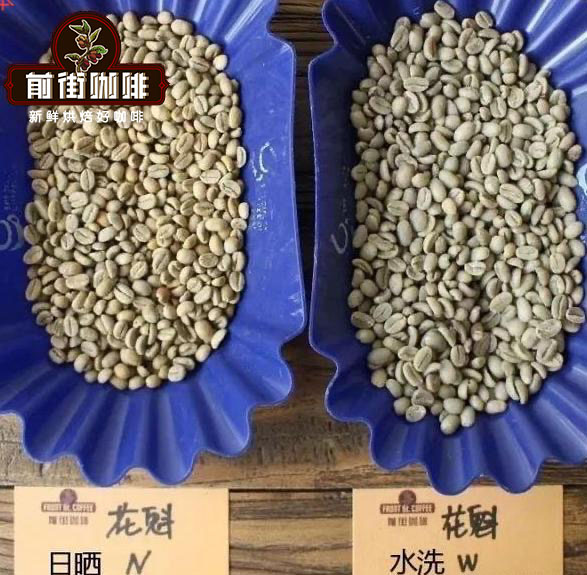
If Guanhua's natural side wins you over, FrontStreet's natural Red Cherry lot from the same Yirgacheffe appellation is the natural next step. It uses full-red-cherry natural processing: only completely ripe, defect-free cherries are picked, given a first sort at the mill, then laid straight onto raised beds and turned every 2-3 hours over the first days to prevent uneven heating and over-fermentation. After three to five weeks in the sun, workers strip the dried pulp by machine as weather allows, and the coffee rests in warehouse. Because the fruit dries on the bean, the cup keeps its classic Yirgacheffe character while adding tropical fruit aromatics — citrus acidity, berry-juice juiciness, honeyed sweetness, and a cream-smooth body.
For the washed side of the region, start with FrontStreet's washed Yirgacheffe daily-drinker, famed for white jasmine, bright citrus and lemon acidity, and a tea-like finish — at an accessible price that has made it many people's first specialty bean. Yirgacheffe itself is a small town in southern Sidamo at roughly 1,700-2,100 meters, with trees planted above 1,800 meters — among the world's highest coffee elevations — and its name became shorthand for washed Ethiopian elegance well before the Commodity Exchange formally split it from Sidamo in 2010. For a step up, FrontStreet's washed Konga Cooperative lot comes from Konga village in the Worka zone at Yirgacheffe's southeastern edge: once part of the YCFCU's Worka cooperative, it emerged as a traceable "single-zone" lot as roasters worldwide began demanding provenance, and its traditional washed processing delivers fresh, bright citrus and lemon acidity wrapped in jasmine — no bitter tones, just the kind of clean, luminous cup that wins people over at first sip.
To brew any of them, FrontStreet suggests a V60 at 90-91°C with 15g of coffee, a 1:15 ratio, and a fine-sugar grind (EK43s setting 10, about 80% through a #20 sieve). Bloom with 30g of water for 30 seconds, pour to about 125g on the scale within a minute, then add the final 100g when the bed drops to two-thirds, finishing around 1:35 — with drawdown complete at 2:00-2:10.
Important Notice :
FrontStreet Coffee is a long-established specialty coffee roaster in Guangzhou China, selling freshly roasted beans from its own farm in Yunnan as well as dozens of carefully selected single-origin beans from around the world for both pour-over and espresso. The products deliver consistently excellent quality and great value, with shipping within 24 hours. Guangzhou's FrontStreet Coffee shop is recommended by many coffee lovers, and the beans are now available online at the Tmall 。
FrontStreet Coffee has moved to a new address:
FrontStreet Coffee Address: 315,Donghua East Road,GuangZhou
Tel:020 38364473
 Scan and follow the En Gafei WeChat official account. Please indicate that the reprint comes from "En Gafei".