Coffee Grind Size Adjustment Tutorial: Grind Coarseness Reference for Pour-Over and Espresso
The Importance of Coffee Grind Size

Grinding is make-or-break for extraction. The coarseness of your grind directly shapes the flavor of the cup, and it needs to be adjusted for each brewing method.
Grind size controls both extraction time and extraction rate. The finer you grind, the denser the coffee bed becomes and the more particle surface area the hot water contacts. Resistance rises, contact time stretches, extraction rate climbs, and over-extraction becomes a real risk. Grind coarser, and the opposite happens: bigger gaps in the bed, less contact with the water, less resistance, a lower extraction rate — and under-extraction becomes likely.

Ground too fine, the water strips out unwanted compounds — including bitterness — from the excess surface area. Ground too coarse, the good stuff stays locked inside the particles the water never fully reaches, and the coffee ends up thin and underdeveloped in aroma.
Espresso Grind Requirements
Espresso adds another layer: you tamp the grounds firmly so the puck can stand up to high-pressure water. That makes grind size especially critical here. The more uniform the grind, the tighter and more even the tamped puck, with fewer channels for water to escape through — only then can you pull a balanced shot.

Here's a concrete example. FrontStreet Coffee runs a Flying Horse 900N grinder whose dial has 8 large markings, each divided into 10 smaller clicks. After zeroing the grinder and dialing in the house-roasted FrontStreet Sunflower Warm Sun Blend, a setting of 2 extracts 20 g of grounds into 40 g of espresso in 32 seconds. During calibration, nudging the setting to 1.9 brings the same dose and yield down to 29 seconds. The two settings are indistinguishable to the naked eye, yet on the espresso machine the difference in the cup is obvious.

Adjusting Grind Size for Roast Level
Roast level matters too: grind dark roasts slightly coarser, light roasts slightly finer.
The lighter the roast, the more intact the bean's cellular structure and the harder it is, so extraction is slower — grind a bit finer. But not too fine, or you'll accentuate sharp acidity. The darker the roast, the more the structure breaks down and the easier the extraction, so go a touch coarser. Too fine and the cup turns bitter.
Grind Size by Brewing Method
Each device calls for its own coarseness.
From finest to coarsest, the rough order is: Turkish pot, espresso machine, moka pot, pour-over, siphon, French press.

Turkish and espresso grinds are the finest — a flour-like powder of roughly 200 microns. Pour-over and siphon sit a step coarser, a sandy texture around 600 microns, while French press runs coarser still, around 850 microns.
Grind Size Classification
1: Turkish-style powder — the finest grind there is, if your grinder can achieve it.
2: Fine espresso powder — very fine, prone to clumping.
3: Espresso powder — fine, may clump slightly; the standard choice for espresso.
4: Fine filter powder — between espresso and filter grinds.
5: Filter powder — the texture of fine caster sugar, noticeably coarser than grade 3; the usual pour-over grind.
6: Coarse filter powder — about the size of granulated sugar.
7: Coarse powder — for immersion methods like the French press; similar to sea salt flakes.
8: Extra-coarse powder — rock-salt sized; only suitable for long immersion brews.

The Science Behind Grind Size
Research by the Specialty Coffee Association of Europe puts it in numbers. French press grind breaks each bean into 100-300 particles about 0.7 mm in diameter. Electric drip machines use a medium grind of 500-800 particles per bean, around 0.5 mm. The medium-fine grind for pour-over and siphon yields 1000-3000 particles per bean at roughly 0.35 mm. Espresso's fine grind produces about 3500 particles per bean, near 0.05 mm. Turkish coffee is ground to flour — roughly 15000-35000 particles per bean.
If all that feels overwhelming, hold on to one simple rule: for the same extraction yield, the finer the grind, the shorter the brew time; the coarser the grind, the longer. It's basic physics — more surface area means more complete contact between water and coffee, so extraction happens faster.

Finding Your Perfect Grind Setting
So what setting does any given bean need? FrontStreet Coffee's view: every bean has a different hardness and every grinder has its own deviation, so there's no rigorous universal answer. How should you find yours?
It's actually simple. When you buy a grinder, check the manual or ask the seller for a recommended starting point. Treat it as a suggestion, not a rule — a place to begin your own dialing-in.
Never lock yourself into one fixed setting. Beans differ in density and roast level, so the right setting differs too. The beans FrontStreet Coffee sells are all calibrated with standard sieves to hit the intended grind distribution and produce their best results.

A grinder isn't a buy-it-and-forget-it purchase, either. Maintain it: periodically remove the burrs and clear out the accumulated coffee oils. Burrs are consumables and need regular replacement — otherwise particle size turns uneven and the flavor suffers.
FrontStreet Coffee Recommendation
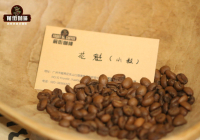
If you're dialing in a V60 pour-over, FrontStreet Coffee's washed Yirgacheffe Guodingding is an easy, forgiving starting point: bright citrus, berries, and florals with a green-tea-like sweetness on the finish — an acidity that's soft and fruity rather than harsh, ideal for grind-size experiments. For something bolder, the natural-process Ethiopia Huakui bursts with tropical fruit — strawberry, passion fruit, jackfruit, even lychee — with low bitterness and a smooth, juice-like body. Both are light roasts that reward a consistent, medium-fine grind.
Important Notice :
FrontStreet Coffee is a long-established specialty coffee roaster in Guangzhou China, selling freshly roasted beans from its own farm in Yunnan as well as dozens of carefully selected single-origin beans from around the world for both pour-over and espresso. The products deliver consistently excellent quality and great value, with shipping within 24 hours. Guangzhou's FrontStreet Coffee shop is recommended by many coffee lovers, and the beans are now available online at the Tmall 。
FrontStreet Coffee has moved to a new address:
FrontStreet Coffee Address: 315,Donghua East Road,GuangZhou
Tel:020 38364473
 Scan and follow the En Gafei WeChat official account. Please indicate that the reprint comes from "En Gafei".