Yirgacheffe Coffee Bean Grading Standards, Variety Characteristics, Flavor Description, Growing Regions, and Pour-Over Coffee Taste Profile
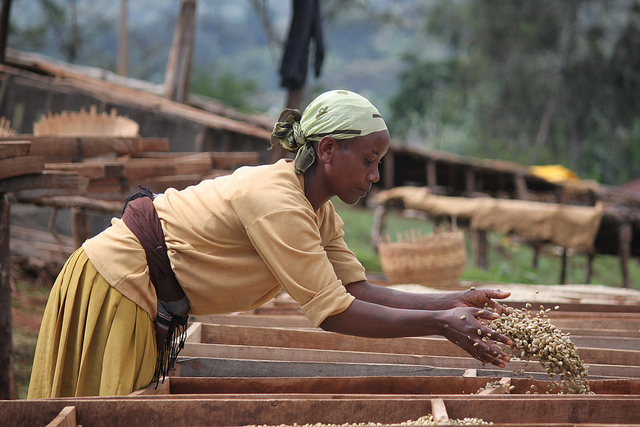
In recent years, many emerging small producing areas and cooperatives in Ethiopia's Yirgacheffe region have begun selling their coffee internationally under their own names. It's a sign of confidence in their production — and of a desire to build brand recognition and loyalty in the global market. These farmers insist on harvesting fully mature cherries and rigorously controlling every step of processing.
Whether washed or naturally sun-dried, Yirgacheffe beans deliver surprisingly fragrant aromas and excellent flavor. FrontStreet Coffee believes this is a key reason Ethiopian coffee generates fresh anticipation among its fans year after year.
What Exactly is Yirgacheffe?

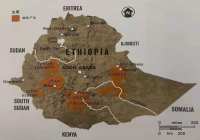
In the ancient Ethiopian language, "Yirgacheffe" combines two words: "Yirga," meaning to settle down peacefully, and "cheffe," referring to marsh-like wetlands. The name therefore carries the sense of "let us settle and make a living in this wetland," and it comes from Yirgacheffe town itself. Strictly speaking, Yirgacheffe is a sub-region of Sidamo in southwestern Ethiopia. Until the mid-20th century, coffee here was processed by traditional natural drying, just as in other Sidamo towns, and Yirgacheffe coffee had not yet developed a distinctive flavor identity.
That changed in the 1970s, when Yirgacheffe town built Sidamo's first wet processing station and introduced washing technology and equipment from Central and South America. This not only improved green bean quality dramatically but also amplified the coffee's inherent citrus and lemon aromas, creating a fresher, brighter taste and fixing Yirgacheffe's unique flavor impression in drinkers' minds. Since then, Yirgacheffe has emerged from Sidamo's shadow as an independent category, and "Yirgacheffe flavor" has become globally popular — a classic beloved by coffee enthusiasts.

To promote industry development, the Ethiopian government registered three regional flavor profiles (including Yirgacheffe®) as commercial trademarks in 2004 and established the Ethiopian Commodity Exchange (ECX) in 2008, with coffee among the auctioned commodities. Exported coffee is graded and flavor-classified so buyers can be sure they're getting the trademarked profile they pay for.
The so-called "Yirgacheffe flavor" can be summed up as unique citrus and lemon fruit aromas complemented by jasmine, a fresh and bright texture, distinct layers of acidity, and a clean, pure finish. And under ECX contract agreements, coffee produced and processed beyond Yirgacheffe town itself — Wenago to the north, Gelena Abaya to the west, Kochere to the south — may also be sold under the Yirgacheffe flavor designation.

The Secret Behind Yirgacheffe's Unique Flavor
Yirgacheffe is one of Ethiopia's highest coffee-growing areas: most trees stand on highlands approaching 2,000 meters, with the highest plots reaching 2,100 meters. The higher the altitude, the more ideal the growing environment — and the stronger the flavor advantages of Arabica. The region's Lake Turkana, Lake Abaya, and Lake Chamo supply abundant moisture, creating year-round mist, spring-like conditions, gentle breezes, and cool, humid weather that nurture the distinctive florals and fruit notes of FrontStreet Coffee's Ethiopian Yirgacheffe.
Unlike the large-estate model behind many specialty coffees, Ethiopian coffee is grown mostly by smallholder farmers, typically on plots of 1 hectare or less with limited yields. They send their cherries to town or to nearby cooperatives for centralized processing. Cooperative management improves quality while giving farmers steadier income — which is why so many coffees are named after their cooperative: Gotiti, Worka, Konga, Adado, and others.
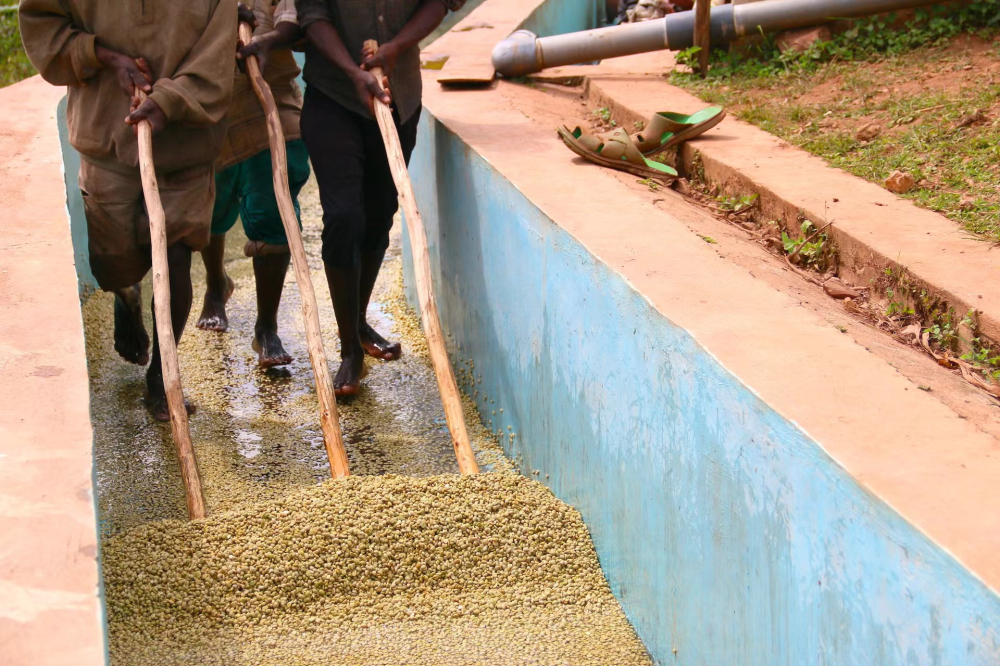
FrontStreet Coffee believes that beyond terroir, the distinctive character of our Yirgacheffe owes much to wet processing.
The washed process works like this: harvested cherries are placed in water, where buoyancy separates out underripe fruit. A depulper removes pulp and skin, and the beans ferment in tanks for 18-36 hours until the mucilage layer decomposes. The parchment is then washed through channels whose design, combined with water flow, carries away low-density, poor-quality beans. Finally, the beans are drained and dried on raised African beds. Each step eliminates defective beans, sharply reducing the defect rate — which is why FrontStreet Yirgacheffe tastes so clean, letting its inherent aromas show through clearly and purely.

The Evolution of Coffee Flavor Preferences
Not long ago, most coffee on the market was dominated by burnt, bitter flavors — a legacy of deep roasting, with nuts and dark chocolate as the primary flavor targets. As specialty coffee took hold, roasters began roasting Yirgacheffe only to a light-medium degree to preserve its acidity. Light-roasted Yirgacheffe offers pleasant fruit sweetness and brightness with white floral notes — effectively opening the "new era of fruit-acid coffee." This shift from bitterness to sweetness aligns perfectly with popular taste, which explains why Yirgacheffe is so widely loved.
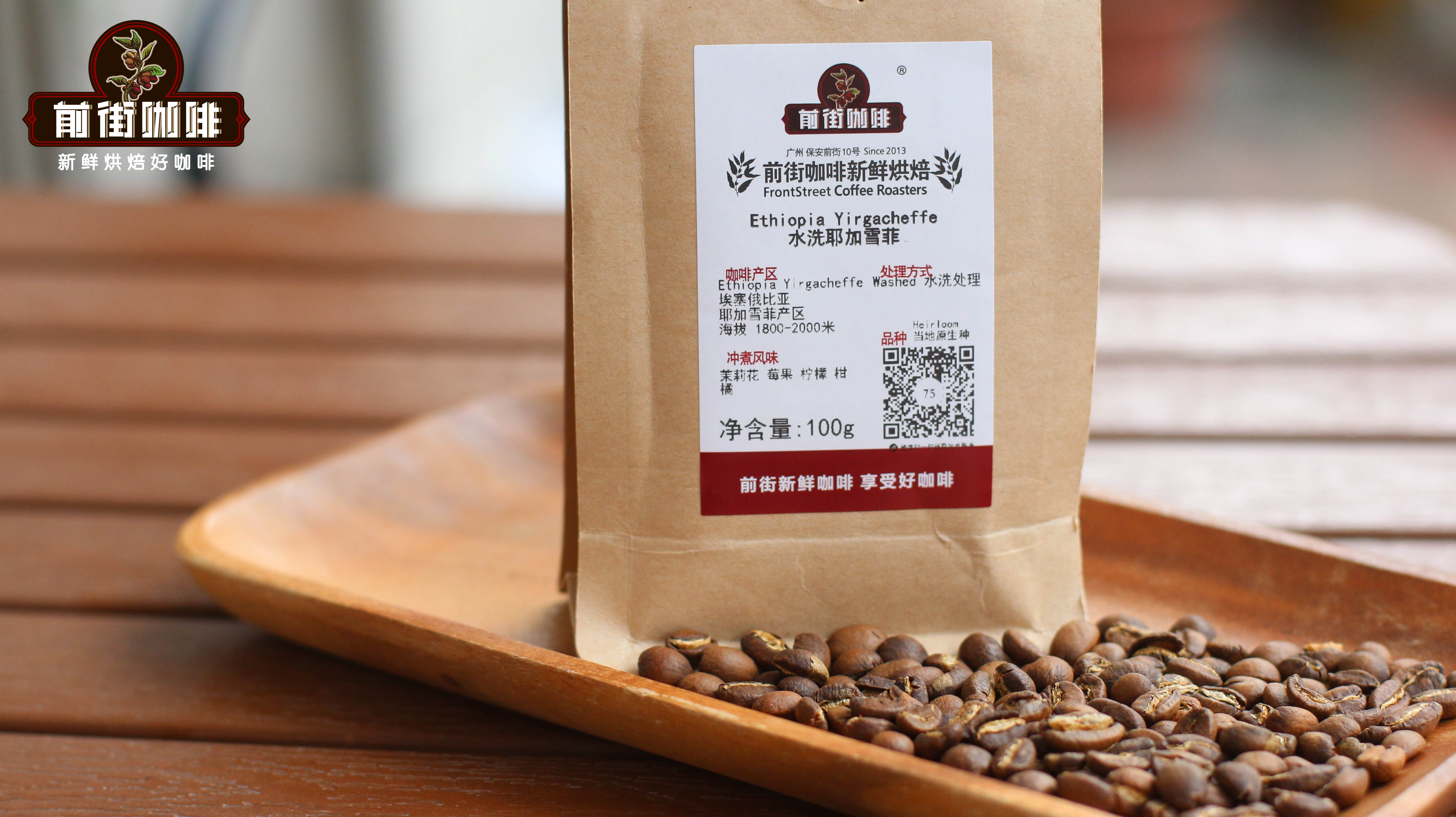
FrontStreet Coffee's Yirgacheffe daily-drinker beans are washed processed, show the classic Yirgacheffe profile, and suit many brewing methods — pour-over, cold brew, and French press among them.
FrontStreet Yirgacheffe Coffee Varieties
The Yirgacheffe region grows primarily Ethiopian heirloom varieties. With thousands of varieties in Ethiopia, "heirloom" is a broad umbrella for wild native varieties or those whose genetics are undefined.

In Ethiopia, garden farming is the dominant cultivation model for the vast majority of smallholders. Heirloom trees come from the "unnamed varieties" in farmers' backyards — perhaps left by previous landowners, shared among neighbors, or grown from seed brought from other regions. Coffee plants are intercropped with other cash crops, harvested only when ripe and sold.
For this reason, "heirloom" doesn't denote a single variety but rather a blend of green beans from a given area — harvests from many small farmers combined into batches that may contain dozens or hundreds of undifferentiated varieties. One of the most visible traits of this coffee is inconsistent bean size, and much of Yirgacheffe's rich flavor comes precisely from this mixture.

FrontStreet Yirgacheffe Flavor and Taste Characteristics
After cupping many Yirgacheffe lots, FrontStreet Coffee finds that coffees from this region typically show bright citrus acidity, fresh white or red florals, a full texture, overall citrus character, and almond notes with a tea-like finish.
Ethiopian Yirgacheffe Coffee Bean Grading System
Yirgacheffe grading follows standards set by the Ethiopian Commodity Exchange (ECX). Under the grading standards updated on the official website in March 2022, the system splits into two categories: "Commercial Grade Coffee" and "Specialty Grade Coffee."

Commercial Grade Coffee
Represented by grades G1 through G5, evaluated on two dimensions:
First, physical characteristics — 40% of the total, scored on defects, appearance, color, and aroma.
Second, cupping — 60% of the total, scored on four dimensions: cleanliness, body, flavor, and acidity.
Physical score plus cupping score gives the total:
G1: 85 points or above; G2: 75-84 points
G3: 63-74 points; G4: 47-62 points
G5: 31-46 points
Higher scores mean better coffee.
Specialty Grade Coffee
Specialty grade is represented by Q1 and Q2. The evaluation works as follows:
G1 and G2 commercial lots are selected for cupping under SCA standards, scored across more dimensions — dry fragrance, wet aroma, flavor, acidity, aftertaste, body, balance, cleanliness, uniformity, sweetness, and overall impression — to produce a final score.
Q1: 85.0 points or above
Q2: 80.0-84.75 points
So coffee scoring 80 or above on SCA cupping counts as specialty grade, with Q1 superior to Q2.

Every Yirgacheffe bean FrontStreet Coffee sells is specialty grade. Our Yirgacheffe Gotiti Cooperative, Kochere Cooperative, Konga Cooperative, and Red Cherry Project beans are all G1 grade, reaching Q1 at 85.0 points or above.
How to Brew FrontStreet Yirgacheffe Coffee Beans?
For a delicious cup, start with freshly roasted beans ground immediately before brewing. All of FrontStreet Coffee's beans ship within 5 days of roasting, so customers receive them at peak aroma and flavor; the optimal tasting window for freshly roasted beans is 30 days.
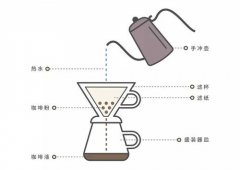
Higher-altitude beans are denser, and to preserve acidity Yirgacheffe is typically roasted medium-light. Their soluble compounds extract less readily, so we recommend a medium-fine grind (80% passing a #20 standard sieve) with 90-91°C water. A V60 dripper suits Yirgacheffe especially well: its spiral ribs and large single hole enhance the coffee's layered complexity.
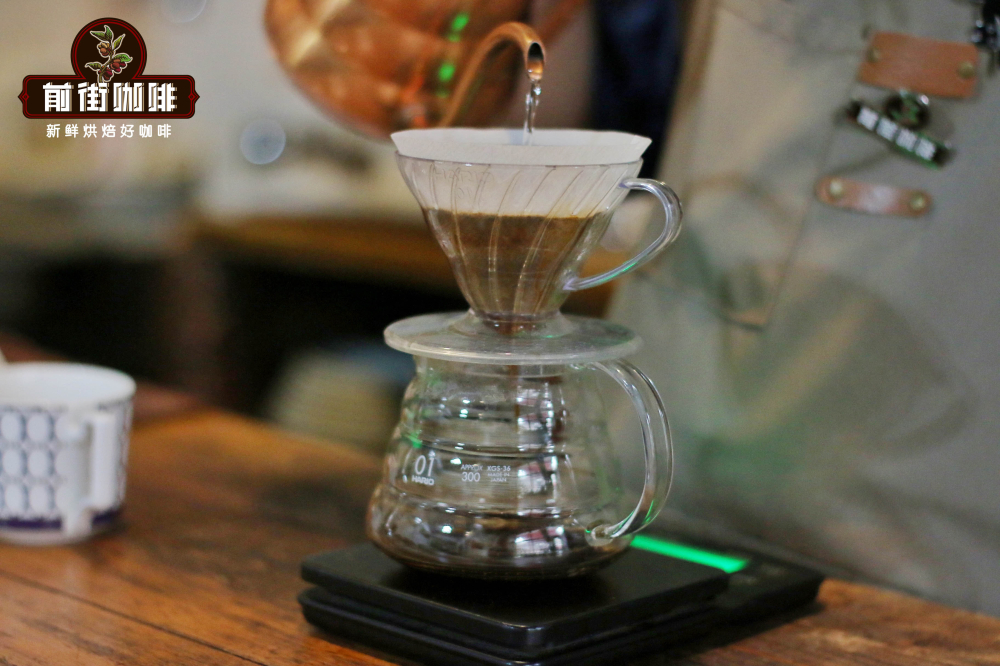
Brewing Parameters:
Dripper: V60 #01
Water temperature: 90-91°C
Coffee dose: 15g
Coffee-to-water ratio: 1:15
Grind size: Medium-fine (80% passing through #20 sieve)
Pouring technique: First pour 30g of water for a 30-second bloom, then pour 95g more (the scale shows about 125g), completing this pour at around 1 minute. When the water level drops to two-thirds of the coffee bed, pour the remaining 100g (about 225g on the scale), finishing at about 1 minute 35 seconds. Extraction completes between 2'00" and 2'10" — then remove the dripper.
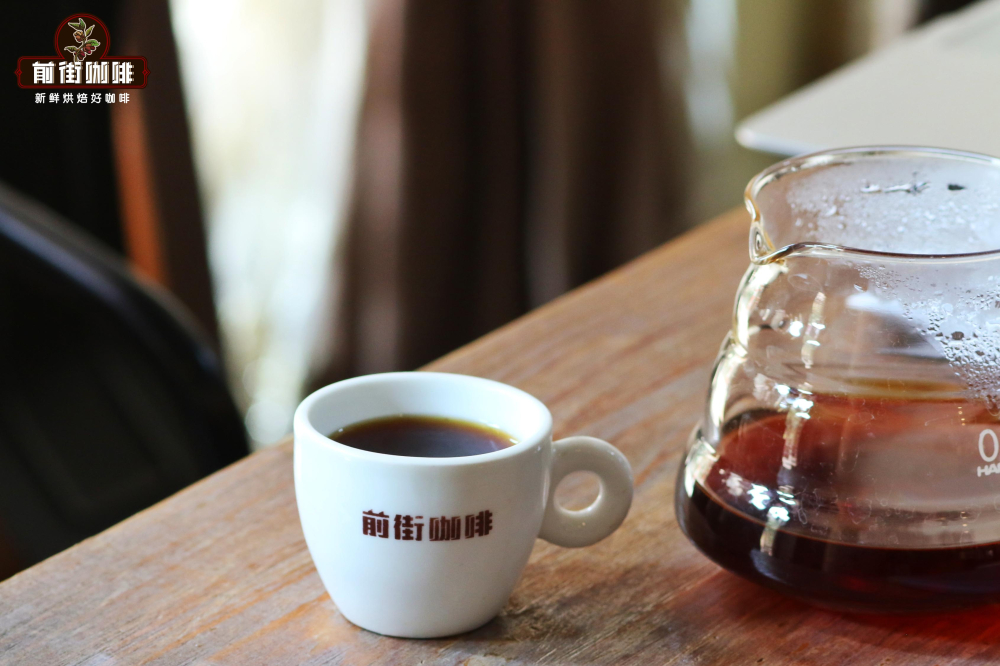
Pour-Over Flavor Profiles:
Yirgacheffe Gotiti Cooperative: citrus, tea-like notes, florals, with prominent caramel sweetness — clean and sweet.
Yirgacheffe Kochere Cooperative: jasmine on entry, lemon notes, a smooth texture with fruit sweetness and acidity.
Yirgacheffe Konga Cooperative: lively berry and citrus acidity, creamy and honeyed sweetness — like drinking a mixed fruit juice.
Yirgacheffe Red Cherry Project: lemon, licorice, citrus, berries, and sweet orange, with high overall sweetness, caramel and cream in the aftertaste, and black tea in the finish.
For more coffee knowledge and specialty bean information, follow FrontStreet Coffee.
FrontStreet Coffee Recommendation: Yirgacheffe, From Gateway to Treasure
If this guide has you reaching for a filter, start with FrontStreet Coffee's Washed Yirgacheffe daily bean — white jasmine, bright citrus and lemon acidity, and a tea-like finish at a friendly price, the perfect first step into specialty coffee. Then explore our Guodingding Cooperative lot from the Worka area, traditionally washed and blessed with clean, luminous citrus and jasmine. For a natural-process counterpoint, the Red Cherry Project dries only fully ripe cherries on raised beds for three to five weeks, turning them every 2-3 hours early on — yielding citrus acidity, a berry-juice sensation, honeyed sweetness, and creamy smoothness. Brew any of them with 15g of coffee, a 1:15 ratio, and 90-91°C water on your V60.
Important Notice :
FrontStreet Coffee is a long-established specialty coffee roaster in Guangzhou China, selling freshly roasted beans from its own farm in Yunnan as well as dozens of carefully selected single-origin beans from around the world for both pour-over and espresso. The products deliver consistently excellent quality and great value, with shipping within 24 hours. Guangzhou's FrontStreet Coffee shop is recommended by many coffee lovers, and the beans are now available online at the Tmall 。
FrontStreet Coffee has moved to a new address:
FrontStreet Coffee Address: 315,Donghua East Road,GuangZhou
Tel:020 38364473
 Scan and follow the En Gafei WeChat official account. Please indicate that the reprint comes from "En Gafei".