What's the Difference Between Natural, Washed, Semi-Washed, and Semi-Dry Coffee Processing Methods? Do Washed Beans Have Silver Skin?
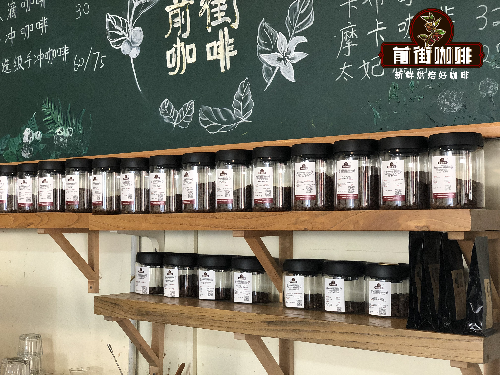
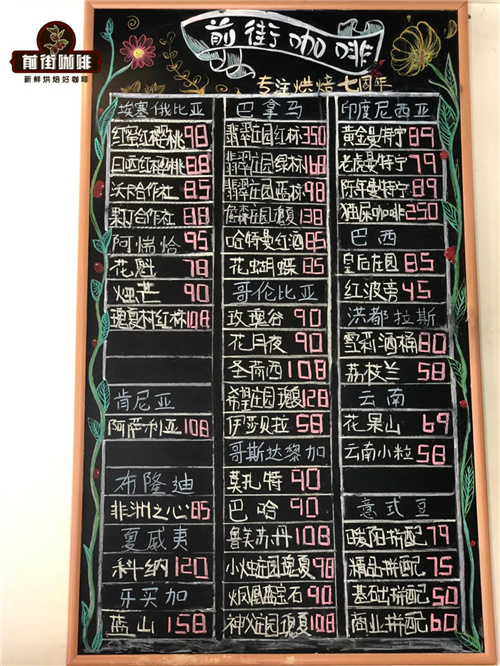
Coffee-growing countries fall into three broad regions, the Americas, Asia, and Africa, and the flavors coming out of each producing nation within those regions differ enormously. Over the years, many customers have stopped by FrontStreet Coffee shops to talk through coffee fundamentals, and processing methods are a topic that keeps coming up from the more curious enthusiasts. So this is a walkthrough of how green coffee gets processed, method by method.
The Influence of Processing Methods on Coffee Flavor
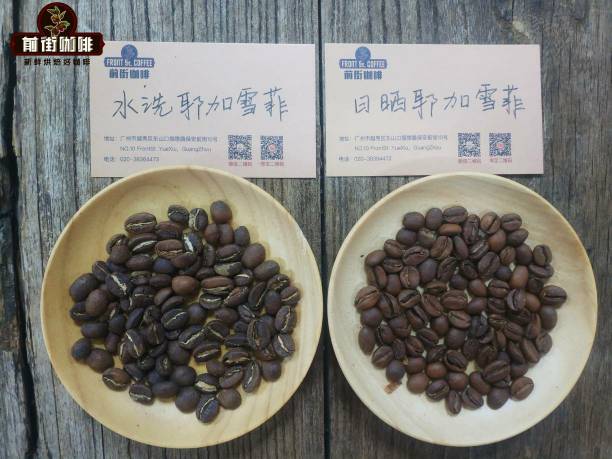
Broadly, a coffee's flavor is set first by its origin, altitude, terrain, and climate, and then shaped by its processing method. Take two Yirgacheffe lots from the FrontStreet Coffee bean list as an example. The washed Yirgacheffe is clean and bright in the cup, though the mouthfeel can lean slightly thin. The natural Red Cherry, by contrast, carries noticeably more body, aroma, and sweetness than its washed counterpart. Brew the washed Yirgacheffe and, along with delicate jasmine florals, you'll find the classic African lemon and citrus tones; the natural Red Cherry's sweetness grows more pronounced as it cools, with acidity tilting toward berries.
Washed Processing Method
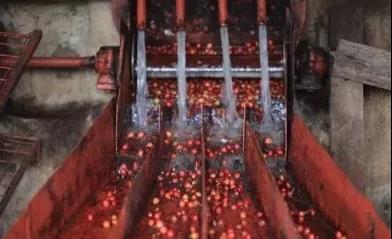
Washed processing is the standard across much of Central America, particularly where water is abundant. The typical sequence: cherries first go into tanks or buckets for flotation sorting, which removes unripe beans and debris before they can spoil the brew. A depulper then strips away skin and pulp, and the beans go into fermentation tanks to break down the remaining mucilage and parchment membrane. Finally the clean beans are dried, leaving green coffee at roughly 11–13% moisture.
The biggest advantage of the washed method is that flotation sorting happens at the very start, and immature and defective beans keep getting removed throughout the process, so washed greens tend to be higher quality and better looking than typical naturals. But every method has its drawbacks. Washing is water-hungry and operationally complex: during fermentation, beans can pick up fermented flavors and turn over-acidic, and if a tank is left unattended, shifting microbial activity can drag down the whole lot. Roughly 50 liters of fresh water are needed to wash the coffee for a single kilogram of green beans, a near-impossible ask in water-scarce producing countries. Washed processing also demands substantial machinery, a heavy burden for smallholder farmers.
Natural Processing Method
African producers such as Ethiopia rely far more on the natural method. Here, whole cherries are simply dried in the open air after harvest, the bright red fruit shriveling to near-black as moisture falls to 11–12%. The process itself couldn't be simpler: spread the harvested cherries evenly across open-air drying patios and let the sun work for several days, turning the cherries frequently to keep them drying evenly and to ward off fermentation, not unlike the old way of sun-drying rice grain.
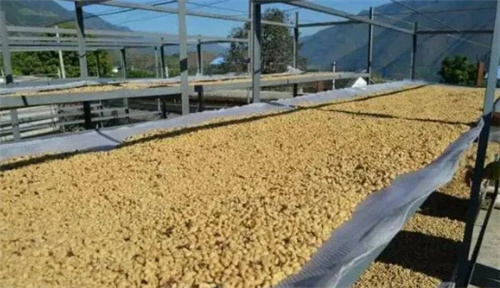
Naturals have obvious virtues: low cost, simple operation, no complex equipment needed, which is why nearly every producing country once processed its coffee this way. The downsides are just as clear: total dependence on the weather, a longer processing window, and a real risk of defective beans and foreign matter sneaking into the lot. Countries that still lean on natural processing include Brazil, Ethiopia, Yemen, and Bolivia; Ethiopia's Harar and Yemen Mocha are the classic famous naturals.
Hybrid Processing Methods
That covers the two traditional methods, but coffee processing is far more inventive than it first appears. Working from those two templates and their local conditions, resourceful farmers developed the semi-washed and semi-natural hybrids.
The semi-natural method, essentially a modernized natural, starts by soaking freshly harvested cherries in large water tanks to float off defects and debris, then machines remove the pulp and skin while the parchment is left intact. The parchment-covered beans then go to drying patios for sun drying, still with frequent turning to ensure even moisture loss and prevent over-fermentation. Beans processed this way rest in parchment for a period before export so the flavor can mature, and the parchment is hulled off only just before shipping. The method is hugely popular in Brazil.
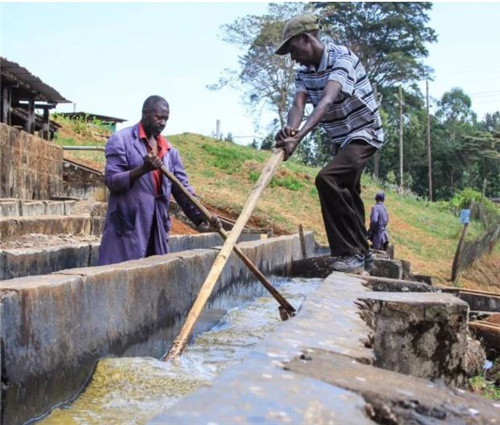
Semi-washed processing follows a similar track: cherries are first floated in tanks to skim off defective fruit, then a depulper removes skin, pulp, and part of the mucilage layer, followed by a one-hour wash. Because soaking and fermentation are so brief, the mucilage doesn't fully wash off, some clings to the parchment, and the beans are then spread out to dry, ideally on well-ventilated raised African beds.
If that sounds nearly identical to the semi-natural method above, that's because it is: both involve a partial wash followed by natural drying, which is why the two names are used interchangeably and grouped together as the pulped natural (semi-washed) method.
Brazil's Semi-Natural Processing Excellence
Water-scarce countries like Brazil therefore lean on the pulped natural method, and it has given Brazilian coffee its distinctive flavor signature. Take the Brazil Queen's Estate lot on the FrontStreet Coffee list: it is pulped-natural processed.
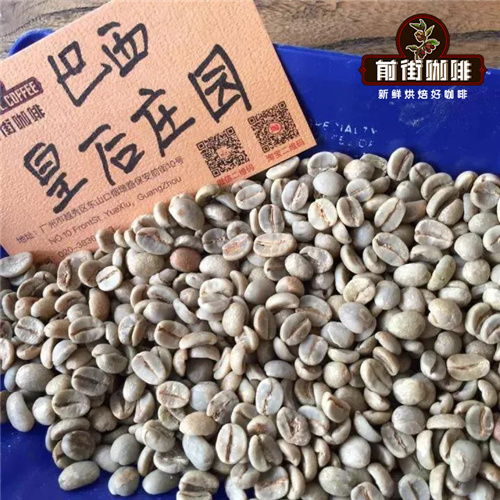
Because this Brazilian bean has lower moisture content and a harder, denser structure, FrontStreet Coffee roasts it medium; and since it absorbs heat readily, roast timing needs careful control to bring out the aroma and body of a pulped-natural coffee. For brewing, FrontStreet Coffee uses the standard three-pour method on a Hario V60: 90°C water, 15g dose, 1:15 ratio, medium-fine grind.

Start with 30g of water for a 30-second bloom, then pour in small circles up to 125g for the first segment; once the water level is about to expose the coffee bed, pour up to 225g and stop. When the bed is again about to break the surface, remove the dripper (timing from the start of the bloom) for a total extraction of 2'00''.
Tasting this Brazil Queen's Estate coffee, the sweetness of the pulped natural process comes through immediately, along with a subtle lemon note, rich Brazil-nut character, and distinct dark chocolate in the finish. It's a remarkably rounded cup, a bean that captures the overall character of Brazilian coffee while showing a liveliness all its own.
FrontStreet Coffee Recommendation
Newcomers who want to understand the Ethiopian growing regions should start with the most classic expression: FrontStreet's washed Yirgacheffe house coffee, known for white jasmine, bright citrus and lemon acidity, and a tea-like finish. Its friendly price has made it the first bean for countless people entering specialty coffee. Yirgacheffe itself is a small town in Ethiopia's southern Sidamo province at roughly 1,700–2,100 meters, with coffee trees planted above 1,800 meters, among the highest coffee elevations anywhere. The land was historically wetland, and the name Yirgacheffe has become shorthand for the region's unmistakable white florals and lemon-citrus acidity; in 2010, its fame grew so large that the Ethiopian Commodity Exchange split it out from Sidamo as its own designation.
For a step up, the Worka-area FrontStreet Washing Station (Idido) cooperative coffee comes from the Worka zone at Yirgacheffe's southeastern edge, originally part of the Worka cooperative under the Yirgacheffe Union (YCFCU), later recognized as a single-origin micro-region as demand for traceability grew. Processed in the most traditional washed style, it carries no old-school bitterness: fresh, bright citrus and lemon acidity with jasmine fragrance.
From the same Yirgacheffe region, FrontStreet's natural Red Cherry uses only fully ripe, defect-free cherries. After a first round of sorting at the mill, the cherries dry on raised beds and are turned every 2–3 hours during the first days to prevent uneven heating and over-fermentation. After three to five weeks of sun drying, workers mechanically strip the dried pulp depending on weather and temperature, and the lots move into storage. Because the fruit dries intact, the cup keeps classic Yirgacheffe character while gaining tropical fruit from the natural process: citrus-like acidity, berry juiciness, honey sweetness, and a creamy smoothness.
Brewing suggestions: V60 dripper, water at 90–91°C, 15g of coffee, 1:15 ratio, grind to fine granulated sugar (20% retained on a #20 sieve, i.e., 80% through). FrontStreet's pour: 30g of water for a 30-second bloom, then pour 95g (scale reads ~125g) over about 1 minute; when the water drops to two-thirds of the bed, pour the remaining 100g (scale reads ~225g) finishing around 1'35''. Drawdown completes at 2'00''–2'10'', remove the dripper and the extraction is done.
Important Notice :
FrontStreet Coffee is a long-established specialty coffee roaster in Guangzhou China, selling freshly roasted beans from its own farm in Yunnan as well as dozens of carefully selected single-origin beans from around the world for both pour-over and espresso. The products deliver consistently excellent quality and great value, with shipping within 24 hours. Guangzhou's FrontStreet Coffee shop is recommended by many coffee lovers, and the beans are now available online at the Tmall 。
FrontStreet Coffee has moved to a new address:
FrontStreet Coffee Address: 315,Donghua East Road,GuangZhou
Tel:020 38364473
 Scan and follow the En Gafei WeChat official account. Please indicate that the reprint comes from "En Gafei".