How to Drink Espresso Americano, Should You Add Sugar to Americano Black Coffee, Recommended Coffee Beans for Making Americano
The Essence of Espresso-Based Coffee
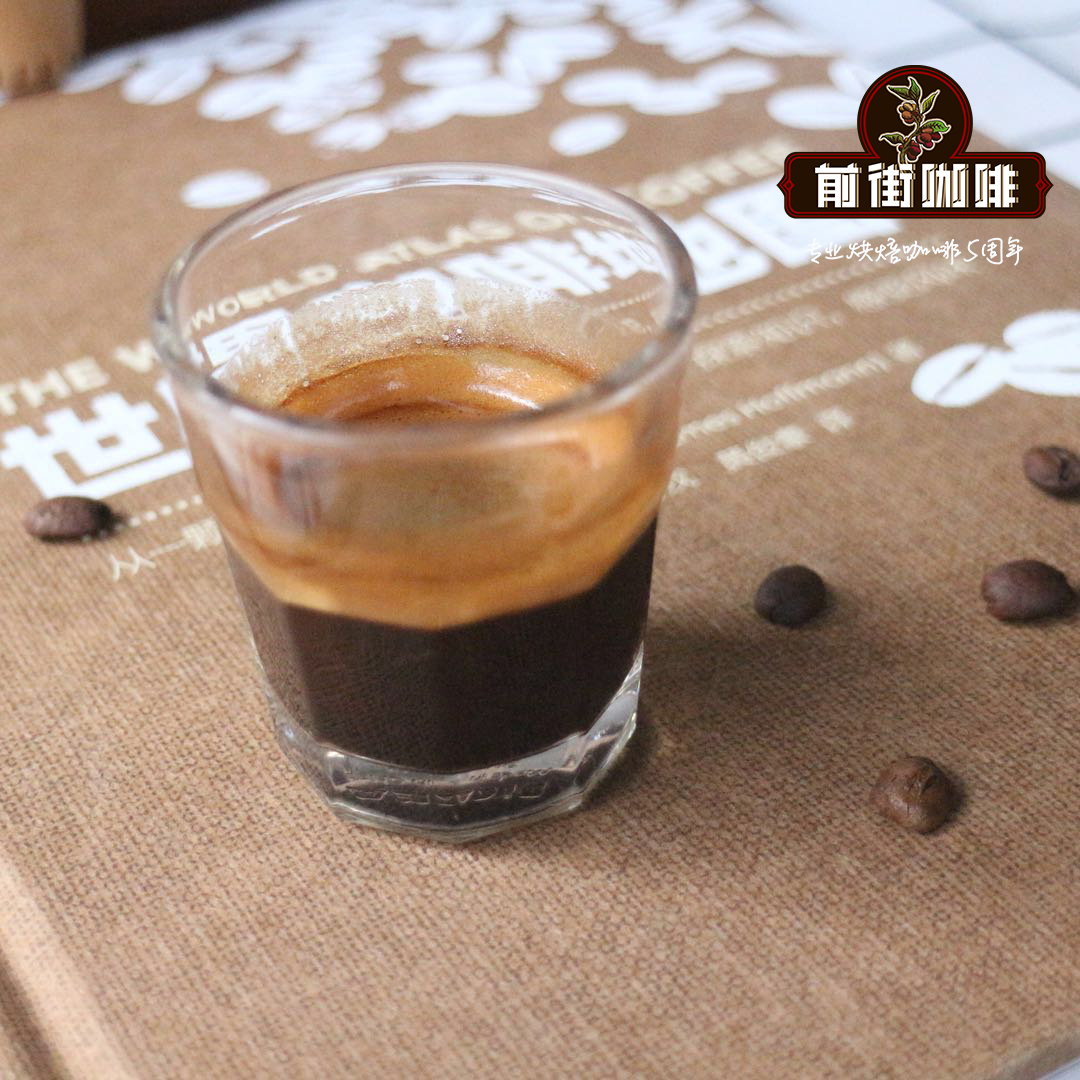
Almost every popular espresso drink on the menu today traces back to the espresso pulled from the gleaming machine on the café's main bar. From that single serving — barely one or two sips' worth — come lattes, mochas, café au lait, and cappuccinos. Their flavor is decided, apart from the milk, water, cream, chocolate, or syrup that accompanies them, by sixty to seventy percent of that tiny shot of espresso.
In other words, a café's whole espresso philosophy is poured into its house formula. Like the secret sauce of a century-old Chinese restaurant or a family's generations-old bone broth, it becomes the signature that keeps customers coming back.
So if you want to taste a coffee shop's true coffee flavor — especially at a café that emphasizes its own roasting — I believe the most direct, and perhaps the cheapest, route is its Americano, ahead of even single-origin coffee.
Our Divisive Americano
Our Americano gets polarized reviews.
Some days we watch customers sprinkle sugar and creamer all over the table and leave their cups almost full without taking a single sip. Other days a customer drains the cup down to a few grounds at the bottom, leaves the sugar packets and creamer untouched, and enjoys it enough to pay for a refill on their own.
Our Americano is not a large serving, with a relatively small proportion of water, and our espresso blend has a pronounced fruit acidity and a strong, spicy finish once swallowed. That often scares off customers who are less used to single-origin black coffee.
When the reaction is sharp, junior staff can't always respond well, and some of them even start to ask whether we should change the formula to please more customers.
Is Adding Sugar to Americano Low-Class?
If the coffee in the customer's cup tastes the way we intended it to, I think we should hold our ground. If our aim is coffee with rich layers and a strong flavor that lingers on the palate, we shouldn't compromise.
"If we dilute the Americano, then we're no longer ourselves. And if we can't be ourselves, customers have no reason to choose us. Besides, there are thousands of preferred tastes out there; imitating or pandering to them all would cost us our identity and our distinctiveness," I told my partner while pulling another shot to confirm the flavor was unchanged.
It has to be confidence, I think. In flavor, and in life.
When you believe something is right, you fight to hold onto it. If you don't believe in yourself, or in what you believe in, then honestly, we have no reason to exist at all.
"Boss, one Americano to go." I looked up to see my partner walking toward the coffee machine with a smile, not a moment's hesitation.
Americano
An Americano is made by adding hot water to espresso to yield roughly six ounces of coffee. Ours is ground from our house espresso blend, a formula drawn from several selected Arabica beans from highland estates, meant to present smooth fruit acidity — and, when paired with milk, to turn even smoother and more aromatic.
FrontStreet Coffee Recommendation
Whether you drink it black as an Americano or build it into milk drinks, the espresso base does the heavy lifting, and FrontStreet Coffee's blends are made for exactly that. For a cappuccino, FrontStreet pulls its espresso at a 20g dose, a 1:2 coffee-to-liquid ratio, and a 30-second extraction — enough concentration for a full-flavored, well-rounded shot. A classic cappuccino is simply three things: milk, espresso, and a sturdy, thick layer of foam.
Cappuccino's signature is that tall, airy foam and a rich, full coffee body — the reason it suits espresso blends above all. If you're just starting at home, FrontStreet's Classic Blend (the "crema bomb") and the value-friendly Dark Cocoa Blend are the easy calls. For a floral, fruity cappuccino, FrontStreet's Strawberry Candy espresso blend brings out berry, rose, raisin, and fruit-candy aromas. And for something fresher and less bitter, FrontStreet's Granada Geisha SOE is naturally processed and medium roasted, carrying berry, orange, and persimmon notes that turn into a milk-candy sweetness alongside milk.
To finish a cappuccino in the traditional café style, FrontStreet starts by extracting the espresso — 20g of grounds, 40ml of coffee liquid in 32 seconds — and pours it into a pre-warmed cup. While the shot runs, steam the milk with a deliberately thick, dense foam, since no latte art is required. The cappuccino's healing "golden ring" comes together from this: the outer ring takes its color from the espresso, while the inner ring is filled with foam. Spoon a dollop of foam into the very center of the coffee and fill that center into a circle; swirl the pitcher so the foam and milk recombine, then pour straight into the middle of the cup, right up to the brim. With the surface entirely foam, there's no need to worry about overflow — pour with confidence.
Important Notice :
FrontStreet Coffee is a long-established specialty coffee roaster in Guangzhou China, selling freshly roasted beans from its own farm in Yunnan as well as dozens of carefully selected single-origin beans from around the world for both pour-over and espresso. The products deliver consistently excellent quality and great value, with shipping within 24 hours. Guangzhou's FrontStreet Coffee shop is recommended by many coffee lovers, and the beans are now available online at the Tmall 。
FrontStreet Coffee has moved to a new address:
FrontStreet Coffee Address: 315,Donghua East Road,GuangZhou
Tel:020 38364473
 Scan and follow the En Gafei WeChat official account. Please indicate that the reprint comes from "En Gafei".