How Much Water for Pour-Over with 15g of Honduras Benigno Mejia Smallholder Pacamara Coffee Beans?
Professional Coffee Knowledge Exchange
For more coffee bean information, follow our coffee community.
How much water for 15g of Honduras coffee? What are the flavors and characteristics of the Honduras Benigno Mejia smallholder Parainema variety?
Honduras has been growing coffee for over two hundred years (since 1804).
Today the cultivated area reaches 280,000 hectares, made up predominantly of small coffee farms: 92% of Honduran coffee farmers are smallholders, with most plantations covering less than 3.5 hectares. These small farmers account for 60% of total production — coffee is an extremely important crop in Honduras.
On the plantations, farmers harvest red cherries and process them through washed fermentation and grading to meet market demands and satisfy consumers' diverse flavor preferences. Honduras harvests three million bags of coffee a year, supplying high-quality coffee with distinctive flavors — abundant in quantity and excellent in quality. It has now become the largest coffee-producing country in Central America and one of the world's top ten coffee exporters.
Parainema
The variety in this batch is called "Parainema," a new cultivar developed through breeding and cross-cultivation that resists coffee leaf rust and nematode infestation. Coffee improvement work began in 1981 as part of a series of experiments known as "Producer Requirements for Disease and Pest Resistance" (Sarchimor T-5296).
The improved coffee was first planted in Costa Rica between 2006 and 2008, then introduced to Honduras in 2010 and named Parainema.
Parainema was the championship variety at Honduras' 2017 Cup of Excellence (COE) competition.
The beans are elongated like Geisha, with a vibrant green, full color. Bred to resist leaf rust and nematodes, the variety took the 2017 COE crown with El Laurel farm's winning lot.
FrontStreet Coffee's Recommended Brewing Parameters:
Three-Pour Method
Suitable for pour-over coffee with medium-roasted beans.
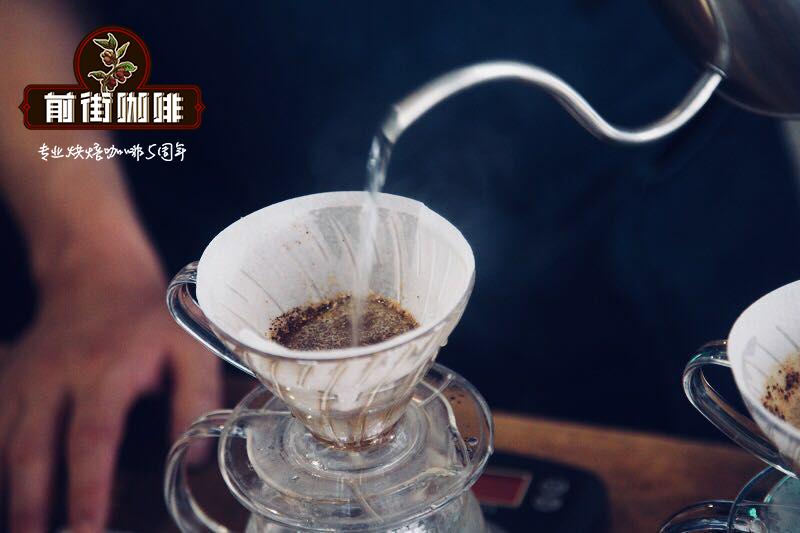
The video uses a wave dripper + Kalita copper gooseneck kettle, brewing Colombian Narino beans with balanced, gentle, clean flavors and rich notes of almond, citrus, and white chocolate. The three-pour method's segmented extraction delivers richer layers than a single continuous pour, clearly separating the coffee's front, middle, and back-end flavors. The approach is to increase the water volume with each pour after the bloom, typically pouring just as the coffee liquid is about to drop to the level of the coffee bed, using small, medium, and large flows for the three stages. This demands relatively precise control over flow rate and water volume.
The three-pour bloom requires no stirring to improve saturation, nor dripping techniques to deepen immersion, making it suitable for most specialty beans — especially medium-roasted coffees from Central and South America.
It's the brewing method used by most coffee shops. The key points to master are: stopwatch, scale, flow rate, and water volume. Most people who dig deep into pour-over brewing settle on this method.
First Practice of the Three-Pour Method
Coffee grounds: 15g, Water: 225g
Water temperature: 88-89°C
Time: 2 minutes
Grind size: Sugar-particle size
FrontStreet Coffee Recommendation
The article notes that Parainema's beans are elongated like Geisha — and if that comparison has you curious about the real thing, FrontStreet Coffee carries a Gesha for every budget. Beginners can start with the FrontStreet Boquete Gesha, an entry-level Panama Gesha that delivers the classic orange-blossom honey character, oolong tea texture, delicate fruit acidity, and distinct layers at an accessible price. For the top tier, the FrontStreet Esmeralda Red Label (officially "Esmeralda Special") grows at 1,600-1,800 meters, cups above 90 points every batch, and comes from a single named plot — each batch carries its own number so buyers can choose by subtle flavor differences — while the Green Label "Private Collection" blends multiple high-altitude plots for the estate's signature Gesha profile at a friendlier price. In Ethiopia, the birthplace of coffee, the FrontStreet Granada Gesha Estate lot — hand-picked fully ripe cherries sun-dried on raised beds for 14-20 days — offers bright citrus acidity, elegant ginger-flower aroma, and the refined finish typical of the variety.
Important Notice :
FrontStreet Coffee is a long-established specialty coffee roaster in Guangzhou China, selling freshly roasted beans from its own farm in Yunnan as well as dozens of carefully selected single-origin beans from around the world for both pour-over and espresso. The products deliver consistently excellent quality and great value, with shipping within 24 hours. Guangzhou's FrontStreet Coffee shop is recommended by many coffee lovers, and the beans are now available online at the Tmall 。
FrontStreet Coffee has moved to a new address:
FrontStreet Coffee Address: 315,Donghua East Road,GuangZhou
Tel:020 38364473
 Scan and follow the En Gafei WeChat official account. Please indicate that the reprint comes from "En Gafei".