The Story and Flavor Characteristics of Konga Coffee Beans from Yirgacheffe Coffee Region

FrontStreet Coffee's washed Yirgacheffe is familiar to many, but that familiarity can mislead. Does everything from the Yirgacheffe region have to be washed? Not at all. Some natural-processed beans from the region deliver remarkable flavor too. Today FrontStreet Coffee introduces a natural-processed coffee from Yirgacheffe: FrontStreet Coffee's Konga. Yirgacheffe is one of Ethiopia's premium coffee regions and the birthplace of coffee, and it has become a synonym for specialty coffee. The washed Yirgacheffe produced here has served as the entry bean for countless people stepping into the specialty world. So why does Yirgacheffe enjoy such a high reputation?
The Growing Environment of Yirgacheffe
The early residents of what is now the Yirgacheffe coffee region gathered in swampy areas, and the name Yirgacheffe itself means "choosing a place away from water to settle." It is a small town in the southern Gedeo region, at 1,700-2,100 meters, making it one of the highest coffee-growing areas in the world. It originally belonged to the Sidamo region, but because the coffee here has such distinctive, easily recognizable characteristics, it was established as an independent region. It borders three small areas, Wenago, Kochere, and Gelena Abaya, whose coffee tastes similar to Yirgacheffe's, which is why Kochere is also classified as part of the Yirgacheffe area. The region has a total of 28 member cooperatives of various sizes, each with limited production, typically grown in backyards or mixed with other crops: true smallholder farming.

Every Ethiopian coffee region has its own flavor profile, closely tied to the local growing environment. So that drinkers can experience the flavors of different Ethiopian regions, FrontStreet Coffee has sourced more than a dozen single-origin Ethiopian beans, with five of them coming from Yirgacheffe alone.
The Konga Cooperative
Konga is one of the 26 cooperatives under the Yirgacheffe Coffee Farmers Cooperatives Union (YCFCU), located 5 kilometers south of Yirgacheffe town. It was established in 1994 and joined the YCFCU union in 2002. It takes its name from the nearby Konga River and Konga village. Konga is made up of more than 1,500 smallholder coffee-farming families, whose farms average less than 1.25 hectares, at growing altitudes of 1,800 to 2,250 meters, and are planted mainly with local heirloom varieties.
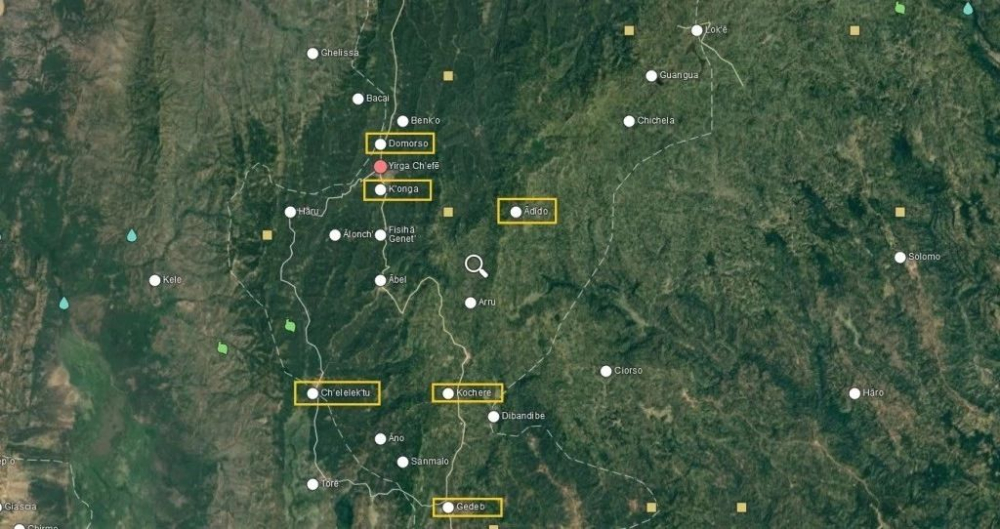
What makes Konga special is the local iron-rich red soil, which reaches depths of up to 1.5 meters. Deeper soil holds richer nutrients, and high iron content is very beneficial for coffee: iron is a micronutrient that helps plants produce chlorophyll, so through photosynthesis the coffee trees absorb more nutrients and the cherry quality improves. This unique geography is one of the key reasons the Konga Cooperative can produce such fine coffee.
Konga Coffee Varieties
Observant drinkers may have noticed that most Ethiopian beans are labeled as local heirloom varieties. What does that mean? Ethiopia is the birthplace of coffee and its gene bank, home to countless varieties that are difficult to identify. To protect them, the government does not disclose information about these varieties. Because many of them have put down roots here for years and have developed distinctive regional characteristics, they are grouped together as heirloom varieties. Like many Ethiopian beans, Konga belongs to these local heirloom varieties.
Ethiopia's green bean grading and export standards also do not use bean size as a criterion. Grading is based mainly on the proportion of defective cherries and on cupping quality: beans containing fewer than 3 defects per 300 grams are classified as G1. That is why Ethiopian beans come in so many shapes and sizes.
The Natural Processing Method
Konga comes from the Yirgacheffe region, so is it also washed? As mentioned above, Konga is a natural-processed coffee from Yirgacheffe. In fact, Yirgacheffe originally used the most ancient natural method, but in 1972 Ethiopia introduced Central and South American washing techniques to improve quality. That made the jasmine and citrus aromas clearer and more refined, quickly turning the coffee into a world-class specialty bean, with the skilled washing playing an indispensable role. Since the 1970s the region has focused mainly on washed processing and has become Ethiopia's most popular washed-bean area.
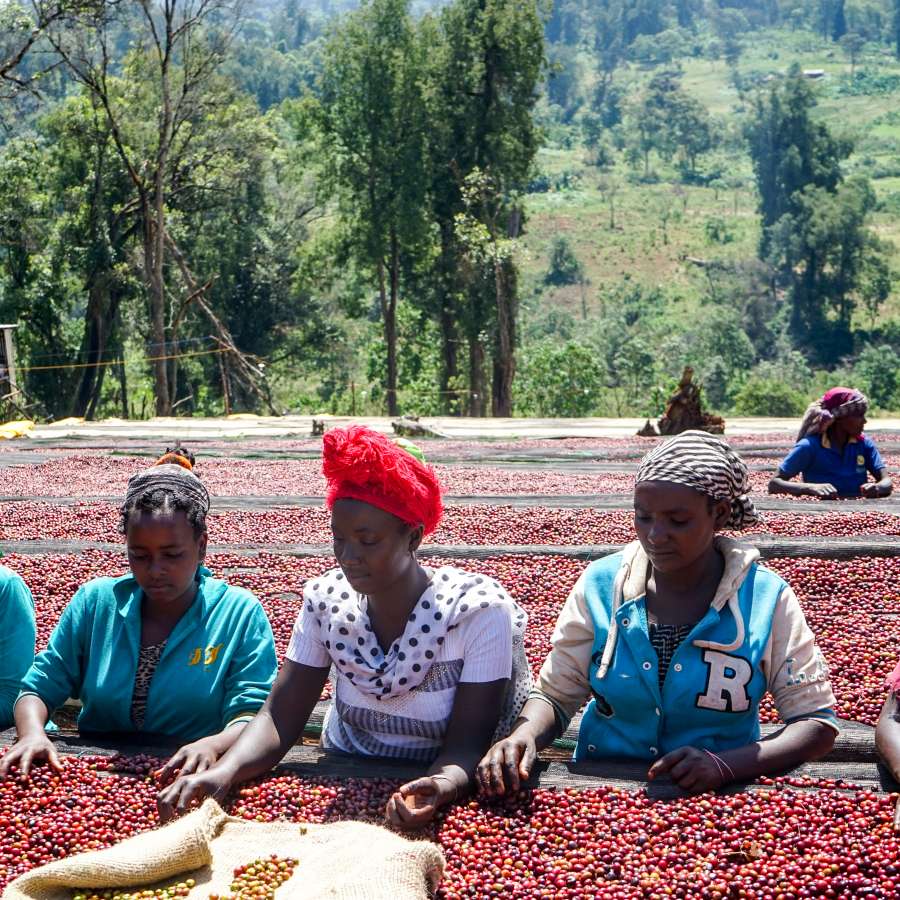
Konga's natural process relies on the cooperative's unified drying beds and an extremely strict cherry selection: unripe, damaged, and overripe cherries are all removed, leaving only fully mature red cherries. The cherries are dried whole, husk and all, on shaded raised beds in direct sun for 2 weeks until the moisture content falls to just 12%, after which they are packed and sent to the warehouse for grading and packing. Naturally processed beans are generally less bright than washed ones, but they carry rich fermented fruit aromas and a fuller, juice-like body.
Brewing Recommendations
On brewing, FrontStreet Coffee has always believed that freshness is crucial, because fresh beans let you experience the full range of flavor. Everything FrontStreet Coffee ships is roasted within 5 days, since freshness greatly affects flavor. The roasting philosophy is "freshly roasted good coffee," so that every customer receives the freshest coffee on arrival. The resting period is about 4 to 7 days, which means the coffee arrives at its peak.
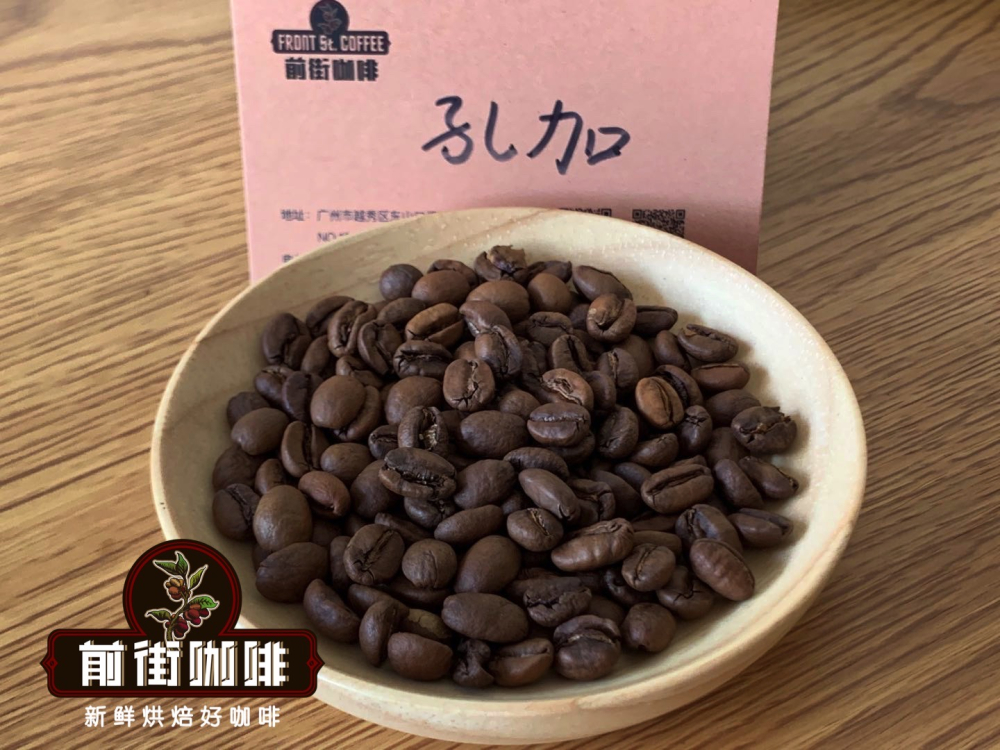
Some customers ask FrontStreet Coffee to grind the beans, which is perfectly fine. But a reminder: once beans are pre-ground, there is no need for a resting period, because the pressure of carbon dioxide building up in the packaging during transit helps mellow the flavor, so you can brew a cup the moment the ground coffee arrives. Ground coffee should nevertheless be used promptly, because it oxidizes quickly once exposed to air and loses its flavor faster. FrontStreet Coffee recommends buying whole beans and grinding fresh before brewing to get the best flavor.
Brewing Parameters for Konga
FrontStreet Coffee's Konga has the classic flavors of Yirgacheffe. To highlight its fresh citrus character while preserving the jasmine aroma, FrontStreet uses a medium-light roast. Because Ethiopian coffee grows at high altitude and the beans are hard, FrontStreet chose a V60 dripper, tapping the V60's even flow to bring out the sweet-sour layers, with water at 90°C to extract the aromatics, a 1:15 ratio, 15g of coffee, and a grind of 80% passing a China No. 20 standard sieve.
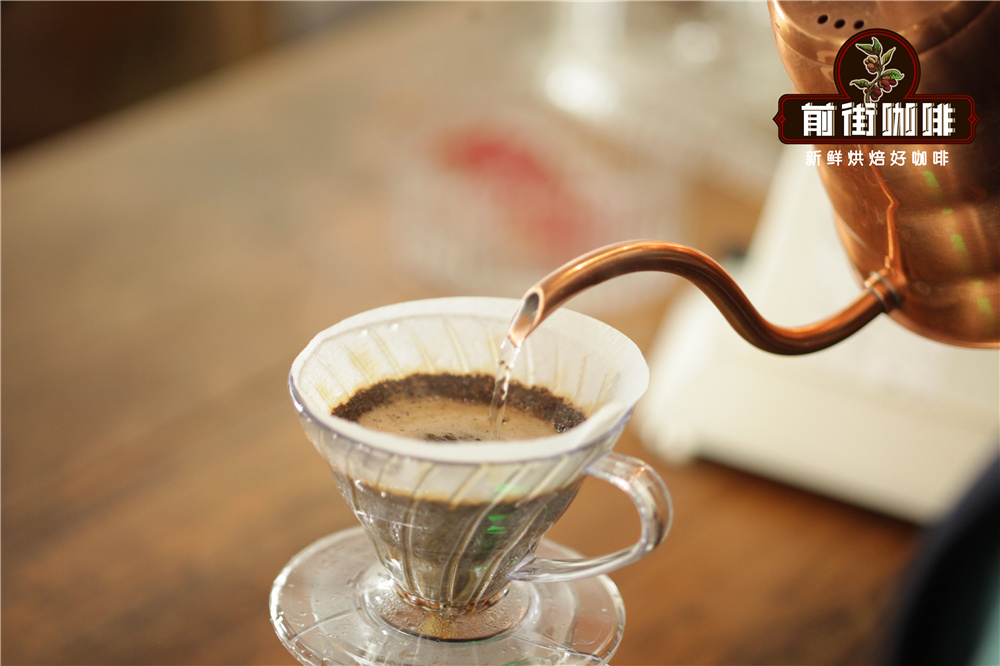
For extraction, bloom with twice the weight of the grounds in water, meaning 30 grams of water for a 30-second bloom. Blooming lets the grounds release their internal carbon dioxide so the rest of the extraction is more stable. With a small circular pour, go to 125 grams, then continue to 225 grams and stop. Remove the dripper once the water has finished dripping through. Time from the start of pouring is 2'00". Then take the whole cup, shake it well, and pour it into a cup for tasting.
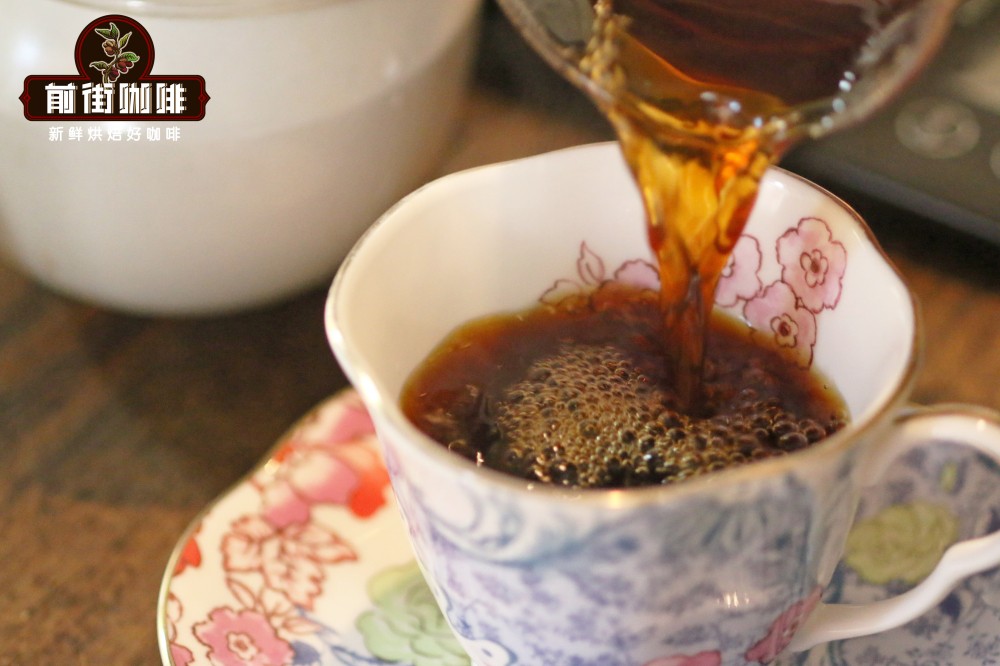
Konga's flavor: fresh and elegant jasmine notes after grinding; during brewing, lively berry and citrus acidity with sweet cream and honey. The overall mouthfeel is like drinking a mixed fruit juice and is a real pleasure.
Ethiopian coffee is a treasure trove that makes people want to keep exploring, which is why FrontStreet Coffee has sourced more than a dozen single-origin beans from different Ethiopian regions, along with over fifty beans from other regions, for a wide range of flavors to explore.
FrontStreet Coffee Recommendation
To taste the region's classic profile, start with FrontStreet Coffee's washed Yirgacheffe, known for white jasmine, bright citrus and lemon acidity, and a tea-like body, at a price that makes it a natural first specialty bean. For an even more refined washed lot, FrontStreet Coffee's washed Gotiti from the Worka area brings clean, bright citrus and lemon acidity with jasmine fragrance and no bitterness.
For a natural-processed contrast in the same regional style as Konga, try FrontStreet Coffee's natural Red Cherry, made from fully ripe cherries dried on raised beds, combining the classic Yirgacheffe profile with tropical fruit aromas, citrus-like acidity, berry juiciness, honey sweetness, and a creamy body.
Important Notice :
FrontStreet Coffee is a long-established specialty coffee roaster in Guangzhou China, selling freshly roasted beans from its own farm in Yunnan as well as dozens of carefully selected single-origin beans from around the world for both pour-over and espresso. The products deliver consistently excellent quality and great value, with shipping within 24 hours. Guangzhou's FrontStreet Coffee shop is recommended by many coffee lovers, and the beans are now available online at the Tmall 。
FrontStreet Coffee has moved to a new address:
FrontStreet Coffee Address: 315,Donghua East Road,GuangZhou
Tel:020 38364473
 Scan and follow the En Gafei WeChat official account. Please indicate that the reprint comes from "En Gafei".