What are Kenya Coffee Varieties SL28 and SL34? Why Are Kenya AA Coffee Beans So Acidic
Kenyan coffee is exceptionally aromatic and brightly acidic, and like every bean FrontStreet Coffee sources from origin, it carries the classic flavors of its terroir. Keeping that flavor identity intact is everything. FrontStreet Coffee currently carries two Kenyan lots: Assaria AA and Sachini PB, both SL28/SL34. The pairing was chosen precisely because they represent two different size grades. PB, peaberry, isn't a quality grade in the way AA is, but a shape classification. Side by side, the PB cups rounder and denser, while the AA tastes brighter and livelier.
Kenyan Coffee SL28 Variety
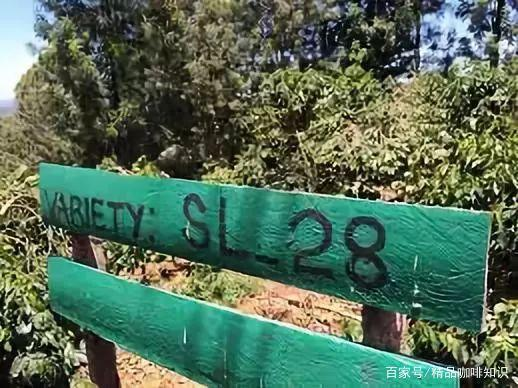
SL28 is one of Africa's most famous and beloved varieties. In recent years it has built its reputation on remarkable blackcurrant notes and bright, fruity acidity, becoming the most-watched variety after Gesha. And like Gesha, born in Ethiopia but turned into a superstar in Panama, SL28 was born in Kenya and has the same kind of crossover potential, now shining in growing regions far beyond its Kenyan home.
SL28 is a direct descendant of Bourbon, selected and refined in early-20th-century Kenya by French and British missionaries and researchers. Its lineage mixes French Mission, Mocha, and Yemen Typica blood. High sweetness, exquisite balance, prominent citrus and plum, intense yet rich fruit acidity, full body, and beautiful harmony, these are the signatures of Kenyan SL28.
About Scott Laboratories
Scott Agricultural Laboratories was founded in 1922 by the colonial government and is now known as the National Agricultural Research Laboratories (NARL). Its mission was to run extensive trials on imported coffee varieties, select individual trees with ideal traits, and give farmers technical advice and cultivation training. The workload also included yield experiments, grafting trials, pruning studies, shade-growing trials, and root cover crops. In 1944 the Kenyan government decided to move the coffee research station to the larger, better-equipped Coffee Research Foundation, which has operated since 1949.
Origin of the SL28 Variety
According to the historical record, in 1931 a Scott Laboratories official conducted field surveys in Tanganyika (today's Tanzania). In the Moduli district he noticed a coffee variety that appeared resistant to drought, disease, and pests, collected seeds, and brought them back to the lab. In 1935, the laboratory selected individual trees from that drought-resistant Tanganyika population and kept refining them through breeding, eventually releasing the Moduli descendant we know as SL28. Recent genetic studies have confirmed SL28 sits squarely in the Bourbon genetic group.
Characteristics of the SL28 Variety
SL28 is easy to grow without special care, produces large beans, yields well, and cups beautifully. After its release by Kenyan authorities in the 1930s it was first cultivated in Kenya, then spread to Uganda, and today it is drawing wide attention even in Central America. It suits medium-to-high altitude zones and tolerates drought well, though it remains susceptible to the major coffee diseases.
Coffee Flavor of the SL28 Variety
The cup carries the bright tones of original Bourbon, even the rich acidity of original Mocha, plus complex layers and a plush texture. Yield never quite lived up to expectations, but the copper-toned leaves and broad, bean-shaped seeds deliver wonderful sweetness, balance, citrus and plum, intense fruit acidity, full body, and lovely harmony. Most importantly, SL28 only shows its true character when grown in Kenya; plantings elsewhere merely approximate it.
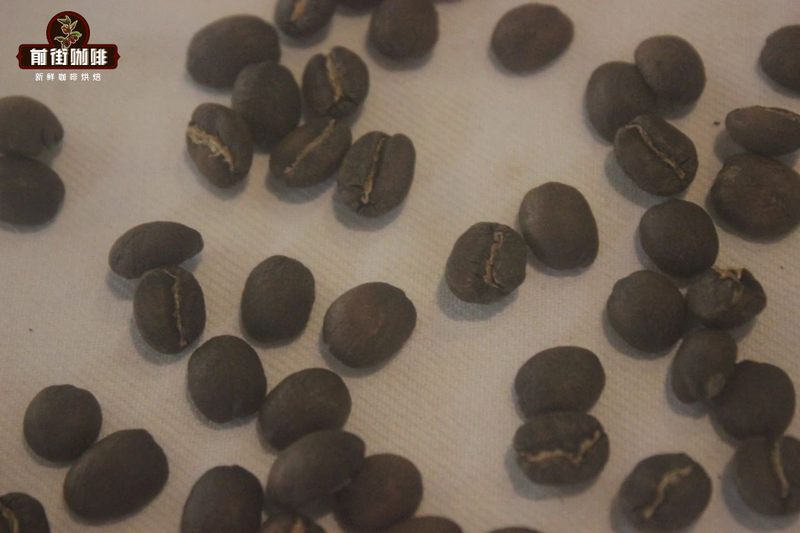
Kenya Isamama Processing Station - Qingcheng AB
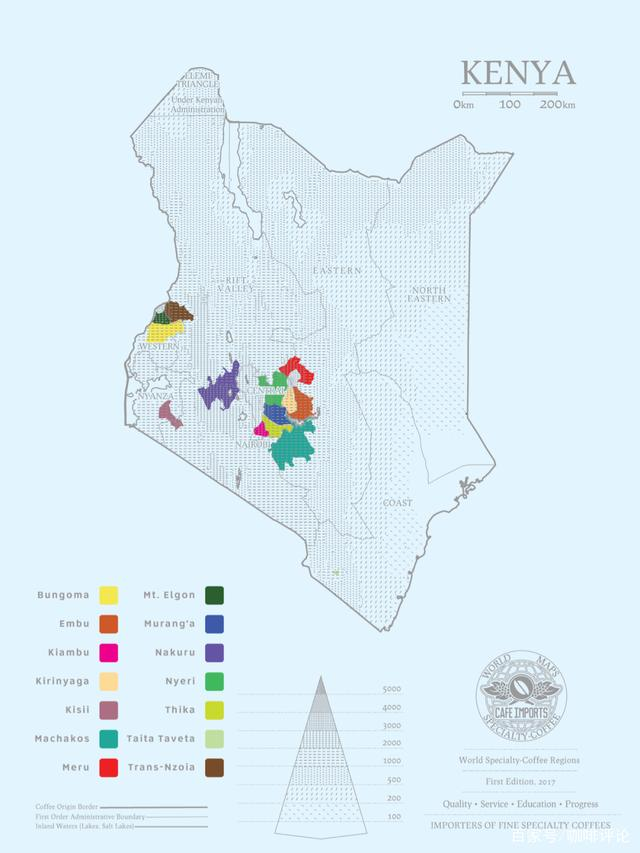
Region: Central Region, Nyeri
Processing Station: Isamama Processing Station
Variety: SL28
Altitude: 1700-1890 meters
Processing Method: Washed
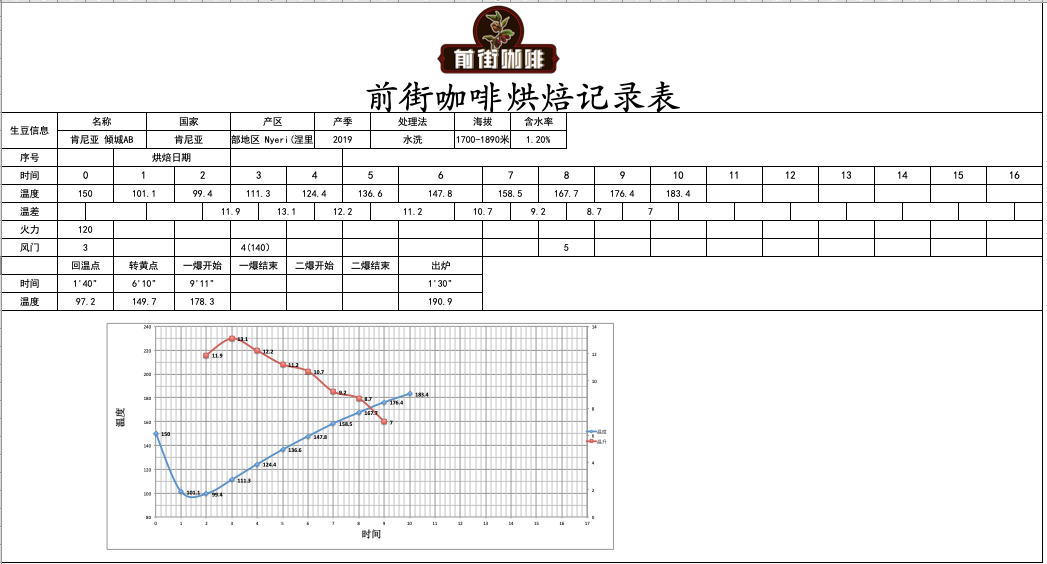
Kenya Isamama Processing Station - Qingcheng AB Roasting Profile
Preheat the drum to 150°C, charge the beans with heat at 120 and the damper at 3. Turning point lands at 1'40''; when drum temperature reaches 140°C, open the damper to 4.
At 8'28'', wrinkling and dark spotting appear on the bean surface and the toast aroma clearly shifts into coffee aroma, the prelude to first crack. Listen carefully from here. First crack begins at 9'11'': open the damper to 5. Develop for 1'30'' after crack and drop the beans at 190.9°C.
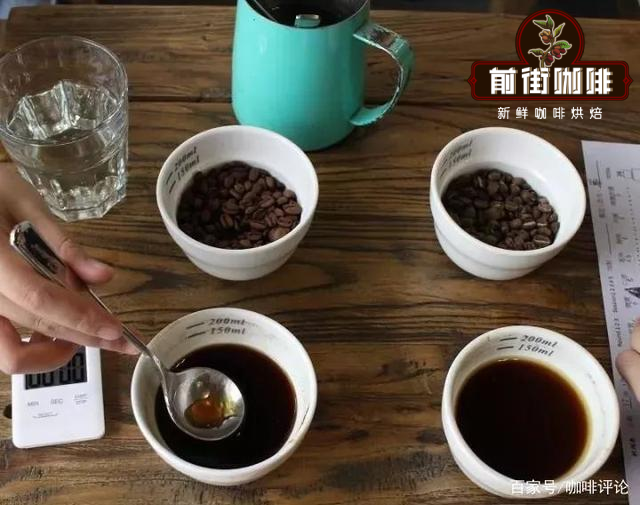
Cupping
FrontStreet Coffee's cupping notes for this lot: bright lemon acidity, grapefruit, and caramel aromatics. As the cup cools, berry acidity and subtle florals emerge. Overall: rich acidity, a juicy mouthfeel, and a long, lingering finish.
FrontStreet Coffee Recommendation
Gesha, the transliteration of "Geisha", is one of the most sought-after Arabica varieties in the world, winning over countless coffee lovers with its unique florals and superb sweet-tart structure. Low yield, weak disease resistance, and demanding cultivation keep its price high, so anyone wanting a great-tasting Gesha without a splurge should first understand the different tiers and their value for money.
FrontStreet carries both Esmeralda Red Label and Esmeralda Green Label. As the saying goes, it takes a talent scout to find a champion horse, and Hacienda La Esmeralda was the scout that made Gesha famous; today nobody in coffee is unaware of Panama's Esmeralda Estate and its Gesha. The estate's Gesha line is split into Red Label and Green Label. The Red Label's official name is "Esmeralda Special": grown at 1,600–1,800 meters, every batch must cup above 90 points, carries its own batch number, and comes entirely from a single small plot, FrontStreet's Red Label, for example, comes from the Harimiyau (Jaramillo area) plot, letting buyers pick the batch that matches their flavor preferences. The Green Label, originally "Private Collection," blends batches from multiple plots rather than highlighting single-plot detail, expressing the estate's signature high-altitude Gesha profile instead; because it skips the plot exclusivity, it sells for less and FrontStreet's Green Label offers outstanding value.
For newcomers curious about the legendary "Gesha flavor," FrontStreet most often recommends the Panama Boquete Gesha, an entry-level Gesha that lets you taste classic, high-quality Panamanian Gesha's orange-blossom honey character, oolong-tea texture, delicate fruit acidity, and clear layering at an accessible price.
Ethiopia, coffee's birthplace, also has a Gesha-famous estate: Gesha Village, with grading as strict as Panama's, actually a bit more elaborate. It grows three Gesha varieties: Gori Gesha, Gesha 1931, and Illubabor Forest, tiered into Gold Label (RARITIES), Red Label (GROWERS RESERVE), Green Label (SINGLE-TERROIR), and the Chaka lot, with variety distinctions on top. The Gold Label is Gesha 1931, just 10% of Gesha Village's production and the estate's top coffee outside auction lots, a frequent pick for international competitive baristas. FrontStreet's Gold Label batch is meticulously natural-processed: complex, layered flavors with distinctive dry aroma, lovely mid-palate, and a finish that lingers. The Red Label is Gori Gesha, about 15% of production, scoring 88 or above on the SCA 100-point scale; it is the estate's single-terroir line, so every batch number carries full traceability, farm block, variety, and processing date.
The FrontStreet Genji Challa (Genlana) Gesha comes from the Genlana Gesha farm in Yirgacheffe, a rare single-variety estate. This lot is processed at the Genlana washing station, founded in 2014 and run by Mr. Israel Degefa, near the border of Ethiopia's Kochere and Genji Abaya zones; coffee covers some 700 hectares there, most of it uncultivated, fertile land shaded by forest trees. Thanks to that original rainforest soil and canopy-grown environment, this Ethiopian landrace Gesha shows more varied layering. Ripe cherries are hand-picked and natural-processed on raised beds, drying for 14–20 days depending on the weather. Roasted medium-light, it offers bright citrus acidity, elegant ginger-flower aromatics, full ripe-fruit sweetness, a silky-smooth texture, and Gesha's signature refined finish.
Brewing Gesha: it's a floral-fruity, medium-light roast with a hard, dense structure that tends to sink and clog the dripper bed. FrontStreet recommends a coarser grind, 78% pass-through on a #20 standard sieve (about the size of fine granulated sugar), and 91°C water. Use 15g of coffee in a small Hario V60 at a 1:16 ratio with a three-pour method: start the timer, pour 30g for a 30-second bloom, then pour in small circles to 125g; when the bed drains to half, pour again in small circles to 225g, and let it finish, total extraction around 2'10''–2'20''.
Important Notice :
FrontStreet Coffee is a long-established specialty coffee roaster in Guangzhou China, selling freshly roasted beans from its own farm in Yunnan as well as dozens of carefully selected single-origin beans from around the world for both pour-over and espresso. The products deliver consistently excellent quality and great value, with shipping within 24 hours. Guangzhou's FrontStreet Coffee shop is recommended by many coffee lovers, and the beans are now available online at the Tmall 。
FrontStreet Coffee has moved to a new address:
FrontStreet Coffee Address: 315,Donghua East Road,GuangZhou
Tel:020 38364473
 Scan and follow the En Gafei WeChat official account. Please indicate that the reprint comes from "En Gafei".