How to Properly Brew Hawaii Kona Coffee? A Professional Brewing Tutorial Guide
The Unique Origins of Kona Coffee
Unique growing and climatic conditions have created the perfect taste of Hawaiian Kona coffee: the taste of Hawaiian beaches, monsoons, and volcanoes.
Hawaiian Kona coffee beans are among the most beautiful coffee beans in the world. They are exceptionally full and glossy, with uniform, even shapes. Kona beans have strong acidity and sweetness, with a smooth, slippery mouthfeel. Because they grow on volcanoes, Hawaii's unique volcanic climate forges Kona coffee's distinctive aroma. At the same time, high-density cultivation means that every bean can be called a pampered "noble lady": beautiful, plump, and with baby-like delicate skin.
Kona coffee tastes fresh and clear, with a medium body, slight acidity, and a rich aroma. The aftertaste lingers long after tasting. What is most rare is the mixed fragrance that combines wine, fruit, and spice aromas, as charming as the colorful volcanic islands. Overall, Kona coffee belongs to the relatively mild category, so mild that some people equate that mildness with plainness, feeling Kona is too refreshing and simple. But if you are someone who likes to ease into the coffee mood through its aroma before tasting, then Kona coffee is perfect for you. Unlike Indonesian coffee's richness, African coffee's strong wine flavor, or Central and South American coffee's boldness, Kona coffee is like a woman walking out of Hawaiian sunshine and a gentle breeze: fresh, natural, and perfectly balanced.
The Taste of Hawaii
In Hawaii, you can watch the fiery sunset sink into the orange sea surface and feel the fresh air filled with flower fragrance while sitting by the sea drinking a cup of rich Kona coffee. Probably no other place in the world can offer you such enjoyment.
Hawaii's earliest settlers arrived between 300-400 AD, and historians speculate that they came from the Marquesas Islands. People dispersed into different tribes living on the islands, led by hereditary chiefs. The earliest Hawaiian residents created Hawaii's rich musical culture, although not much written material has been preserved.
The European discovery of Hawaii was purely accidental. Explorers were originally looking for a legendary passage to the spice-producing East and instead discovered the richest pearl in the Pacific Ocean. A captain named James Cook landed on Kauai Island in 1778 to resupply his ships. On his return journey, he encountered severe cold and storms, so he had to return to Hawaii early the following year, anchoring at a beach in Kona. From then on, the Hawaiian Islands became important midway stops on world trade routes. Hawaiian chiefs traded the island's specialty sandalwood with passing ships for weapons, goods, and livestock. Starting from the 1820s, Western religions began to spread widely on the islands, and many churches built during that era are still in use today.
Hawaii has a developed tourism industry. Visitors can tour coffee farms and watch or take part in the various steps of harvesting, processing, roasting, and grinding, and make a cup of truly their own coffee. In the Kona region there are about 600 independent coffee farms, most of them very small family operations, typically with planting areas between 18-42 acres. Kona coffee can generate over $10 million in annual revenue for these farms.
Kona coffee cultivation has always followed a family farming model. Initially only men were allowed to work in the coffee gardens, but later women joined as well. Hawaiian families preferred to rely on family effort rather than hired workers, so it was normal for a Hawaiian household to have eight or nine children. Afterward, new immigrants continued to arrive from the Philippines, the mainland United States, and Europe to work in coffee cultivation. Over time, Hawaii formed a social atmosphere centered on family culture that also absorbed foreign cultures easily, one of Hawaii's major characteristics.
Hawaii is also a paradise for tasting and buying coffee. Each island has several distinctive places for tourists and local residents to taste and buy coffee, from cozy, warm little shops to comprehensive centers that introduce coffee knowledge. In Hawaii, you can watch the fiery sunset sink into the orange sea surface and feel the fresh air filled with flower fragrance while sitting by the sea drinking a cup of rich coffee. Probably no other place in the world can offer you such enjoyment.
Noble and Ancient Lineage
True Hawaiian Kona coffee allows people to enjoy a unique pleasure, guiding you slowly into a transcendent state of coffee tasting. This comes entirely from the most ancient Arabica coffee trees.
Hawaii is the only U.S. state that grows coffee, planted on the five main islands of the Hawaiian archipelago: Oahu, Hawaii Island, Maui, Kauai, and Molokai. Coffee produced on each island has its own character: Kauai coffee is gentle and smooth, Molokai coffee has high body and low acidity, and Maui coffee has medium acidity but the strongest flavor. Hawaiians are immensely proud of their 100% locally grown Arabica coffee beans.
Hawaii Island is the largest island in the archipelago, also called the Big Island. Kona coffee is produced in the western and southern parts of Hawaii Island's Kona district, with coffee trees covering the slopes of Hualalai and Mauna Loa. The altitude here ranges from 150 to 750 meters, perfectly suited to coffee growth.
Kona coffee's excellent quality benefits from its suitable location and climate. Coffee trees grow on volcanic slopes, and the geography ensures the altitude coffee needs; dark volcanic ash soil provides essential minerals; and the climate is very suitable, with morning sun passing gently through moisture-filled air and the mountains turning more humid and foggy in the afternoon. Surging white clouds provide natural shade for the coffee trees, while nights become clear and cool but never frosty. These conditions give Kona coffee an average yield as high as 2240 kilograms per hectare, while in Latin America coffee yields only 600-900 kilograms per hectare.
In 1813, a Spaniard first planted coffee in Manoa Valley on Oahu, which today is the main campus of the University of Hawaii. In 1825, an English agricultural expert named John Wilkinson transplanted some coffee from Brazil to Chief Boki's coffee garden on Oahu. Three years later, an American missionary named Samuel Reverend Ruggles brought coffee tree branches from Chief Boki's garden to Kona. This coffee is a descendant of the earliest Arabica trees that grew on the Ethiopian plateau, and to this day Kona coffee continues its noble and ancient lineage.
Hawaii's earliest coffee cultivation had already adopted large-scale plantation models, at a time when coffee had not yet become a widely grown crop worldwide. Kona coffee's production and sales went through several ups and downs. After World War I broke out, coffee demand rose dramatically. The government purchased large amounts of coffee to maintain soldiers' fighting capacity, and rising demand triggered price increases, and Kona coffee was no exception. The period from the outbreak of World War I to 1928 was the golden age of Kona coffee. However, the Great Depression that followed dealt a heavy blow to Kona coffee. In 1940, World War II caused coffee prices to rise again. To avoid excessive price increases, the U.S. government set price ceilings for coffee. Even so, Hawaiian coffee farmers still gained considerable benefits, and during this period their transport of coffee cherries was entirely replaced by Jeques instead of donkeys.
In the 1970s and 1980s, Kona coffee prices experienced several more ups and downs, but it was from this period that Kona coffee established its position as one of the world's top coffees. Even though Kona coffee has gained worldwide fame, its production remains relatively low.
Starting in the early 19th century, coffee has been cultivated continuously in the Kona area without interruption, and only coffee produced there can be called "Hawaiian Kona." Hawaiian Kona coffee green beans are usually single-origin coffee in 100-pound bags. Kona coffee beans are also often blended with coffee from other parts of the world to make blended coffee. Blends containing Kona coffee beans are labeled "Kona Blend" on the packaging. Unfortunately, the Kona content in such blends may be very low: in Hawaii, the minimum Kona content standard for blends that can use the "Kona" label is only 10%. So unless you are in Kona, Hawaii, it is difficult to find 100% pure Kona coffee beans.
KONA is produced on Hawaii's largest island, Hawaii Island, in the KONA region on the western slopes of 4200-meter-high Mauna Kea Mountain. The tropical rainforest climate provides abundant annual rainfall, and coffee trees are planted on crushed volcanic rock and black gravel. The local natural environment is quite suitable for coffee cultivation, producing excellent quality coffee.
KONA has low production and is processed by small-scale, finely operated factories that produce excellent quality green beans, making it quite expensive, second only to Jamaican Blue Mountain coffee.
Consumers who have traveled to Hawaii know that KONA coffee bought in Hawaiian tourist areas is not cheap, and much of it is only KONA blended coffee, with KONA beans making up only a small percentage.
Tasting Notes
Aroma: Wine-like color with citrus and dried fruit flavors, vanilla plant aroma, and sugarcane fragrance
Taste: Noticeable acidity provides a fresh and bright feeling, with citrus fruit flavors noticeable in the aftertaste
Kona Coffee Brewing Analysis
1. Dripper: V60
2. Water Temperature: 92°C
3. Grind Size: Fuji Mill grind level 3.5
4. Roast Level: Medium roast
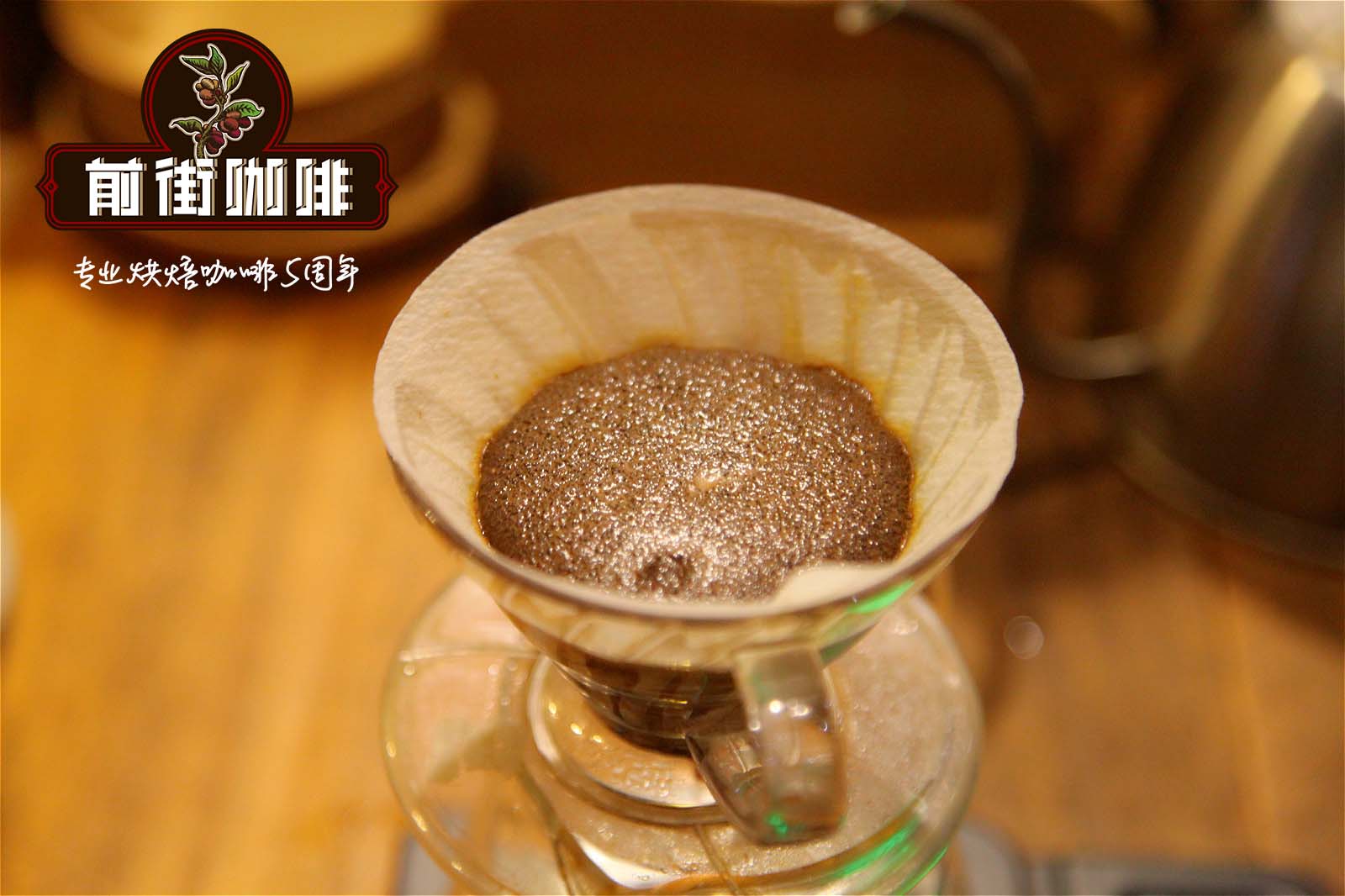
5. Bloom Time: 30 seconds
Flavor: Malt, mulberry, and a persistent caramel sweetness in the finish
FrontStreet Coffee Brewing Recommendation: Pour slowly, steadily, and continuously: a gentle circular pour with a fine stream allows for even extraction. Very slow pouring is ideal, and you can also use a stir stick. Usually, perform one cross-stir during the bloom so the water fully contacts the coffee grounds and more aromatic compounds are released.
FrontStreet Coffee is a roastery with a small shop but a diverse range of beans, offering both famous and lesser-known origins. If you love Kona's mild, balanced profile but want a little more depth and body, FrontStreet's Indonesian wet-hulled Mandheling is a natural next step, trading Kona's delicacy for a syrupy, low-acid richness with caramel, black chocolate, and toasted-bread notes.
FrontStreet Coffee Recommendation
Kona is loved for its gentle balance, clean cup, and long, sweet finish, and FrontStreet Coffee's Indonesian range is a great way to explore a fuller-bodied coffee with that same easy drinkability. FrontStreet Indonesian Wet-Hulled Mandheling comes from the Toba Lake area of the Lindong region and is roasted medium-dark for low acidity and a rich, mellow body with caramel, black chocolate, and toasted-bread aromas.
For a higher tier, FrontStreet PWN Golden Mandheling uses three hand selections and one machine sort to deliver a clean, sweet cup with sandalwood, herbal, spice, roasted hazelnut, caramel, and dark chocolate notes. If you prefer an espresso-style option, FrontStreet Classic Blend brings the depth of Mandheling together with the smoothness of Brazilian beans for a thick, warm crema.
Important Notice :
FrontStreet Coffee is a long-established specialty coffee roaster in Guangzhou China, selling freshly roasted beans from its own farm in Yunnan as well as dozens of carefully selected single-origin beans from around the world for both pour-over and espresso. The products deliver consistently excellent quality and great value, with shipping within 24 hours. Guangzhou's FrontStreet Coffee shop is recommended by many coffee lovers, and the beans are now available online at the Tmall 。
FrontStreet Coffee has moved to a new address:
FrontStreet Coffee Address: 315,Donghua East Road,GuangZhou
Tel:020 38364473
 Scan and follow the En Gafei WeChat official account. Please indicate that the reprint comes from "En Gafei".