How to Make Single-Origin Pour-Over Coffee and Parameter Ratios - How to Operate Pour-Over Coffee at Home?

FrontStreet Coffee has shared plenty about what shapes coffee flavor. Alongside the five important objective factors — dose, brew ratio, water temperature, grind size and equipment — there is one subjective factor: your hands, or your pouring technique. This article from FrontStreet Coffee covers the key techniques to watch when you brew.
Making coffee is essentially pouring water over coffee grounds, and a recipe tells you how to pour it so that the result tastes best. That breaks down into two parts: water distribution and pouring technique.

Water Distribution
With all objective parameters left unchanged, water distribution becomes the most significant part of a brewing recipe. What we usually call single-pour and three-pour are really just water distribution schemes.
Single-pour means pouring all the remaining water continuously after the bloom.
Three-pour means splitting the remaining water into three stages after the bloom.

Take single-pour and three-pour as examples. Both use the same total water, but the single-pour raises the water level higher, and the direct consequence is that it finishes faster than three-pour. Compare the two and the former tastes clean and thin, while the latter tastes complex and mellow.
If the stages in a multi-pour recipe are not evenly allocated, the results differ again. With a light roast, for instance, a larger early share of water gives more acidity and less sweetness in the cup. A larger late share gives more sweetness and less acidity, though mishandling can produce bitterness.
Pouring Technique
Pouring technique also takes in several factors: bloom technique, circular speed, pouring height, flow rate and pouring range.

Bloom Technique
The bloom can be called the make-or-break step in brewing. The most basic bloom operation is to fully saturate and degas. If the grounds absorb water unevenly, degassing will be uneven too, and extraction inside the bed becomes a matter of luck — some areas over-extracted, others under-extracted, producing astringency as a matter of course.
On bloom water volume and time, the most commonly discussed approach is twice the water amount with 30 seconds of bloom. If you're at a basic stage there's no need to understand the reasoning, but since we're going deep today, let me explain: simply put, it is twice the amount of water the grounds can saturate and absorb, and most beans within their optimal tasting window release their active gases within about 30 seconds of meeting water.

One caution: depending on the coarseness of the grind, larger particles cannot fully saturate and absorb during the short bloom pour. So if you pour twice the water amount in a short time, water will drip from the dripper. If you trust your water control, you might try blooming with 1.5 times the water amount. So what happens if you bloom with more than twice the water? The answer is that the cup will be more acidic than normal. The reason is simple: excess water drips into the lower pot before fully extracting coffee compounds, lowering the overall extraction rate, and the early coffee liquid carries more small-molecule acidic substances.
A short bloom can leave gases incompletely released, hurting extraction efficiency afterward. A long bloom makes the following water extract more readily, including large-molecule bitter compounds.
On circular speed, pouring height, flow rate and pouring range, FrontStreet Coffee has run corresponding experiments too.

Circular Speed
Stirring fast in circles raises the flow and maximizes the tumbling of the grounds, which increases the extraction rate. The coffee tastes more mellow and aromatic, with the aroma retained relatively well — but there is also a risk of over-extraction.
Pouring slowly in circles, letting the force of the stream itself wash the grounds, leaves some grounds unagitated and static, so the extraction rate is relatively lower and the taste and aroma are relatively lacking. Overall it is more balanced and gentle.
Pouring Height
A high water column extracts less than a low one. As a general rule, keep the pouring height at 6-7cm.

Flow Rate
When the pouring flow rate is high, the liquid level rises until it reaches the short ribs, and more water runs down along the edge ribs, cutting contact time with the grounds. With a small flow rate, the liquid level doesn't rise as high, the grounds bed stays thicker, and the contact time between water and grounds is slightly longer.
Fast brewing with a large flow rate shortens brew time and brings the aroma forward, but the flavor tends toward single and clean. Slow brewing with a small flow rate extends extraction and fully develops the flavor, so it edges ahead on richness and complexity — though it carries a risk of over-extraction.
Pouring Range
Pouring in small circles concentrates the flavor, highlights the sweetness of a light roast and makes the taste more solid. Pouring only in large circles brings out more acidity and a lighter, thinner taste. In practice, when brewing with a conical dripper, pouring around the outer circle looks as if you aren't hitting the filter paper, but the water column carries impact and can in fact strike the ribs at the edge of the grounds bed, sending water down the ribs and leaving extraction incomplete.

All of this, of course, takes extensive practice to accumulate. FrontStreet Coffee shares several single-origin coffees from distinct regions to help you practice.
FrontStreet Coffee Ethiopia Washed Yirgacheffe
Country: Ethiopia
Region: Yirgacheffe
Altitude: 1800-2000m
Variety: Local Heirloom
Processing: Washed
Flavor: Jasmine, berries, lemon, citrus

Yirgacheffe is a small town in Ethiopia at 1700-2100 meters, which makes it one of the highest coffee-growing regions in the world and a synonym for Ethiopian specialty coffee. Lakes Turkana, Abaya and Chamo bring abundant water vapor here. The Rift Valley, represented by Misty Valley, is filled with year-round mist, spring-like seasons, gentle breezes and cool, humid air, where thousands of coffee varieties thrive and reproduce, nurturing Yirgacheffe's unique, ever-changing floral and fruity terroir. The so-called Yirgacheffe flavor means rich citrus and lemon fruit acidity, intense jasmine aroma and a light, elegant taste with tea-like notes — like a refreshing, clean lemon tea.
Washed Processing Method
Selected cherries go into a depulper to remove their skin and pulp; the beans with remaining pulp and mucilage ferment in water for about 24 hours; after fermentation the parchment beans are washed in flowing water channels to remove the pulp and mucilage; once washed, the beans are dried in the sun or by machine until moisture reaches about 12%; finally the parchment is removed.

FrontStreet Coffee believes washed processing better reflects a coffee's clean taste and pure flavor, so when analyzing the specific flavors of a region, we use washed beans from that region as the reference. For beginners who have never tried Yirgacheffe, FrontStreet Coffee recommends washed Yirgacheffe first, to build an understanding of the regional flavor. When you later try natural and honey-processed Yirgacheffe, you'll have a direction for comparison.
Although this washed Yirgacheffe is grade G2 (Ethiopia grades by defect rate, and G2 allows 4-12 non-severe defective beans per 300g of green beans), FrontStreet Coffee performs two rounds of hand sorting to remove defective beans before roasting, ensuring the quality of every batch.

To preserve the bright citrus acidity and floral character of washed Yirgacheffe, FrontStreet Coffee's roaster chose a medium-light roast for this bean. Bean-in temperature 200°C, yellowing point at 5'35, first crack at 9'08 and 182.1°C, developed for 2 minutes after first crack, dropped at 195°C.
FrontStreet Coffee Brewing Recommendations
Water Temperature: 90-91°C
Grind Size: EK43s grinder setting 10 (fine sugar size / 80% retention on #20 sieve)
Brew Ratio: 1:15
Dose: 15g

FrontStreet Brewing Method: First pour 30g of water for a 30-second bloom, then pour 95g (scale shows about 125g), completing in about 1 minute. When the water level drops to 2/3 of the grounds bed, pour the remaining 100g (scale shows about 225g), completing in about 1 minute 40 seconds. Finish the drawdown in 1'55''-2'00'', remove the dripper and finish extraction.
Brewing Flavor: Jasmine aroma, berry juice sensation, lemon and citrus acidity, overall bright, clean and fresh.

FrontStreet Coffee Costa Rica Tarrazu
Country: Costa Rica
Region: Tarrazu
Altitude: 1500m
Variety: Caturra, Catuai
Processing: Washed
Flavor: Sweet orange, honey, toffee, nuts
Costa Rican coffee has long been known for its balanced flavor, rich chocolate and smooth texture. Tarrazu lies south of the capital, San José, and is one of the country's most valued coffee-growing areas. Tarrazu beans are full-bodied, rich in body and smooth in texture, with generous chocolate and nutty aroma, moderate acidity and an enticing fragrance.

Washed Processing Method
The washed method puts selected cherries into a depulper to remove their skin and pulp. The beans with remaining pulp and mucilage ferment in water for about 24 hours. After fermentation the parchment beans go into flowing water channels to wash away the pulp and mucilage. Once washed, they are dried in the sun or by machine until moisture reaches about 12%, and finally the parchment is removed.
FrontStreet Coffee Brewing Recommendations
Water Temperature: 90-91°C
Grind Size: EK43s grinder setting 10 (fine sugar size / 80% retention on #20 sieve)
Brew Ratio: 1:15
Dose: 15g

FrontStreet Brewing Method: First pour 30g of water for a 30-second bloom, then pour 95g (scale shows about 125g), completing in about 1 minute. When the water level drops to 2/3 of the grounds bed, pour the remaining 100g (scale shows about 225g), completing in about 1 minute 40 seconds. Finish the drawdown at 2 minutes 3 seconds, remove the dripper and finish extraction.
Brewing Flavor: The entry brings sweet orange's sweet-and-sour sensation, the mid-palate shows prominent nut and chocolate flavors, with a persistent caramel aftertaste and some cedar aroma — overall balanced.

FrontStreet Coffee Indonesia Lintong Mandheling
Country: Indonesia
Region: Sumatra, Lintong
Altitude: 1100-1600m
Variety: Typica, Caturra
Processing: Wet-hulled
Flavor: Toasted bread, nuts, caramel, pine, herbal
Mandheling doesn't actually refer to a coffee variety or a region, but to a tribal name that Japanese buyers mistakenly took for the name of the bean — and the term has stuck ever since.

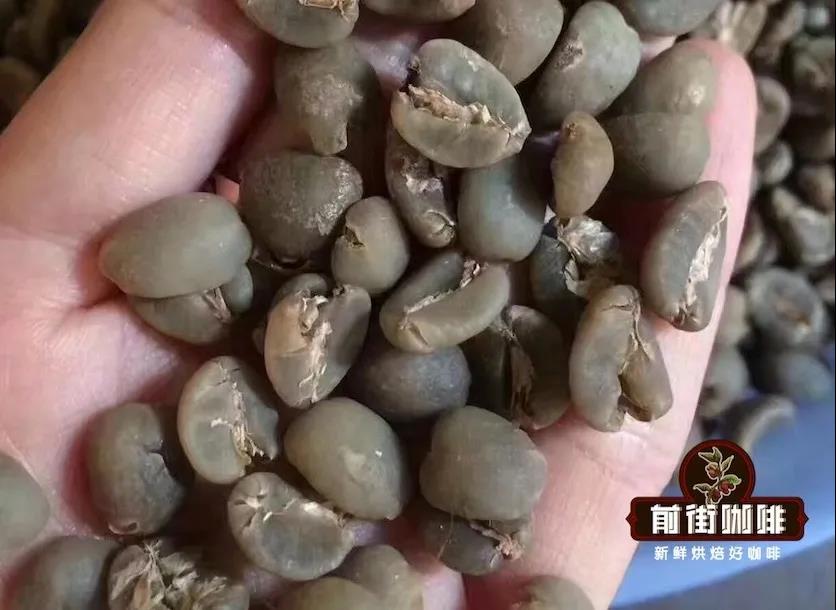
Lintong Mandheling comes from the Lintong mountain area in north-central Sumatra, near Lake Toba. Lintong Mandheling is the regular version of Mandheling. It uses the conventional wet-hulled method, which gives it its low acidity and high body. The wet-hulled method can also produce a situation where the semi-hard, semi-soft wet green beans are easily bruised when the pulp and parchment layers are removed, and the beans crack like sheep's hooves — commonly known as "sheep's hoof beans." These are not defective beans, but a very distinctive feature of Mandheling.
Coffee Processing Method
Wet-hulled is a fast way to process coffee beans. The cherry's skin and pulp are removed, followed by brief fermentation and drying, then the mucilage and parchment layers are removed, and the final drying continues until moisture reaches 12%. Wet-hulled Mandheling beans clearly show varying degrees of compression cracks and have a darker greenish color.
FrontStreet Brewing Recommendations
FrontStreet Coffee uses a Kono dripper for Mandheling. The Kono's ribs extend less than halfway up the dripper, and this design ensures that after wetting, the filter paper clings tightly to the wall and restricts airflow. That increases the grounds' water absorption time, giving more uniform extraction overall and enhancing the mellow mouthfeel. The concave skeleton at the bottom of the Kono dripper is also a key design that lets later pouring produce a siphon effect.

Recommended Water Temperature: 87-88°C
Grind Size: EK43s grinder setting 11 (coarse sugar size)
Brew Ratio: 1:15
Dose: 15g
FrontStreet Coffee Brewing Method: Use 30g of water for a 30-second bloom. Pour in small circles to 125g, then segment. When the water level drops and is about to expose the coffee bed, continue pouring to 225g and stop. When the level drops and is about to expose the bed again, remove the dripper (timing starts from the bloom). Extraction time is 2'00''.
Brewing Flavor: The entry brings herbal and medicinal notes and dark chocolate, then caramel, with a sweet aftertaste.
FrontStreet Coffee Recommendation
To practice the technique above, three FrontStreet single origins cover the range of the article. FrontStreet Yirgacheffe Gedingding is a washed Ethiopian lot showing jasmine florals with bright citrus acidity and a green-tea, honey-like finish — ideal for reading how bloom and pour range shape clarity. FrontStreet Ethiopia Huakui runs the other way, with strawberry, passion fruit, jackfruit and even lychee across the top, obvious sweetness, very low bitterness and a juicy, mouth-filling body. For a brighter, more complex pour-over, FrontStreet Kenya Small Tomato brings cherry tomato and smoked plum, a full juice body, snow pear and black plum in the middle and a clean yellow-sugar and green-tea finish. All are light or medium-light roasts, so they respond clearly to the pouring variables discussed here.
Important Notice :
FrontStreet Coffee is a long-established specialty coffee roaster in Guangzhou China, selling freshly roasted beans from its own farm in Yunnan as well as dozens of carefully selected single-origin beans from around the world for both pour-over and espresso. The products deliver consistently excellent quality and great value, with shipping within 24 hours. Guangzhou's FrontStreet Coffee shop is recommended by many coffee lovers, and the beans are now available online at the Tmall 。
FrontStreet Coffee has moved to a new address:
FrontStreet Coffee Address: 315,Donghua East Road,GuangZhou
Tel:020 38364473
 Scan and follow the En Gafei WeChat official account. Please indicate that the reprint comes from "En Gafei".