What Are Coffee Blends and the Difference Between Espresso and Single-Origin Blends, and How to Blend Yunnan Coffee

Blend versus single-origin is a conversation that never ends. So what exactly does each do well? FrontStreet Coffee takes on the question here.
What Is Single-Origin Coffee?
Single-origin means coffee of a single variety from a single producing region. It is ground and brewed on its own, typically drunk neat — no milk, no sugar. It carries strong character and distinctive flavors, whether fresh and mellow or fragrant and smooth, and because the cost is relatively high, so is the price. Famous names like Mandheling, Brazilian, and Colombian coffee are all single-origin coffees named for the region that produced them.

There is a wrinkle worth noting. By definition, "single-origin" refers to one variety from one region — yet the name can be attached to a region, a variety, a processing station, an estate, or any number of dazzling invented names. And in reality, an entire region almost never grows just one variety, and processing stations handle coffee gathered from many nearby farmers — so some blending has already happened upstream, at the green-bean trading stage. Those coffees are still perceived as single-origin. The currently popular "Flower Butterfly," for instance, is a coffee mixed from part Gesha and other varieties — quite the curiosity: "raw blended," yet still sold as "single-origin."
What Is an Espresso Blend?
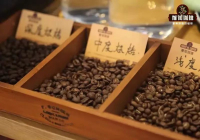
A blend mixes multiple coffees in different proportions — beans of similar or contrasting character — to create a profile distinct from any of its components, above all in flavor. Blending is also an art: a good blend takes repeated experiments and inspiration. These well-balanced blends typically feed the espresso machine, where high temperature and high pressure extract a rich, mellow shot.

Blending serves several purposes:
1. Stable Flavor
Coffee is an agricultural product — even the same bean tastes different from harvest to harvest. Mixing several beans together largely solves the problem, keeping the taste essentially consistent year after year.

2. Balanced Taste
An espresso machine tends to amplify whatever is most prominent in a bean, so we almost never pull a shot from a single variety. A bitter bean yields an exceptionally bitter espresso; an acidic bean, a very sour one. Blending balances the various flavors against each other.
Blending is never simple addition. The goal is for the blender's understanding of flavor to let different beans offset each other's weaknesses and amplify strengths. SOE — single-origin espresso — is not automatically better than a blend. And unlike single-origin coffee, usually named for its origin, blends are usually named for the brand.

The Major Principles of Blending
1. Green Bean Selection
Use beans with clearly distinct characters, and avoid beans whose flavors resemble each other — same processing method, same origin, or same flavor profile.
2. Blending Ratios
Each café blends to its own character, but a 1:1 ratio is generally avoided: equal proportions suppress each component's distinctiveness. A blend needs primary and secondary players to create something better than any single origin.
3. When to Blend
There is raw blending — mixing green beans in proportion before roasting — and roasted blending — mixing after each component is fully roasted. The choice depends on the flavor target.
4. Flavor Balance
A blend generally uses 2-6 beans. Whatever the beans or roast degree, too many varieties make it impossible for any single flavor to express itself.
5. Relentless Experimentation
Blends demand constant testing. Since stability is usually the goal, draft a combination plan using mathematical permutations, then settle on the best solution through cupping.

FrontStreet Coffee offers four distinctive blends built for different needs:
FrontStreet Warm Sun Espresso Blend: Honduras Sherry : Yirgacheffe Natural Red Cherry, 7:3, roasted blend
Flavor: pronounced fruit acidity with a faint lingering berry fragrance, rich wine and chocolate notes, a comfortable sweet aftertaste. The Sherry component contributes a rich whiskey aroma and a chocolate-liqueur-like finish with intense fragrance; the Natural Red Cherry brings fermented depth and berry aromatics with a smooth entry. Packaged in half-pound bags, the Warm Sun Blend suits cafés that want a distinctive espresso flavor and high bean quality, or espresso enthusiasts with modest consumption.

FrontStreet Premium Blend: Colombia : Brazil, 3:7, roasted blend
Flavor: comfortable bittersweetness, an extremely smooth entry, a faint grassy fragrance — fresh aroma with slight bitterness, sweet, smooth, palatable, and a pleasant aftertaste. Colombian Huila beans contribute delightful acidity, mellow aroma, moderate acidity, and intriguing richness of sweetness; Brazilian Cerrado beans contribute comfortable bittersweetness and a silky-smooth entry. This premium blend suits a wide range of specialty coffee shops.

FrontStreet Commercial Blend: Colombia : Brazil : Robusta, 3:6:1, raw blend
Flavor: classic taste with caramel sweetness, nuts and cocoa, dark chocolate; sweet-and-sour balance with slight bittersweetness and a persistent finish. Huila brings delightful acidity, mellow aroma, moderate acidity, and rich sweetness; Cerrado brings comfortable bittersweetness and an extremely smooth entry; the Robusta provides rich oils. This commercial blend suits coffee shops and beverage shops of every size.

FrontStreet Basic Blend: Yunnan AA : Brazil, 3:7, roasted blend
Flavor: soft fruit acidity, caramel sweetness, nut and dark chocolate; smooth and thick-bodied yet relatively light on the palate. Yunnan's natural conditions closely resemble Colombia's — high altitude and large day-night temperature differences — producing a mellow, aromatic cup of moderate acidity with uniform beans, high oil content, and a fruit fragrance, comparable in quality and taste to Colombian coffee. The Brazilian Cerrado component contributes comfortable bittersweetness and an extremely smooth entry. The Basic Blend suits small cafés, bakeries, and beverage shops.

FrontStreet Coffee Recommendation
For drinkers who love a heavy, brooding espresso or a bold pour-over, FrontStreet Coffee's Indonesian Mandheling lineup is the perfect companion to these blends. Sumatra is Indonesia's largest source of arabica, and its coffee is universally known as Mandheling. The FrontStreet PWN Golden Mandheling, produced by Indonesia's PWN company, is built on beans of 18 mesh or larger with fewer than three defects per 300-gram green sample — the top G1 grade — followed by three rounds of hand-sorting for exceptional cleanliness and sweetness. The flavor comes from Sumatra's wet-hulled processing: in humidity of 70-90% with rainfall above 2,000 mm a year, growers strip the parchment while the beans are still half-dry, accelerating drying while inviting the local microflora that gives Mandheling its wild, earthy, herbal depth.
For pour-over, FrontStreet recommends 15 g of coffee at a 1:15 ratio, water at 87-88°C, a coarse granulated-sugar grind, and three pours — 30 ml to bloom, 100 ml to lift the golden foam and raise the bed, then a gentle 95 ml poured in the center to boost sweetness — for a thick, full body with caramel sweetness and chocolate and nut flavors.
On the espresso machine, the Classic Blend is the natural fit: a traditional Mamba-style recipe of Brazilian coffee and Mandheling, with a small addition of Robusta for crema. It layers butter, roasted chestnut, and caramel over the Mandheling's sandalwood, herbal, and spice notes, pouring latte art or building a layered Dirty with ease.
Important Notice :
FrontStreet Coffee is a long-established specialty coffee roaster in Guangzhou China, selling freshly roasted beans from its own farm in Yunnan as well as dozens of carefully selected single-origin beans from around the world for both pour-over and espresso. The products deliver consistently excellent quality and great value, with shipping within 24 hours. Guangzhou's FrontStreet Coffee shop is recommended by many coffee lovers, and the beans are now available online at the Tmall 。
FrontStreet Coffee has moved to a new address:
FrontStreet Coffee Address: 315,Donghua East Road,GuangZhou
Tel:020 38364473
 Scan and follow the En Gafei WeChat official account. Please indicate that the reprint comes from "En Gafei".