Non-Bitter Coffee Drink Recommendations | Starbucks Non-Bitter Coffee Varieties & Flavor Profiles
More and more people are drinking coffee these days. Yet walk into a shop and look at a crowded menu, and plenty of people freeze: which coffees are not bitter? Which taste best? How should they be ranked by sweetness?
The logic is simple - the more syrup a drink contains, the sweeter it is, as with a Frappuccino; the more milk it contains, the more diluted the coffee flavor becomes and the less noticeable the bitterness, as with a latte, a chocolate-sauce mocha, or a caramel macchiato.

FrontStreet Coffee has found that most customers ordering milk-and-sugar drinks are comfortable there, but when it comes to pour-over coffee without sugar or milk, many find the bitterness hard to accept. Through years of experience, FrontStreet Coffee can say with confidence that, beyond variety, growing environment, brewing water temperature, brewing time, and grind size, the single biggest factor behind obvious bitterness in pour-over coffee is the roast level of the beans. The darker the roast, the fuller the body - and the more bitterness comes with it.

Understanding Coffee Roast Levels
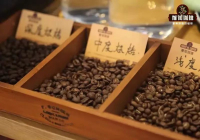
Green coffee beans start out pale green. As they roast, their color shifts from light green to brown and eventually to dark brown. As the roast deepens, the Maillard reaction continues, and proteins and polysaccharides transform into large dark-brown pigment molecules. Those pigments are precisely what constitutes the source of coffee's bitterness. The larger the pigment molecules, the stronger the bitterness, the weaker the acidity, and the fuller the body.
Coffee Bean Examples from FrontStreet Coffee
The more than thirty coffees on FrontStreet Coffee's shop menu all illustrate this point. Let us compare two beans with the most extreme flavor profiles.

FrontStreet Coffee Kenya Asalia Coffee Beans
Region: Thika, Kenya
Processing Station: Asali Honey Processing Station
Altitude: 1550m-1750m
Varieties: SL28, SL34
Processing Method: K72 Washed

FrontStreet Coffee PWN Golden Mandheling Coffee Beans
Country: Indonesia
Region: Gayo Mountain, Aceh, Sumatra
Altitude: 1100m-1600m
Variety: Ateng
Processing Method: Wet Hulling
Brewing Recommendations
FrontStreet Coffee recommends the following brewing parameters:
Filter: Kono dripper [Golden Mandheling]; V60 dripper [Kenya]
Water Temperature: 86°C [Golden Mandheling]; 93°C [Kenya]
Coffee Dose: 15 grams
Coffee-to-Water Ratio: 1:15
Grind Size: EK43s #11 (70-75% pass-through rate on the China standard #20 sieve) [Golden Mandheling]; EK43s #10 (80% pass-through rate on the China standard #20 sieve) [Kenya]
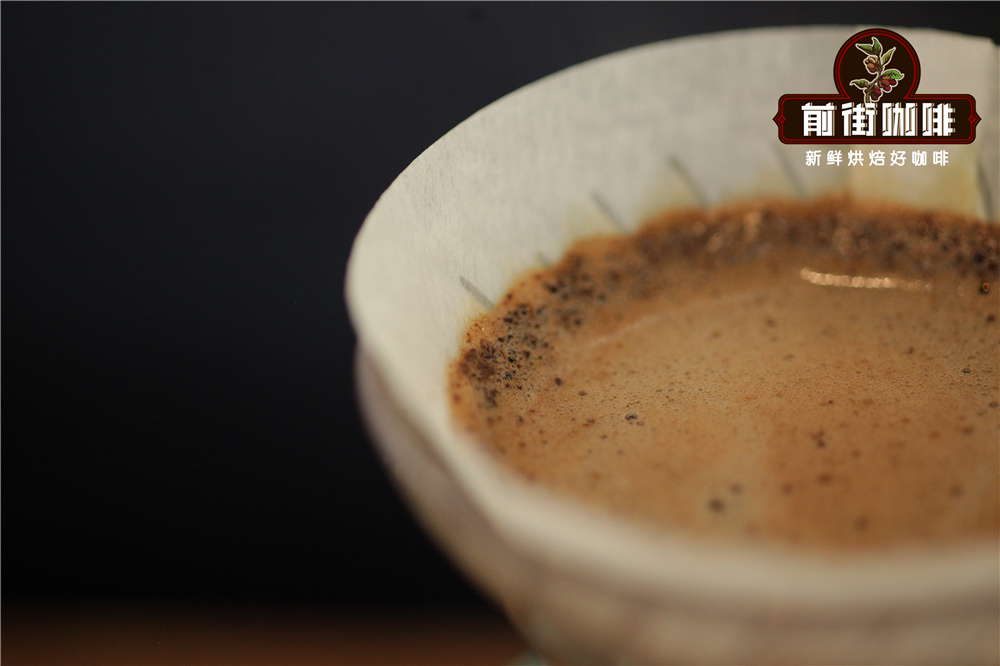
FrontStreet Coffee uses a multi-stage extraction method: bloom with 30g of water for 30 seconds, then pour in a small circular motion to 125g and pause. When the water level drops to just before exposing the coffee bed, continue pouring to 225g and stop. Wait until the water level again drops to just before exposing the bed, then remove the dripper. Total extraction time (starting from the bloom) is 2'00".
Flavor Descriptions
[Kenya] The aroma carries ripe tomato and floral notes. The entry reveals cherry tomato and black plum, with bright acidity and a clean, rich mouthfeel. The middle section highlights prominent sweetness with a juicy sensation. The aftertaste brings berry fragrance and brown sugar sweetness, along with green tea aroma.
[Golden Mandheling] Multi-layered, full-bodied, and clean, with high balance. Rich nut and caramel aromas, chocolate notes, and a persistent aftertaste.

Kenya Asalia
The reason FrontStreet Coffee's Kenya Asalia beans achieve such bright, clean acidity is not only their light roast but also the phosphorus-rich red soil of Kenya and their K72 processing method.
What is K72 Processing?
K72, also known as the Kenyan 72-hour fermented washed process, is a repeated cycle of fermentation followed by washing. Processing begins on the day of harvest, selecting the finest cherries for pulping and fermentation, with a fermentation time of 24 hours. After 24 hours they are washed with clean river water, and the cycle is repeated 3 times to reach 72 hours in total.

Golden Mandheling
Mandheling became known to the world largely because of its excellent body, and there is quite a story behind the name.
Mandheling was originally the name of a tribe in Indonesia, and it became a coffee name almost by accident. When Japanese soldiers returned home after the colonial period in Indonesia, they could not forget the delicious local coffee. Through trade contacts, they asked locals to collect high-quality beans, including this Mandheling variety. The Japanese loved it and asked for its name. Since the commercial source could not be disclosed, the locals casually said "Mandheling," and the name stuck.
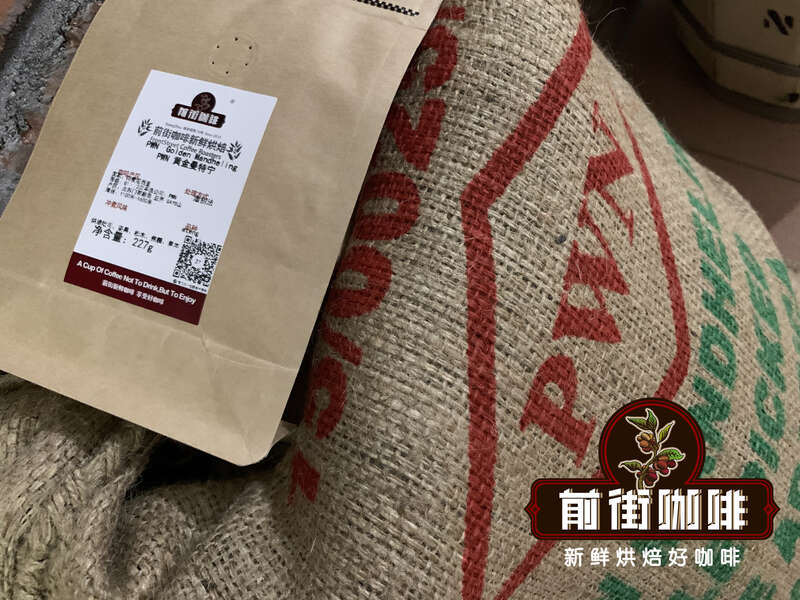
The friend who helped was in fact the owner of Indonesia's PWN company (Pwani Coffee Company). PWN later registered Golden Mandheling as its trademark. FrontStreet Coffee's Golden Mandheling is precisely the Golden Mandheling from PWN.
Special Wet Hulling Processing Method
Most Mandheling coffee uses Sumatra's unique processing method - wet hulling. Wet hulling creates the special flavor of Mandheling, and the two are bound together. Because the local weather is predominantly rainy with constant typhoons, making the good weather needed for sun-drying impossible, and because the local economy could not afford the more expensive washed method, the locally characteristic wet hulling method developed. Indonesian coffee is no longer the poverty-stricken scene of the past, and many estates and companies now have the means to use washed processing. Still, FrontStreet Coffee believes wet hulling is the factor that made Mandheling known to the world. When people mention Mandheling, they think of wet hulling, and the two have become complementary.

The specific steps of wet hulling fall into two stages:
Stage One: Use a wooden pulper to remove the skin and pulp, ferment for 3 hours, then sun-dry to reduce moisture content to a semi-dry, semi-wet 30-50%.
Stage Two: Remove the mucilage and parchment, then continue the final drying, which takes 2-4 days, reducing moisture content to 12-13%.

Beyond regular wet hulling, there is also aged wet hulling. The beans are first processed through regular wet hulling, then sealed in warehouses for 2-3 years. The warehouse must be cool and ventilated, with regular turning of the beans to prevent mold and spoilage. Over that time, the acidity gradually diminishes and converts to sugars, and the color deepens, mostly to yellow-brown or dark brown. The Mandheling on FrontStreet Coffee's menu using this method is called Aged Mandheling.
Panama Geisha
If you ask whether sweet pour-over coffees exist, the answer is yes. In FrontStreet Coffee's view, the Panama Hacienda La Esmeralda washed Green Label Geisha offers excellent value for money.
When talking about Geisha, we must mention Hacienda La Esmeralda. La Esmeralda is both the discoverer of Geisha's flavor and the promoter of Geisha coffee. The Geisha variety was introduced to Panama in the 1960s and remained relatively unknown. After more than 40 years of quiet development, it won first place in the 2004 BOP competition and became famous overnight.

Geisha beans are considered the brightest, most complex, and most intensely aromatic coffee variety. Geisha trees grow at very high altitudes and have beautiful long, narrow leaves. Geisha cherries and green beans are also slightly more elongated than other top-quality high-altitude coffees. Geisha has full sweetness, an extremely clean mouthfeel, and rich aromas that range from berries and citrus to mango, papaya, and peach. A very distinct bergamot-like aftertaste is also one of its typical cupping characteristics. Geisha beans are often champions among coffee varieties, and they show a medium body in cupping evaluations.
La Esmeralda classifies its Geisha into three grades: Red Label, Green Label, and Blue Label. To protect the estate's brand image, from 2021 onward they discontinued the Blue Label under the Geisha brand.

Green Label Geisha
Green Label is not a single competition batch. These are Geisha varieties from different plots that do not enter bidding but still have excellent quality. Selected from Geisha grown at altitudes of 1600-1800 meters, they are produced as micro-lot blends from different plots such as Jaramillo and Canas Verdes. People often ask about the difference between Red Label and Green Label. FrontStreet Coffee's most straightforward answer is that Red Label can be traced to a specific small plot, while Green Label is a blend that cannot. Because it uses a blending model without detailed plot specifications, Green Label and Red Label may sometimes have very similar flavor profiles, though the next batch might differ. FrontStreet Coffee feels that drinking Green Label is like the excitement of buying a lottery ticket - perhaps the batch you taste has the flavor of a Red Label. Green Label Geisha is processed using natural or washed methods.
FrontStreet Coffee's La Esmeralda washed Green Label Geisha has fresh jasmine and ginger flower aromas, citrus-like bright acidity, and a thick, juicy mouthfeel.

FrontStreet Coffee La Esmeralda Green Label Geisha Coffee Beans
Region: Boquete Region, Panama
Estate: Hacienda La Esmeralda
Altitude: 1600m-1800m
Variety: Geisha
Processing Method: Washed
FrontStreet Coffee's Brewing Recommendations for La Esmeralda Green Label Geisha
Filter: V60 #01
Coffee Dose: 15g
Coffee-to-Water Ratio: 1:16
Grind Size: EK43s #10.2
Water Temperature: 91°C
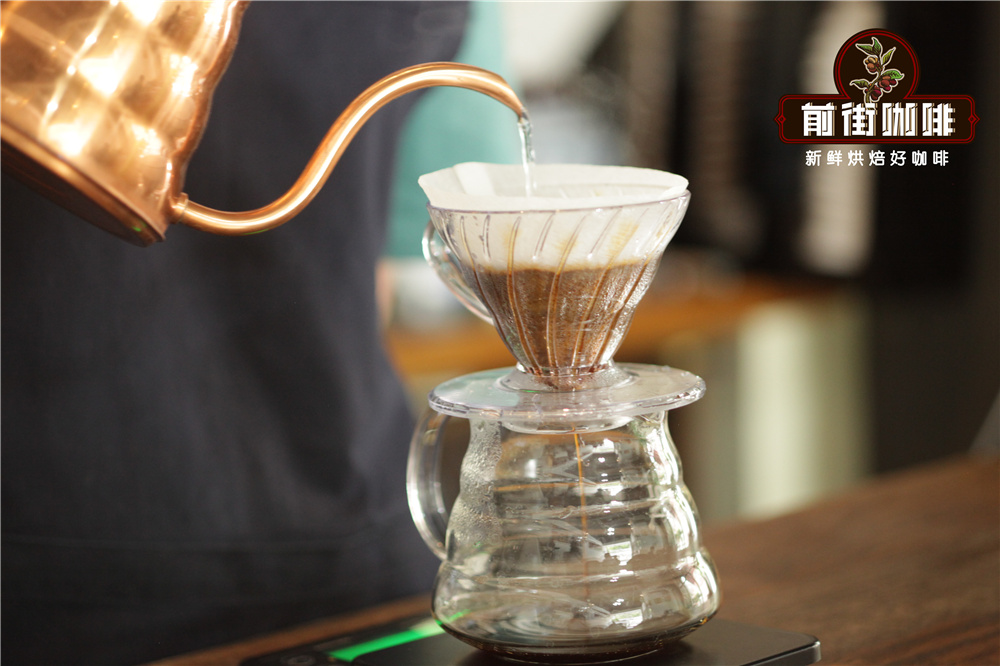
FrontStreet Coffee considers these Geisha beans lightly roasted. Light-roasted beans are less soluble than dark-roasted ones, so to ensure full extraction of the Geisha flavors, FrontStreet uses a higher water temperature and a finer grind size. Some may notice that FrontStreet normally recommends a 1:15 coffee-to-water ratio, but for La Esmeralda's Geisha it is 1:16. Slightly increasing the water ratio helps you better experience the complexity and flavors of Geisha.
FrontStreet Coffee uses multi-stage extraction, also called three-stage brewing: bloom with 30g of water for 30 seconds, then pour in a small circular motion to 125g and pause. When the water level drops to just before exposing the coffee bed, continue pouring to 240g and stop. Wait until the water level again drops to just before exposing the bed, then remove the dripper. Total extraction time (starting from the bloom) is 2'00" to 2'05".

Flavor Description: Rich jasmine aroma, high sweetness, citrus, berries, juice sensation, cream, green tea, orange peel, and cantaloupe, with overall rich layers and a persistent floral and citrus aftertaste.
For more specialty coffee beans, please add FrontStreet Coffee on private WeChat: kaixinguoguo0925
FrontStreet Coffee Recommendation
If bitterness is what turns you off, the surest fix is to start with a lower-acid, well-balanced coffee brewed as pour-over. FrontStreet's Brazil Queen Estate is a good example: low in acidity and highly balanced, with rich nut and cocoa aromas and clear caramel sweetness, smooth on entry and warm on the finish. It suits pour-over, espresso, or the Moka pot, and it is an easy daily bean for anyone who would rather taste sweetness than bite.
For a genuinely sweet, fruit-forward pour-over, the Panama Hacienda La Esmeralda washed Green Label Geisha is the standout. FrontStreet brews it with a V60 #01, 15g of coffee, a 1:16 ratio, an EK43s #10.2 grind size, and 91°C water, then a three-stage pour to 240g. The cup brings a rich jasmine aroma, high sweetness, citrus, berries, cream, green tea, orange peel, and cantaloupe, with a long floral and citrus aftertaste. Because Geisha is lightly roasted and harder to dissolve, FrontStreet raises the water temperature and tightens the grind, and nudges the ratio from the usual 1:15 to 1:16 to draw out its complexity.
For a balanced everyday choice that almost everyone finds easy to like, a classic like Jamaica Blue Mountain No.1 sits right in the middle - neither the sharp fruit acidity of some African coffees nor the heavy bitterness of a dark roast, but a careful balance of acidity, sweetness, bitterness, and aroma, with cream, caramel, chocolate, nuts, honey, and a light fruit note.
Important Notice :
FrontStreet Coffee is a long-established specialty coffee roaster in Guangzhou China, selling freshly roasted beans from its own farm in Yunnan as well as dozens of carefully selected single-origin beans from around the world for both pour-over and espresso. The products deliver consistently excellent quality and great value, with shipping within 24 hours. Guangzhou's FrontStreet Coffee shop is recommended by many coffee lovers, and the beans are now available online at the Tmall 。
FrontStreet Coffee has moved to a new address:
FrontStreet Coffee Address: 315,Donghua East Road,GuangZhou
Tel:020 38364473
 Scan and follow the En Gafei WeChat official account. Please indicate that the reprint comes from "En Gafei".