Blue Mountain Coffee vs Golden Mandheling Coffee: Differences, Mandheling Coffee Bean Flavor Characteristics, Stories, and Brewing

At FrontStreet Coffee, we often hear customers ask: "I'd like a cup of non-acidic coffee - what do you recommend?" We usually suggest a Mandheling, though some friends will simply say, "I'll have a Blue Mountain." Both of these coffees are famous precisely because their flavors are not acidic.
We know that essentially all premium coffee beans are Arabica varieties. Arabica has poor resistance to pests, disease, and harsh climates, and it demands stricter growing conditions - but in return it offers finer aromatics and lower caffeine content, which makes it far more valuable for specialty coffee. The other main species, Robusta, is mostly destined for instant coffee.
Blue Mountain Coffee
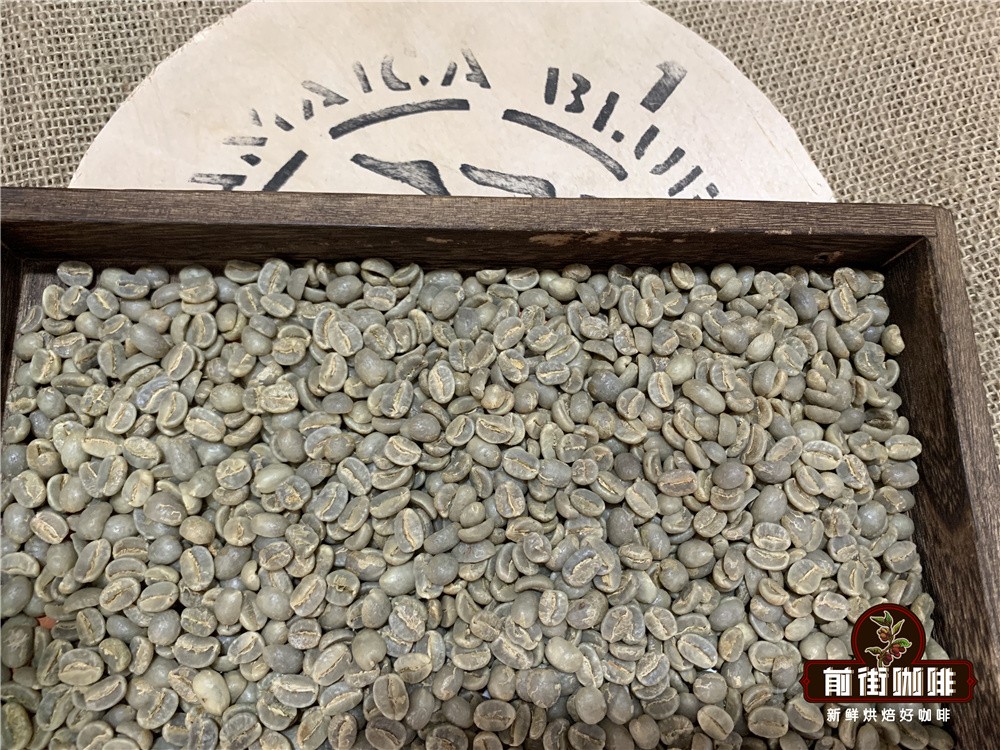
The Blue Mountain coffee carried by FrontStreet Coffee is of the Typica variety. Typica is the oldest Arabica variety: bronze-colored leaf tips, oval or slender pointed beans, and tall trees with branches angled 50-70 degrees from the trunk. Its opposite leaves are long ovals with smooth surfaces, terminal branches are long with few offshoots, and white flowers bloom at the nodes where leaf stems meet the branches. The cup is elegant, but the plant is fragile - poor disease resistance and very low yields per tree. Ripe coffee cherries look like bright red cherries in the literal sense.
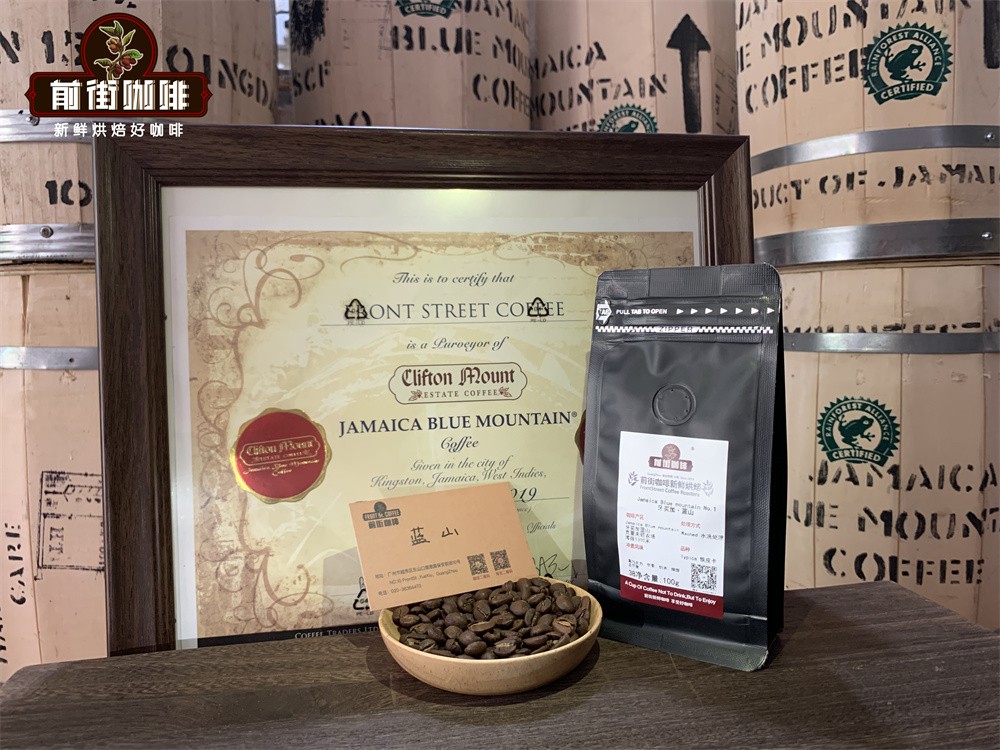
Because Jamaican Blue Mountain is disease-prone, low-yielding, and susceptible to insect damage, supply is limited - one of the main reasons for its price. FrontStreet Coffee's Blue Mountain is priced at 158 yuan per 100 g, and some customers ask, "Is this real Blue Mountain? How can it be so affordable?" It is authentic Jamaica Blue Mountain No. 1, certified by the Jamaica Coffee Industry Board, and the wooden barrels used to ship the green beans carry the industry's green frog logo. FrontStreet Coffee sources specifically from Clifton Farm, a Rainforest Alliance-certified Jamaican Blue Mountain No. 1 estate. Jamaica is also the only origin that ships green beans in wooden barrels, alongside the most iconic Blue Mountain flavor: a rich aroma and balanced mouthfeel in which no single element dominates or falls short. Authentic Jamaican Blue Mountain No. 1 costs more than other coffees for three reasons: limited quantity, exceptional flavor, and strict quality control - together they create one of the most expensive coffees in the world.
FrontStreet Coffee's Blue Mountain No. 1 Processing
Until recently, Blue Mountain No. 1 was available only as a washed coffee: washing and fermentation are used to remove the fruit pulp and mucilage. Farms using the washed method must build washing channels and have access to continuous fresh water. First the pulp is removed, then the beans ferment for 12-18 hours, after which they are agitated in channels, where friction between the beans and the flow of water washes them until smooth and clean. After washing, the beans are still encased in parchment at roughly 50% moisture, and they must be sun-dried down to 12-14%; otherwise they will keep fermenting and spoil. The dried beans are then screened and stored in dedicated warehouses. Every one of these steps has to be tightly controlled or quality suffers. In 2020, the Blue Mountain region also exported a batch of natural-processed Blue Mountain No. 1, which FrontStreet Coffee imported and roasted right away.
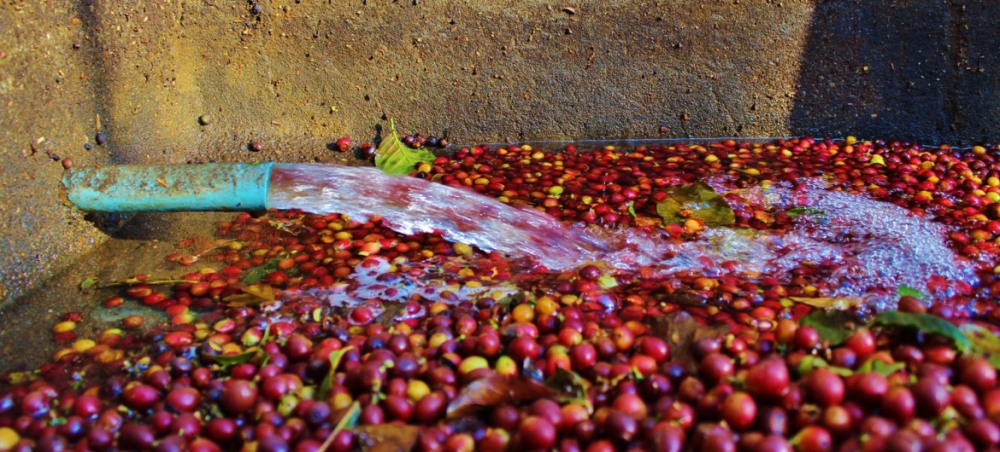
Producing a natural Blue Mountain was no small undertaking. Washed processing had been the norm because it is the most reliable way to preserve Blue Mountain's essential flavor characteristics - change the process, and the flavor structure changes with it. This is also why, when introducing coffees from any origin, FrontStreet Coffee starts customers with washed lots: washed processing expresses a region's character most faithfully. The natural Blue Mountain is largely a response to market trends, just as FrontStreet Coffee has recently added a natural-processed Mandheling alongside the traditional wet-hulled version.
Mandheling Coffee
The Story of Mandheling Coffee
The Mandheling story begins with Japanese soldiers returning home after Indonesia's colonial era who could not forget the delicious local coffee. Through trading contacts, they asked locals to help source high-quality beans, including the coffee we now call Mandheling. The Japanese loved it and asked for its name; since the commercial source could not be disclosed, the locals answered offhand: "Mandheling." The Japanese then commissioned Indonesian merchants to ship 15 tons to Japan, where it became an unexpected hit - and the name stuck.
Mandheling, famous for its non-acidic profile, is also an Arabica coffee. The Typica grown there performs exceptionally well and is recognized as a premium variety; it traces back to the Mandailing region near the Bukit Barisan mountains of North Sumatra. Its flavor is full-bodied and low in acidity with gentle herbaceous notes. Mandheling cultivation itself originated with the compulsory cultivation system imposed by the Dutch East Indies government: in 1835, the Dutch brought coffee seedlings from Java and began planting them in Sumatran soil, and with the government's backing, coffee soon spread across several regions of North Sumatra.
FrontStreet Coffee carries Lintong Mandheling, Sumatran Tiger Mandheling, and Gold Mandheling.
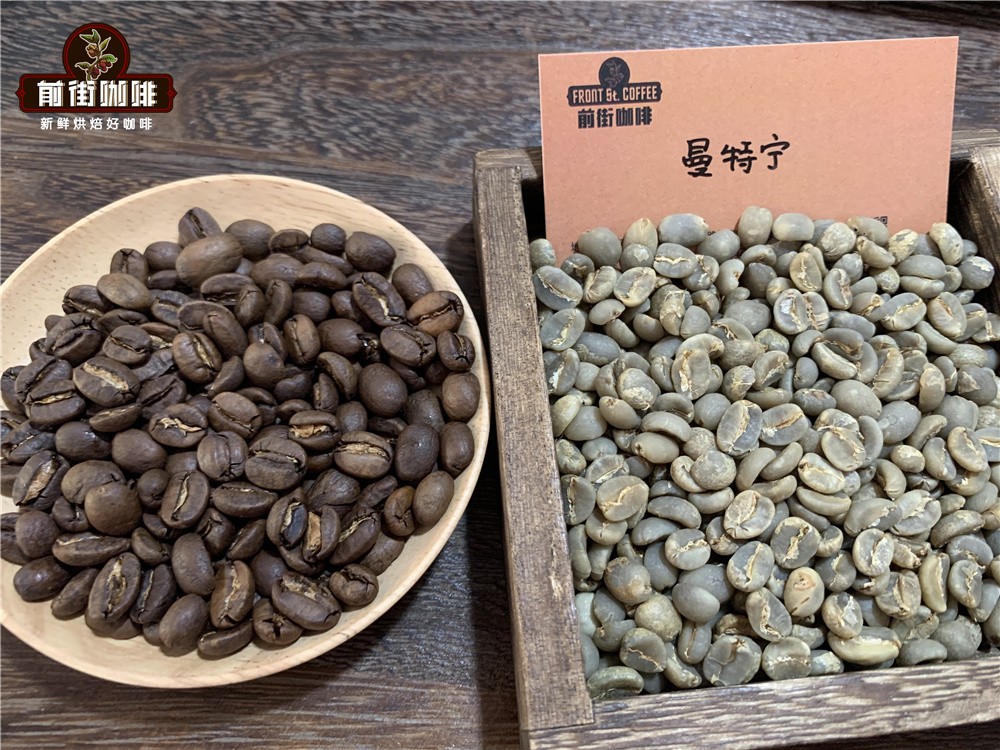
Indonesian Coffee Regions
About 90% of Indonesia's coffee is Robusta; the remaining 10% is Arabica, grown mainly around Lintong in Sumatra's Lake Toba region, in the Gayo mountains of Aceh, and on Java and Sulawesi. Indonesian regions typically see two harvests: the main harvest around September-October and the smaller fly crop in May-June.
Lake Toba / Lintong: Lake Toba lies south of Medan, the capital of North Sumatra - a vast high-altitude freshwater lake about 100 kilometers long and 30 kilometers wide, covering 1,130 square kilometers at an average elevation of roughly 900 meters, the largest volcanic lake in the world. The coffee known as Mandheling is, strictly speaking, Typica or its local variants grown in the mountains around the lake, and Lintong is the most famous producing zone in the area. Lintong Mandheling is the classic expression of the name, processed with the conventional wet-hulled method that gives it low acidity and a full body. One quirk of wet-hulling: because the semi-dried beans are easily damaged when the parchment is stripped away, they often crack open like a goat's cloven hoof - the famous "goat hoof beans." These are not defects but a signature of genuine Mandheling.
Aceh: At the northernmost tip of Sumatra, Aceh is a fascinating and complicated place; long political instability has kept ordinary travelers away. The Gayo mountain region sits in Aceh Province, where coffee is grown on the slopes around the town of Takengon and Lake Tawar at average altitudes of 1,100-1,300 meters. FrontStreet Coffee's new-crop Gold Mandheling comes from the Gayo mountains of Aceh.
FrontStreet Coffee's Gold Mandheling
Why is it called Gold Mandheling? Does it contain gold, or simply gleam like it? The story goes that when the green beans are spread out for processing, they give off a brilliant golden luster in the sunlight - hence the name. But it was not a Japanese company that registered "Gold Mandheling" as a trademark; it was the Indonesian company PWN (Pwani Coffee Company), which had previously partnered with Japanese firms to export Mandheling. Because PWN owns the trademark, only Gold Mandheling produced by PWN can be considered the authentic article - and to bring customers true Gold Mandheling flavor, FrontStreet Coffee sells only PWN's.
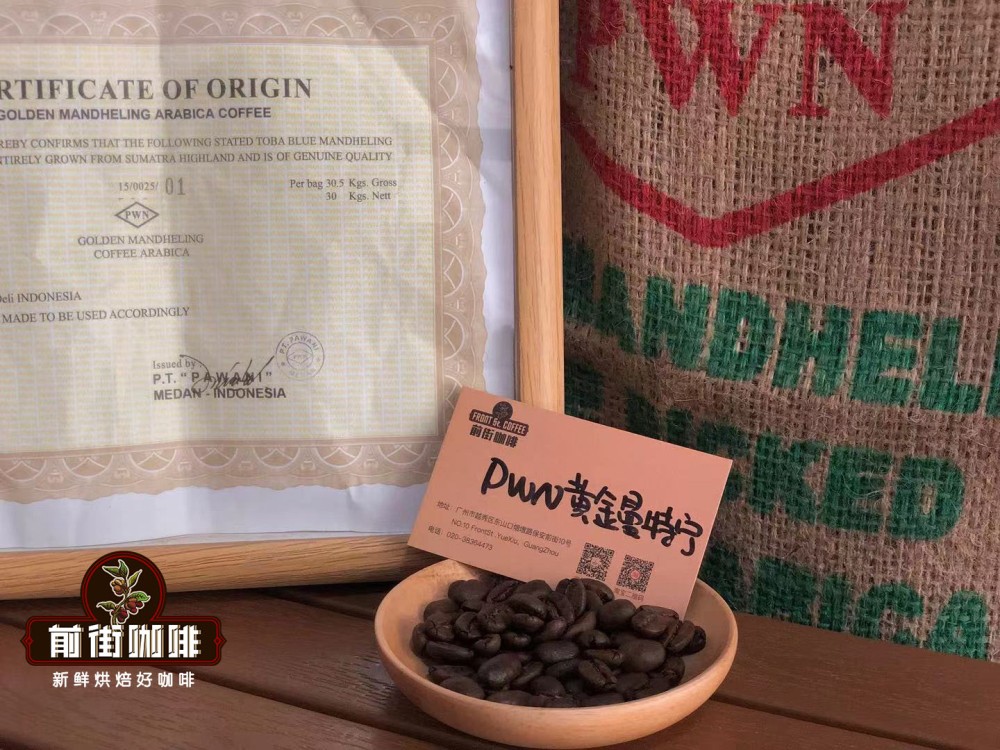
PWN is short for Pwani Coffee Company, one of Indonesia's most famous green coffee exporters, sourcing almost exclusively from the country's best growing regions. Gold Mandheling is their flagship: after acquisition, the beans pass through multiple rounds of hand selection to pick out only full, defect-free seeds - only beans that survive this gauntlet of sorting can be graded as Gold Mandheling. Because the trademark is PWN's, lookalike "Gold Mandheling" from other exporters should more accurately be called Premium Mandheling. PWN's Gold Mandheling is produced in the Lintong region of northern Sumatra - a top grade of Mandheling processed with extra care, with all picking done by hand.
FrontStreet Coffee's PWN Gold Mandheling is screened to size 18 and above, with fewer than three defective beans per 300 g sample - the highest G1 grade - showing a dark green color and uniform, flat bean shape. After our own strict screening, we found that PWN Gold Mandheling not only lacks the earthy impurities typical of ordinary Mandheling but also tastes cleaner and brighter, with stronger sweetness.
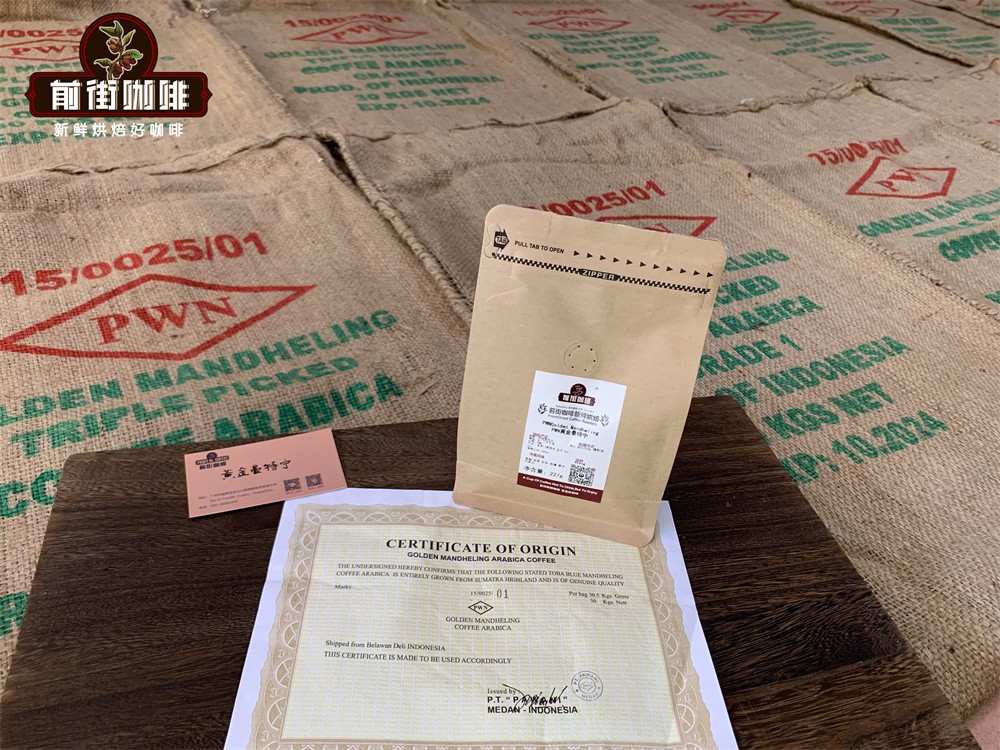
PWN's uncompromising standards are why its coffee commands a higher price than generic "Gold Mandheling." So why do some market versions never mention PWN? Some green bean traders raise prices simply by selecting 18-screen-and-larger beans from ordinary G1 Mandheling; others go as far as three rounds of sorting to mimic the look of PWN Gold Mandheling. But a similar appearance is only skin deep - flavor cannot be faked. FrontStreet Coffee has bought several coffees also labeled "Gold Mandheling" for blind tasting, and our baristas can always pick out the PWN lot, because its cleanliness is simply unmatched.
Gold Mandheling Coffee Varieties
FrontStreet Coffee's new-crop Gold Mandheling is the Ateng variety - the local Indonesian name for Catimor - named after the Aceh Tenggara region.
What Is Indonesian Wet-Hulling?
Mandheling's character is inseparable from its unique processing method. Indonesian wet-hulling - known locally as Giling Basah - is a traditional Indonesian approach that produces a cup profile completely different from washed coffee. As FrontStreet Coffee understands it, the tradition grew out of the weather: Indonesia's annual humidity runs between 70-90%, typhoons are constant, and in some regions annual rainfall reaches 2,000 mm.
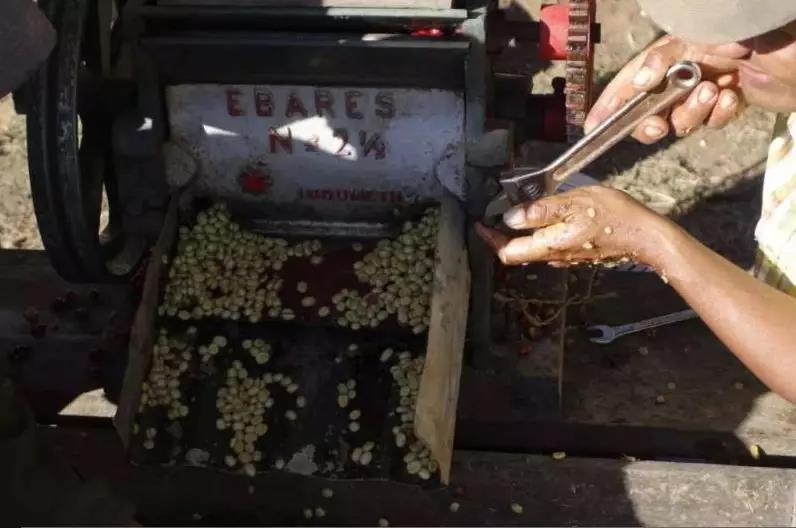
Under tropical conditions, coffee normally takes an average of 2-3 weeks to dry. In Indonesia's humidity, drying becomes a serious bottleneck: the beans stay at high moisture for much longer, giving bacteria an easier path into the green coffee. In conventional washed processing, the parchment shields the beans during drying. Wet-hulling removes the parchment before the final drying stage, letting sunlight strike the green bean directly - drying the coffee 2-3 times faster than the washed method.
It is a genuinely clever adaptation, but it has a cost: the beans turn out ugly. Goat hoof beans form because, when the parchment is stripped, the coffee's moisture content is still 20-24%, whereas in conventional processing beans are hulled at 10-12%. In this "semi-dry" state the parchment clings to the bean surface, so dehulling demands more friction and force.
At the same time, semi-dry green beans are fragile, with much lower hardness than fully dried beans, so they crack and split easily - producing the horse-hoof or goat-hoof beans (called kuku kambing locally).
The tea and coffee writer Han Huaizong once described wet-hulled coffee this way in his book: "A rare processing method in the world, it accidentally created Mandheling's special low-acid, thick, mellow aromatic flavor." After years of cupping wet-hulled Indonesian coffees, FrontStreet Coffee would put it this way: Mandheling has relatively low acidity, a thick mouthfeel, and distinctive herbal-spice flavors - the drawback being inconsistent quality. That inconsistency cannot be blamed entirely on wet-hulling; in most cases, uneven green bean quality is the likelier culprit.
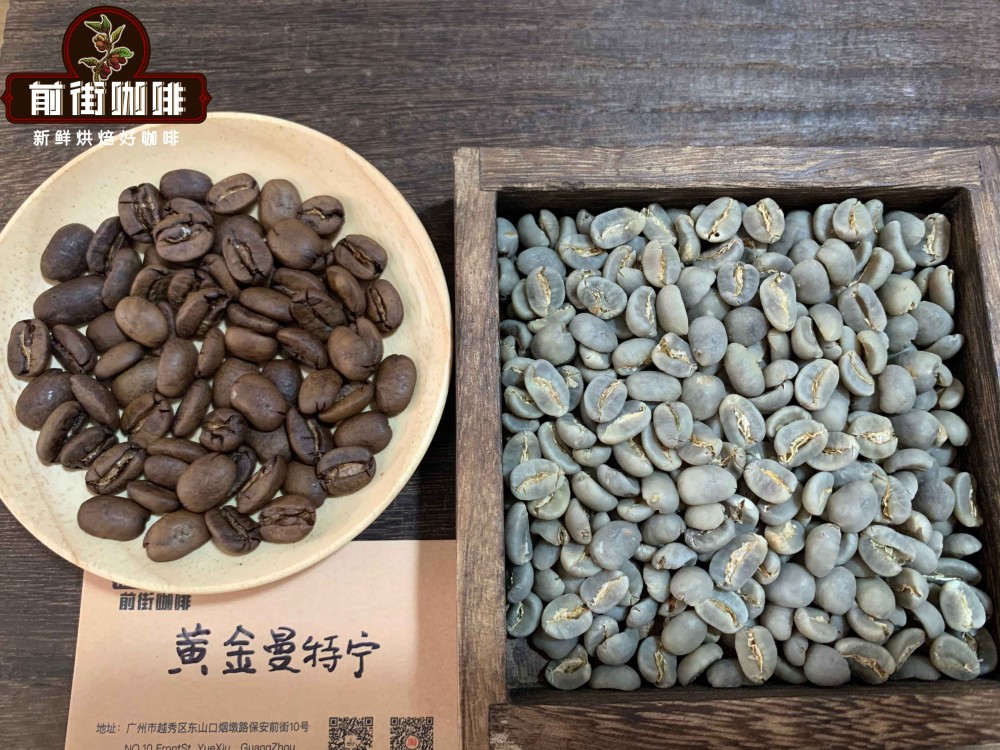
Another practical advantage: because Mandheling has so little acidity, it never develops unpleasant sour or astringent notes even after sitting on the warmer or being chilled over ice. The roasted beans run relatively large, with green beans in brown to dark green tones carrying a special caramel-like aroma and a mellow, rich flavor. Most enthusiasts drink it as a single origin, and it remains an indispensable component in espresso blends.
All of FrontStreet Coffee's Mandheling is processed with the wet-hulled method.
FrontStreet Coffee's Brewing Recommendations
We recommend brewing with freshly roasted beans to capture the full flavor. Coffee shipped by FrontStreet Coffee is roasted within the past five days, because freshness dramatically affects the cup. Our roasting philosophy is "Freshly Roasted Good Coffee": since coffee's ideal resting period runs about 4-7 days, your beans arrive right at peak flavor.
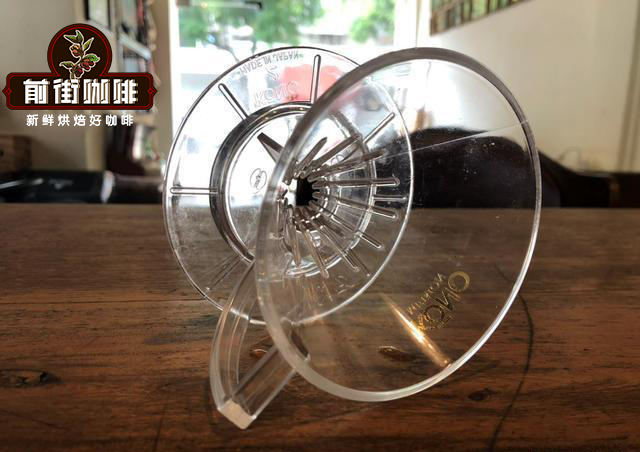
For darker-roasted beans where body is the point, FrontStreet Coffee reaches for the Kono dripper. The Kono's strength is its semi-immersion character, which extracts more dissolved solids and thickens the body. Its few ribs sit low near the base, so the filter paper presses flat against the walls, restricting airflow, slowing the drawdown, and extending contact time between water and coffee.
Dripper: Kono dripper
Water temperature: 88°C
Dose: 15 g
Coffee-to-water ratio: 1:15
Grind size: Medium (70% passing through a #20 standard sieve)
Brewing method: Three pours. Bloom with 30 g of water for 30 seconds, then pour in small circles up to 125 g; continue pouring to 225 g just before the water level exposes the coffee bed, then stop and let the coffee finish draining before removing the dripper. Timed from the start of pouring: extraction takes 2'00" with a V60 and slightly longer at 2'10" with the Kono.
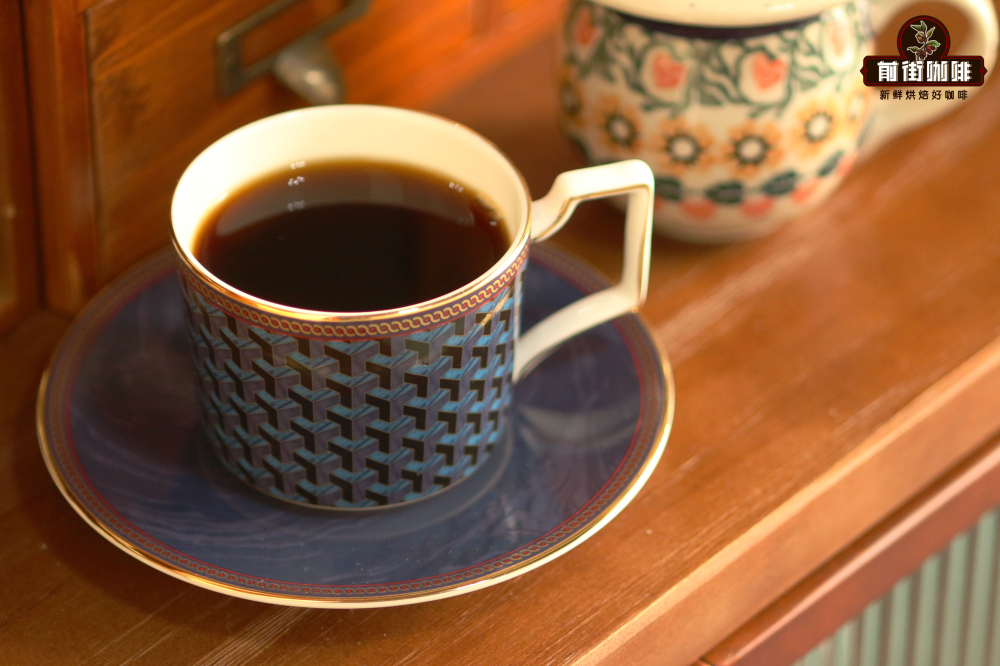
Washed Blue Mountain: rich dark chocolate and nutty flavors, a creamy smooth mouthfeel, with sweetness, acidity, and bitterness in balance.
Gold Mandheling: nuts, spices, herbs, licorice, chocolate, and caramel - clean and soft.
Lintong Mandheling: herbs, chocolate, and caramel, overall well balanced.
As for which tastes best, FrontStreet Coffee's answer is that every coffee tastes good in its own way - different processing methods create different flavors, and tasting across them is the best way to understand a region's coffee culture. So try as many as you can. You might just fall in love. FrontStreet Coffee carries more than 50 single-origin coffees in a huge range of flavor profiles, and we always welcome friends to come taste and talk coffee!
FrontStreet Coffee Recommendation
If Mandheling's thick, low-acid charm is what you are after, start with FrontStreet Coffee's PWN Gold Mandheling - the definitive expression of the style. Sourced from PWN and triple hand-selected to the G1 standard (size 18+, fewer than three defects per 300 g), it roasts up with rich toasted aromatics, a clean yet full-bodied cup, notes of dark chocolate, caramel, and wild herbs, and almost no acidity - ideal for anyone who dislikes sour coffee.
For pour-over, we suggest 87-88°C water, 15 g of coffee ground to a coarse-sugar texture, a 1:15 ratio, and a three-pour structure: a 30 g bloom to degas, a second pour of about 100 g to lift the bed, then a gentle center pour to finish. This brings out Gold Mandheling's syrupy body and caramel sweetness best - and if you'd rather pull espresso, FrontStreet's classic blend pairs Brazilian cream-and-nut notes with mid-dark Mandheling for a thick, buttery shot with chestnut and caramel flavors.
Important Notice :
FrontStreet Coffee is a long-established specialty coffee roaster in Guangzhou China, selling freshly roasted beans from its own farm in Yunnan as well as dozens of carefully selected single-origin beans from around the world for both pour-over and espresso. The products deliver consistently excellent quality and great value, with shipping within 24 hours. Guangzhou's FrontStreet Coffee shop is recommended by many coffee lovers, and the beans are now available online at the Tmall 。
FrontStreet Coffee has moved to a new address:
FrontStreet Coffee Address: 315,Donghua East Road,GuangZhou
Tel:020 38364473
 Scan and follow the En Gafei WeChat official account. Please indicate that the reprint comes from "En Gafei".