Sumatra Coffee Tiger Mandheling Brewing Grind Size - Tiger Mandheling Coffee Bean Characteristics and Story
Indonesian Coffee and Tiger Mandheling
Indonesia is Asia's great coffee producer and one of the world's most famous coffee exporters. Its flagship is Mandheling—renowned for rich body and intense flavor, a coffee that can stand beside Blue Mountain and is especially adored in Japan. Here, FrontStreet Coffee introduces a Sumatran original: Tiger Mandheling.

What is Mandheling Coffee?
The name "Mandheling" was pure accident. It was originally the name of an Indonesian ethnic group. When Japanese soldiers asked locals about the delicious coffee, a language mix-up led them to answer "Mandheling"—and as the Japanese popularized the coffee abroad, the accidental name stuck, putting Sumatra on the world coffee map.
Tiger Mandheling Coffee
Tiger Mandheling comes from the Lake Tawar area in Aceh Province, on the northern tip of Sumatra's Gayo Highlands. Straddling the equator, Indonesia has a humid tropical rainforest climate, abundant rainfall, and fertile volcanic soil that feeds the coffee generously. The region's remoteness, however, meant coffee cultivation only began there in 1924, mostly under traditional shade-grown, pesticide-free organic farming.
In Aceh, coffee is the region's second-largest export crop. An estimated 60,000 smallholder farmers grow it there, each holding about 1-2 hectares. Indonesia's traditional coffee trade runs through a multi-point supply chain—farmers sell through layer after layer of middlemen before quantities accumulate enough for export. Direct trade, where a single buyer collects from farmers and arranges the export, remains rare locally.
The bar for Tiger Mandheling is specific: it must carry a traditional herbal-medicine aroma, and only Mandheling with a defect rate below 4% and screen size above 17 qualifies as "Tiger."
The method behind the flavor is Sumatra's own wet-hulled process. With humidity holding between 70-90% all year, annual rainfall up to 2,000mm, and constant typhoons, farmers can't rely on long sun-drying. In the regular washed process, beans dry in parchment for 2-3 days until reaching 20-24% moisture before hulling; wet-hulling strips the parchment earlier, exposing the green beans directly to the air. The beans become more prone to squeezing and small cracks—the famous "horsehoof" or "goat hoof" beans—raising the defect rate but creating a mellow, intense, unmistakably Sumatran flavor.
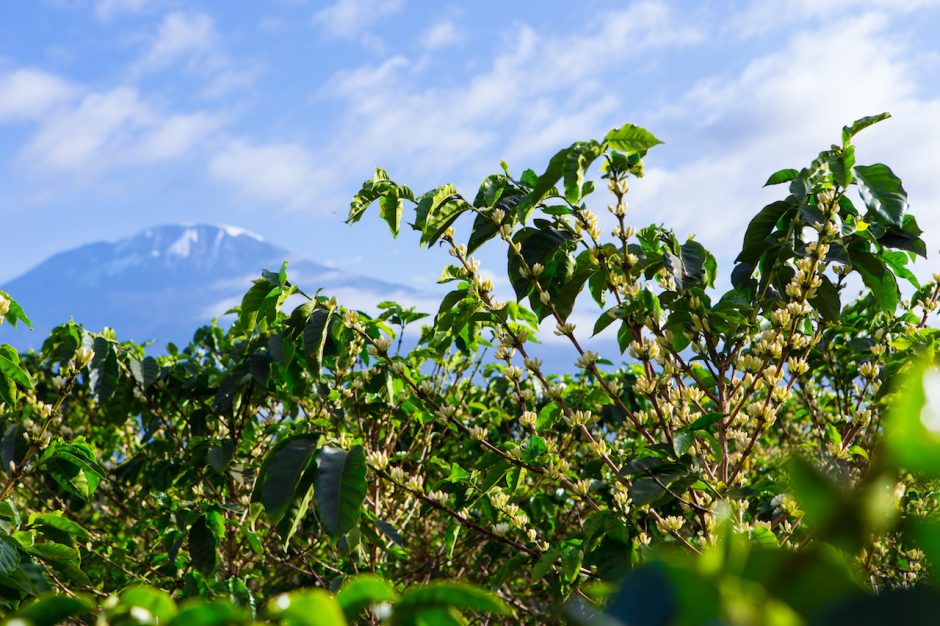
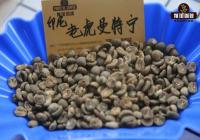
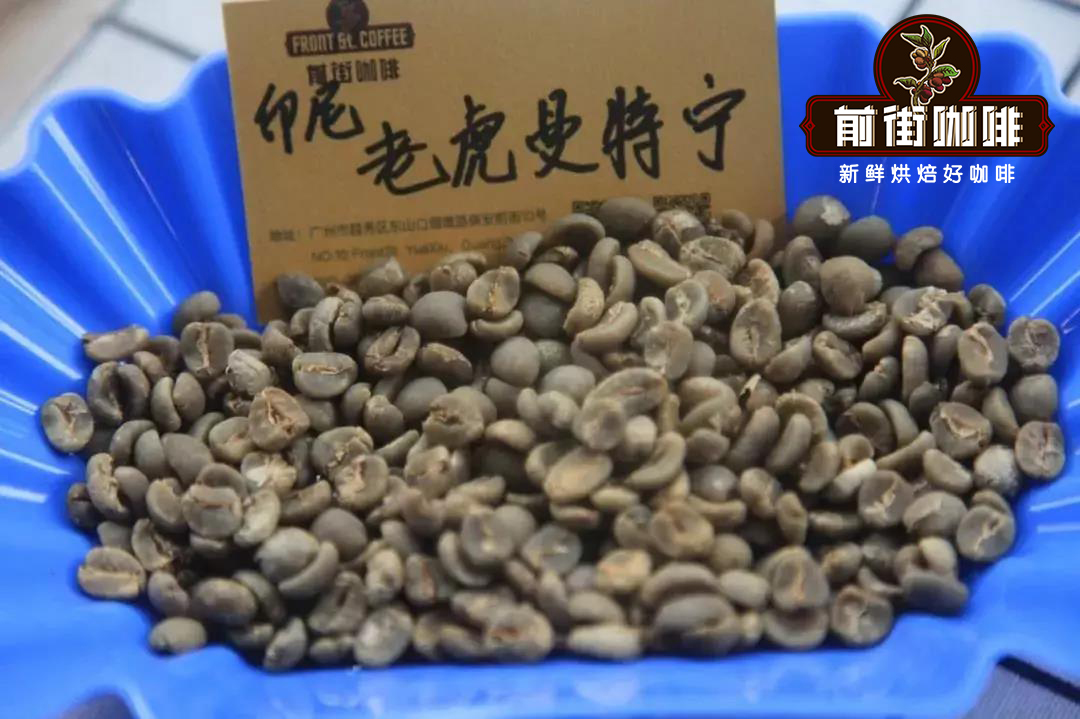
Tiger Mandheling's main varieties are Catuai, Typica, and Sidikalong. In the cup it shows lemon or citrus acidity, clean lemon notes, and a sweet aftertaste—overall a balanced profile with high cleanliness and distinct cream, dark chocolate, caramel, and nut flavors. The green beans are plump, green with yellow undertones, well uniform, and relatively high in moisture.
The Charm of Taming the Tiger
The name fits: like taming a tiger, processing and sorting Tiger Mandheling demands patience and energy. The wet-hulled process exists because rain and typhoons rule out proper sun-drying and the local economy can't absorb the cost of full washed processing. The specification stays fixed—screen size above 17, defect rate below 4%.
Tiger Mandheling also comes from near Lake Tawar in Aceh, and Mandheling from this area has a fruity sweetness and cream aroma that other regions lack. With everything aligned, it presents flavors unlike ordinary Mandheling: less of the typical herbal bitterness, with brighter acidity and rich fruity-herbal notes. Not everyone warms to that herbal character, which is why opinions on it tend to divide.
FrontStreet Coffee Roasting Analysis
Tiger Mandheling green beans are plump, green with yellow hints, uniform, and higher in moisture. The roasting goal is a dark roast that eliminates excess acidity, builds body and balance, and preserves the coffee's signature cedar aroma.
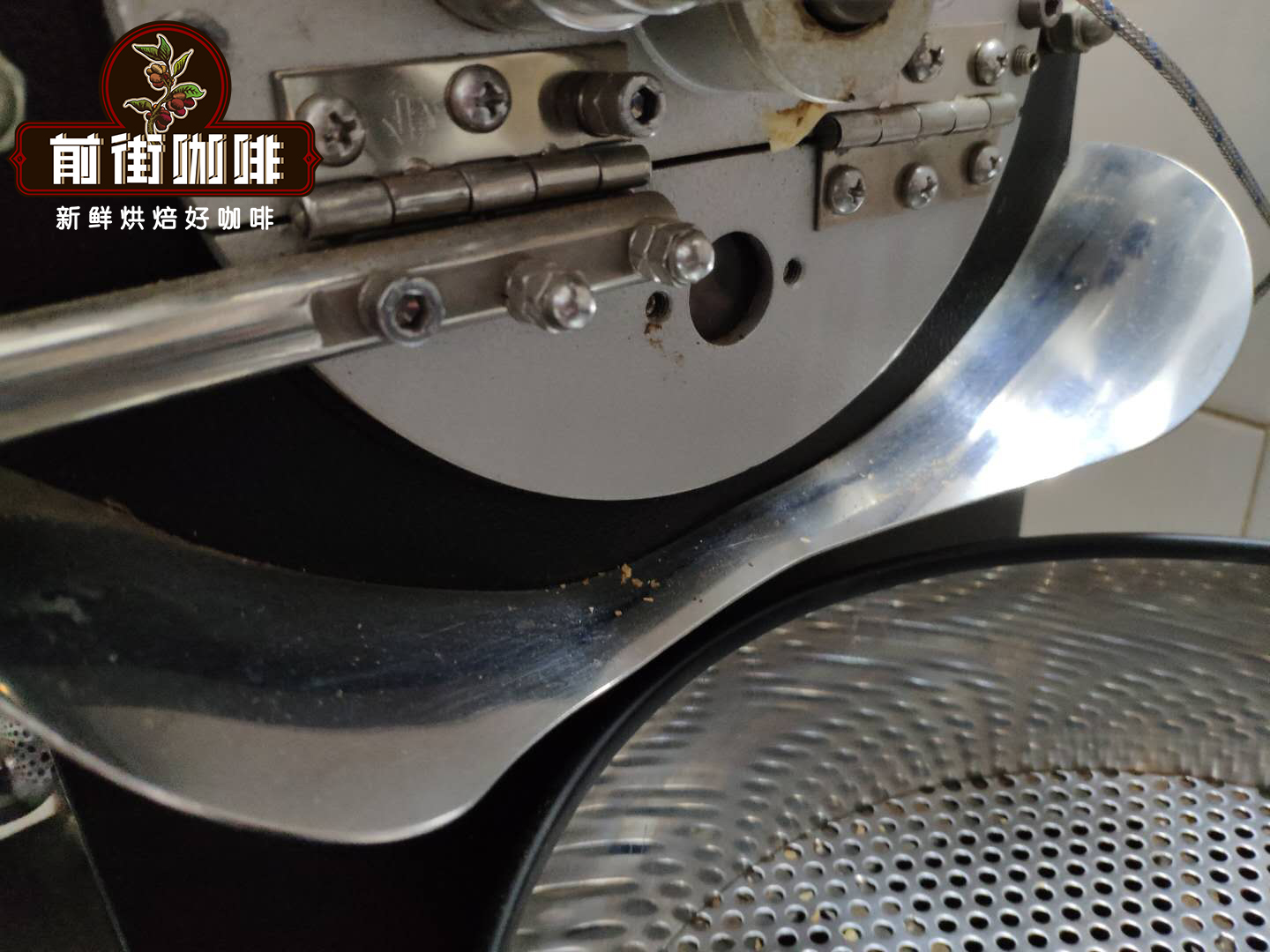
In the first batch, the charge temperature was relatively high: 200°C at charge with relatively high heat. Since this bean grows at only medium altitude and its texture is very soft, we used a heat-reduction slide to extend the drying phase and avoid acidity from insufficient dehydration. Heat was reduced at the yellowing point, after drying completed, and before first crack to prevent surface scorching. We dropped the beans 4 minutes after first crack ended, 20 seconds before second crack, stretching the caramelization to show off the coffee's cleanliness and sweetness.
Heat the roaster to 200°C with the air damper at 3. After 30 seconds, reduce heat to 160°C, damper unchanged. Turning point at 1'45"; hold the heat. At 5'18" the bean surface yellows, the grassy aroma disappears entirely, and the drying stage gives way: reduce heat to 140°C and open the damper to 4.
At 7'30" drying completes; hold 140°C. At 8'55", wrinkles and dark spots appear on the surface and the toast aroma shifts unmistakably into coffee aroma—the prelude to first crack. Listen carefully. At 9'00" first crack begins: reduce heat to 110°C and open the damper fully to 5 (reduce gently—too little heat and the cracks stall). Develop for 4'00" after first crack and drop at 203°C.

FrontStreet Coffee Brewing Suggestions
This brew is built to highlight Tiger Mandheling's rich body and cedar aroma, using a KONO dripper—invented to simulate flannel filtering and produce thick, rich coffee.

For this dark-roasted coffee, choose a medium-coarse grind (70% pass-through on a #20 standard sieve, EK43s at setting 11). Use a 1:15 ratio with 15g of coffee—a tighter ratio makes the cup read richer—with water at 87°C.

The technique: pour slowly onto the grounds, keeping the bed as level as possible, and avoid shaking the dripper (shaking compresses the space between particles and hinders degassing). First, pour 40g in small circles at the center for a 30-second bloom; the bed will swell into a "hamburger" dome.
Second, pour 120g in circles from the center outward, keeping the stream close to the bed and moving slowly to avoid over-agitating. Finally, pour the last 100g. Extraction finishes once all the coffee has drained into the server—about 2 minutes total.
FrontStreet Coffee Recommendation
If Tiger Mandheling's wild herbal side hooks you, compare it with FrontStreet Coffee's PWN Golden Mandheling from the Gayo highlands of Aceh—G1 grade, screen size 18 and up, fewer than 3 defects per 300g sample, and three rounds of hand-sorting for a strikingly clean, sweet cup. Roasted medium-dark, it shows caramel sweetness, chocolate, and nuts with a thick, full body—perfect for anyone who dislikes acidic coffee.
Both come from Sumatra's two great growing provinces: Aceh around Lake Tawar, and North Sumatra around Lake Toba, where the traditional Lintong Mandheling delivers that mysterious, dense aroma, heavy body, and intense flavor only wet-hulling can create.
Important Notice :
FrontStreet Coffee is a long-established specialty coffee roaster in Guangzhou China, selling freshly roasted beans from its own farm in Yunnan as well as dozens of carefully selected single-origin beans from around the world for both pour-over and espresso. The products deliver consistently excellent quality and great value, with shipping within 24 hours. Guangzhou's FrontStreet Coffee shop is recommended by many coffee lovers, and the beans are now available online at the Tmall 。
FrontStreet Coffee has moved to a new address:
FrontStreet Coffee Address: 315,Donghua East Road,GuangZhou
Tel:020 38364473
 Scan and follow the En Gafei WeChat official account. Please indicate that the reprint comes from "En Gafei".