The Story and Relationship Between Panama Coffee Estates: Morgan Estate and Finca Deborah

Since Geisha coffee became famous, many estates around the world have started growing it, and even Yunnan has begun to plant Geisha. When it comes to Geisha, many friends immediately think of Panama's Hacienda La Esmeralda, but did you know that Panama has other famous Geisha estates that may be overshadowed by Esmeralda's reputation? Today, FrontStreet Coffee introduces two more well-known Geisha estates in Panama: Finca Deborah and Morgan Estate.
About Panama
Let us first understand Panama. Why can Geisha from Panama's Hacienda La Esmeralda become famous while Geisha in Ethiopia cannot? FrontStreet Coffee explains: it is because Panama has different climate conditions. Although coffee is also an agricultural crop, it has very high requirements for its growing environment, including shade and altitude. Panama's conditions meet those requirements, which is why Geisha from Hacienda La Esmeralda shows such excellent flavors.

Panama borders Costa Rica to the north and Colombia to the south. Its coffee-growing regions cluster around the highest volcanic range in Central America, including Baru Volcano, the Boquete region, the Volcán region, and the Renacimiento region. Panama enjoys extremely unique microclimates, and its lands are rich in nutrient-dense volcanic soil, providing perfect environmental conditions for growing distinctive specialty coffees.
Jamison Savage, the owner of Finca Deborah, manages three coffee projects: Finca Deborah, Morgan Estate, and Savage Coffee.

Finca Deborah
FrontStreet Coffee has noted before that coffee grown at higher altitude tends to taste better. Finca Deborah sits at an altitude of over 1900 meters, covered by vast primitive forest, making it the highest and most remote coffee estate in Panama. It is located on a magnificent mountain in the Volcán region of Chiriquí Province, Panama. Precisely because of its extremely high altitude, disease stays naturally at a minimum; the temperature alone creates a barren environment for fungal problems and other unwanted diseases. This lets the coffee trees focus on producing beautiful fruit rather than wasting precious energy fighting disease. Because of the increased altitude, insect problems are also minimized.

In addition to its extremely high altitude and lower, coffee-friendly temperatures, Finca Deborah often sees scenes of pervasive fog and heavy rain, with annual rainfall of 2200 millimeters. Combined with the wide temperature difference between day and night, nighttime temperatures can drop to 10 degrees Celsius. Together these two factors contribute greatly to the rich sweetness and complex flavor of Finca Deborah's Geisha. This is undoubtedly an extraordinary environment for growing many coffee varieties, and under such conditions Geisha, one of the most complex varieties of all, not only survives but thrives.
The natural processing at Finca Deborah requires careful manual selection first, then spreading perfectly ripe cherries in thin layers for slow drying to ensure a clean natural-processed bean. After natural drying, the cherries remain in their dried pulp for up to 60 days to enhance aroma and stabilize sugar content. A final selection then ensures no broken beans remain, making the coffee more refined and impressive.

Savage Coffee
The Savage Coffee project was initiated by Jamison Savage in Panama's Boquete region. Its members are small coffee estates and small-scale farmers from the Boquete and Volcán producing regions. Jamison positions himself as one of the world's most sophisticated coffee producers, and the beans produced by his Finca Deborah have won famous coffee competitions worldwide.
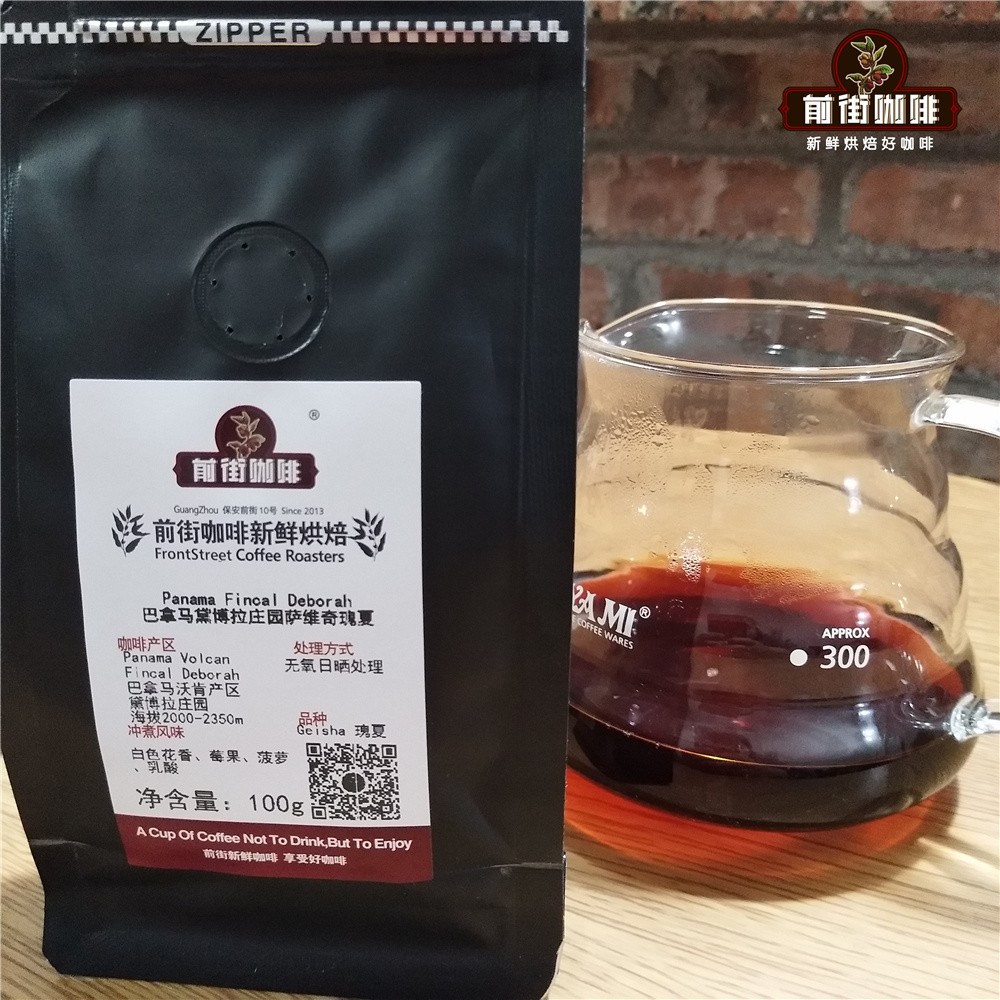
Savage series coffees are harvested from small estates and small farmers in the Boquete and Volcán regions. To obtain the best-flavored coffee, the cherries harvested for this project are fully mature red cherries. The growers behind the Savage series, like Jamison Savage, show the deepest respect for the local ecology and apply core concepts of sustainable development, excellent quality, and innovation to their own land.
FrontStreet Coffee has also acquired a coffee from the Savage series. After cupping, the barista praised this Savage coffee for its enticing floral notes and pleasant sweet-and-sour balance.
Morgan Estate - The Sister Estate of Deborah
Morgan Estate
Morgan Estate, which also grows Geisha, is the sister estate of Finca Deborah. Hong Kong's Cha Ka-Po, a World Barista Championship (WBC) runner-up, made a comeback in 2016 to compete in the Hong Kong Barista Championship (HKBC), choosing Geisha from Panama's Morgan Estate, winning again and earning a place at the 2017 World WBC. The Panama coffee estate Morgan Estate is the sister estate of the renowned Finca Deborah.
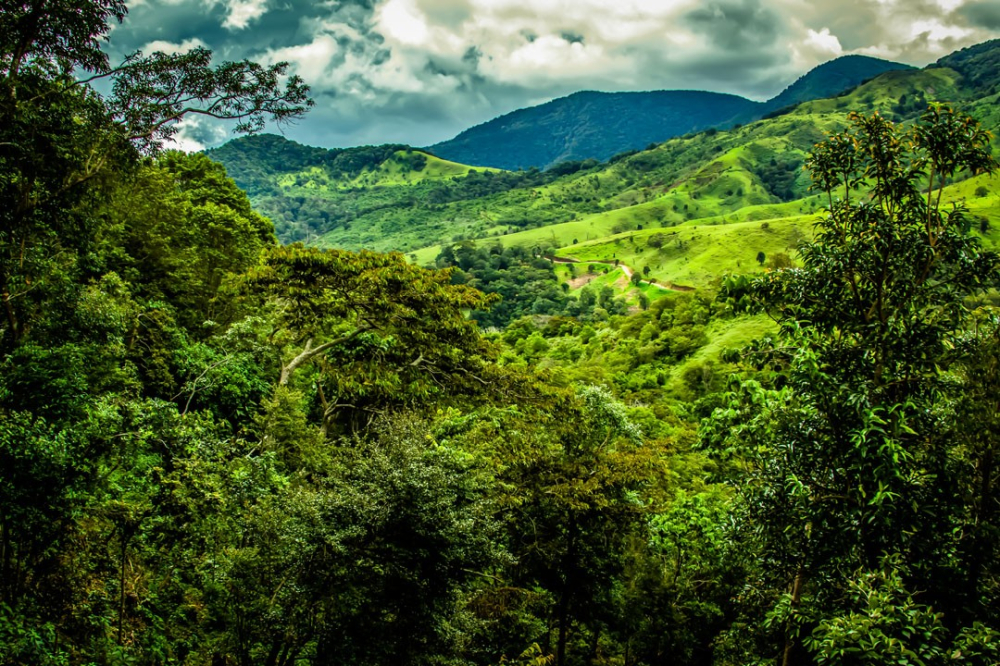
Morgan Estate lies near the Chiriquí volcano, at an altitude of 1600-1800 meters on the steep western slopes of Baru Volcano. The estate features lush tropical rainforest and picturesque waterfalls. It has been growing coffee for eight years and is managed by Jamison, owner of Panama's Finca Deborah. Its total area is about 15 hectares, with approximately 2000 coffee trees planted per hectare. Two wooden houses sit on either side of a valley stream, with clear water flowing from north to south. Century-old trees are visible everywhere, creating picturesque scenery, and the preservation of the original forest vegetation is excellent.
The coffee trees are planted on steep slopes on both sides, making harvesting quite difficult. Morgan Estate uses completely natural organic farming methods, adjusting fertilizer ratios according to soil conditions and the nutritional needs of the coffee trees. When a tree encounters pests or disease, the entire tree is removed and the soil renewed to isolate the problem and protect the others. Estate owner Jamison says that to avoid polluting local water sources and natural ecosystems, the coffee cherries are transported elsewhere for processing and drying after harvest. Geisha trees prefer cool environments and need only about 40% of daily sunlight, so staff regularly patrol the estate to keep the optimal ratio of shade and sun for the Geisha trees.
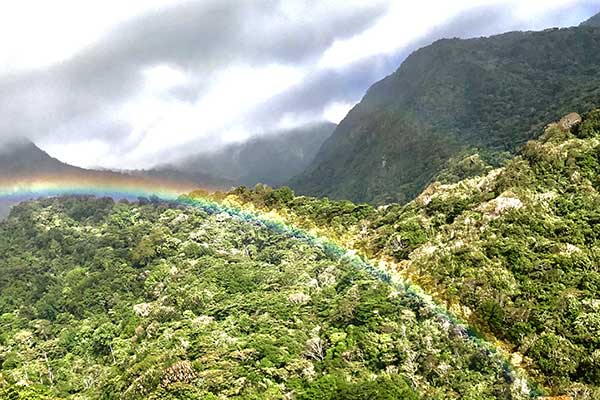
The Geisha Jamison produces has complex layers and diverse flavors, making it very suitable for pour-over brewing. This Geisha is the green-tipped variety, growing on both sides of very steep mountains, so care and harvesting are quite challenging. Lower temperatures combined with dense shade trees slow the maturation of the cherries, thereby developing excellent acidity.
Coffee Processing Method
Jamison has studied post-harvest processing and coffee-processing techniques at Finca Deborah for over ten years. The Savage series Geisha that FrontStreet Coffee acquired uses anaerobic natural processing.
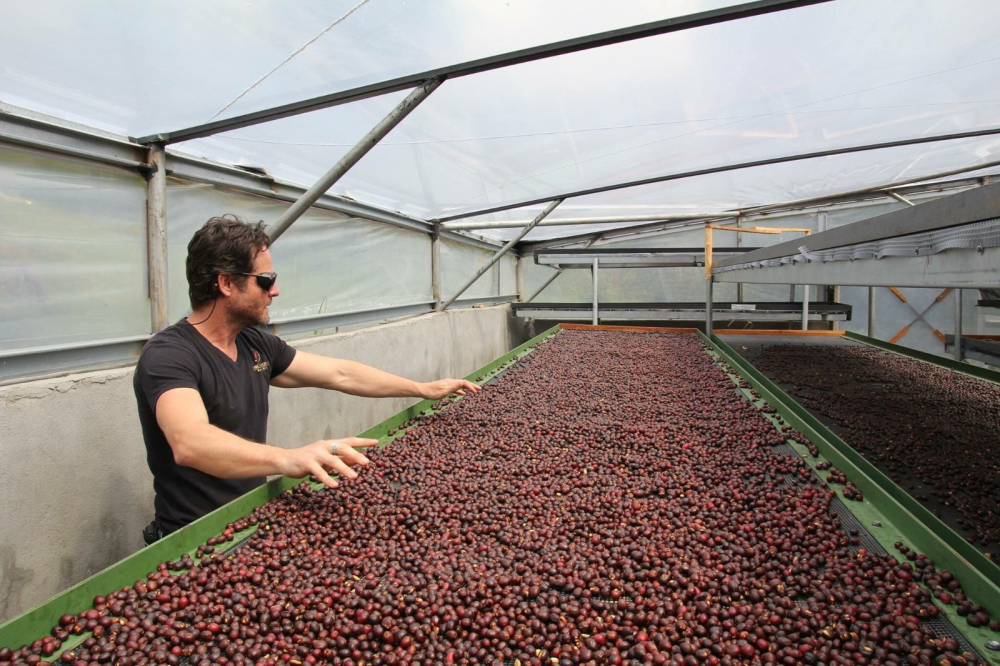
First, freshly harvested cherries are sun-dried in greenhouses until they become raisin-like; then these dried cherries are placed in sealed containers with the oxygen removed for 36 hours of dry fermentation; next they are depulped while retaining 100% of the pulp for fermentation. Coffee processed this way has extremely sweet flavors, highlighting fresh fruit and floral notes.
FrontStreet Coffee Brewing Recommendations
For brewing, FrontStreet Coffee recommends using freshly roasted beans to make the most of coffee's rich flavors. Beans shipped by FrontStreet Coffee are roasted within 5 days, because FrontStreet Coffee understands how much freshness affects flavor. The roasting philosophy is "Freshly Roasted Good Coffee," ensuring that every customer who places an order receives the freshest coffee possible. The resting period is about 4-7 days, so by the time customers receive their coffee, it is at its optimal flavor.

Some customers need FrontStreet Coffee to grind the beans for them, which is fine as well. One reminder, though: when beans are ground in advance, there is no need for further resting, because during transportation the pressure from carbon dioxide buildup in the package also helps round out the flavor, so you can brew a cup immediately upon receiving the ground coffee. Ground coffee must be brewed promptly, however, because it oxidizes quickly once exposed to air, meaning the flavor dissipates relatively fast and the coffee will not taste as good. FrontStreet Coffee therefore recommends buying whole beans and grinding fresh before brewing to better experience the coffee's flavors.
FrontStreet Coffee Brewing Parameters
FrontStreet Coffee took into account that this Geisha bean is lightly roasted. Lightly roasted beans dissolve more slowly than dark-roasted beans, so to ensure full extraction of Geisha flavors, a higher water temperature is used along with a finer grind.

Dripper: Hario V60, Water Temperature: 90°C, Coffee Amount: 15g, Coffee-to-Water Ratio: 1:15, Grind Size: Medium-fine grind (Chinese standard #20 sieve, 80% pass rate)
The brewing method uses three-stage extraction. Pour the coffee grounds into the V60 dripper, use twice the weight of the coffee grounds in water to wet the coffee bed, forming a dome and letting it bloom for 30s. Then use a small water stream to pour from inside out in circles until reaching 125g for the first stage. Wait until the coffee bed drops to half the height of the dripper, then continue with the same fine stream for the third stage up to 225g. Remove the dripper once all the coffee liquid has filtered through, with a total time of about 2 minutes.

[Panama Finca Deborah Savage Geisha Coffee Flavor] Distinct white floral notes, pineapple and fermented-beverage sweet-and-sour balance, a full-bodied texture, overall clean and balanced.
FrontStreet Coffee Recommendation
To taste the estate-level Panama Geisha style that Deborah and Morgan represent, FrontStreet Coffee's Esmeralda Red Label Geisha is the benchmark. Formally Esmeralda Special, it is grown at 1,600-1,800 meters, must cup above 90 points for every lot, and is individually numbered, with each lot coming from a single small plot, so buyers can choose the parcel whose subtle flavor suits them best.
For the same Geisha character in a different landscape, FrontStreet Coffee's Granja Geisha comes from the Granja Gesha farm in Ethiopia's Yirgacheffe, one of the rare estates planted to a single variety. The coffee comes from the Granja processing station on the border of the Kochore and Granja Abaya areas, a station founded in 2014 and run by Mr. Israel Degefa, whose surrounding area covers as much as 700 hectares of coffee, much of it uncultivated, with fertile soil and shade trees throughout. Hand-picked ripe cherries are dried on raised beds for 14-20 days depending on the weather. Given a medium-light roast, it shows bright citrus acidity, elegant ginger flower, the full sweetness of ripe fruit, and the fine, silky texture and refined finish that mark the Geisha variety.
Important Notice :
FrontStreet Coffee is a long-established specialty coffee roaster in Guangzhou China, selling freshly roasted beans from its own farm in Yunnan as well as dozens of carefully selected single-origin beans from around the world for both pour-over and espresso. The products deliver consistently excellent quality and great value, with shipping within 24 hours. Guangzhou's FrontStreet Coffee shop is recommended by many coffee lovers, and the beans are now available online at the Tmall 。
FrontStreet Coffee has moved to a new address:
FrontStreet Coffee Address: 315,Donghua East Road,GuangZhou
Tel:020 38364473
 Scan and follow the En Gafei WeChat official account. Please indicate that the reprint comes from "En Gafei".