Panama Aurora Estate Ironman Geisha Coffee Beans Flavor Profile Story Origin Information Introduction Grade

FrontStreet Coffee: Panama Aurora Estate Catrina Geisha
Country: Panama
Region: Volcán Region
Estate: Aurora Estate
Altitude: 1500-1700 meters
Variety: Geisha
Processing: Natural
Flavor Notes: Floral notes, yellow lemon, strawberry, guava, berries, oolong tea aroma
Panama's Aurora Estate takes a name that seems to promise every day ahead will be beautiful and full of hope. The Geisha grown here offers a clean, transparent cup, rich floral aromatics, and captivating fruit sweetness and acidity that carry you into a gentle, rarefied place.
Introduction to Panama Aurora Estate
Aurora Estate lies in the Volcán region of Panama, in the western valley of Barú Volcano. Its location is unusual, since it sits only about two kilometers from the border between Panama and Costa Rica; when you look at it on Google Maps, the whole estate occupies the northwestern corner of Panama's map, which makes it easy to spot. Aurora Estate was established in 2006, making it a young operation. Its name comes from combining the names of Mr. Roberto's daughter, Aurora, and his granddaughter, Mar, to form AUROMAR.

Since 2013, when Aurora Estate first appeared at the Best of Panama with "Ironman Geisha" and took first place in the washed category, it has reached the competition's shortlist almost every year. Today the estate not only holds an astonishing record of awards but is world-renowned for the premium Geisha it produces each year.

The estate covers 30.5 hectares, about half of it native tropical rainforest. Average annual temperatures here range between 16-25°C, rainfall reaches 3500mm, and the distinctive terrain creates an excellent microclimate. To keep the balance between coffee farming and the original forest, Roberto led his team in reorganizing the plantation, ensuring the coffee trees are planted at a sensible density at high elevation. Because the estate is rich in plant species, the owner transplanted local banana, avocado, and cedar next to the coffee trees to provide denser shade.
Where the Name Ironman Geisha Comes From
The owner of Aurora Estate is Roberto Brenes, who previously served as president of the Central Bank of Panama and bought the estate after retiring. He is passionate about triathlon, and he named one lot of Geisha from the estate "Ironman."
The Aurora Estate Geisha that won the 2013 Best of Panama championship was washed, so the domestic coffee market habitually refers to the estate's washed Geisha as "Ironman Geisha." Today Aurora Estate not only holds an astonishing record of awards but is world-renowned for the premium Geisha it produces every year.
When the estate entered the 2014 Best of Panama, a natural-processed Geisha placed tenth. To distinguish it from Ironman Geisha, this natural lot was named Camilina after the owner's most beloved granddaughter.
From then on, Aurora Estate called each year's washed Geisha lot "Ironman Geisha," while the natural-processed Geisha was called Camilina Geisha.
In 2022, Aurora Estate's Ironman Geisha again won the Best of Panama championship in the washed category. Before that, FrontStreet Coffee had acquired the new season's Camilina natural Geisha from the estate.
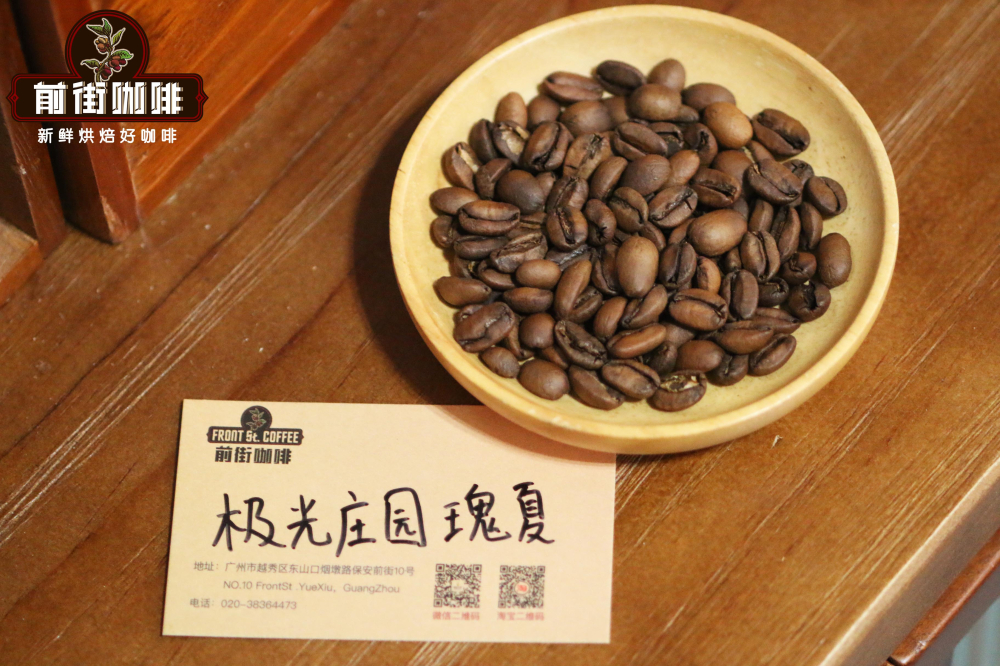
FrontStreet Coffee: Panama Aurora Estate Geisha
Region: Panama · Volcán Region
Estate: Aurora Estate
Altitude: 1500-1700 meters
Variety: Geisha
Processing Method: Natural
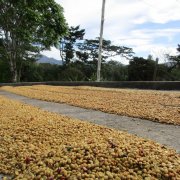
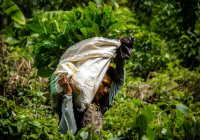
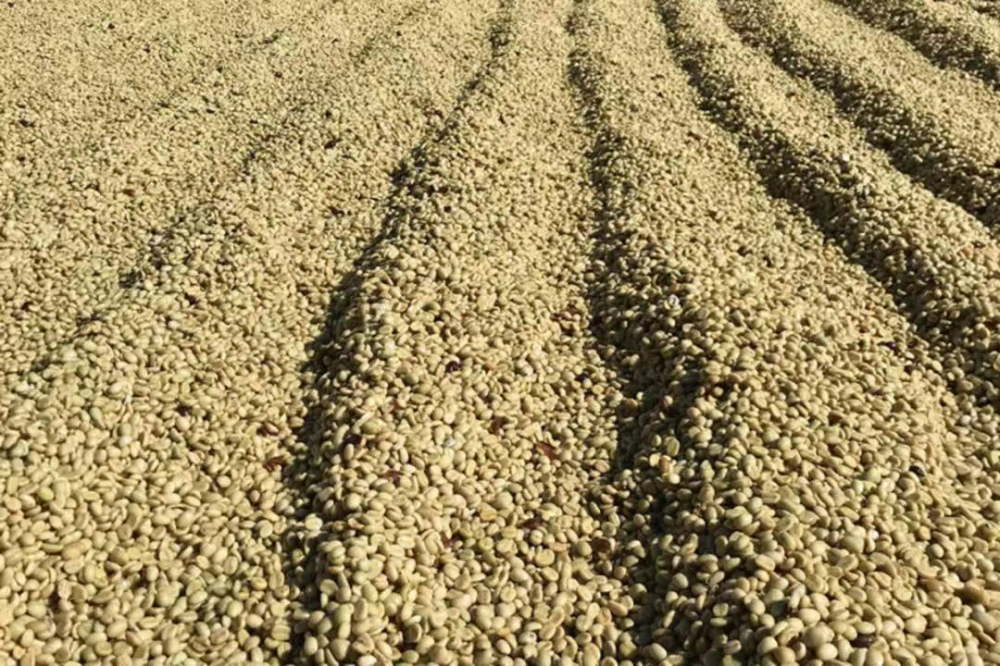
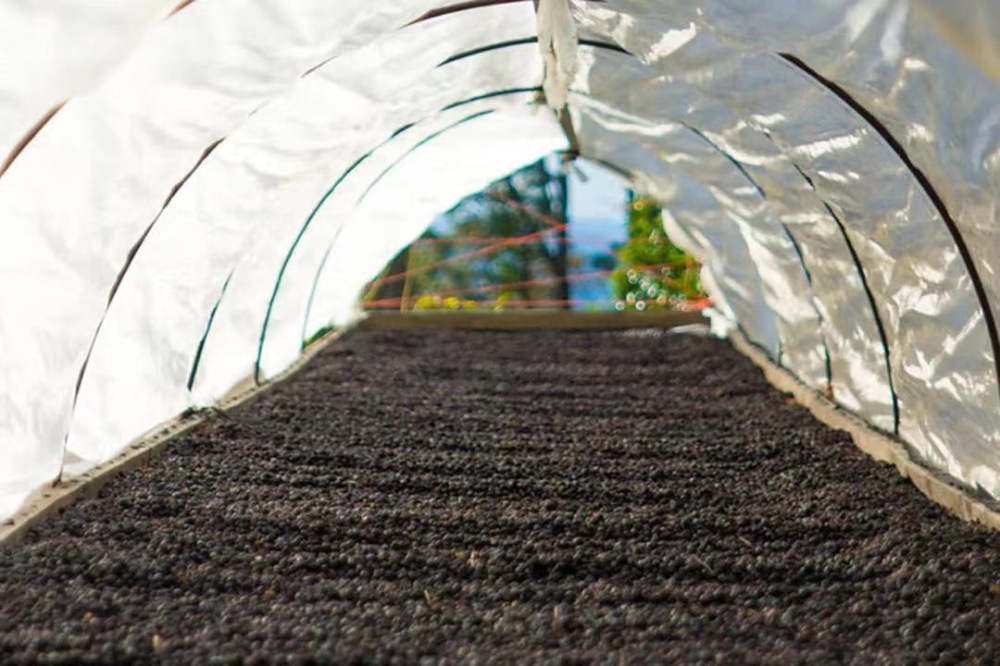
Aurora Estate is equally meticulous about producing natural coffee. When harvest arrives each year, the estate assigns workers to hand-pick cherries at optimal ripeness, which ensures higher sweetness in the fruit. The fresh fruit is then rushed to the nearby processing plant and spread evenly on raised drying beds under shade cloths. Depending on the weather, the whole process takes approximately 25-30 days. The dried parchment beans are then placed in a cellar designed to keep out moisture and left to rest for a period before hulling, which gives the coffee greater cleanliness.

Before the natural drying begins, workers pick perfectly ripe Geisha cherries and spread them evenly on the raised beds, paying close attention so that every fruit dries evenly. Because the coffee is dried as whole fruit, the sugars in the pulp give Aurora Estate's natural Geisha more pronounced sweetness and richer flavor.
For this reason FrontStreet Coffee used a medium roast, preserving the delicate fruit acidity while making the cup fuller and more aromatic. For pour-over, a medium-fine grind is recommended, the texture of granulated sugar with an 80% pass-through rate on the Chinese #20 standard sieve, brewed with 90-91°C water at a coffee-to-water ratio of 1:15.

Place the filter paper in a V60 dripper and pour water to wet it so that it sits better. Add the coffee and tap gently to level the bed. For the first pour, gently inject 30g of water to bloom, and let it bloom for 30 seconds. For the second pour, inject to about 125g of water, moving in a steady, even outward circle. Then wait for the coffee to drain, and when it has dropped halfway, make the final pour up to 225g. Wait for all the coffee to finish dripping; total extraction time is generally around 2 minutes.

Aurora Estate Natural Geisha flavor: The first sip brings a floral fragrance, followed by the intense fruit aroma of ripe strawberry, guava, and pineapple. The sweetness is particularly prominent. As the temperature drops slightly, berry-like sweet-and-sour notes of blueberry, cherry, and grape begin to emerge. After you swallow, an oolong tea-like aftertaste lingers. The mouthfeel is very smooth, and the clear, persistent finish leaves you eager for the next sip.
FrontStreet Coffee Recommendation
If Aurora Estate is the newcomer that keeps climbing the Best of Panama podium, the estate that made Geisha a global name is Esmeralda, and FrontStreet Coffee carries both of its grades. The Red Label, formally Esmeralda Special, is grown at 1,600-1,800 meters, must cup above 90 points for each lot, and is numbered individually, with every lot coming from a single small plot, so buyers can choose the parcel whose subtle flavor suits them best. The Green Label, formally Private Collection, blends lots from several plots to express the estate's signature high-altitude Geisha profile, and it offers notably good value.
For an easier entry into the variety, FrontStreet Coffee's Boquete Geisha is the one to try first. It is an entry-level Geisha that delivers the classic Boquete orange-blossom honey character at a friendly price, with the oolong-tea sensation and fine fruit sweet-and-sour balance that define a good Panama Geisha, and clearly separated layers.
To explore the variety's birthplace instead, FrontStreet Coffee's Granja Geisha comes from the Granja Gesha farm in Ethiopia's Yirgacheffe, one of the rare estates planted to a single variety. The coffee comes from the Granja processing station on the border of the Kochore and Granja Abaya areas, a station founded in 2014 and run by Mr. Israel Degefa, whose surrounding area covers as much as 700 hectares of coffee, much of it uncultivated, with fertile soil and shade trees throughout. Hand-picked ripe cherries are dried on raised beds for 14-20 days depending on the weather. Given a medium-light roast it shows bright citrus acidity, elegant ginger flower, the full sweetness of ripe fruit, and the fine, silky texture and refined finish that mark the Geisha variety.
Important Notice :
FrontStreet Coffee is a long-established specialty coffee roaster in Guangzhou China, selling freshly roasted beans from its own farm in Yunnan as well as dozens of carefully selected single-origin beans from around the world for both pour-over and espresso. The products deliver consistently excellent quality and great value, with shipping within 24 hours. Guangzhou's FrontStreet Coffee shop is recommended by many coffee lovers, and the beans are now available online at the Tmall 。
FrontStreet Coffee has moved to a new address:
FrontStreet Coffee Address: 315,Donghua East Road,GuangZhou
Tel:020 38364473
 Scan and follow the En Gafei WeChat official account. Please indicate that the reprint comes from "En Gafei".