Flavor Profile and Characteristics of Guatemala Antigua Flora De Jade Coffee Beans - How to Brew Guatemalan Coffee Perfectly
Every coffee-producing region in Guatemala has a flavor of its own, so much so that the president of Maruyama Coffee once said, "If I were only allowed to purchase coffee beans from one country, Guatemala would be my first choice." Why does FrontStreet Coffee keep exploring beans from around the world? Because FrontStreet Coffee believes that only by tasting and comparing more beans can we better understand the flavors of different regions and help coffee lovers deepen their understanding of the coffees they love.
A Brief History of Guatemalan Coffee
Coffee trees were introduced to Guatemala in 1750. By 1845, coffee had become an important economic crop in the region. By the late 19th century, German colonists had developed the local coffee industry. Today, most production takes place in the south of the country. The slopes of the Madre volcanic range provide ideal conditions for growing premium beans, and coffee thrives at high altitude there. Compared with other coffees, cuppers favor this one for its spicy flavor notes. The strictly hard bean coffee of the region is exceptionally good: full-bodied, delicious, and well balanced in acidity. Its giant beans have also made Guatemalan coffee particularly noteworthy. The coffee industry once brought the country prosperity and still holds a dominant position in the national economy. Unfortunately, domestic political conditions are not favorable to coffee growers. High yield is typically a sign of overall economic prosperity in a country.
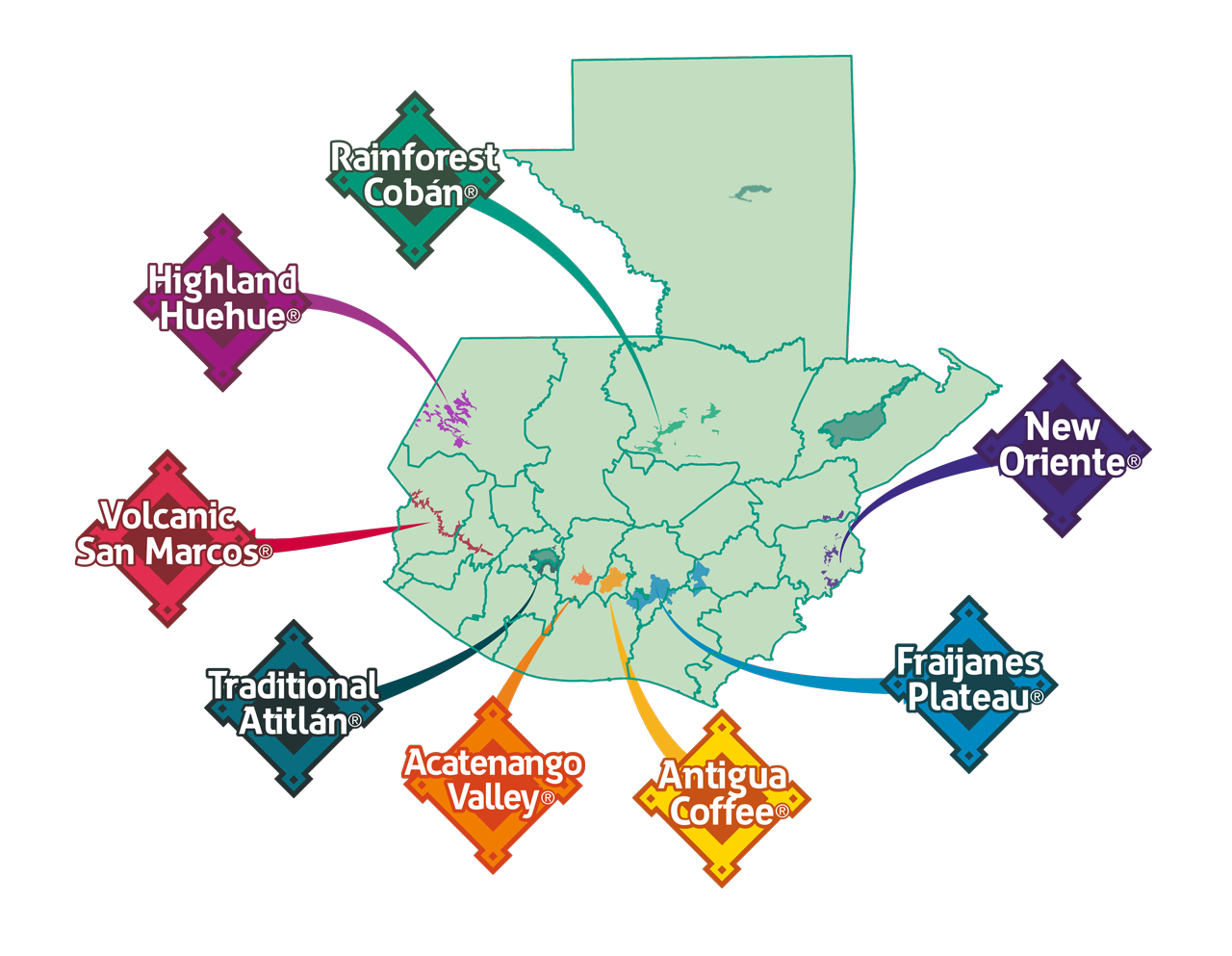
Guatemala's territory features many volcanic mountains and plateau terrain, producing high-quality Central American high-altitude strictly hard beans. Its main coffee regions include Antigua, Huehuetenango, Atitlan, Coban, Fraijanes, San Marcos, and Acatenango. All Guatemalan coffee produced in these regions is Arabica.
Guatemalan coffee has long been the economic lifeline of the country, with half the domestic workforce employed in agriculture. The growing regions enjoy tropical rainforests, volcanic geology, highland valleys, and proximity to both the Atlantic and Pacific oceans, which together create over 300 microclimates. That produces unique flavors from region to region. Among them, Antigua and Highland Huehue are the most famous. Coffee grown here, blessed with exceptional climate and terroir, is praised for its good fruit acidity and rich, layered flavors. Most Guatemalan coffee is graded by altitude and processed using the washed method.
The Antigua Coffee Region
Antigua is said to be the birthplace of Guatemalan coffee. It sits in a valley surrounded by three volcanoes, Agua, Fuego, and Acatenango, with Volcan Fuego still active. Its periodic eruptions have enriched the soil with minerals, and the area also retains extensive primary forest, which fills the soil with potassium ions. Together these give coffee plants in Antigua an endless supply of nutrients for healthy growth. The climate is mild year-round with stable humidity at 65%, making it one of the most suitable places for coffee. Unlike other regions that see extreme swings as the dry and rainy seasons alternate, Antigua lets coffee grow slowly in valleys above 1,500 meters. Because it is an enclosed valley, it also avoids severe soil erosion. All of these conditions allow Antigua to maintain consistently excellent quality.
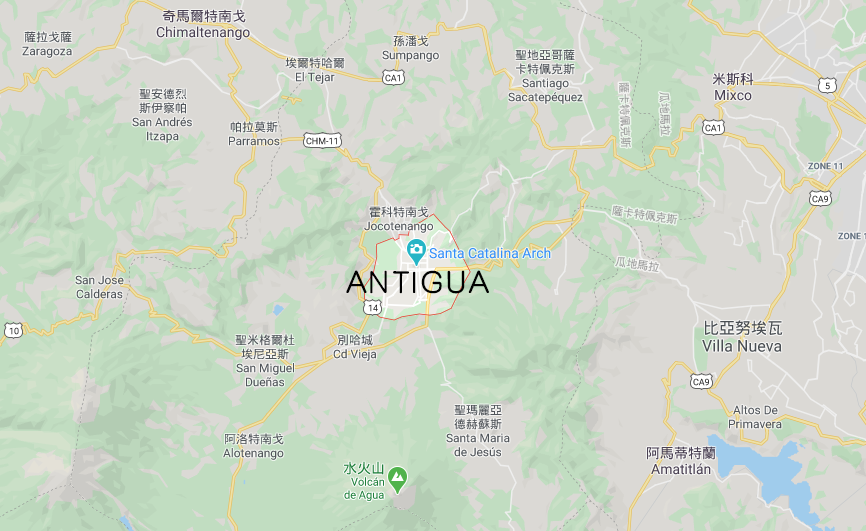
FrontStreet Coffee's Guatemala Antigua has volcanic soil, and the special soil characteristics give the coffee its distinctive flavor. The smoky notes are alluring and captivating, with richly varied acidity and excellent sweetness. The growing conditions are exceptional, producing a complex, delicate volcanic coffee with intense, rich aromas of ripe berries. The profile shows slight acidity, a smooth bitterness, and fascinating tobacco notes, making the taste even richer and more complex.
Altitude: 1,500~1,700 meters
Annual rainfall: 800~1,200 mm
Average temperature: 18~22°C
Relative humidity: 65%
Harvest season: January to mid-March
Soil: Volcanic pumice
Main drying method: Sun-dried
Shade tree types: Gravilea
Main terrain: Volcanic, valley areas
Coffee profile: Elegant and balanced aroma, with rich fragrance and extremely sweet taste
La Minita Coffee Cultivation
La Minita is known for excellent cultivation and processing techniques as well as extremely strict quality control. The company commissions Las Pastores, the largest wet processing mill in Antigua, to process its green beans to those standards, and names the coffee "Flor." Besides preserving the original regional flavors, this FrontStreet Coffee Guatemala Flor coffee carries rich floral and tea notes in the dry aroma. On tasting, lime acidity and berry flavors emerge and move toward a honeyed finish. Excellent cleanliness and rich layering are what define this Flor coffee.

La Minita does not use pesticides. Thanks to the estate's geography, the climate and altitude naturally limit pest populations, and the few pests present do not significantly affect the trees. As the rainy season ends, the cherries begin to ripen. Green fruit starts turning red, but cherry maturation is slow and uneven, unlike the rapid, uniform flowering. Harvesting therefore has to be handled more carefully, collecting only fully ripe deep red cherries.
The fruit from a single tree may need up to 5 separate pickings depending on ripeness. The estate runs soil tests twice a year to determine its fertilization needs, and La Minita is very cautious with anything that can increase yield, fertilizing about 3 times per year.
Applying trace elements such as zinc, boron, and copper also supplies extra nutrients and helps prevent disease. This kind of scientific cultivation management has created the excellent flavor of Flor coffee and maintained consistent quality for many years. Following La Minita's well-known gatekeeping procedures, the entire process from cultivation to packaging is strictly supervised. These procedures ensure that only the best quality leaves the Pastores mill, while the estate's standard operating procedures are tightly controlled.
Flor is a brand coffee under La Minita Company, with its growing region in Antigua, Guatemala. It is a highland surrounded by active volcanoes at 1,850 meters, making it the country's most award-winning and famous coffee region.
Coffee Varieties
The batch of Flor purchased by FrontStreet Coffee consists of Bourbon and Caturra. Bourbon is a natural mutation of Typica and ranks alongside it as an ancient, high-quality variety. The beans are slightly smaller and rounder than Typica. Caturra is a natural mutation of Bourbon, featuring fresh lemon-citrus acidity, with slightly less sweetness than Typica and Bourbon.

Caturra features lemon or citrus acidity, with sweetness inferior to Typica and Bourbon. That is because Caturra's sweetness depends on how often and how heavily the grower fertilizes. It has high productivity, but maintaining yield requires continuous fertilization and pruning, which results in short trees with many branches. Although yield increases, the two-year harvest cycle and higher cultivation costs still restrict production volume.
Processing Method
1. This batch of FrontStreet Coffee Guatemala Flor is washed. First, the harvested cherries are poured into large water tanks. Underdeveloped, inferior beans float to the surface while mature, full cherries sink. The defective fruit floating on top is then removed.
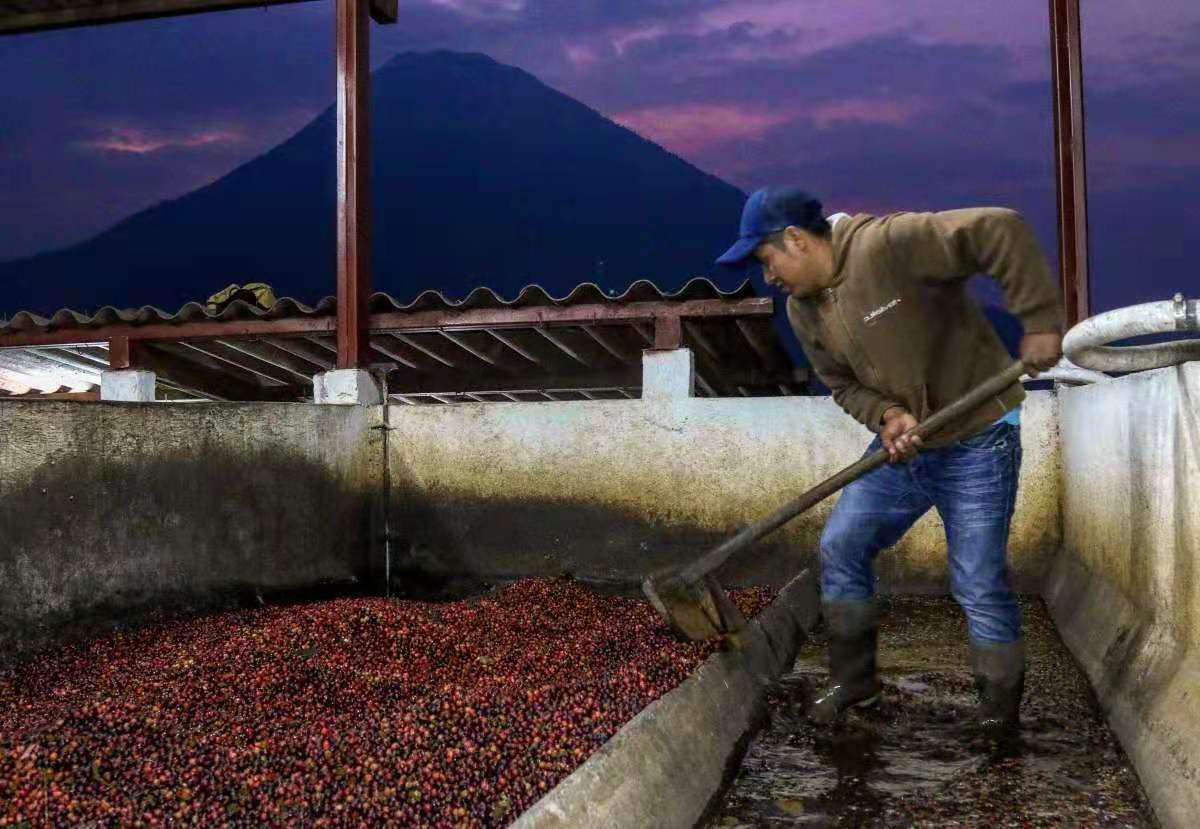
2. A pulper then removes the outer skin and pulp from the cherries. At this point the beans still carry a slippery layer of mucilage.
3. The beans with mucilage go into fermentation tanks for 16-36 hours, during which microorganisms break the mucilage down. Once fermentation is complete, large amounts of clean water are used to wash away any remaining mucilage.
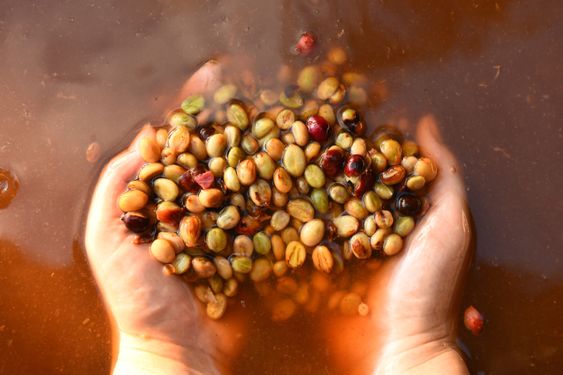
4. Finally, the washed beans are sun-dried to bring moisture content down to 10-14%. A huller then removes the parchment, completing the process.
Roast Analysis
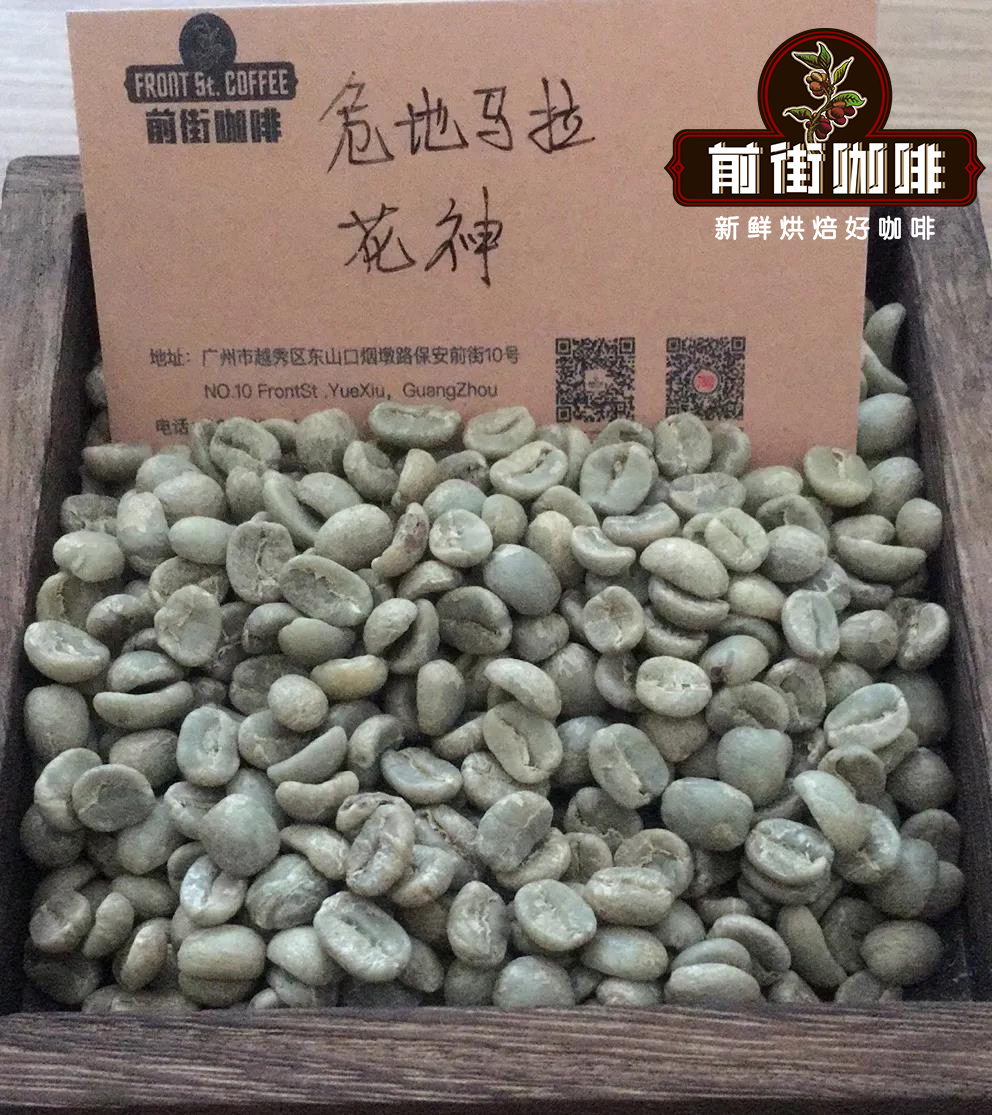
This batch of FrontStreet Coffee Guatemala Antigua Flor is round in shape and greenish-yellow in color, with fairly good uniformity and medium moisture content. FrontStreet Coffee's roast target is medium, which preserves bright acidity to show off the floral and fruit aromas while adding richness and balance.
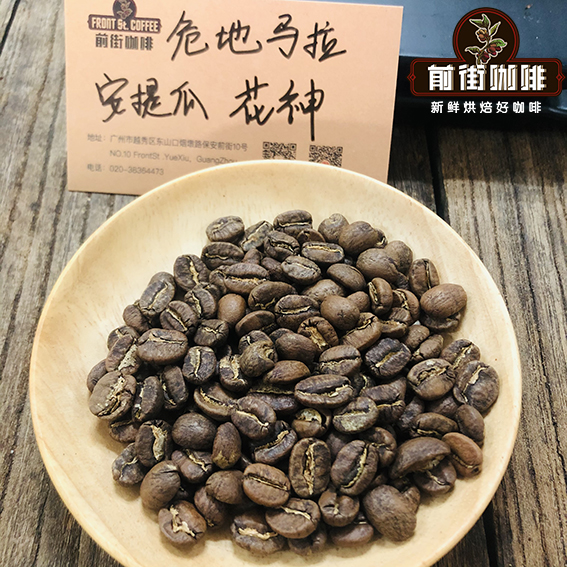
In the first batch, the drop temperature was relatively high, with an inlet temperature of 200°C and fairly high heat. During roasting it became clear that this Guatemalan batch has high altitude and harder beans. To preserve more acidic aromas, a fast temperature rise and an early first crack were adopted. Heat was reduced when the beans reached the yellowing point, once dehydration was complete, and again before first crack, to avoid scorching the surface. The beans were dropped 1 minute 50 seconds after first crack ended, shortening the caramelization reaction to preserve more of the floral and fruit aftertaste.
Brewing Parameters
Grind size: 80% passes through a #20 sieve
Dripper: V60
Dose: 15g
Water temperature: 90°C
Ratio: 1:15

Brewing Method
Step-by-step extraction: Use 30g of water for a 30-second bloom, then pour in small circles to 125g and pause. When the water level drops and is about to expose the coffee bed, continue pouring to 225g and stop. When the level drops and is about to expose the bed again, remove the dripper. Timing starts from the bloom, and total extraction time is 2 minutes.
Flavor Description
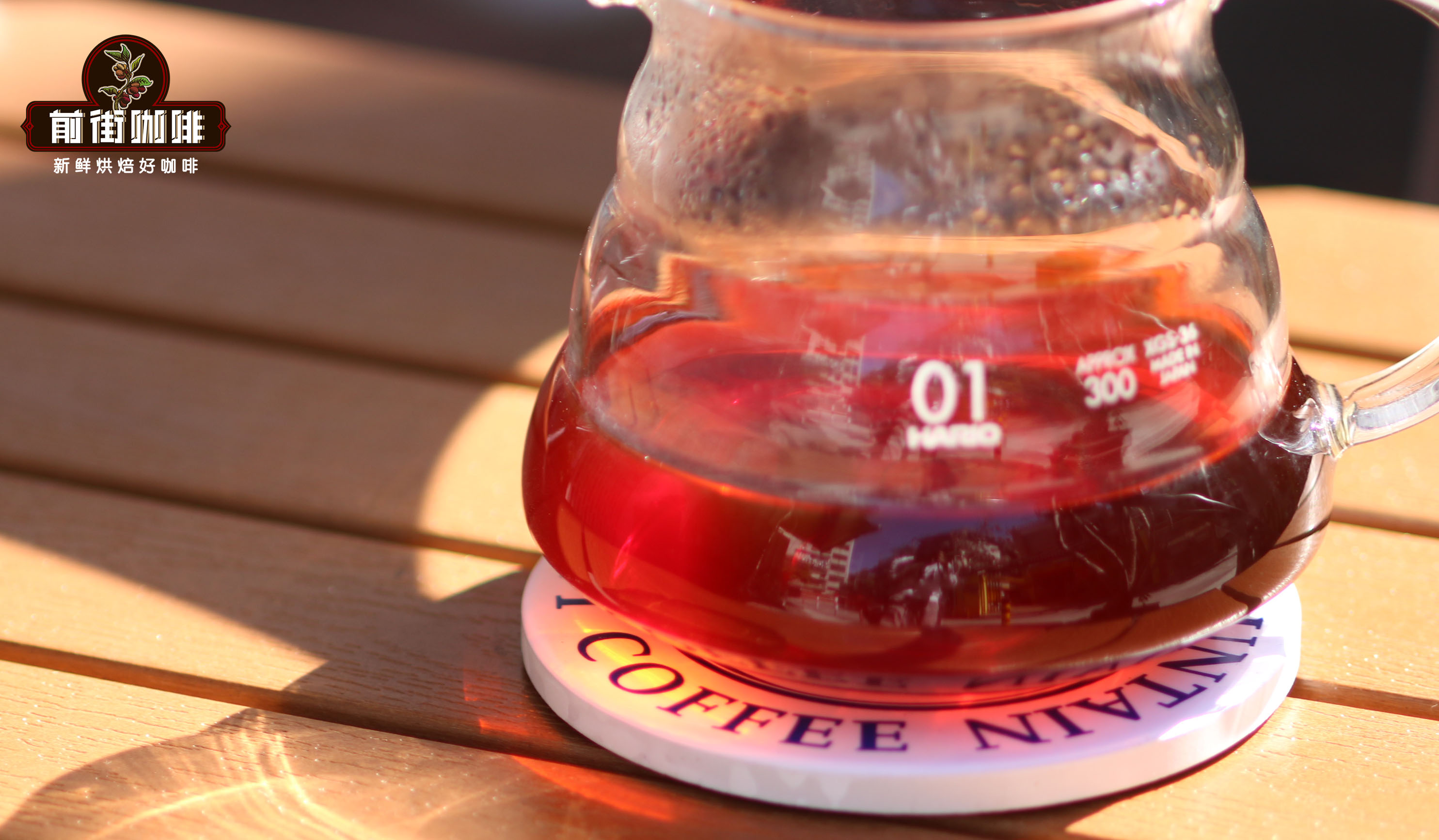
This FrontStreet Coffee Guatemala Antigua Flor washed coffee shows prominent citrus acidity with a juicy quality, rich floral notes, and pleasing sweetness, over a medium body, with slight caramel and smoky notes in the finish. Overall it is clean and gentle, with a smooth texture, and the flavor is balanced, lively, and layered.
FrontStreet Coffee Recommendation
Guatemala Antigua's citrus acidity and floral aroma belong to the same broad family as the lightly roasted, fruit-forward coffees many drinkers seek out, and FrontStreet Ethiopia Huakui is one of the boldest examples. Grown at high altitude in Ethiopia with excellent natural conditions, fertile soil, and carefully selected ripe cherries, it is roasted medium-light. The cup is dominated by tropical fruit aromas such as strawberry, passion fruit, jackfruit, and lychee, with obvious sweetness and very low bitterness. It is smooth and full of juice, and for anyone who normally avoids the bitterness of coffee it can completely change their expectations.
FrontStreet Ethiopia Kafa Forest is a notable choice for that same floral and citrus direction. It comes from Ethiopia's Kafa Forest, a UNESCO-recognized biosphere reserve and the birthplace of Arabica, where the growing area spans more than seven thousand square kilometers at 1,400 to 2,100 meters. Wild coffee trees grow under layered forest shade and frequent mist without any artificial planting, and the cup brings intense jasmine, citrus, and wild berry notes with a fine, vivid layering.
For a Kenyan interpretation of bright acidity, FrontStreet Kenya Cherry Tomato is a washed single origin from the Thika region, planted at 1,550-1,750 meters and made from the classic SL28 and SL34 varieties. It goes through Kenya's signature 72-hour double washed fermentation and is lightly roasted. The dry aroma alone shows concentrated dried cherry tomato and floral notes, and the cup brings clear cherry tomato and dark plum flavors with bright, sturdy acidity, a juicy body, a sweet mid-palate, and a clean, lingering finish of yellow sugar and light green tea.
Important Notice :
FrontStreet Coffee is a long-established specialty coffee roaster in Guangzhou China, selling freshly roasted beans from its own farm in Yunnan as well as dozens of carefully selected single-origin beans from around the world for both pour-over and espresso. The products deliver consistently excellent quality and great value, with shipping within 24 hours. Guangzhou's FrontStreet Coffee shop is recommended by many coffee lovers, and the beans are now available online at the Tmall 。
FrontStreet Coffee has moved to a new address:
FrontStreet Coffee Address: 315,Donghua East Road,GuangZhou
Tel:020 38364473
 Scan and follow the En Gafei WeChat official account. Please indicate that the reprint comes from "En Gafei".