Starbucks Sumatra Coffee Pattern Meaning: What Are the Characteristics and Stories of Sumatra Coffee Beans

For more premium coffee knowledge, follow FrontStreet Coffee.
The Unique Charm of Mandheling Coffee
Mandheling coffee has a charm that is hard to shake. Unlike the fruity sweetness of Ethiopian coffee or the floral, perfumed aroma of Geisha, Mandheling wins people over with a flavor all its own. It is remarkably mellow and was once considered the fullest-bodied coffee in the world: rich, syrupy, and low in acidity. Its main export markets are Germany and Japan, which says something about both its quality and its broad appeal.
Wet-Hulling Processing Method
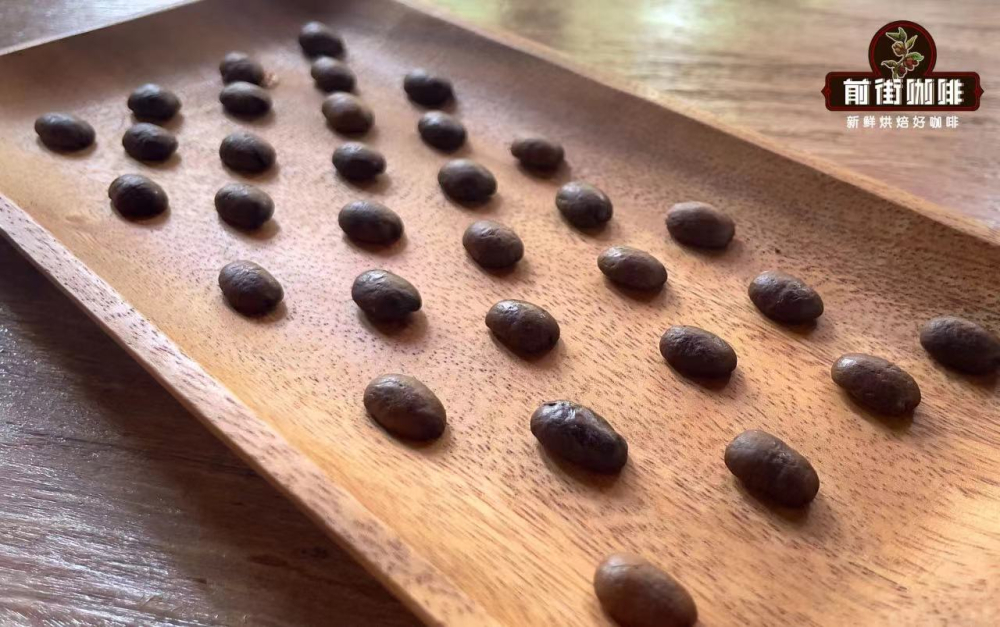
Wet-hulling is a fast way to process coffee. The cherry skin and pulp are stripped from the beans, followed by a brief fermentation and drying, after which the mucilage and parchment layer are removed and the beans continue drying until moisture drops to 12%. Mandheling beans processed this way show clear compression cracks at varying degrees, and their color tends toward a dark, bluish-green.
Two Premium Mandheling Varieties
FrontStreet Coffee's bean menu carries two Mandheling varieties, both from Sumatra's two most renowned growing regions. One is the "Golden Mandheling" from the Aceh region of northern Sumatra, near Lake Tawar; the other is the "Lintong Mandheling" cultivated and harvested around Lake Toba to the south. Locals call the pair "Two Lakes, Twin Mandhelings." Because so many smallholders use their own semi-washed methods, and because the soil here is iron-deficient, the beans from this region show a distinctive bluish tint in their fresh green state.

Lintong Mandheling: The Traditional Choice
Lintong Mandheling refers to Arabica coffee from the mountains around Lake Toba in North Sumatra Province. The lake lies north of Medan, the capital of Sumatra Island, and is a high-altitude freshwater lake with an average elevation of roughly 900 meters above sea level. Lintong Mandheling represents traditional Mandheling and belongs to the regular tier of the coffee. Processed by the wet-hulling method, it delivers Mandheling's signature herbal, earthy aroma. That's why FrontStreet Coffee added Lintong Mandheling to its daily bean series, letting curious drinkers experience the unmistakable aroma of Indonesian coffee.
Golden Mandheling: PWN's Exclusive Signature
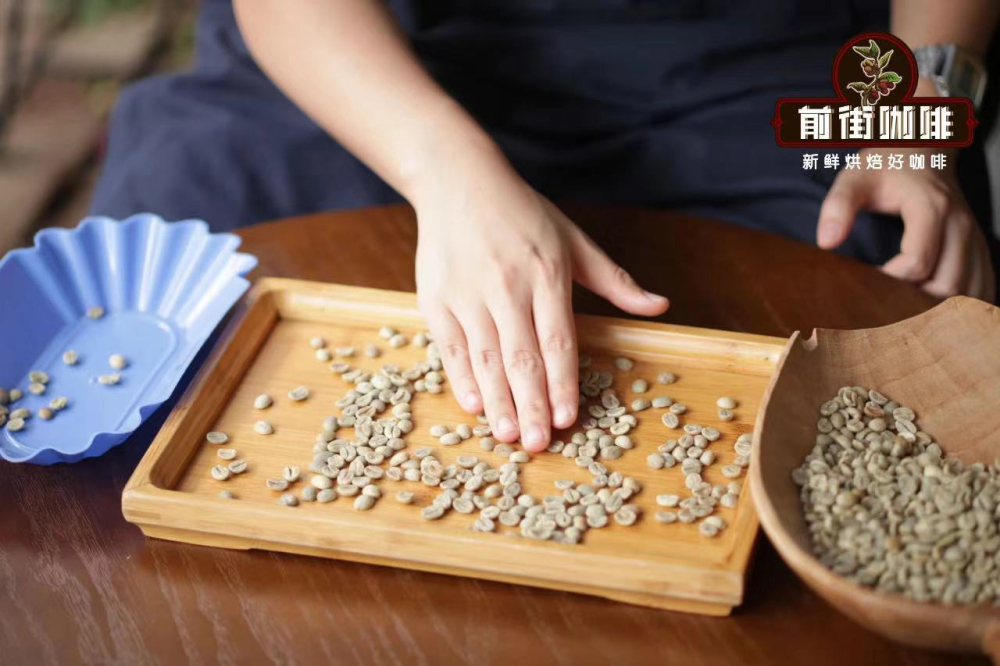
Golden Mandheling is the exclusive signature product of the PWN company. Because PWN registered the "Golden Mandheling" trademark early on, only Mandheling produced by PWN can legitimately carry that name. What sets Golden Mandheling apart is its repeated screening of green beans, which pushes overall quality extremely high. PWN buys Mandheling green beans of 18 mesh or larger, with fewer than 3 defective beans per 300g sample, meeting the G1 grade—the highest grade for Indonesian green beans. From there, the company applies one machine selection plus three manual defect selections, ensuring that the beans are uniform in color, shape, and size. The result is that PWN Golden Mandheling tastes cleaner and brighter, with more pronounced body and sweetness.
FrontStreet Coffee has tasted countless Mandheling varieties, including PWN Golden Mandheling, Lintong Mandheling, Tiger Mandheling, Aged Mandheling, and even Natural Process Mandheling. Of all of them, PWN Golden Mandheling is the one FrontStreet Coffee watches most closely.
PWN Golden Mandheling Profile
FrontStreet Coffee: Indonesia PWN Golden Mandheling Coffee Beans
Region: Sumatra, Indonesia
Grade: G1, Triple Hand-Sorted
Altitude: 1100m - 1600m
Variety: Ateng
Processing Method: Wet-Hulled
It's worth noting that "Golden Mandheling" has long been registered as a trademark by Indonesia's PWN company. In other words, only beans produced by PWN are authentically Golden Mandheling. FrontStreet Coffee has noticed that plenty of "Golden Mandheling" is sold on the market; some merchants, hoping to fetch a higher price, select 18-mesh-or-larger green beans out of G1 Mandheling and run three hand selections to make them look as close to PWN Golden Mandheling as possible.
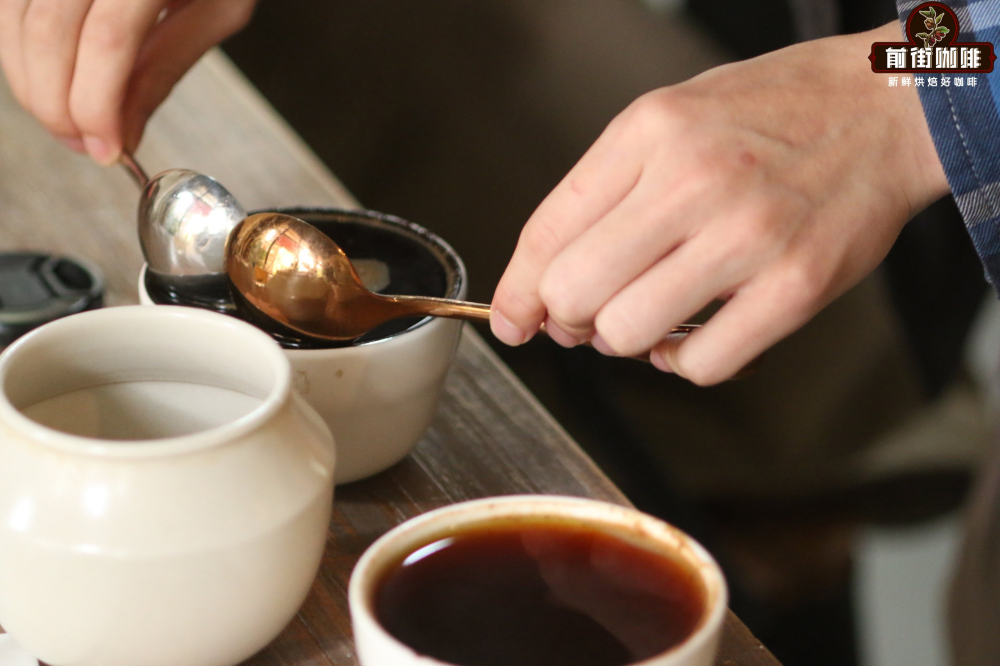
FrontStreet Coffee has also acquired several "Golden Mandheling" lots and cupped them side by side. Its baristas could pick out the PWN Golden Mandheling without hesitation. Beyond the herbal notes and nuttiness you expect from Mandheling, the genuine PWN lot offers a clean taste and a more prominent caramel sweetness that the other "Golden Mandheling" lots simply could not match.
The PWN Golden Mandheling that FrontStreet Coffee sources is harvested exclusively by hand-picking single fully ripe cherries, which secures quality from the very first selection. The cherries are processed using the semi-washed method, naturally sun-dried, and after hulling they undergo another round of drying refinement, two green bean cleaning procedures, and three manual selections. First the lot meets G1 grade, then the 18-mesh-or-larger size requirement, and finally three hand selections remove every defective bean, guaranteeing a clean cup. It is, in short, a strictly selected premium Golden Mandheling.
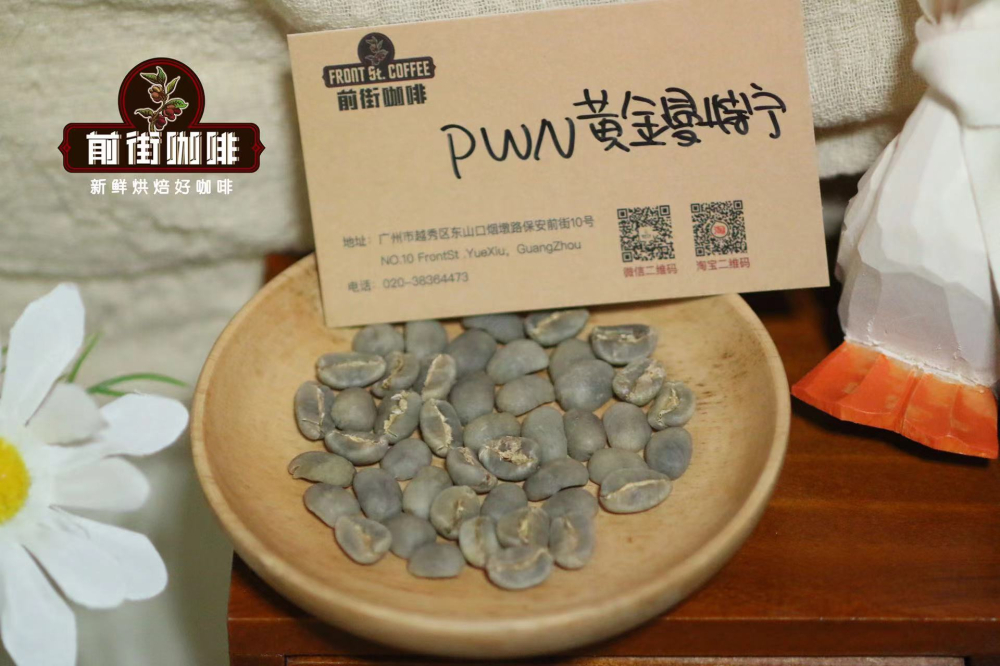
When FrontStreet Coffee's baristas cup PWN Golden Mandheling, they taste high-quality herbal notes, a caramel aftertaste, and a mellow, rich chocolate flavor. For coffee connoisseurs, it's a top choice.
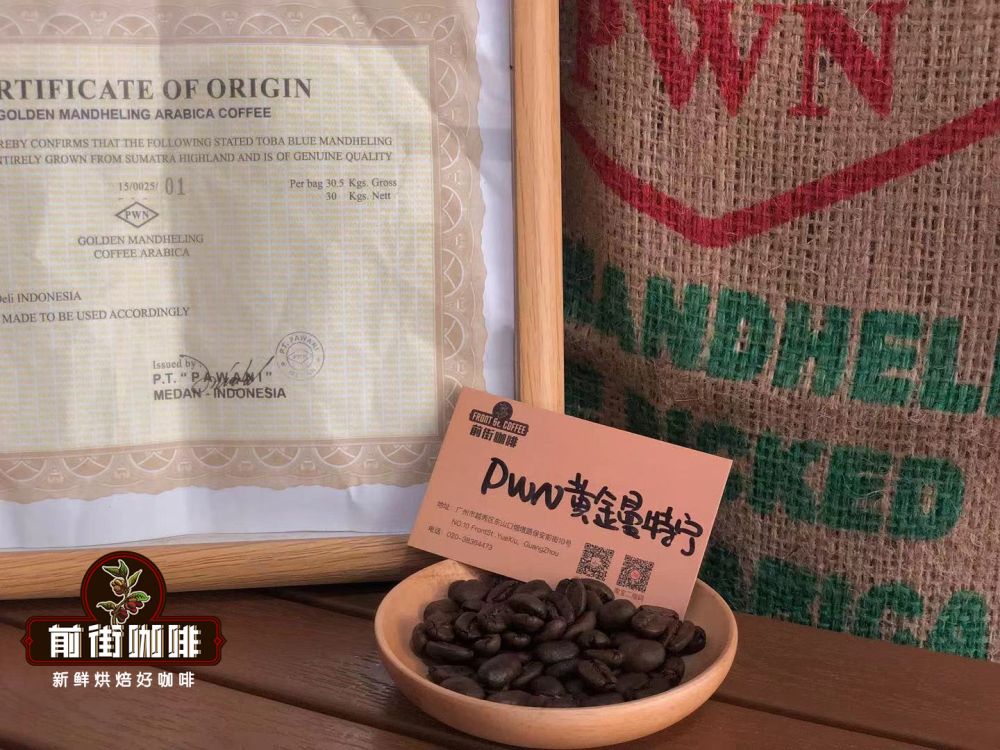
As the image above shows, the "PWN" mark on Golden Mandheling is the abbreviation of Indonesia's Pawani company, and its PWN Golden Mandheling beans are all registered in Indonesia. Some drinkers worry that the carefully chosen Golden Mandheling they bought might not be the real thing. In practice, you can ask the seller to show you the PWN Golden Mandheling green bean sacks and the relevant certificates for verification. The walls of FrontStreet Coffee's storefront display exactly those PWN Golden Mandheling sacks alongside their certificates.

Brewing Recommendations
Many people have the impression that Mandheling is "bitter," so they often ask FrontStreet Coffee's baristas how to brew Golden Mandheling so it tastes good. In fact, bitterness can be good or bad. Good bitterness fades shortly after it enters the mouth and leaves a lasting aroma behind. And since Mandheling is practically synonymous with full body, it is roasted to a darker degree.
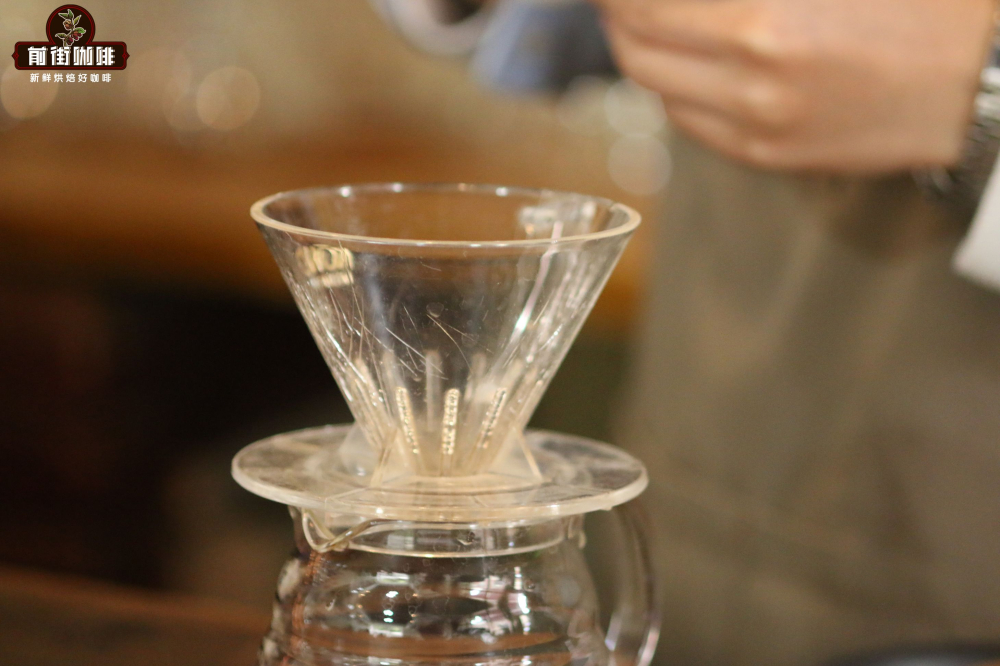
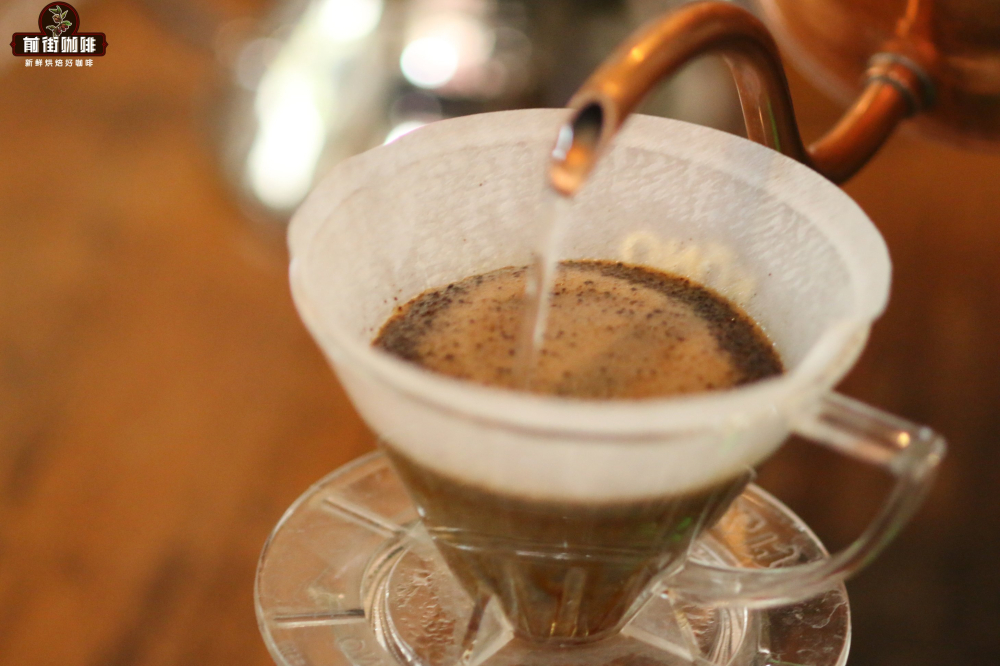
To bring out Golden Mandheling's high body, FrontStreet Coffee serves it from a Kono dripper. Kono was chosen for its unique conical design, which distributes water evenly and lets the coffee drip at a stable speed throughout the brew. The grooves on the lower half of the cone sit tightly against the filter, cutting down on sediment and improving airflow, and the result is a cup with concentrated flavor and greater body.
Optimal Brewing Parameters
For water temperature, FrontStreet Coffee brews Mandheling with 88°C water. If you brew at home, you'll have noticed that under otherwise identical conditions, hotter water yields a more bitter cup. Temperature is crucial to extraction because it governs how fast the flavors come out. "Extraction" is simply the process of flavor compounds dissolving from the grounds into your cup. Hotter water speeds up the release of oils, acids, and caffeine, and that can tip a brew into over-extraction and bitterness. Through testing, FrontStreet Coffee found that 88°C works best for Golden Mandheling.
Medium-dark roasted coffee doesn't take well to large water-to-coffee ratios, since that thins out the overall taste. FrontStreet Coffee suggests starting at 1:15, then adjusting to your own preference.
Brewing Recipe
Dripper: KONO Dripper
Water Temperature: 88°C
Coffee Amount: 15 grams
Water-to-Coffee Ratio: 1:15
Grind Size: 70% pass-through rate on China standard #20 sieve
Brewing Technique
Segmented extraction: use 30g of water for a 30-second bloom. When the water level reaches 125g, pause. When the bed is about to be exposed, pour again up to 225g and stop. When the bed is about to be exposed once more, lift off the dripper. (Timing begins at the bloom.) A V60 dripper finishes in 2'00", while the Kono runs slightly longer, at 2'10".
For more premium coffee knowledge, follow FrontStreet Coffee.
FrontStreet Coffee Recommendation
When you want the full Mandheling experience, start with FrontStreet Coffee's PWN Golden Mandheling from Sumatra. It is triple hand-sorted and graded G1, wet-hulled, and grown between 1100m and 1600m. Because PWN buys only beans of 18 mesh or larger and holds defects to fewer than 3 per 300g sample, the cup is unusually clean for a wet-hulled Sumatra, with pronounced body, caramel sweetness, and a smooth, lingering finish. FrontStreet Coffee keeps the PWN green bean sacks and certificates on display, so buyers can verify exactly what they are getting.
If you prefer the more traditional side of the style, FrontStreet Coffee's Lintong Mandheling—grown around Lake Toba at roughly 900 meters—is the earthy, herbal original: rich, low-acid, with notes of clove, wood, and spice, and a deep, lasting sweetness. Both are roasted medium-dark to soften acidity and spotlight that signature Mandheling heft.
To get the most from either lot, brew with 88°C water at a 1:15 ratio and 15 grams of coffee ground to a coarse-sugar consistency. A Kono dripper suits them especially well. Use a three-stage pour: 30 ml for the bloom, then 100 ml, then a gentle 95 ml down the center. That sequence draws out the thick, syrupy body along with the caramel, chocolate, and nutty notes. If you'd rather build a milk drink or a Dirty, FrontStreet's classic blend layers a medium-dark Mandheling over creamy Brazilian beans, adding butter, roasted chestnut, and caramel on top of the Mandheling's sandalwood, herbal, and spice character.
Important Notice :
FrontStreet Coffee is a long-established specialty coffee roaster in Guangzhou China, selling freshly roasted beans from its own farm in Yunnan as well as dozens of carefully selected single-origin beans from around the world for both pour-over and espresso. The products deliver consistently excellent quality and great value, with shipping within 24 hours. Guangzhou's FrontStreet Coffee shop is recommended by many coffee lovers, and the beans are now available online at the Tmall 。
FrontStreet Coffee has moved to a new address:
FrontStreet Coffee Address: 315,Donghua East Road,GuangZhou
Tel:020 38364473
 Scan and follow the En Gafei WeChat official account. Please indicate that the reprint comes from "En Gafei".