Which Brazilian Coffee Brands Taste the Best? Where Are Brazil's Four Major Coffee Growing Regions Located?

Brazil's sheer output has kept it at the top of the world coffee export table for more than a century. Step into almost any specialty cafe and you will find at least one Brazilian single origin on the shelf, or an espresso blend built around Brazilian beans. That kind of reach says a great deal about how deeply Brazil shapes the industry. In this article, FrontStreet Coffee shares what you need to know about Brazilian coffee.
The Story of Brazilian Coffee
The earliest recorded planting of coffee in Brazil goes back to the eighteenth century, when the country was still a Portuguese colony. A Portuguese captain named Francisco Palheta won the heart of the governor's wife in Cayenne, the capital of French Guiana, and carried coffee seeds from there back to Brazil.

Coffee adapted to the local environment with surprising ease and gradually spread from the north down to São Paulo in the southeast, where it began to be cultivated on a wide scale. By 1845 Brazilian coffee accounted for 45% of the world's supply and had become São Paulo's main source of income.
Brazilian Coffee Growing Regions
Data from the Brazilian Coffee Association shows that more than 14 states grow coffee, and that 7 of them together account for nearly 90% of total production. As the map makes clear, the west is dominated by Robusta, while the higher-quality Arabica is concentrated in the southeast. Here, FrontStreet Coffee introduces two representative regions: Minas Gerais (MINAS GERAIS), Brazil's largest coffee-producing state, and São Paulo (SÃO PAULO), its earliest coffee-growing region.

Minas Gerais alone produces close to half of the country's coffee each year, and it contains four major areas: Cerrado, Sul de Minas, Chapada de Minas, and Matas de Minas. Cerrado, which shares its name with the vast savanna, refers here to the Cerrado zone of western Minas Gerais. Its flat land and tightly concentrated harvest window make it ideal for large-scale, managed picking. Many exporters have set up farms there, and most of those plantations cover more than 10 hectares. The other three areas are hilly and steep, so family farmers there still rely mainly on small-scale manual production.
São Paulo state is home to the well-known Mogiana region. The name comes from the Mogiana Railroad Company, which laid its "coffee railway" in 1883; better transport followed, and coffee production in the area expanded quickly. Mogiana sits at 900-1100 meters with an average annual temperature of around 20°C. Its rolling hills give the coffee a pleasing sweetness and balance, and because of the terrain the farms still harvest by hand. The Queen Estate coffee on FrontStreet Coffee's menu comes from Mogiana.

Queen Estate (Fazenda Rainha) is one of Brazil's top-tier specialty estates. It took a win at the very first Brazil Cup of Excellence competition, and its record has only grown since; the awards of every size it has collected over the years are all down to the quality of the coffee it grows. FrontStreet Coffee's Brazilian Queen Estate coffee is selected from the Yellow Bourbon variety. Yellow Bourbon is a Bourbon mutation cultivated in Brazil whose recessive genes turn the cherries yellow. The beans are naturally sweet and clean, well balanced, and carry tropical fruit aromas.
Brazilian Coffee Green Bean Processing
Sitting in the tropics, Brazil harvests during its dry season, so the cherries can be dehydrated and dried in the sun. Traditional natural processing, however, was fairly rough: cherries were dumped straight onto muddy ground to dry, which often left the coffee tasting earthy. To raise quality, Brazil developed the pulped natural method in the 1990s, also known as semi-washed processing.

Here is how it works. After harvesting, the cherries are sorted to remove leaves, stones, and other debris, then poured into water tanks where the floating cherries, which signal insufficient ripeness, are skimmed off. Machines strip away the skin, the pulp, and part of the mucilage layer, followed by an hour of washing. Because the soak and fermentation are so brief, not all of the mucilage washes away; the parchment beans, still carrying some mucilage, are then spread out on drying patios.
Pulped natural saves water and cuts labor costs, and it also dries faster than traditional natural processing, which is why it is used so widely in Brazil. FrontStreet Coffee's Brazilian Cerrado daily coffee is pulped natural, and its multiple screening stages noticeably improve cleanliness in the cup. FrontStreet Coffee's other Queen Estate beans use a refined small-batch natural process. Large-scale natural production can over-ferment when the cherries are not turned often enough, producing off fermented flavors. Queen Estate dries its entire crop on African raised beds, which keeps earthy and fermented notes out of the cup and delivers sweetness that goes beyond conventional pulped natural.

Once processed, Brazilian green coffee is graded against three different standards: defects, screen size, and cupping quality. This is part of Brazil's complex grading system, which sets it apart from other producing countries. The grade is printed on the jute bags in the format: "Country + Defect Grade + Cupping Quality + Size + Cupping Flavor Grade + Origin."
For example, the Brazilian Cerrado green coffee that FrontStreet Coffee buys is marked "Brazil NY.2 SC – 17/18 FC Cerrado." That tells you the coffee comes from the Cerrado region of Brazil, that it is 17-18 screen size, that SC stands for Strictly Soft (a very smooth mouthfeel), that FC stands for Fine Cup (excellent cup quality), and that the defect grade is NY.2. Since NY.1 means completely defect-free beans and such lots cannot be supplied consistently, Brazil set NY.2 as the top grade in its defect classification.

Brazilian Coffee Flavor Characteristics
Classic Brazilian coffee rests on notes of nuts, cocoa, chocolate, and toast. That is why FrontStreet Coffee roasts both of its Brazilian beans to a medium-dark level, which plays up their rich, low-acidity character.
Some customers notice that the coffee they brew at home tastes different from what they had in the shop. Every bag of FrontStreet Coffee beans carries a brewing QR code on its label; scan it and you will get the brewing parameters to adjust from. Below, using Brazilian Queen Estate as the example, FrontStreet Coffee walks through how its baristas approach the brew.

FrontStreet Coffee's Queen Estate coffee is roasted medium-dark. Medium roasting visibly changes the bean's internal structure, making it more porous and raising how much water the grounds absorb. If the parameters are not adjusted, the cup tips into over-extraction and bitterness. To pull enough aroma without over-extracting, you have to slow the extraction rate, so FrontStreet Coffee uses a slightly lower water temperature and a coarser grind size to hold back the bitter large-molecule compounds.
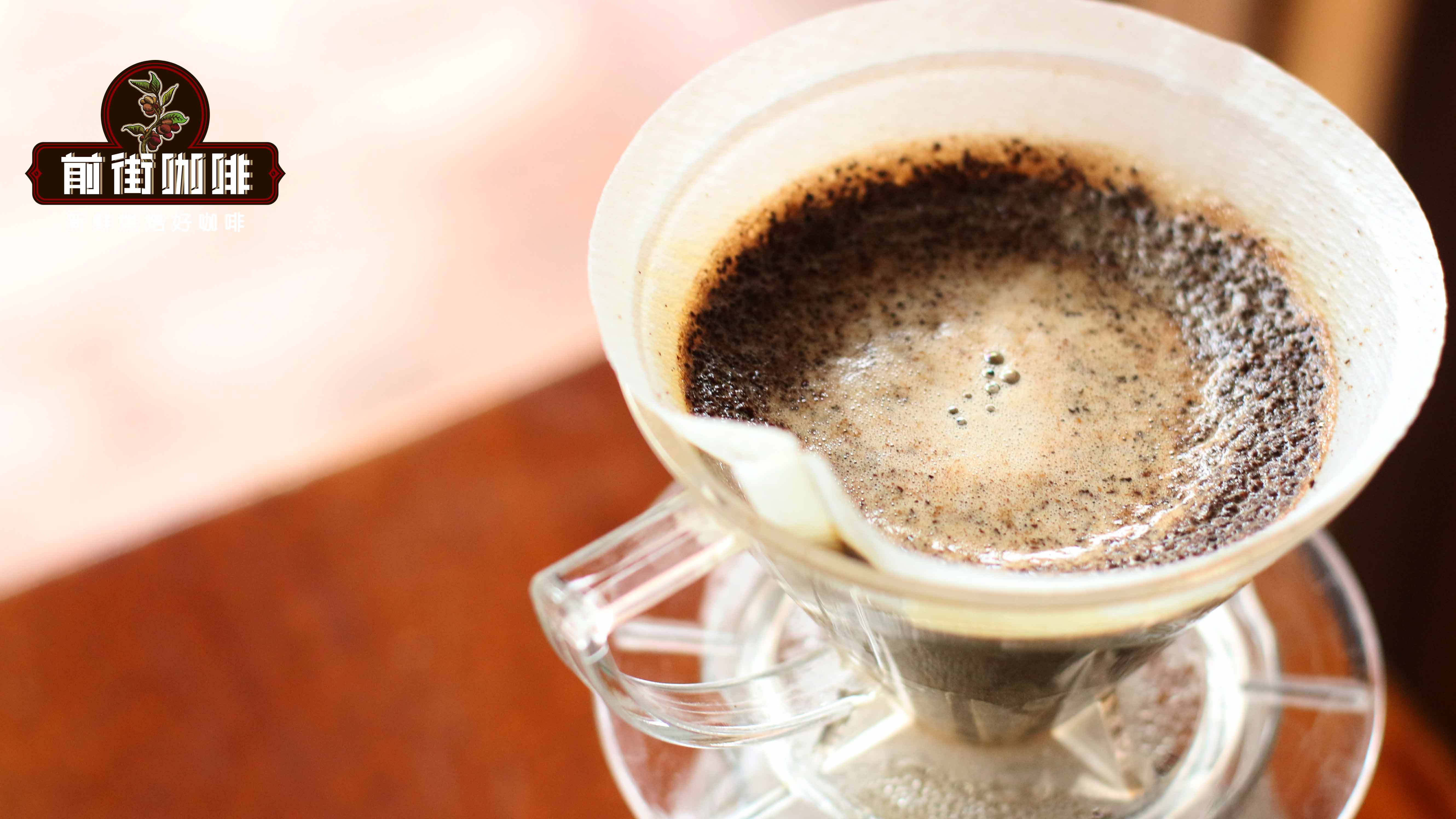
FrontStreet Coffee's baristas consistently reach for the KONO dripper when they want to draw out body. The KONO's only exhaust area is the quarter-rib section. Once the water level rises above the ribs, the volume in the dripper keeps building and creates pressure through the weight of the water itself. Because the outlet is relatively small, the contact time between coffee particles and water is stretched out. As the water flows through, it dissolves soluble material more effectively, which is what intensifies the coffee's rich, full-bodied feel.

Pour-over parameters: 87-88°C water, medium grind (70% pass-through on a China-standard #20 sieve), 15g of coffee, 1:15 powder-to-water ratio, three-stage pour.
Wet the bed with twice the coffee's weight in water, let it form a dome, and bloom for 30 seconds. Then use a thin stream, circling from the inside out, to pour up to 125g, and pause. When the bed has dropped to half the height of the dripper, continue with the same fine stream to pour the third stage up to 225g. Remove the dripper once all the liquid has filtered through, about 2 minutes in total. Finally, swirl the server to mix the coffee evenly before you drink.

Poured over, the Brazilian Queen Estate is rich and full-bodied with a clean finish. The flavors shift as the cup cools, showing real layered complexity. Nut and caramel aromas lead into chocolate, nut, and caramel on the palate. The sugarcane sweetness is genuinely pleasant, and the balance is high.
FrontStreet Coffee Recommendation
If you simply want a first taste of what Brazil can do, start with FrontStreet Coffee's Cerrado Red Bourbon, a classic pulped-natural single origin. Cerrado is a well-known region for high-quality beans, and this one is the familiar South American Red Bourbon: medium roasted, it gives you creamy peanut, toasted bread, caramel, and hazelnut aromas with a round body, little acidity, and a faint bitter edge. It works as a pour-over, and it also performs in a moka pot, as an espresso SOE, in a siphon, or in a French press.
For something rarer, FrontStreet Coffee's Queen Estate comes from Mogiana, close to Sul de Minas, where the fertile red volcanic soil lets the fruit absorb plenty of nutrients and build a full aroma. It is the uncommon Yellow Bourbon, mutated from Red Bourbon, and it delivers a cleaner fruit character than most Brazilian beans — a sugarcane clarity you will not find elsewhere, alongside fruit and chocolate. Try it as a pour-over, in a moka pot, or on a home espresso machine.
Brazilian beans also anchor FrontStreet Coffee's espresso blends. Low acidity, balance, and an approachable price make Brazil the first choice for many specialty recipes: the crema-rich Classic Blend, the nutty Premium Blend, the balanced Black Cocoa Blend recommended by many baristas, and FrontStreet Coffee's Commercial Blend built for cafes all contain Brazilian coffee. Brazil adds chocolate and cream aromas along with a soft sweet-sour-bitter profile, and that balance helps keep extraction stable.
Important Notice :
FrontStreet Coffee is a long-established specialty coffee roaster in Guangzhou China, selling freshly roasted beans from its own farm in Yunnan as well as dozens of carefully selected single-origin beans from around the world for both pour-over and espresso. The products deliver consistently excellent quality and great value, with shipping within 24 hours. Guangzhou's FrontStreet Coffee shop is recommended by many coffee lovers, and the beans are now available online at the Tmall 。
FrontStreet Coffee has moved to a new address:
FrontStreet Coffee Address: 315,Donghua East Road,GuangZhou
Tel:020 38364473
 Scan and follow the En Gafei WeChat official account. Please indicate that the reprint comes from "En Gafei".