Brazil Red Yellow Bourbon Coffee Bean Variety Origin Flavor Profile Characteristics How to Brew Cerrado Pour-Over Coffee for Great Taste

Tastes differ, and so do the beans people reach for. Some love the delicate florals and clean, refined fruit of FrontStreet Coffee's Yirgacheffe; some chase the smoky character of FrontStreet Coffee's Guatemala; others enjoy the mouth-filling cherry-tomato juiciness of FrontStreet Coffee's Kenya; and plenty are devoted to the perfectly balanced sweet, sour, and bitter notes of FrontStreet Coffee's Blue Mountain.
Although single-origin coffee today leans heavily toward florals and fruit, there will always be traditionalists who want low acidity, richness, and nutty flavors. FrontStreet Coffee's physical stores know these customers well — the ones who say "no acidity at all, and even something as bold as Mandheling won't do." Whenever that happens, FrontStreet Coffee's baristas reach for Brazilian beans. But for a roaster that collects coffee regions the way others collect stamps, one Brazilian bean was never going to be enough.
Brazil's Premium Coffee Regions

Among the Brazilian beans FrontStreet Coffee carries, besides the Yellow Bourbon from Queen's Estate Farm, Brazil also appears in the daily coffee bean and drip bag series — proof that as a producing country, Brazil is indispensable to classic coffee flavors.
Anyone who has read up on coffee knows Brazil is not actually the ideal place to grow it. The soil is good and the climate humid, but the altitude is modest — a fatal flaw in coffee production. Such conditions cannot compete with the world's elite growing regions, yet everything has its trade-offs: this same natural environment is a major reason Brazilian coffee tastes so balanced.

After a medium-dark roast, that balanced, nutty character becomes Brazil's greatest asset: no standout strengths, but no obvious flaws either. Mild and smooth, low in acidity, moderate in body, and quietly sweet — all these moderate flavors blend into a pleasant challenge for the taste buds to separate. That is exactly what loyal Brazilian coffee fans adore. Ordinary and gentle, it pairs with everything; even in espresso, it never loses itself against milk but merges into it perfectly. It is why so many espresso blends on the market today count Brazilian beans as a core component.
Brazil's Rich Coffee History
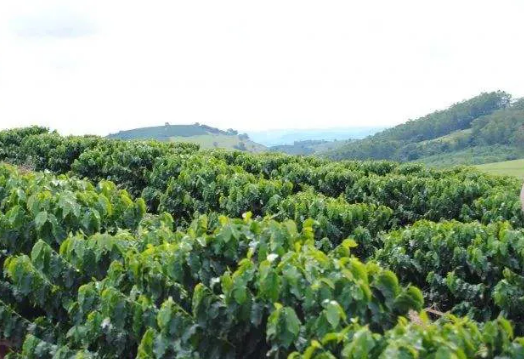
Brazil's coffee history is long and storied. According to FrontStreet Coffee's research, coffee arrived from French Guiana in 1729. Today Brazil is the world's largest coffee-producing country, and generations of accumulated experience — intensive cultivation, changing processing methods, improved planting techniques — have steadily raised both quality and output.
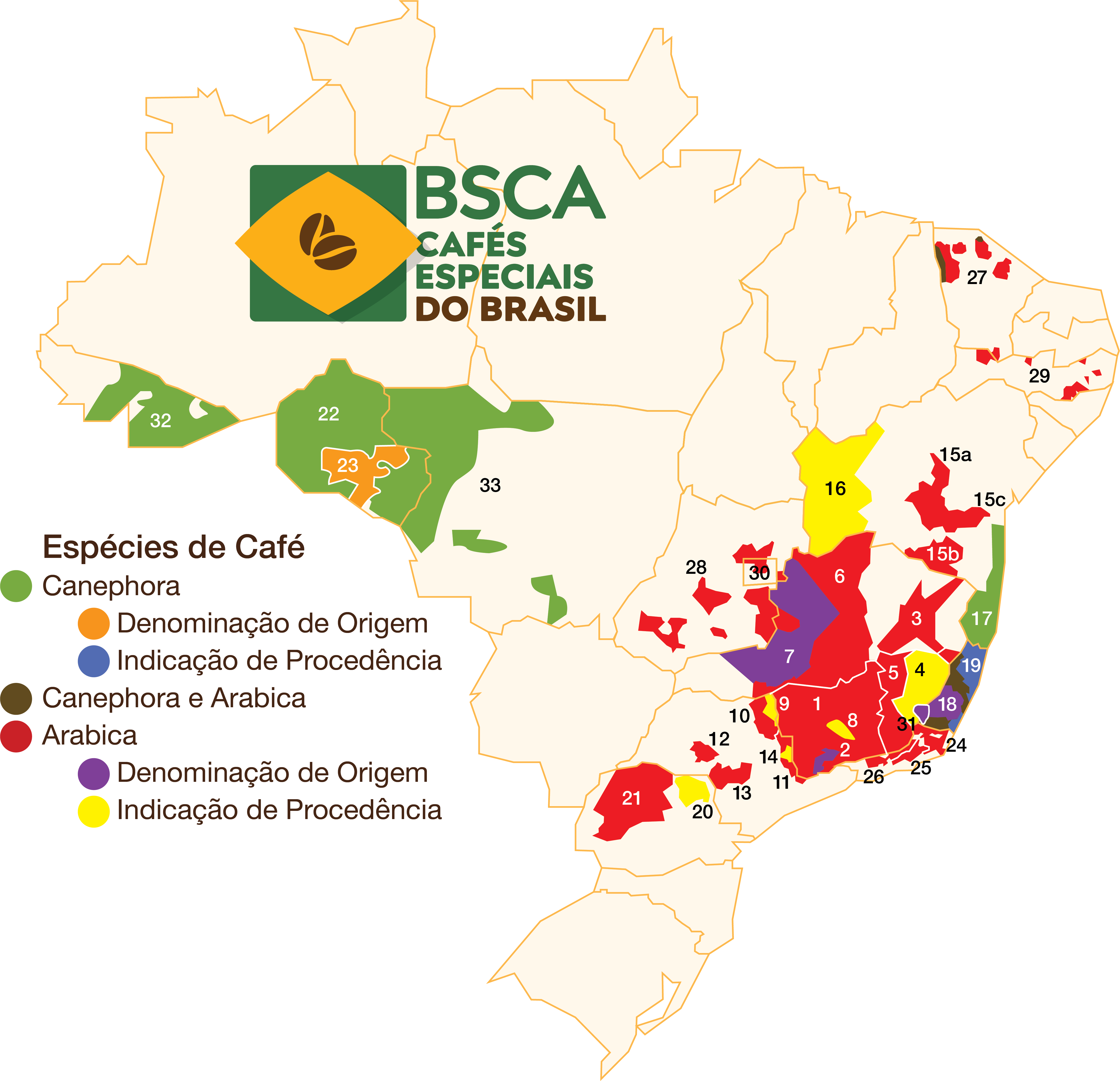
For all its vast territory, Brazil's coffee growing is concentrated in four states: Minas Gerais, São Paulo, Bahia, and Espírito Santo, which together account for 90% of national exports. Santos and Mogiana, two familiar names, both come from São Paulo. Cerrado and Sul de Minas in Minas Gerais, sitting at higher altitudes, produce more specialty beans. Cerrado lies in the western part of Minas Gerais, a flat plateau with elevations ranging from 750m to 1200m.

Sul de Minas is hilly country at elevations of 700m-1200m and was Brazil's earliest coffee production area. With labor costs rising, most harvesting there is now done mechanically; it was also the first region to be commercially organized, which is why so many large exporters are headquartered there. Bahia in the north mainly produces washed Brazilian coffee, while the coastal state of Espírito Santo is the main export zone for Brazilian Robusta.
FrontStreet Coffee's Brazilian Selections
Take FrontStreet Coffee's Queen's Estate Farm coffee as an example. The green bean details for this lot are as follows:

FrontStreet Coffee Brazil Queen's Estate Farm Coffee Beans
Region: Mogiana region, São Paulo state, Brazil
Altitude: 1400-1950m
Variety: Yellow Bourbon
Processing: Natural processing
When the beans arrived, FrontStreet Coffee noticed how solid their texture was, with faint orange peel and spice aromas, and a relatively low moisture content that made them absorb heat quickly. The roaster set the entry temperature at 200°C and used high heat with a small airflow to speed up drying. After the drying phase, they dropped to medium airflow and medium heat so the beans could work through the Maillard reaction slowly, without being rushed, and finished the roast right as the first crack drew to a close.

FrontStreet Coffee also stocks generous quantities of affordable, good-value daily beans from Brazil's Cerrado region. Cerrado as a grassland covers 22% of Brazil's total area, deep in the country's interior — its Portuguese meaning is "closed place." It originated in Mato Grosso province in the southwest and stretches through central-western Minas to western Bahia. The Cerrado coffee region FrontStreet Coffee refers to is not that entire grassland, but the coffee-growing areas above 1000 meters in central-western Minas — the essence of the Cerrado, where high altitude and fertile soil make it possible to grow specialty beans that are sweet, full in body, and clean in flavor.
So how is FrontStreet Coffee's Brazilian Cerrado? In a word — excellent. Here is the green bean information for FrontStreet Coffee's Cerrado coffee:
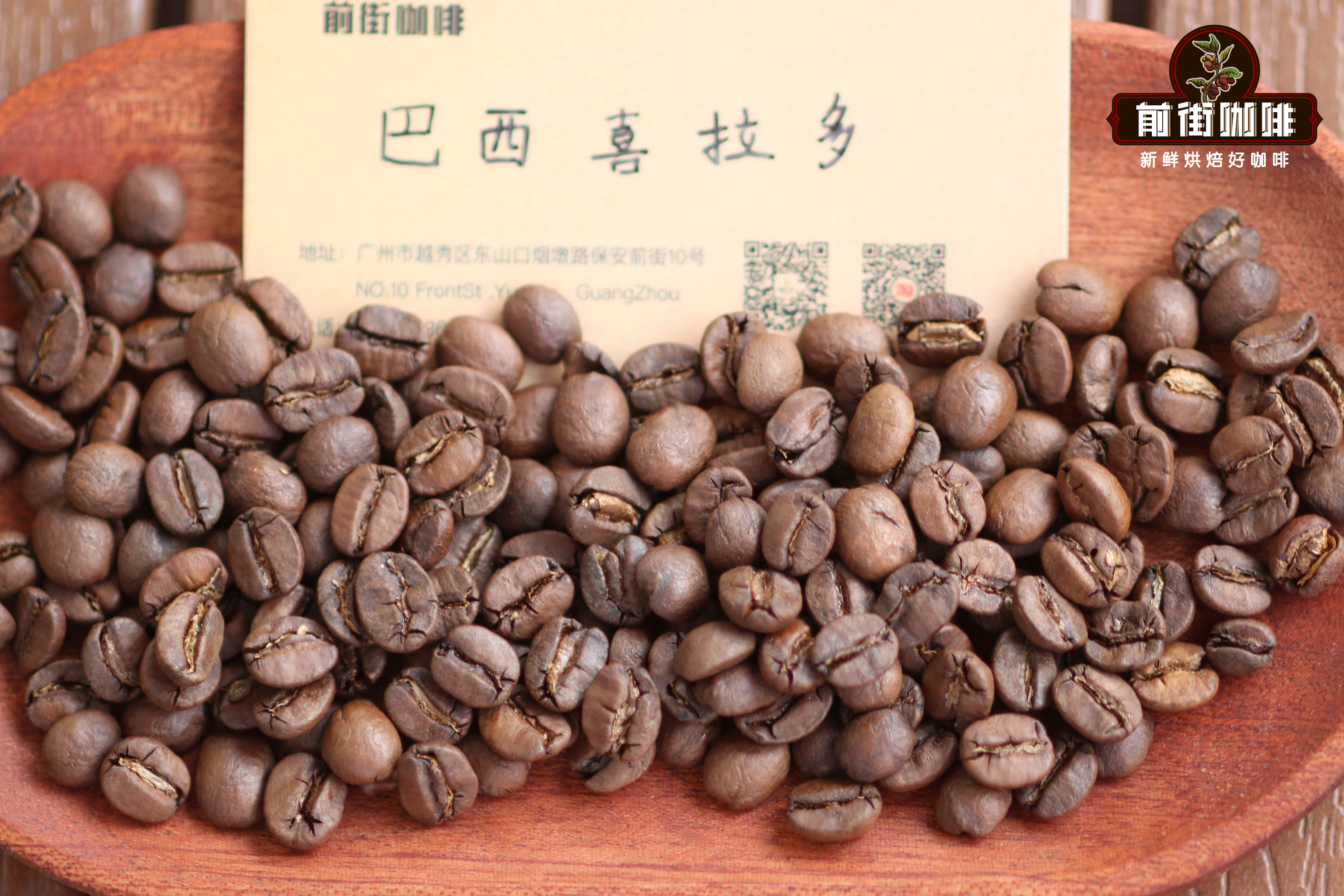
FrontStreet Coffee Brazil Red Bourbon Coffee Beans
Country: Brazil
Region: Cerrado region, Minas Gerais state
Altitude: 1000 meters
Variety: Red Bourbon
Processing: Semi-washed
As noted above, Brazilian beans are defined by their rich body, and to highlight that, FrontStreet Coffee roasts them medium. Because the green beans' moisture content varies from lot to lot, the roasting approach had to change too: compared with the Yellow Bourbon, FrontStreet Coffee extended the roast time for this coffee while lowering the entry temperature.
The Bourbon Varietal
Why did FrontStreet Coffee pick two beans from the Bourbon variety? Because Bourbon is Brazil's main variety. It was first cultivated on Réunion Island — known as Bourbon Island (Le Bourbon) before 1789 — and its arrival in Brazil owed much to the American Civil War, which sent demand for Brazilian coffee soaring and pushed Brazil to introduce higher-yielding varieties. Bourbon is a subspecies born from a Typica mutation, and alongside Typica it is one of the oldest coffee varieties still grown in Brazil. When ripe, its cherries turn a bright red; the color progression after flowering runs green > slightly yellow > slightly orange > mature red > darker ripe red, which is why some call it the [Red Bourbon variety]. In truth, Red Bourbon is simply the Bourbon we all know.

Bourbon grown at high altitude typically shows better aroma and brighter acidity, sometimes even wine-like notes. Put simply, Bourbon is a variety within the Arabica species that generally bears red fruit — Red Bourbon. Beyond that there are also Yellow Bourbon and Orange Bourbon. Yellow Bourbon yields less but delivers better quality in the cup.
Brewing Recommendations

Since both coffees are roasted relatively dark, FrontStreet Coffee brews them in a KONO dripper to bring out their richness. The KONO's strength is its steeping function: it extracts more coffee solids and thickens the mouthfeel. With few ribs, all located near the bottom, the filter paper sits flush against the dripper wall, restricting airflow — water flows more slowly, and the coffee and water stay in contact longer.
FrontStreet Coffee brews in segments. The bloom uses twice the coffee's weight in water — 30 grams of water for a 30-second bloom. Then pour in small circles up to 125 grams and stop. Once the water level drops and the coffee bed is about to be exposed, pour the rest up to 225 grams and stop there. Total extraction time: 2 minutes.

Brewed the same way, the two coffees are quite different in the cup. Queen's Estate Farm comes out sweet and clean, and its natural processing keeps the acidity gently bright and well folded into the sweetness, with tropical fruit aromas on some lots — the overflowing fragrance during brewing alone is a delight. Expect fresh sugarcane-juice sweetness, black tea, smooth mellow fruit sweetness, clear nutty notes, balanced gentle acidity, and a faint clean bitterness carrying rich chocolate and nut flavors, all wrapped in a bright, smooth, delicate mouthfeel. The Cerrado, by contrast, opens with obvious sweetness and a subtle lemon note, packs plenty of nut flavor, and finishes with distinct dark chocolate — rounded from start to end.
FrontStreet Coffee Recommendation
If the nutty, low-acid comfort of these Brazils wins you over, keep a bag of the FrontStreet Washed Yirgacheffe daily bean on hand for when you want the opposite pole: white jasmine florals, bright citrus and lemon acidity, and a clean tea-like finish at an everyday price. Brew it V60-style with 15g of coffee at a 1:15 ratio, water at 90-91°C, ground to an EK43s grind setting of 10 — about the texture of fine granulated sugar, with 80% of the grounds passing a #20 screen. Pour 30 grams of water for a 30-second bloom, then build up to around 225 grams for a total extraction of roughly 2 minutes. For a fruitier option, the FrontStreet Natural Red Cherry offers citrus acidity, berry-juice body, honeyed sweetness, and a creamy smoothness.
Important Notice :
FrontStreet Coffee is a long-established specialty coffee roaster in Guangzhou China, selling freshly roasted beans from its own farm in Yunnan as well as dozens of carefully selected single-origin beans from around the world for both pour-over and espresso. The products deliver consistently excellent quality and great value, with shipping within 24 hours. Guangzhou's FrontStreet Coffee shop is recommended by many coffee lovers, and the beans are now available online at the Tmall 。
FrontStreet Coffee has moved to a new address:
FrontStreet Coffee Address: 315,Donghua East Road,GuangZhou
Tel:020 38364473
 Scan and follow the En Gafei WeChat official account. Please indicate that the reprint comes from "En Gafei".
![[Yunnan Coffee Origin Program] Why Does FrontStreet Coffee Choose This Most Difficult Path?](https://en.gafei.com/uploads/allimg/180624/3-1P624213J11I.jpg)