
The Relationship Between Pour-Over Coffee Grind Size and Extraction Time - What Mesh Size Should Your Coffee Sieve Have?
Understanding Coffee Grind Size and Extraction Time for Pour-Over Coffee
To brew a delicious cup by pour-over, it pays to understand the key parameters involved. Beans of different flavor profiles call for different drippers and grind consistencies. In this article, FrontStreet Coffee explains the relationship between pour-over grind size and extraction time, and how to settle on the right grind for pour-over.
The Relationship Between Grind Size and Extraction Time
The consistency of the grind has a major effect on extraction. The coarser the grind, the larger the gaps between particles, which naturally lets water flow faster, shortens the extraction time, and lowers the extraction yield.
Conversely, if the grind is too fine, the extraction yield rises, boosting the coffee's concentration but producing bitter, astringent flavors.
On top of that, light-roasted beans are harder in texture and release their soluble compounds less readily, so they suit a finer grind. Dark-roasted beans, by contrast, are better with a coarser grind, since too fine a grind easily turns bitter.
Common Coffee Grind Sizes
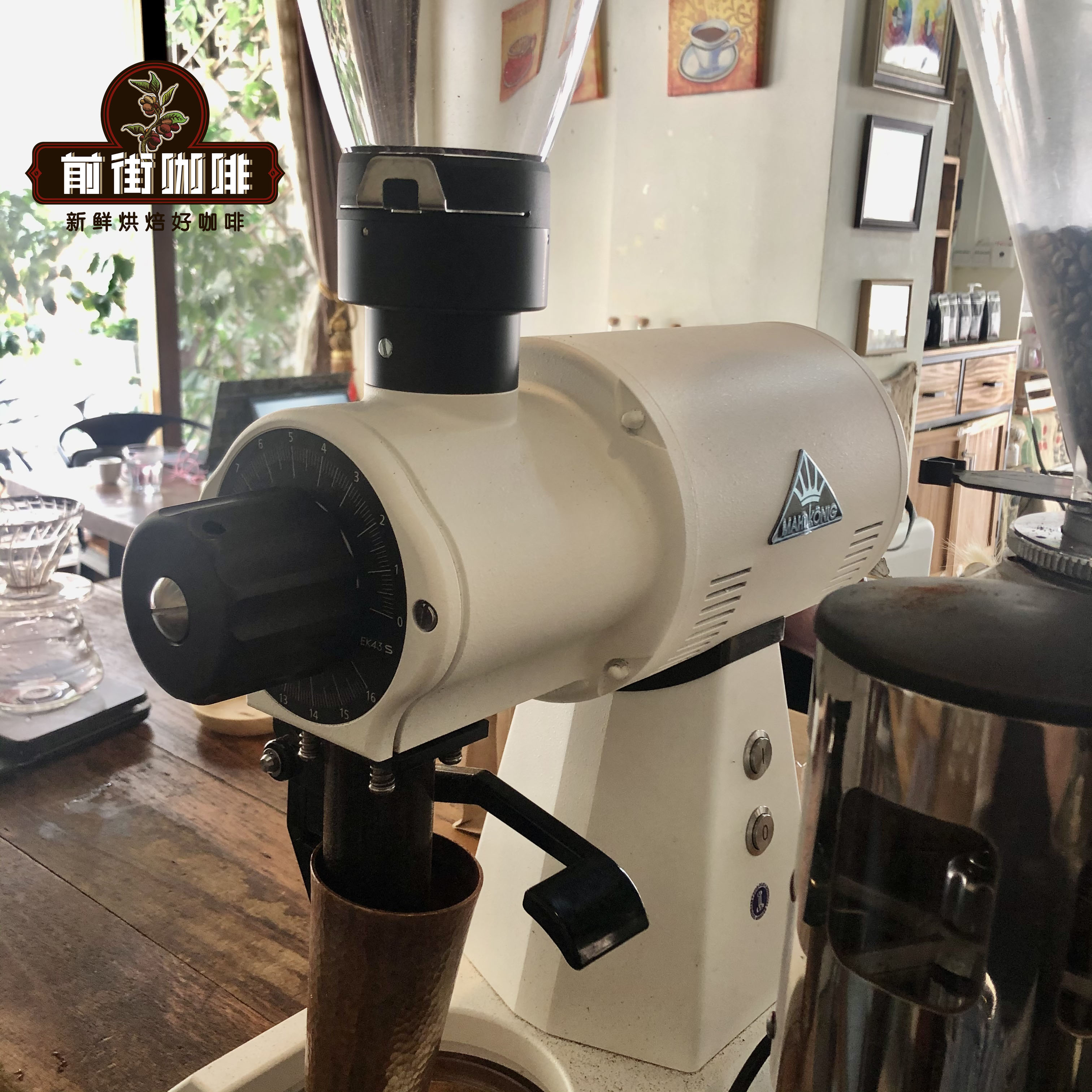
According to FrontStreet Coffee's research, the grinders on the market fall roughly into three categories by grinding range: one type is built for the espresso range, another cannot handle espresso but covers most other grind settings, and the last type spans every brewing method.
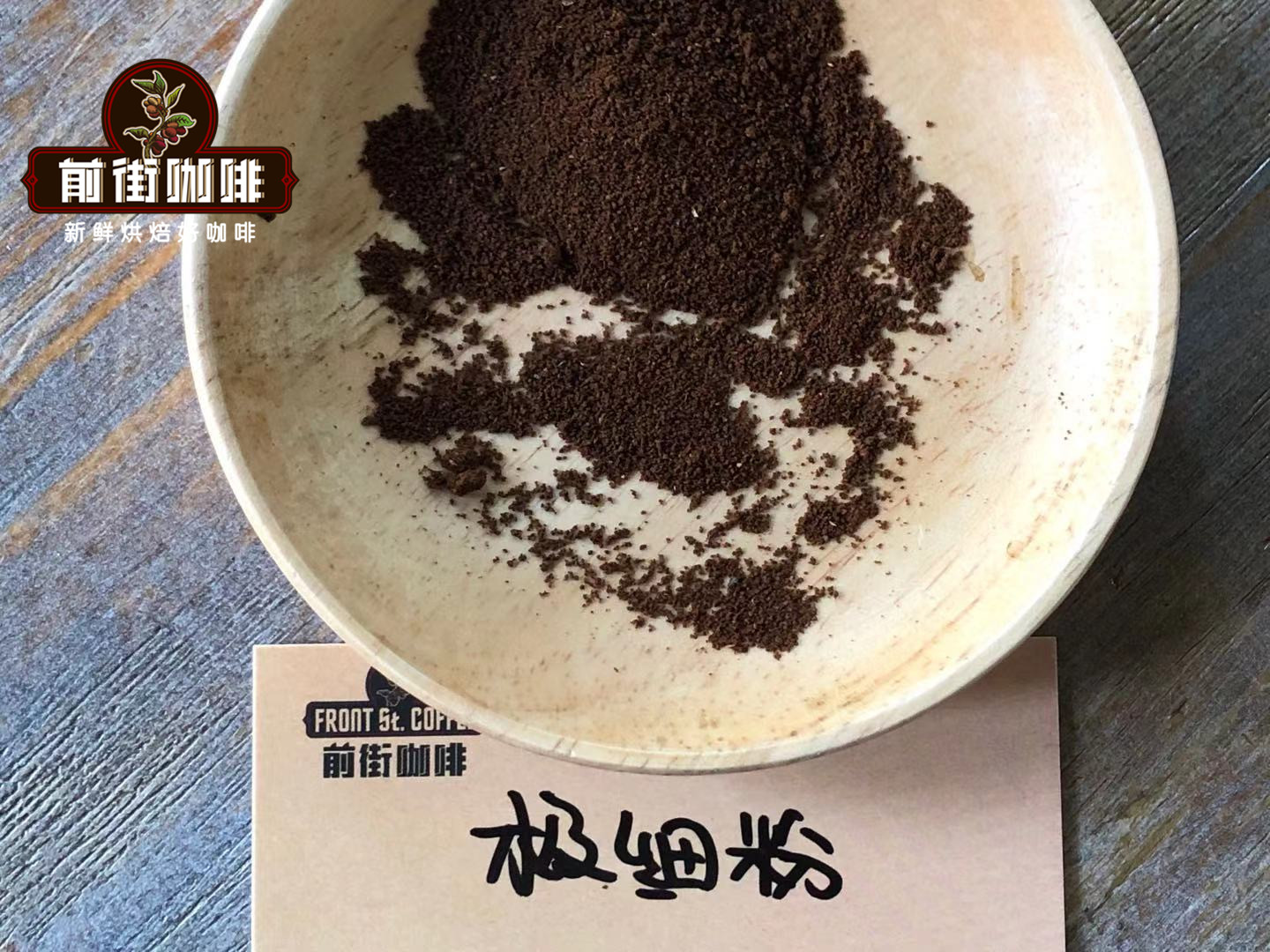
Based on grinders' recommended settings, we can identify several common consistencies. The finest grind is for Turkish coffee, followed by espresso, then the medium-coarse grind for pour-over and drip, a touch coarser for siphon, and finally the coarsest grind for French press.
Espresso needs a relatively fine grind, a requirement that grows out of how it is prepared and what it is used for. Espresso pulls in a very short time, typically 20 to 30 seconds. It is also the base for most Italian-style coffee drinks, so it must extract enough coffee material to stand up to dilution with water or milk. Compared with other brewing methods, then, espresso's grind is considerably finer.
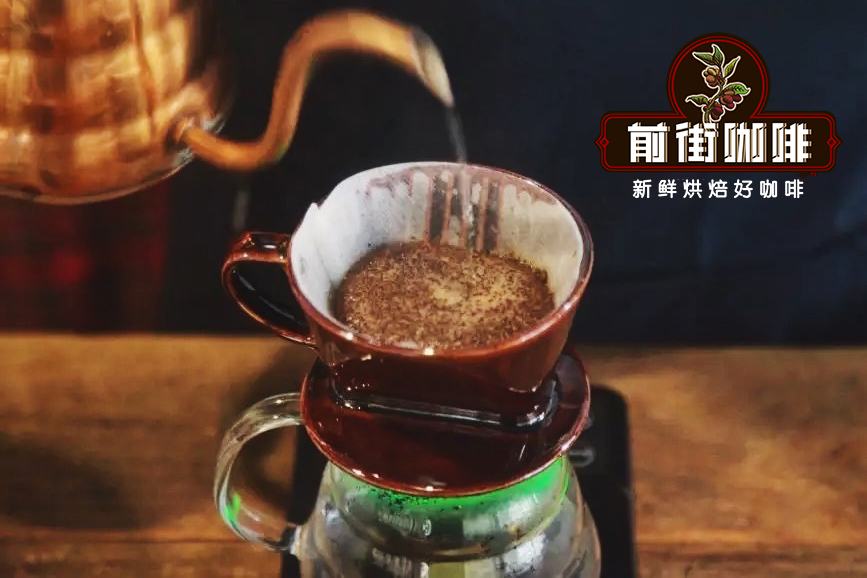
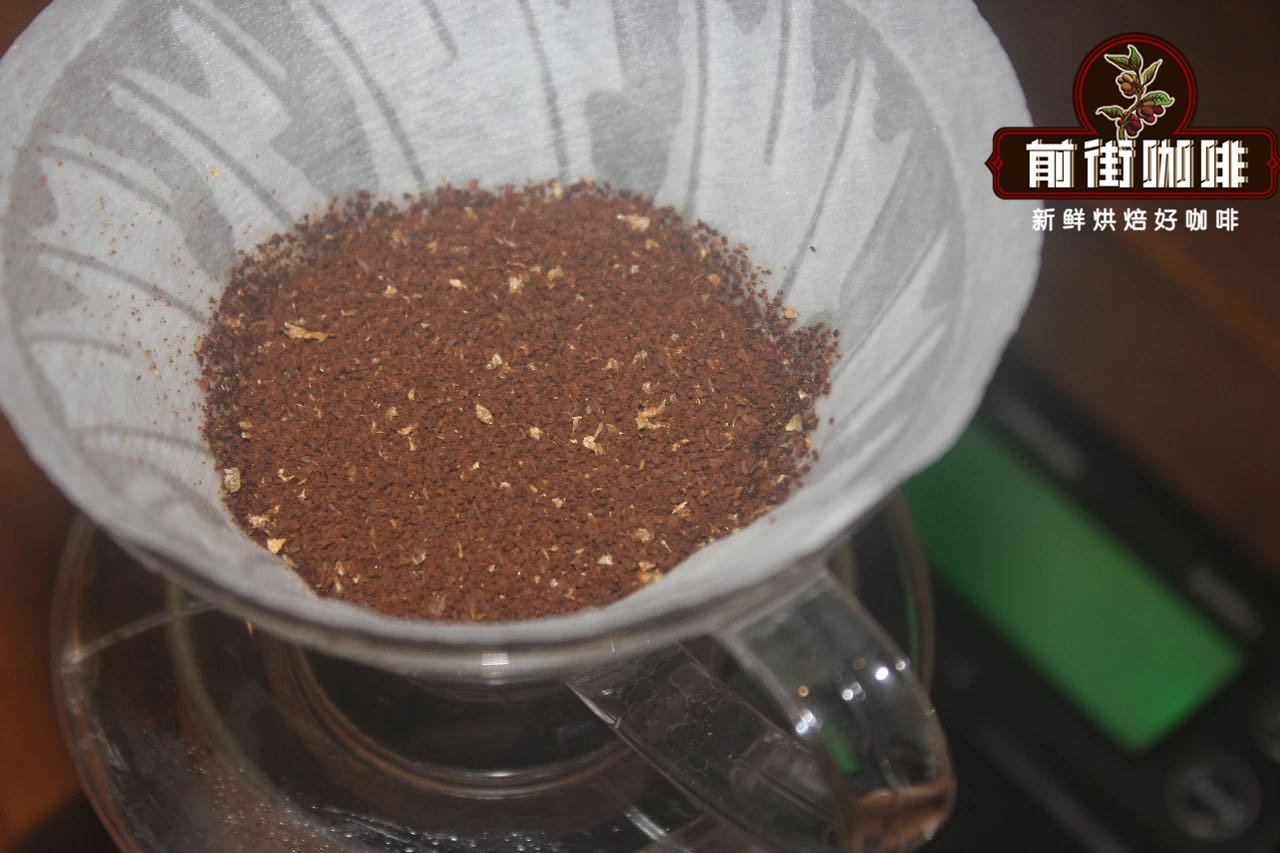
Pour-over sits in the middle of the pack for extraction time, averaging around 2 minutes, though 1 to 3 minutes is also acceptable. Most single-serve pour-over recipes land near 2 minutes. Compared with espresso, pour-over does not need as fine a grind to avoid over-extraction, so its grind falls in the medium-coarse range.
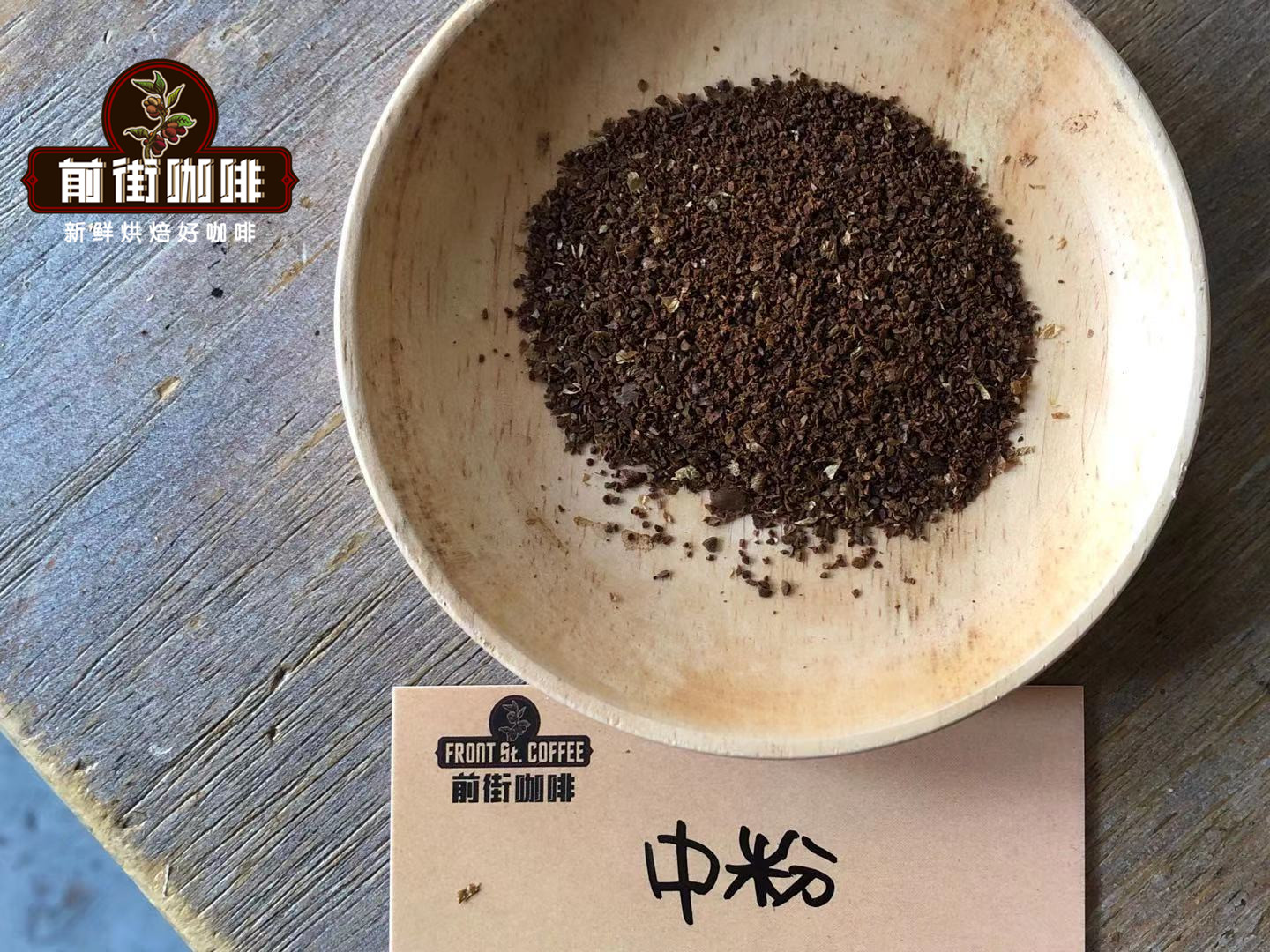
French press extraction takes 4 minutes or longer — longer than pour-over — so it typically uses the coarsest grind to avoid over-extraction from the extended steep.
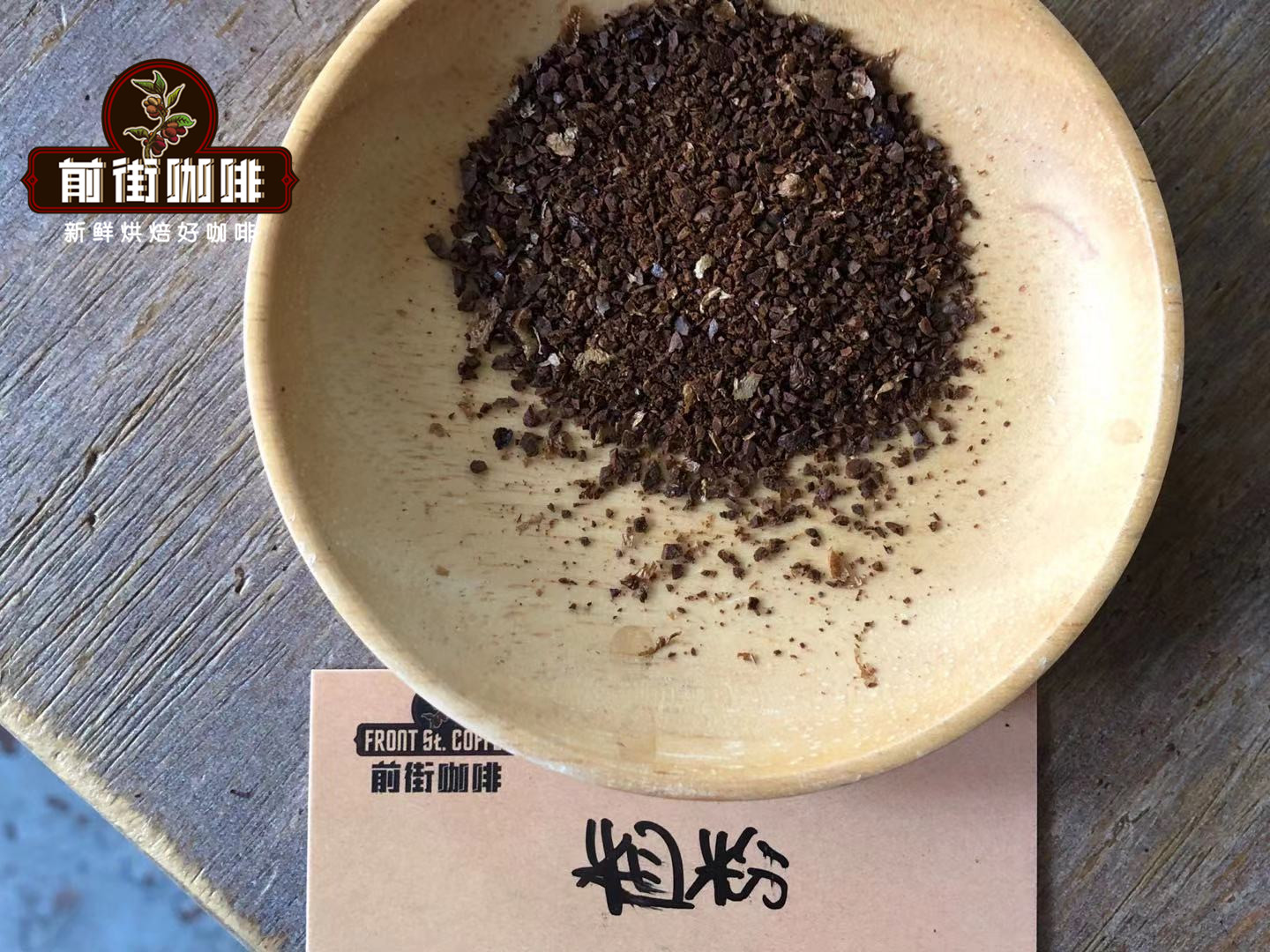
How to Determine a Medium-Coarse Grind for Pour-Over
FrontStreet Coffee stresses that different grinder models express grind settings by different standards, so a pour-over grind sieve is the way to pin down the right consistency.
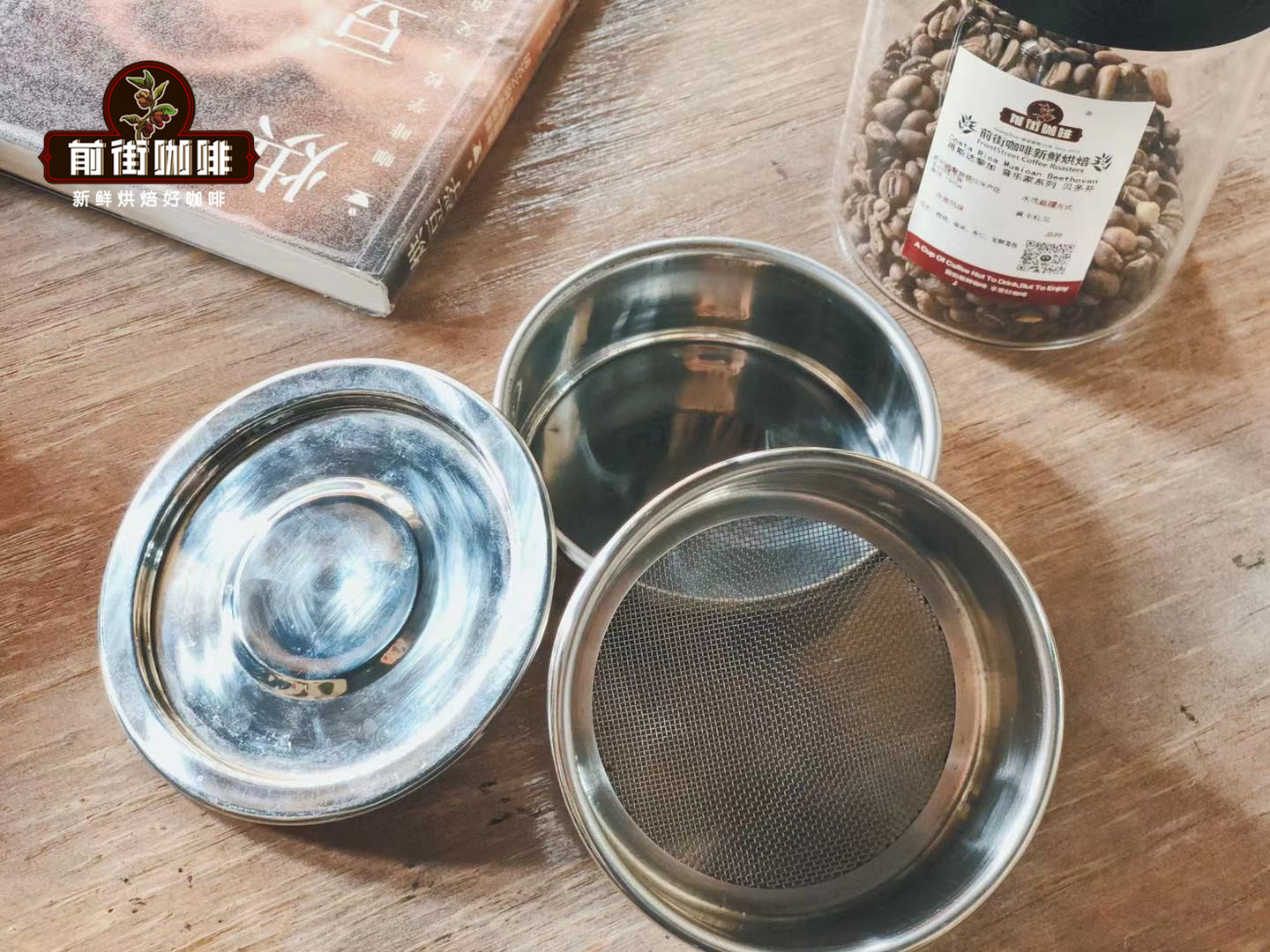
FrontStreet Coffee recommends a standard 0.85mm sieve. Its round holes measure 0.85mm in diameter, so particles smaller than that fall through. To use it, weigh out 10 grams of beans and grind them, place the grounds in the upper layer of the sieve, and shake repeatedly so that particles smaller than 0.85mm sift into the lower layer. Weigh the grounds in the lower layer; comparing that weight with the original 10 grams gives the pass-through rate for that grind.
FrontStreet Coffee has found that the pass-through rate should be around 80%, meaning 10 grams of beans should yield roughly 8 grams of sifted powder. That figure came out of repeated sifting and brewing tests at FrontStreet, so it is not an absolute standard. Everyone has their own understanding of pour-over, and once you grasp how the various parameters relate, other combinations become possible. But if you are still a beginner, or haven't yet dialed in a grind for a particular bean, FrontStreet Coffee suggests using that 80% pass-through grind as a starting point for learning and experimenting.
Conclusion
That covers FrontStreet Coffee's summary of how pour-over grind size relates to extraction time, and the answer to what mesh size a pour-over sieve should be. We hope it helps enthusiasts who want to brew their own pour-over, or who aren't sure how to begin.
FrontStreet Coffee Recommendation
Once your grind is dialed in, the dripper itself matters, and the V60 that most veterans recommend to beginners is worth understanding. Hario, the company that designed the V60, was founded in Tokyo in 1921 and is a well-known local glassmaker; it began by designing and producing heat-resistant glassware and equipment for research institutions, and its heat-resistant glass server is a popular companion to pour-over setups. In 2004 Hario redesigned the V60's prototype into a shape closer to today's familiar form, naming it for its distinctive 60° cone and "V" profile, and released it a year later.
The cone and 60° angle mean that with the V60 water must travel to the center before dripping into the server, which lengthens contact between water and coffee and lets aroma and flavor extract fully. The V60's single, large aperture lets water flow without obstruction, so the flow rate rests largely on the brewer's pour control and shows up directly in the cup. Its fast extraction is exactly what brings out a more three-dimensional aroma and lively acidity — the sort of refined floral, fruity, clean-sweet, and tea-like notes that suit beans such as FrontStreet's Yirgacheffe Gudingding, the tropical-fruit-rich Ethiopia Huakui, the Geisha-style Strawberry Candy, and the raisin-forward Mozart.
Today's V60s come in resin, ceramic, glass, copper, and stainless steel. Material affects appearance, weight, and how heat conducts — which can make for subtle extraction differences — but the design stays the same. FrontStreet favors the resin Hario V60 above all: resin blocks heat loss effectively, and in standardized mass production it is the easiest material to shape with the smallest tolerances.
Important Notice :
FrontStreet Coffee is a long-established specialty coffee roaster in Guangzhou China, selling freshly roasted beans from its own farm in Yunnan as well as dozens of carefully selected single-origin beans from around the world for both pour-over and espresso. The products deliver consistently excellent quality and great value, with shipping within 24 hours. Guangzhou's FrontStreet Coffee shop is recommended by many coffee lovers, and the beans are now available online at the Tmall 。
FrontStreet Coffee has moved to a new address:
FrontStreet Coffee Address: 315,Donghua East Road,GuangZhou
Tel:020 38364473
 Scan and follow the En Gafei WeChat official account. Please indicate that the reprint comes from "En Gafei".
![[Yunnan Coffee Origin Program] Why Does FrontStreet Coffee Choose This Most Difficult Path?](https://en.gafei.com/uploads/allimg/180624/3-1P624213J11I.jpg)