Pour-Over Coffee Tutorial: What are the Five Major Pour-Over Techniques? Do You Need a Pour-Over Stand?
"Miss, would you like me to grind the coffee beans for you?"
"Yes, grinding them at home is too much trouble."
Conversations like this happen countless times every day in coffee shops around the world.
After reading today's article, you may never let a coffee shop grind your beans again.
We know some people will not buy that advice - everyone knows freshly ground coffee is more aromatic.
So let our star barista explain.
Zhang Xianming
Star barista at the "one more cup" specialty coffee shop.
Years of coffee-making experience, specializing in pour-over coffee.
Important Information
Once coffee beans are ground and exposed to air, their optimal flavor window lasts only 1 day.
You read that right - only 1 day.
Once that window passes, no matter how expensive the beans were, the brewed coffee will have no aroma or flavor left to speak of.
If you buy whole beans, the flavor window is longer, but do not think you can store them indefinitely at home. They last only about 30 days longer than ground coffee - that is equivalent to just 1 month.
After a month, whole beans lose their aroma and flavor as well.
And remember: store them in sealed bags with one-way valves.
The valve allows carbon dioxide from the beans to escape.
Why Can Instant Coffee Last So Long?
Because instant coffee is not necessarily made from good coffee beans - defective beans are often used, and it may even be blended with corn, wheat, or other ingredients before roasting, making it truly hard to distinguish.
Of course, the most rewarding coffee is always the cup you make yourself. Our star barista will now teach everyone how to make a cup of pour-over coffee - the brewing method that requires the simplest tools and the lowest cost in the coffee world.
Required Tools
Dripper, filter paper, coffee grinder, digital scale, pour-over kettle, coffee pot, coffee cup, coffee beans.
Pour-Over Coffee Tutorial
1. Measure Beans & Boil Water
While the water heats, measure coffee beans according to your cup's capacity.
TIPS: The typical water-to-coffee ratio is 1:15. For example, use 15 g of coffee beans for 225 ml of water.
2. Grind Beans
Grind the beans into coffee powder with a grinder.
3. Fold Filter Paper
Lay the filter paper flat, fold along the crease line, and place it in the dripper.
4. Add Coffee & Rinse Filter
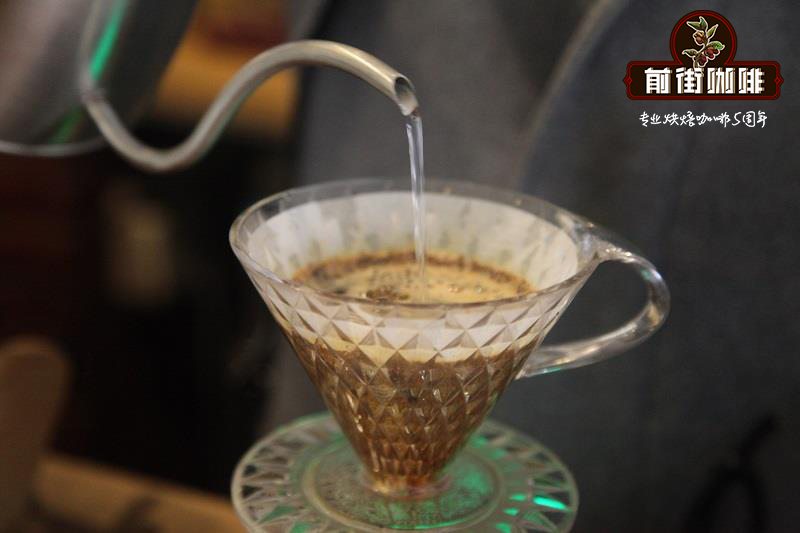
Pour hot water into the pour-over kettle and rinse the filter paper to warm the cup. Pour the ground coffee into the dripper and gently tap to level the bed.
TIPS: Water temperature between 89°C and 94°C is optimal.
5. Bloom
Begin the first pour, about 30-40 seconds.
TIPS: Do not pour too much water during the first pour - just enough to wet the grounds.
6. Second Pour
Pour hot water in circular motions from the center outward until the dripper is 70-80% full.
7. Finish & Serve
Finally, remove the dripper, gently swirl the coffee pot so the freshly dripped coffee mixes thoroughly, and pour into the cup to enjoy while hot.
PS: The roast level of the beans can be "played with" a little.
Pour-over coffee suits lightly roasted beans, giving a lighter flavor.
Espresso suits dark-roasted beans, giving a relatively stronger flavor.
Quick, drink the coffee you brewed yourself - can you taste the three standard flavor characteristics of good coffee?
Balance
The balance of bitter, sour, and sweet is most important. Some people prefer bitterness, others enjoy slight acidity, and some are particular about the sweetness in the aftertaste. The so-called "balance" of flavors actually varies from person to person.
But which beans might suit you better? Here is a list of common coffee bean flavors for reference:
Common Single-Origin Coffee Bean Flavor Profile
FrontStreet Kenya: Rich and aromatic, with balanced acidity
FrontStreet Colombia: Rich, full-bodied aroma with bright, high-quality acidity, excellent balance, and rich nutty flavors
FrontStreet Mandheling: Slightly acidic with sweetness, earthy aroma, heavy and intense
FrontStreet Guatemala: Rich flavor profile with tobacco notes
FrontStreet Brazil: Mild, with moderate bitterness and acidity and a gentle aroma
FrontStreet Yirgacheffe: Fruity, with almond notes and a fermented wine-like aroma
FrontStreet Panama: Tropical fruits, floral notes, slight acidity
FrontStreet Costa Rica: Bright acidity, high sweetness, a clean and rich flavor profile
Body
"Body" is really a kind of persistent flavor. If the coffee is strong with multiple flavor characteristics, it will be very aromatic with a sweet aftertaste.
Cleanliness
Good coffee should not have excessive impurities - at minimum, it should be refreshing to drink, with no uncomfortable feeling in the mouth or on the tongue afterward.
To enjoy such a flavorful cup of good coffee, all coffee lovers should drink it while hot.
By the time you finish posting on social media, it will be too late.
FrontStreet Coffee Recommendation
If you are buying your first pour-over dripper, a V60 is very likely the recommendation you will get, and FrontStreet Coffee's beans are chosen to make the most of it. The Hario company behind the V60 was founded in Tokyo in 1921 as a maker of heat-resistant glassware for research institutions, and it redesigned the V60 into its familiar form in 2004, naming it for the 60° cone angle and "V" shape before launching it the following year. That cone and 60° angle force the water toward the center before it drips, extending contact between water and grounds and pulling out more aroma and flavor, while the single large hole lets the flow respond directly to the brewer's pour - which is why V60 shines with bright, aromatic beans.
For that reason, FrontStreet's fruit-and-floral coffees are especially well matched to a V60: the classic Yirgacheffe profile of Gotiti with its white floral and citrus, the tropical fruit of Flower Queen, the Geisha-character Strawberry Candy, and the raisin-honey Mozart. All of them reward the quick extraction a V60 provides, letting their aroma, lively acidity, floral notes, and clean sweetness come through.
On parameters, a 1:15 water-to-coffee ratio is the usual starting point - 15 g of coffee to 225 ml of water - with water between 89°C and 94°C, a 30-40 second bloom just enough to wet the grounds, and a second pour in circles from the center outward until the dripper is 70-80% full. Drink it hot, and you will taste why these beans and this dripper are so often paired.
Important Notice :
FrontStreet Coffee is a long-established specialty coffee roaster in Guangzhou China, selling freshly roasted beans from its own farm in Yunnan as well as dozens of carefully selected single-origin beans from around the world for both pour-over and espresso. The products deliver consistently excellent quality and great value, with shipping within 24 hours. Guangzhou's FrontStreet Coffee shop is recommended by many coffee lovers, and the beans are now available online at the Tmall 。
FrontStreet Coffee has moved to a new address:
FrontStreet Coffee Address: 315,Donghua East Road,GuangZhou
Tel:020 38364473
 Scan and follow the En Gafei WeChat official account. Please indicate that the reprint comes from "En Gafei".