How Much Difference Is There Between Pour-Over Coffee and Coffee Machines? Is Pour-Over Coffee Really Better Tasting Than Espresso Machines?
Walk into almost any coffee shop today and you'll see two things on the menu: pour-over coffee and espresso drinks. If you're not a habitual coffee drinker, the distinction can be genuinely confusing. They're both coffee, so what actually separates them? FrontStreet Coffee is here to walk you through the defining traits of each style.
Espresso Coffee
Espresso is the coffee produced on an espresso machine. What comes straight out of the machine is called espresso; from there, different ingredients turn it into other drinks. Add milk and you have a latte, add water and you get an Americano, and all of these together are what we call espresso-based coffee. The defining trait of espresso is that it uses 9 bar of pressure to pull an intensely concentrated cup.

How to Make Espresso?
Step 1: Remove the portafilter and wipe it clean. Wiping the portafilter before weighing the grounds each time keeps the inside dry and free of residual water.
Step 2: Weigh the coffee grounds. Use an electronic scale for accuracy, keeping the deviation within plus or minus 0.1 grams. For today's calibration, the dose was set at 19 grams.
Step 3: Distribute the grounds evenly by hand or with a distribution tool so they sit uniformly in the portafilter. An uneven bed produces an uneven puck density - where there is more coffee the puck is denser and harder to extract, and where there is less it is looser and easily over-extracted.

Step 4: Tamp the grounds firmly and evenly with a tamper, taking care not to leave a sloped surface.
Step 5: Extraction. Lock the portafilter into the machine gently and start the shot right away. This keeps the machine's high temperature from accelerating the loss of aromatic compounds. At the same time, use an electronic scale to track the weight of the espresso and record the extraction time. FrontStreet Coffee's calibrated shot today yielded 38 grams of liquid, a 1:2 coffee-to-liquid ratio, in 27 seconds.

Step 6: Cleaning. After stopping the extraction, remove the portafilter and run some water through to rinse the brew head.
Pour-Over Coffee
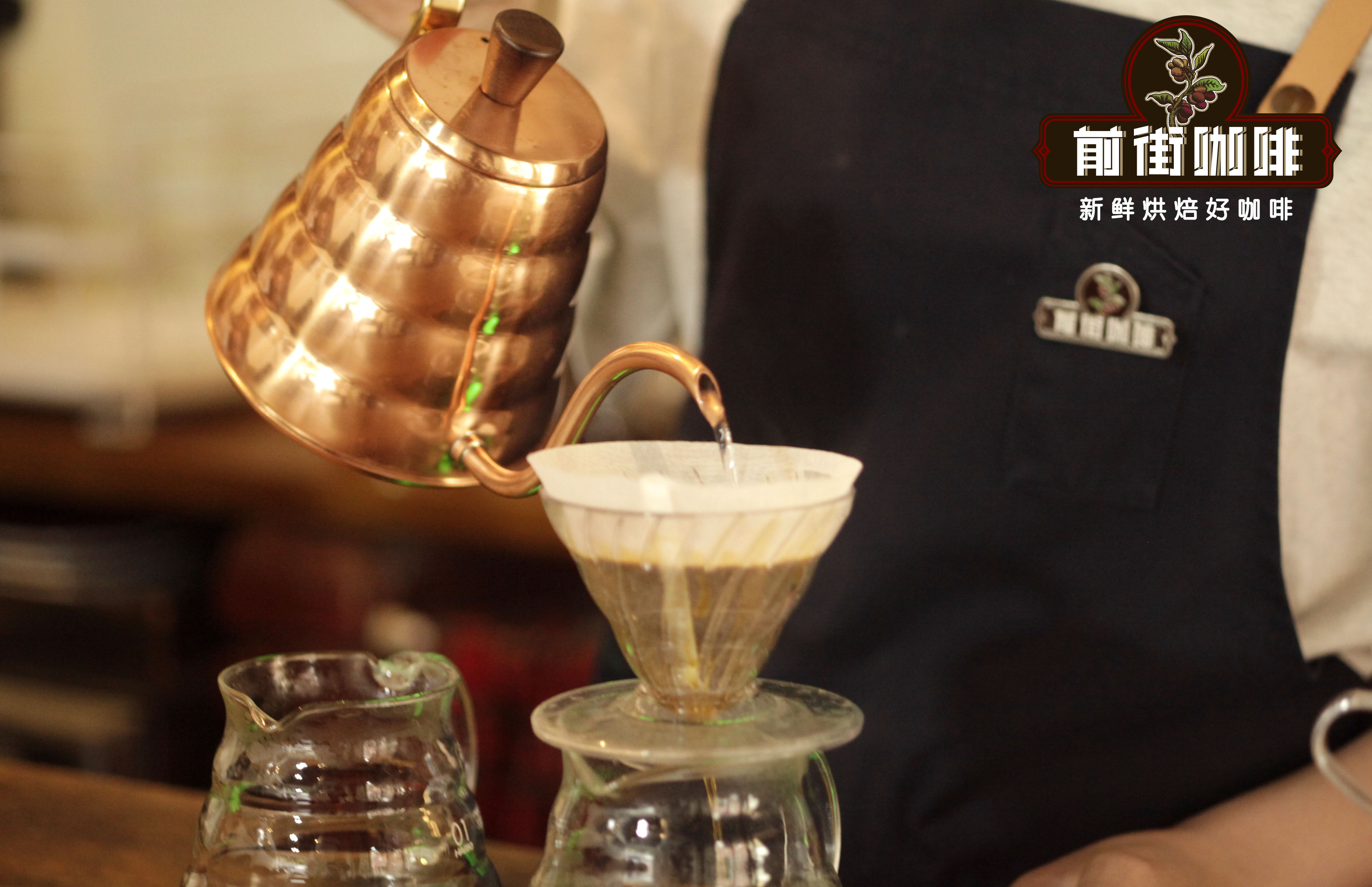
Pour-over is an extraction method too, but a pressure-free one that relies on gravity. Here the key to a good cup is how fast water moves through the coffee bed. Filter paper separates the grounds from the liquid, giving you a clean, bright black coffee.

The great strength of pour-over is how directly it expresses a bean's character. Any coffee can be brewed this way and still show its own personality. On top of that, pour-over is far more convenient than running an espresso machine, which is why so many shops keep a rotating selection of beans for pour-over while their espresso blend stays fixed.
FrontStreet Coffee would like to introduce a common brewing technique called the "Three-Pour Method." Simply put, it splits the whole pour into three stages, beginning with the bloom. Take FrontStreet Coffee's Colombia Huila Washed Caturra as an example: FrontStreet Coffee uses 15 grams of grounds as standard, a 1:15 coffee-to-water ratio, water at 88°C, and a medium-coarse grind size with a 75% pass-through rate on a #20 standard sieve.
Brewing Process
First, set everything up (warm the filter and server, grind the coffee, and prepare water at the right temperature), then add the grounds. Start the timer and begin the first pour, adding 30 grams of hot water in circles from the center outward. The grounds will absorb water and slowly swell into a puffy "coffee burger."

Stop at 30 grams and let the bed bloom for 30 seconds. Begin the second pour at 31 seconds on the scale, again circling from the center outward. Keep the stream steady and vertical. When the water column meets the coffee bed, foam forms and spreads across the whole surface, with the liquid level rising to the base of the ribs. This stage adds 100 grams.

When the liquid level drops to the 1/2 mark, begin the final pour. This stage also uses a "nose-smelling" motion from the center outward, adding 95 grams. The dark brown foam turns a pale yellow, and the liquid level returns to where it was after the second pour. Once all the coffee has dripped into the server, remove the filter to finish the extraction.

How to Determine When to Pour Again?
The three-pour method has two re-pouring points: the second and third pours. The second is easy to time - usually 30 seconds after the bloom. The third is trickier because there is no fixed moment; generally you wait until the water level drops to 1/2 or 2/3 before pouring again.
Waiting until the level falls to 1/2 or 2/3 means there is neither too much water sitting in the filter nor so little that the coffee bed is exposed, which would cause the upper and lower layers to extract unevenly.
Once the level drops, fresh water can push straight through the remaining liquid to stir the lower layer. If the level stays too high, the stream lacks enough force, leaving the upper bed over-extracted while the lower grounds stay under-extracted.
Recommended Coffee Beans for Pour-Over Beginners
FrontStreet Coffee · Ethiopia Washed Yirgacheffe G2
Country: Ethiopia
Region: Yirgacheffe
Altitude: 1800-2000 meters
Variety: Local native varieties
Processing: Washed
Flavor: Jasmine, berries, lemon, citrus

Yirgacheffe is a small town in Ethiopia sitting at an altitude of 1700-2100 meters, making it one of the highest coffee-growing regions in the world and a byword for Ethiopian specialty coffee. Lakes Turkana, Abaya, and Chamo bring abundant water vapor to the area. Around the Misty Valley in particular, the rift valley is shrouded in fog almost year-round, with spring-like conditions throughout, gentle breezes, and a cool, humid climate that lets thousands of coffee varieties thrive. This is the terroir behind FrontStreet Coffee's Yirgacheffe, where floral and fruit notes intertwine in ever-changing ways. The so-called Yirgacheffe flavor means rich citrus and lemon acidity, an intense jasmine aroma, and a light, elegant body with a tea-like quality that drinks like a refreshing, clean lemon tea.
FrontStreet Coffee specifically favors washed processing because it best reflects a coffee's cleanliness and the purity of its flavor. That is why, when analyzing the specific flavors of a producing region, we use that region's washed beans as the reference. If beginners have never tried FrontStreet Coffee's Yirgacheffe, FrontStreet Coffee would first recommend this washed Yirgacheffe to build a sense of the regional profile. Later, when tasting natural, honey-processed, and other versions of Yirgacheffe, they'll have a baseline for comparison.

FrontStreet Coffee Brewing Recommendations
Water Temperature: 90-91°C
Grind Size: BG#6m (Fine sugar size / 20# sieve 80% pass-through)
Coffee-to-Water Ratio: 1:15
Coffee Dose: 15 grams
FrontStreet Coffee Brewing Method:
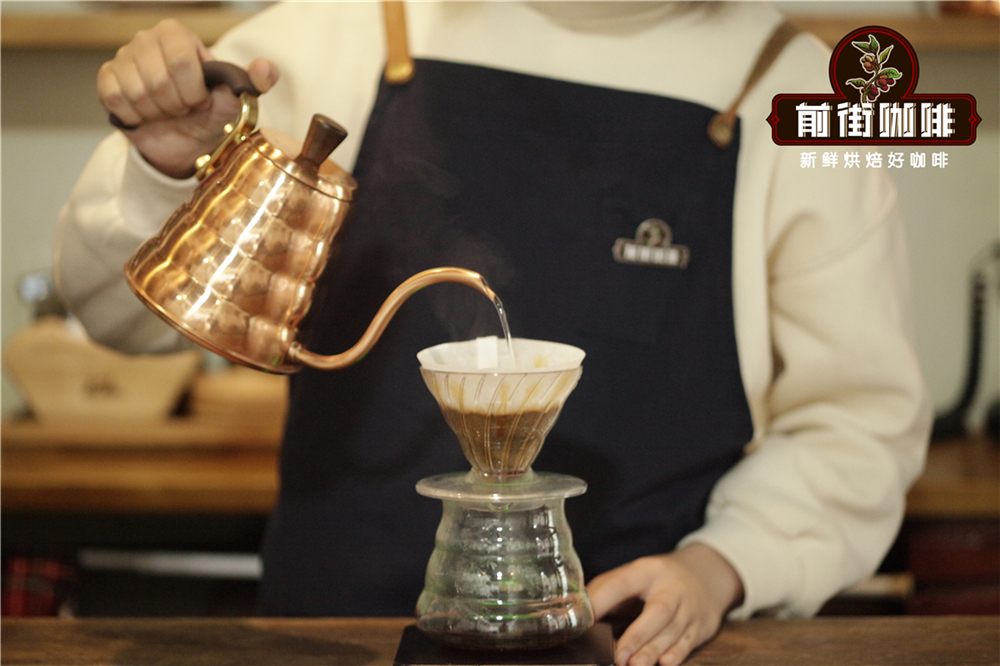
First pour: 30 grams of water for a 30-second bloom, then pour 95 grams (the scale reads around 125 grams), finishing in about 1 minute. When the water level drops to 2/3 of the coffee bed, pour the remaining 100 grams (the scale reads around 225 grams), finishing in about 1 minute 40 seconds. Complete the drip filtration between 1'55'' and 2'00'', then remove the filter to finish the extraction.
FrontStreet Coffee Ethiopia Washed Yirgacheffe Brewing Flavor:
Jasmine aroma, berry juice sensation, lemon and citrus acidity, overall bright, clean, and fresh.
For professional coffee knowledge exchange and more coffee bean information, please follow Coffee Workshop (WeChat public account: cafe_style). For more specialty coffee beans, please add FrontStreet Coffee's private WeChat account: kaixinguoguo0925
FrontStreet Coffee Recommendation
If you are just starting out with pour-over, FrontStreet Coffee's Ethiopia Washed Yirgacheffe Guodingding is an excellent first stop. It comes from the Gedeo Zone at 1900-2300 meters, is a washed heirloom, and shows bright citrus and lemon acidity over a clean, jasmine-scented cup with a honeyed finish. Brew it in a Hario V60: 15 grams of coffee, a 1:15 ratio, water at 90-91°C, and a fine-sugar grind size at around 80% pass-through on a 20# sieve.
A V60 is the natural companion for this style. Hario, founded in Tokyo in 1921, reshaped the dripper in 2004 around its signature 60° cone and single large hole, and the design works especially well for light to medium roasts that reward a bright, layered cup. For thicker, sweeter coffee, reach for FrontStreet Coffee's PWN Golden Mandheling instead: a medium-dark, wet-hulled Sumatra with low acidity and caramel, herbal, and dark chocolate depth.
Important Notice :
FrontStreet Coffee is a long-established specialty coffee roaster in Guangzhou China, selling freshly roasted beans from its own farm in Yunnan as well as dozens of carefully selected single-origin beans from around the world for both pour-over and espresso. The products deliver consistently excellent quality and great value, with shipping within 24 hours. Guangzhou's FrontStreet Coffee shop is recommended by many coffee lovers, and the beans are now available online at the Tmall 。
FrontStreet Coffee has moved to a new address:
FrontStreet Coffee Address: 315,Donghua East Road,GuangZhou
Tel:020 38364473
 Scan and follow the En Gafei WeChat official account. Please indicate that the reprint comes from "En Gafei".