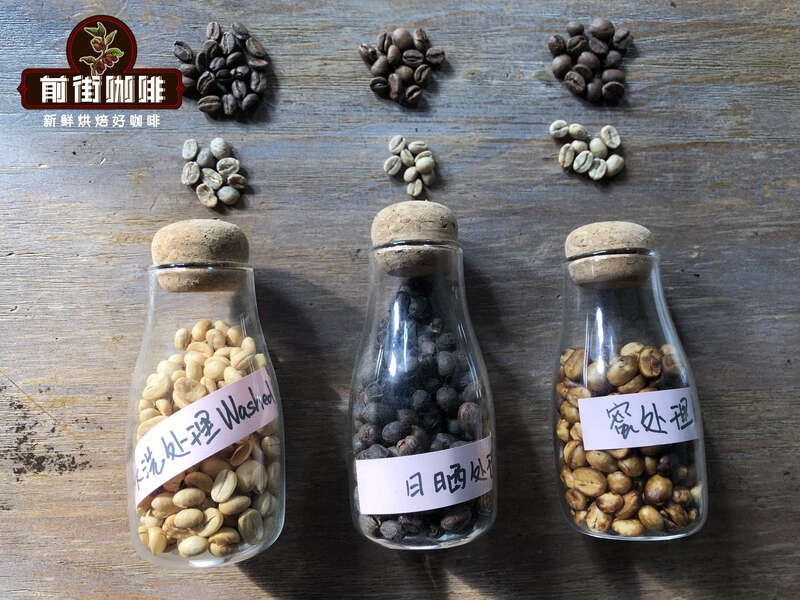
The Difference Between Honey and Natural Process Coffee Beans: Which Processing Method Produces Sweeter Coffee?

Washed, natural, and honey processing can be called the three traditional processing methods for coffee beans. For specialty coffee beans, in addition to selecting excellent varieties grown in superior locations, the final processing steps are even more crucial - any mistake can ruin all the previous effort. Many friends ask FrontStreet Coffee's baristas: both natural and honey processing have sweetness and fermentation notes, so how can we tell which processing method was used without reading the description? In this article, FrontStreet Coffee discusses the differences between natural and honey processing.
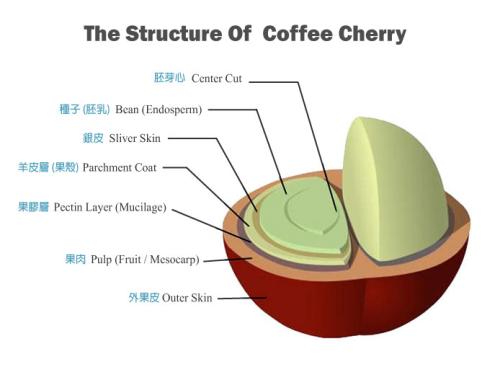
Before discussing processing methods, let us first understand the structure of coffee cherries. From outside to inside, they can be divided into skin, pulp, mucilage layer, parchment (also called the parchment layer), silver skin, and the innermost coffee bean seeds. The so-called processing methods involve removing the skin, pulp, and mucilage from coffee cherries to extract the two coffee beans wrapped in silver skin, then drying them to stabilize the bean characteristics. While this sounds simple, it is actually a time-consuming and labor-intensive technical process, because if the mucilage layer is not handled properly, the various sugars it contains will ferment and spoil, releasing pungent odors that affect the coffee beans. FrontStreet Coffee believes that regardless of the processing method, as long as it is handled properly, these mucilage layers will bring infinite variations to coffee beans, such as increasing acidity, sweetness, and fermentation notes.
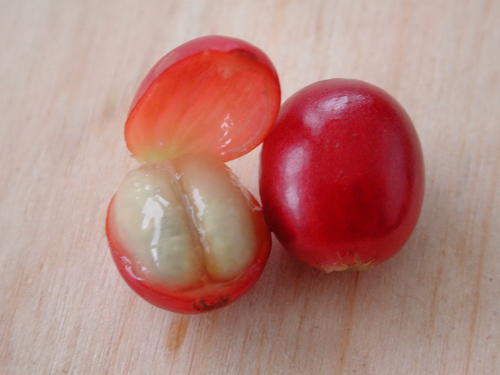
Before processing, coffee farmers must select mature red coffee fruits. Why? FrontStreet Coffee gives an example: when oranges are still green-skinned, they taste very sour; when orange peels are mixed with green and orange, oranges taste both sour and sweet; when oranges become completely orange-skinned, they taste very sweet. This series of examples shows that the organic acids in fruits have not completely converted to sugars yet, and mature fruits become sweet and delicious. Coffee cherries are the same - if coffee cherries are picked and processed before fully ripening, the resulting coffee beans will taste harshly acidic and green when brewed. Mature coffee cherries have sufficient sugar in the mucilage layer, so as long as they are effectively processed, the coffee beans will have sweetness.
Next, floating beans must be sorted out. After picking, coffee cherries will include some spoiled fruits. When placed in a water tank of clean water, mature and intact fruits sink to the bottom. Spoiled, underdeveloped, and other bad cherries float on the surface. This step is particularly important, as the saying goes: "one bad apple spoils the whole bunch." FrontStreet Coffee believes that if spoiled beans are not selected out, they will directly affect all the coffee cherries in the next processing step - if there is even one rotten fruit, all the resulting coffee beans will carry rotten flavors.
Now, back to the main topic: what is natural processing and what is honey processing?
Natural Processing
Natural processing is one of the oldest and most traditional processing methods. Coffee fruits are dried immediately in the sun after picking. It is more common in areas with abundant sunlight or water scarcity, such as Ethiopia, where nearly 70% of coffee fruits are processed naturally.
1. Collection & Sorting
After picking, coffee fruits are first manually sorted to remove defective coffee fruits, including overripe, unripe, and insect-damaged ones, as well as foreign objects other than fruits.
2. Drying
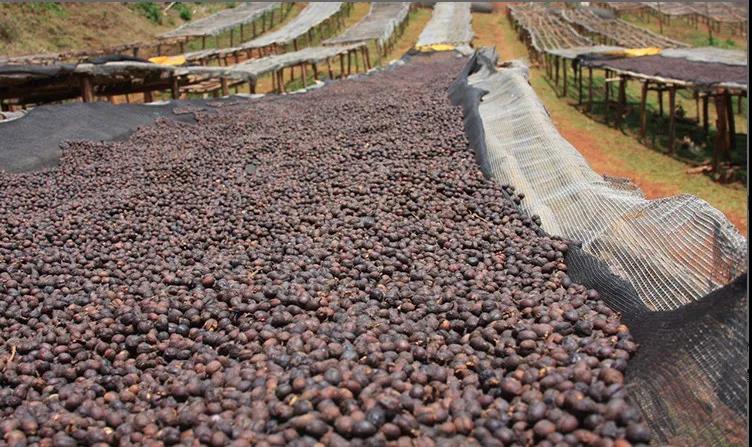
After sorting, coffee fruits are sent to drying areas for drying. Different regions may use different drying surfaces - some may use waterproof tarps, others raised beds, and others concrete floors. The drying time averages 3 to 4 weeks until the coffee moisture content drops to 11% to complete the drying process.
3. Hulling
Dried coffee fruits are sent to processing plants for hulling and even polishing. The skin and pulp are removed in this step.
4. Sorting & Storage
After hulling, green coffee beans are sorted again to remove coffee beans with poor appearance. This reflects the quality of the coffee drying process - over-dried coffee beans are more fragile and may break into fragments during hulling, while under-dried coffee beans have too much moisture, with overly active water content that easily breeds bacteria and causes mold.
In addition to traditional natural processing, the currently popular anaerobic fermentation technology is also used in natural processing. Before sun-drying, coffee fruits are placed in a sealed anaerobic environment for fermentation, called "anaerobic natural." FrontStreet Coffee believes that compared to washed and honey processed coffee, natural processed coffee has the lowest acidity, the highest sweetness, and the clearest mouthfeel, but slightly lower cleanliness. In terms of flavor, it produces more berry-like notes and is more complex.

Honey Processing
Honey processing sits between washed and natural processing, and is commonly found in Costa Rica in the Americas. The practice of retaining some mucilage gives the coffee a taste that distinguishes it from washed and natural processed coffee.
1. Collection
After picking, coffee fruits are collected and sorted to select high-quality coffee fruits that meet standards.
2. Depulping
After sorting, coffee fruits are put into coffee depulping machines for depulping. This step removes the skin and pulp of the coffee fruit while retaining the mucilage layer. The mucilage is the part with the highest sugar content in coffee fruits and is an important component of coffee processing fermentation. It can be said that this part determines 80% of the nutritional supply during processing. Yellow honey retains 60% of the mucilage, red honey retains 75%, and black honey retains almost all of it. The more mucilage retained, the richer the final flavor and the higher the sweetness.

3. Drying
Unlike washed processing, honey processing retains some mucilage for drying. The drying process reduces the moisture content of coffee beans to about 11%, taking about 18 to 25 days, depending on climate and the processor's experience.
4. Storage
After drying, coffee beans are bagged and transported to warehouses for storage until hulling to remove the coffee parchment layer before export.
Honey Processing Grades
In Costa Rica, Brazil, and Colombia, local processing plants used to use high-pressure washing machines, so during depulping, some mucilage would also be removed. According to the amount of mucilage remaining (40%-100%), honey processing is divided into 4 grades: 40%, 60%, 80%, and 100%. Of course, some growers intentionally remove some mucilage to ensure that the coffee doesn't become too fruity due to fermentation during drying.
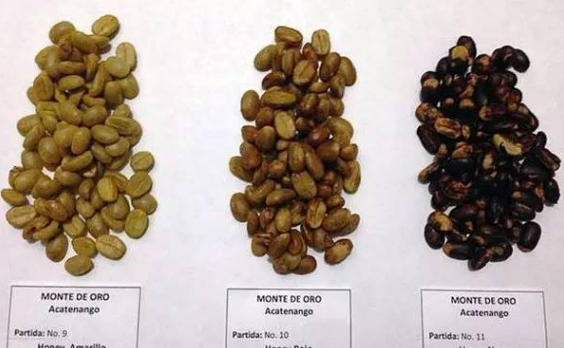
Yellow honey processed green coffee beans have the longest sun exposure time. Long sun exposure means higher heat, so this coffee can be dried within 1 week. Generally, coffee drying time depends on local climate, temperature, and humidity conditions.
Red honey processed green coffee beans have a drying time of 2-3 weeks, usually due to weather conditions or being placed in shady areas. If the weather is sunny, growers shade some of the sunlight to reduce exposure time.
Black honey processed green coffee beans are dried in shady areas for the longest time, with the shortest sun exposure. This coffee has a minimum drying time of 2 weeks. Black honey processed green coffee beans have the most complex processing and the highest labor costs, making them the most expensive.

FrontStreet Coffee believes that honey processed coffee beans have excellent flavor, with balanced acidity and sweetness. Like natural processing, because it undergoes sun drying, the coffee beans' own aroma is also amplified, with a rich body. At the same time, honey processing uses less water during processing, and the drying time is shorter than natural processing, greatly speeding up the green bean processing time.
Raisin Honey Processing
Raisin honey processing retains 100% mucilage and uses a zero-water processing method. This increases the difficulty of honey processing, requiring strict time control. On the day coffee cherries are harvested, the harvested coffee fruits are poured into large water tanks - mature, full fruits sink to the bottom, while underdeveloped or overripe fruits float on the surface and need to be removed. The selected coffee fruits are dried on raised beds for at least three days, then the cherry skin is removed, retaining the mucilage before further drying. At this stage, climate factors are key to successful honey processing.
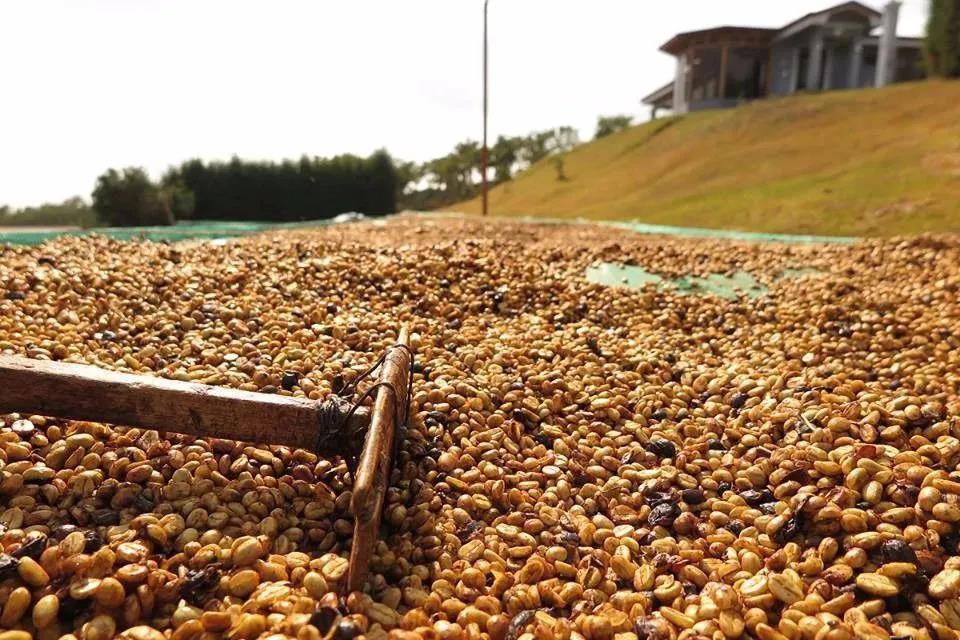
During drying, these coffee cherries must be constantly turned to ensure even drying, but the turning frequency must be controlled to ensure slow drying for proper fermentation while avoiding over-fermentation. This sweet raisin honey processing gives coffee a white wine mouthfeel and balanced acidity, with rich fermentation aromas. FrontStreet Coffee believes that raisin honey processed coffee beans have rich fermentation notes and dried fruit sweetness.

Representative Natural Processed Coffee Beans - FrontStreet Coffee Yirgacheffe Natural Red Cherry Coffee Beans
Country: Ethiopia
Region: Yirgacheffe
Altitude: 2300m
Variety: Local landrace
Processing: Natural Processing
FrontStreet Coffee Roasting Suggestions
Yirgacheffe varieties are local landrace, small-particle varieties with a relatively round appearance and very small beans, mostly between 14-15 mesh. Yirgacheffe natural red cherries have relatively uniform maturity and a clean flavor, so FrontStreet Coffee's roaster uses medium-light roasting to preserve more floral, fruity acidity and mature fruit fermentation aromas.

FrontStreet Coffee uses a Yangjia 800N, with 550 g of beans: using fast stir-fry mode, preheat the roaster to 200°C, set the air damper to 3.5. After 1 minute, adjust the heat to 160°C, air damper unchanged. At 148°C, adjust the heat once to 130°C. Roast to 5'03'', temperature 151°C, bean surface turns yellow, grassy smell completely disappears, dehydration complete. Adjust the heat to 105°C, open the air damper to 4. At 8 minutes, the bean surface shows ugly wrinkles and black spots, the toast smell clearly turns to coffee aroma, which can be defined as the prelude to first crack. At this point, listen carefully for the sound of first crack. At 9'07'' first crack begins, adjust the heat to 70°C, fully open the air damper (adjust the heat very carefully, not too low, so the cracking sounds do not stop). Take out at 194°C.

FrontStreet Coffee Cupping Report

Representative Raisin Honey Processed Coffee Beans - FrontStreet Coffee Musician Series Baha Coffee Beans
Country: Costa Rica
Region: Tarrazú
Altitude: 1,950M
Processing: Raisin Honey Processing
Grade: SHB
Variety: Caturra
FrontStreet Coffee Roasting Suggestions
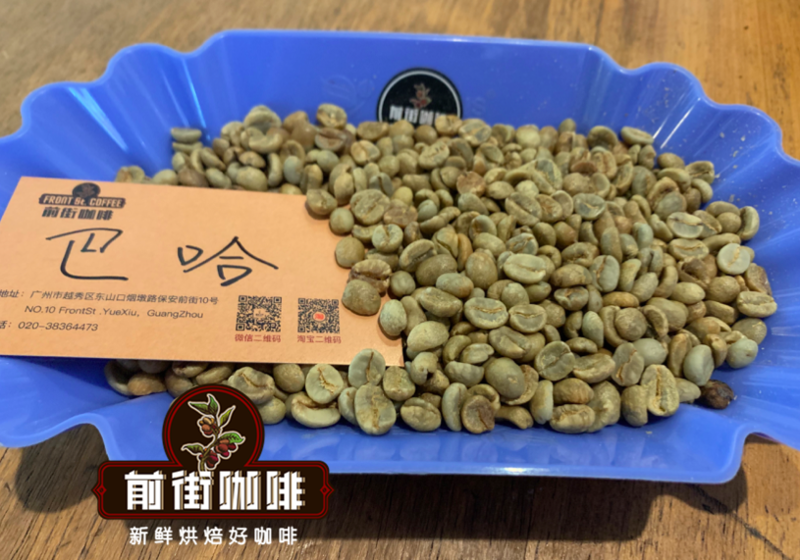
The green beans appear yellow-green, typical of honey processed coffee beans, smelling of fresh ripe fruit aroma with a light fermented fruit fragrance. For this bean's roasting approach, FrontStreet Coffee's roaster aims for a medium-light roast, mainly to preserve bright acidity and showcase floral and fruit aromas, while also enhancing richness and balance.
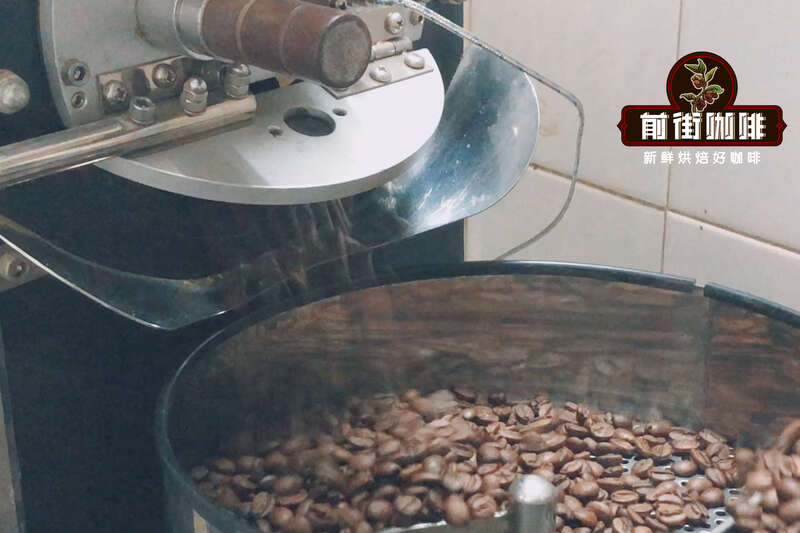
Yangjia 800N, with 300 g of beans: preheat the roaster to 180°C, set the heat to 130, open the air damper to 3. Return to temperature at 1'43", maintain heat. At 140°C, heat unchanged, open the air damper to 4. At 6'15" turn yellow, grassy smell disappears, enter the dehydration stage. At 151°C, adjust the heat down to 100, air damper stays at 4. At 176°C, adjust the heat to 70, air damper unchanged. At 8'15" dehydration complete, the bean surface shows wrinkles and black spots, toast smell turns to coffee aroma, the prelude to first crack. Pay attention to listen for the first crack sound. At 9'40" first crack begins, fully open the air damper to 5, heat unchanged. Post-first-crack development time 1'45", take out at 196°C.
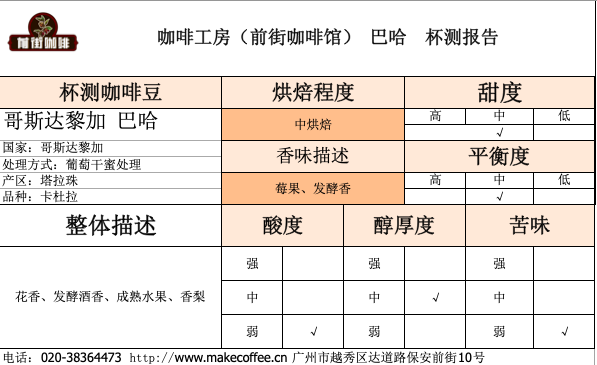
FrontStreet Coffee Cupping Report
FrontStreet Coffee Brewing Suggestions
Dripper: V60
Water Temperature: 90°C
Dose: 15 grams
Ratio: 1:15
Grind Size: Fine sugar (Chinese standard #20 sieve, 80% pass-through)
Coffee beans of different altitudes and roast levels use different grinder settings, so FrontStreet Coffee suggests that grinder calibration be redone periodically. To calibrate coffee grind size, you can use a coffee standard inspection #20 sieve. If you don't have a sieve at home, FrontStreet Coffee suggests observing the flow rate to judge - if the water flows too fast, the grind is too coarse; if the water flows too slowly, the grind is too fine.

FrontStreet Coffee uses segmented extraction, also called three-stage brewing. Use 30 g of water for a 30-second bloom, then continue pouring with a small water flow in circles to 125 g for the first segment. When the water level drops and is about to expose the coffee bed, continue pouring to 225 g and stop pouring. When the water level drops and is about to expose the coffee bed again, remove the dripper. Extraction time (starting from the bloom) is 2'00"-2'10".

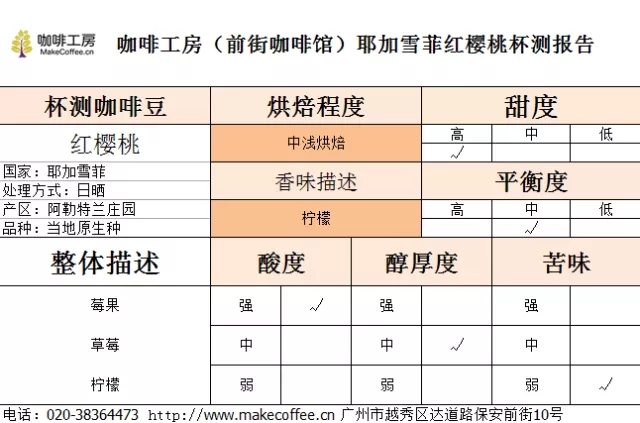
Natural Red Cherry Brewing Flavor: Obvious sweet-and-sour notes on entry, with lemon, berries, and a fermented wine aroma. The lemon acidity in the aftertaste is persistent, with an obvious sweet return.
Costa Rica Baha Brewing Flavor: Smells like rice wine fermentation aroma. Tastes of mature tropical fruits, berry sweet-and-sour notes, nut and cream flavors, with caramel in the aftertaste and light floral notes in the finish.
FrontStreet Coffee Recommendation
If the sweetness and fermentation character of honey and natural coffees appeal to you, FrontStreet Coffee roasts several honey-processed lots that show the style across its range of grades. The FrontStreet Costa Rica Blackberry uses a black honey process that removes almost no mucilage and dries for at least two weeks under cover, giving rich floral aromas with grape, berry, and ripe blackberry flavors after a medium-light roast. The FrontStreet Costa Rica Mozart uses a raisin honey process with 100% mucilage retention and brings osmanthus, pineapple, and raisin aromas to pour-over, cold brew, or moka pot. For a sweeter, more accessible taste of the style, the FrontStreet Strawberry Candy blend pairs a Costa Rican raisin-honey coffee with a Panamanian Geisha for orange-blossom honey, grape, dried blueberry, soft fruit acidity, and an almond finish. If you want to compare honey processing with natural processing directly, the FrontStreet Yirgacheffe Natural Red Cherry features the same natural Yirgacheffe profile described above.
Important Notice :
FrontStreet Coffee is a long-established specialty coffee roaster in Guangzhou China, selling freshly roasted beans from its own farm in Yunnan as well as dozens of carefully selected single-origin beans from around the world for both pour-over and espresso. The products deliver consistently excellent quality and great value, with shipping within 24 hours. Guangzhou's FrontStreet Coffee shop is recommended by many coffee lovers, and the beans are now available online at the Tmall 。
FrontStreet Coffee has moved to a new address:
FrontStreet Coffee Address: 315,Donghua East Road,GuangZhou
Tel:020 38364473
 Scan and follow the En Gafei WeChat official account. Please indicate that the reprint comes from "En Gafei".