What Pour-Over Coffee Options Does Starbucks Have? What Coffee Bean Varieties Are Used in Starbucks Cold Brew
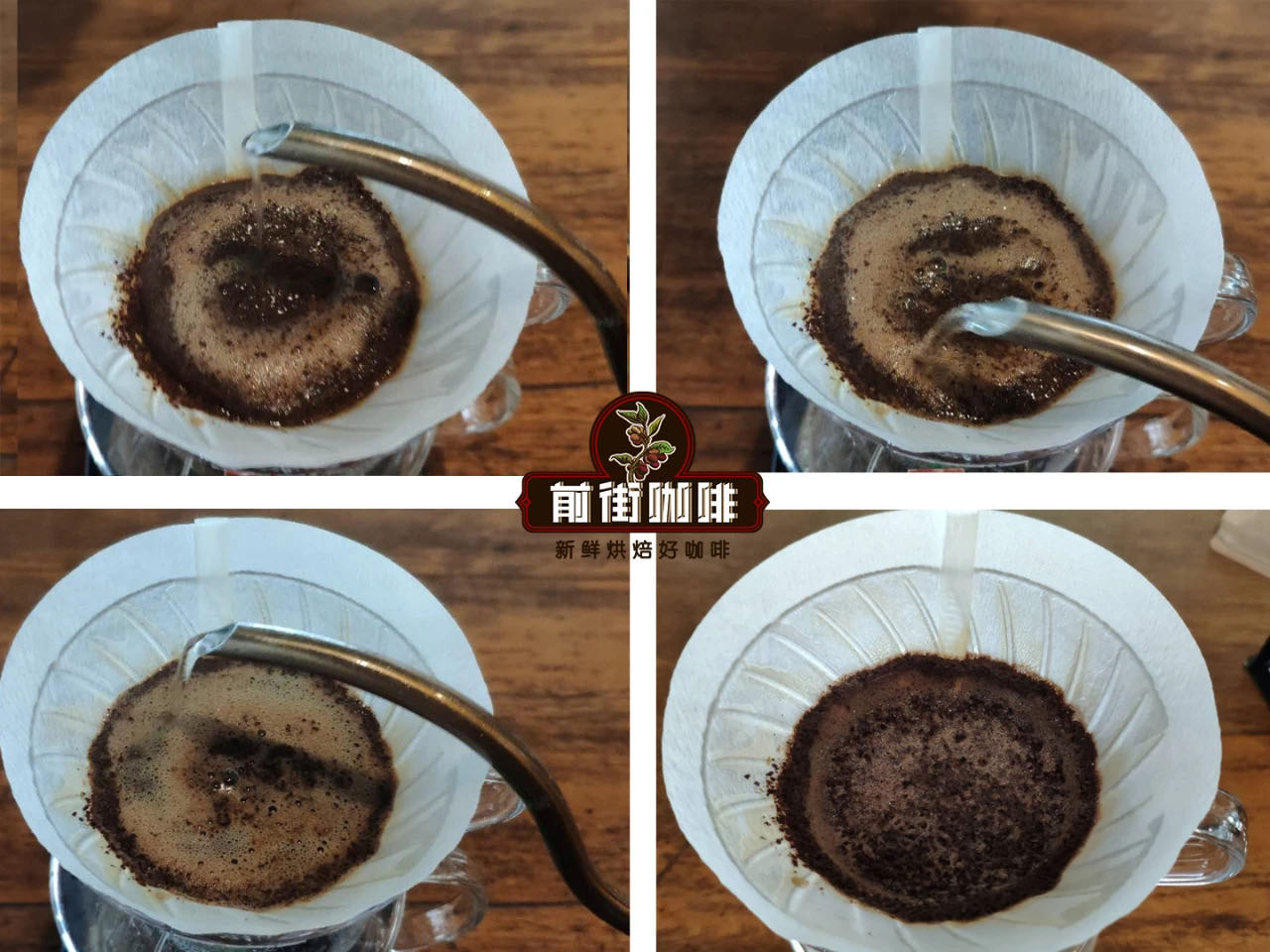
Customers who have tried Starbucks pour-over coffee often ask FrontStreet Coffee's baristas why Starbucks pours all the water in one go through the center after blooming, while FrontStreet Coffee uses two separate circular pours. What are the differences between these two pouring methods? This article explains the different extraction effects of the two pour-over approaches.
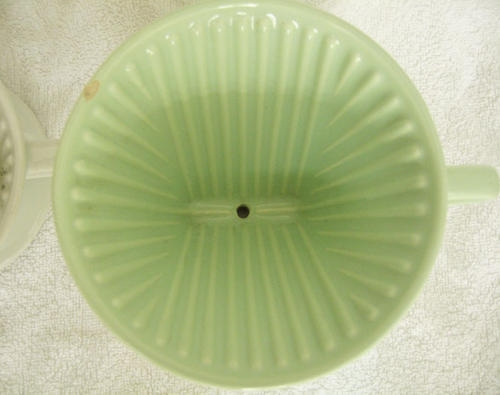
Starbucks Pour-Over Coffee Dripper: Melitta
Melitta is a very famous figure in coffee history, and her invention influenced the coffee world for more than 100 years. Her full name was Bentz Melitta, and she was born in 1873 in Dresden, Germany. She loved drinking freshly brewed coffee but hated the feeling of coffee grounds left in her mouth. One day, on a sudden inspiration, she took a copper bowl, punched a small hole in the bottom, and laid blotting paper from her child's schoolbag on top. When she poured in hot water, the coffee filtered through the blotting paper and dripped into the pot below, instantly filling the air with rich coffee aroma. The invention preserved coffee's rich flavor while filtering out the spent grounds, and this was the operation that created the drip extraction method. Before it, Germans used filter cloths to strain out grounds, but the cloth was hard to clean, repeated use raised hygiene problems, and residue left in the cloth also affected the extraction of secondary flavors. On June 20, 1908, Melitta registered her invention at the Royal Patent Office: a copper coffee filter with an arched bottom and a single outlet hole, the world's first filter-style coffee cup.
Extraction Characteristics
Seen from the side, the Melitta trapezoidal filter is wider at the top and narrower at the bottom, with a circular opening up top. This shape helps concentrate the water volume and lets the coffee particles distribute evenly, reducing stacking. The cup wall carries many ribs in straight lines with consistent spacing, intended to speed exhaust and water flow. At the same time its flow rate is relatively slow, relying mainly on steeping for extraction, which yields a better body. Starbucks' beans generally use medium to dark roasting levels, so a Melitta filter expresses the rich body of Starbucks coffee well.
Starbucks' Single-Stream Center Pouring Method
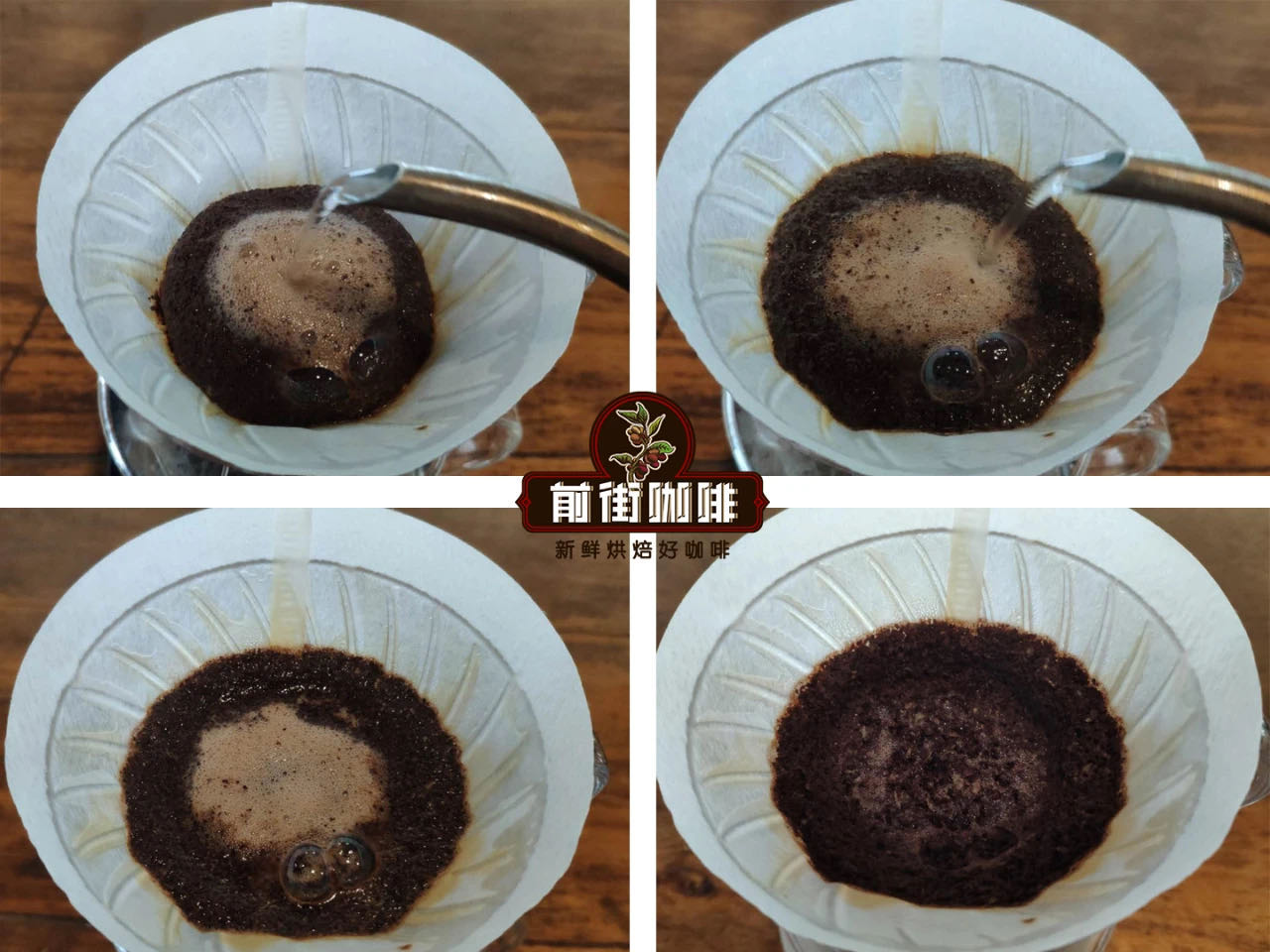
Center pouring means that after blooming, during the second pour, you begin at the inside and move outward in circles, pouring water to wet all the grounds, then return to the center point and keep pouring at that fixed spot. The method lets the grounds tumble regularly in the filter. Its advantage is more even extraction; its drawback is that the resulting coffee has a relatively low body. Many people say center pouring often fails to extract completely. FrontStreet Coffee believes center pouring can extract completely, and here is why.
Key Points About Center Pouring
1. The grounds in the filter actually form a honeycomb structure. Water passes through the coffee because of these honeycomb gaps, extracting water-soluble substances from the coffee.
2. The taste of the brew depends on the steeping time. Coffee flavor comes from the process of grounds steeping in water: sufficient steeping produces rich flavor, while insufficient steeping leaves a lighter taste. The water-retention capacity of the brewing tool is therefore an important factor. Flannel holds water better than filter paper, so flannel-brewed coffee is more concentrated than filter-paper extraction.
3. Water poured from the center flows through the most coffee grounds and extracts most completely.
FrontStreet Coffee's Tip
If you choose the center pouring method, watch the water flow speed and pouring time. The flow should be neither too strong nor inconsistent, which would cause uneven or insufficient extraction and bring out sharp acidity and vegetable-like defect flavors. If the time is too short, it is also hard to extract the coffee fully.
FrontStreet Coffee's KONO Filter for Medium-Dark Roast Coffee Beans
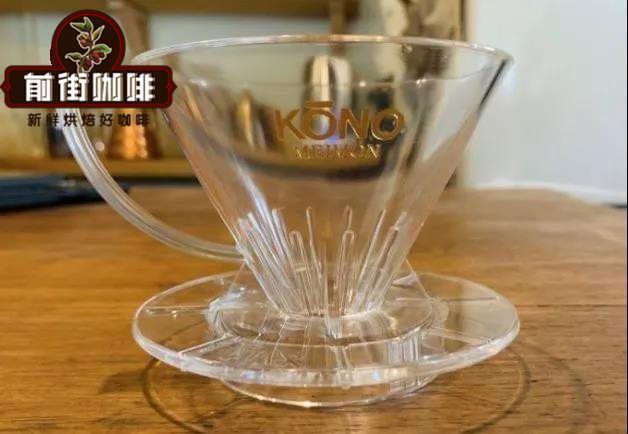
KONO is a renowned Japanese company specializing in coffee equipment. Since inventing the siphon pot in 1925, KONO has focused on bean roasting, research and development, and the production of coffee gear. Its creator was a Japanese man named Toshio Kono, and the filter is named after him.
Look closely at a KONO and you will see that its ribs do not run from the bottom all the way to the top, but stop at less than half the filter's height.
That height is what makes the filter paper cling closely to the wall after absorbing water during the drip. Once the exhaust space is restricted, airflow is limited too, which lengthens the time the ground particles absorb water and makes the overall cup more balanced, less prone to under-extraction.
The grooved frame at the bottom of the KONO filter is the key design that creates a siphon effect in brewing. It is said that President Kono spent more than 10 years settling on the depth and length of these ribs.
Extraction Characteristics
During brewing, once the water level submerges the ribs, the absence of diversion grooves at the top means the filter paper fits tightly against the cup wall, blocking air so it can only flow downward. This creates a relatively vacuum space between the water and the coffee particles and forms steeping of the grounds. At the bottom of the filter, the ribs extend to the outlet.
That design sets up a downward gravitational effect for the outflow. With the upper airflow blocked, a sealed space forms below, generating a relatively strong downward extraction force.
In terms of mouthfeel, the extracted flavors are relatively concentrated. The small opening at the bottom of the filter concentrates that extraction force further, giving the water flow more steeping time with the grounds, which results in higher body, very full flavors and the typical charm of Japanese pour-over.
Why FrontStreet Coffee Uses Segmented Circular Pouring? What Makes It Special?
FrontStreet Coffee's three-stage pour keeps the overall time to about 2 minutes, divided into blooming, a second pour and a third pour. Segmenting the extraction this way clearly separates the front, middle and back flavor segments of the coffee and safeguards the way those flavors come through.
Brewing coffee is really the process of extracting molecules from coffee cells, and it involves three steps, wetting, dissolution and diffusion. The three occur in sequence and influence one another, ultimately producing the coffee's flavor.
Wetting
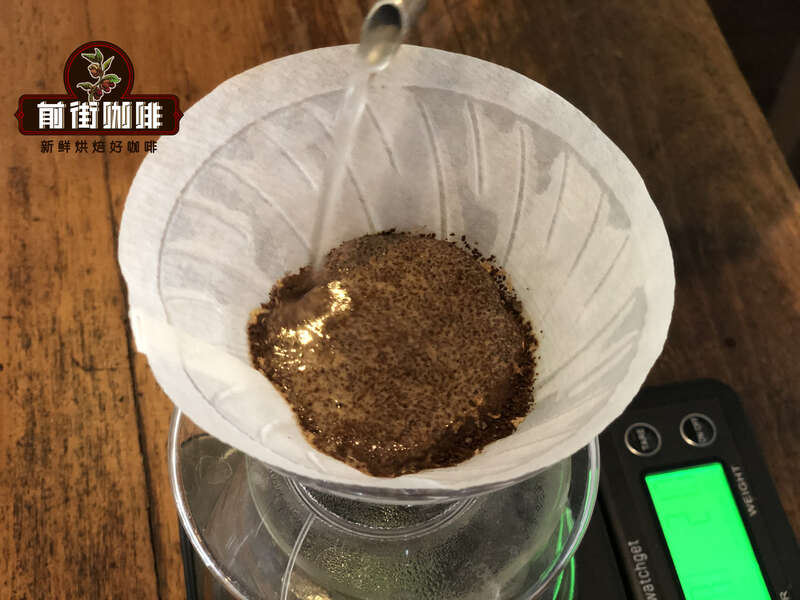
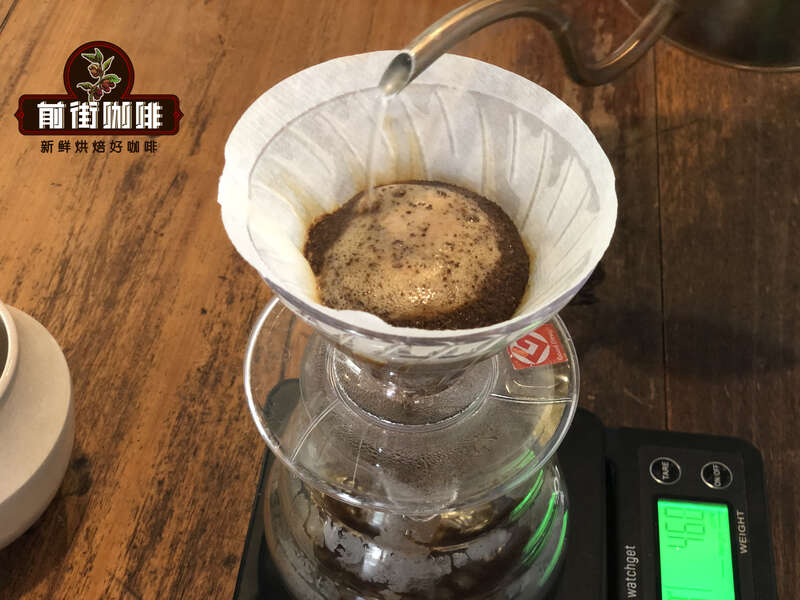
Wetting is exactly what it sounds like: the grounds get wet when they meet water, the starting point for coffee cells to begin releasing molecules. This is what FrontStreet Coffee often calls the blooming process.
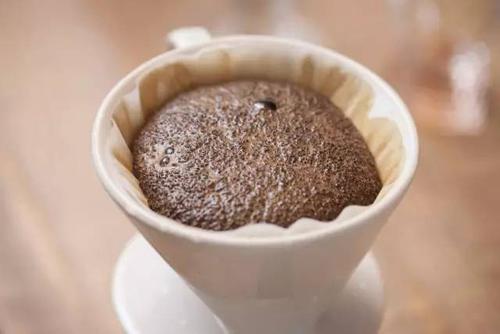
Roasted beans are full of carbon dioxide, and the fresher the beans, the more they hold. When hot water touches the grounds, carbon dioxide is released first, forming a layer of bubbles on the surface, and during pour-over you will see the grounds in the filter begin to expand. So after wetting the grounds we stop pouring and wait for the carbon dioxide to release completely and the grounds to stop expanding before adding more hot water, for a better extraction.
Dissolution
Dissolution is the process by which soluble molecules in the coffee cells dissolve in hot water. It is the most important step and determines the flavor that is extracted, what FrontStreet Coffee often calls the extraction process.
A coffee bean is made up of 70% insoluble cellulose and 30% soluble aroma molecules. When it meets water, these dissolve in order of molecular size. Small molecules dissolve first, including acids and aromas such as floral notes and citrus acids; then medium molecules for sweetness, like fruit-juice sweetness, honey and brown sugar; and finally large molecules for bitterness. This is how coffee's layers of flavor come about. So if you prefer sweeter flavors, the extraction time should be shorter, because the longer hot water stays on the grounds, the more bitter compounds dissolve.
Diffusion
Once aroma molecules dissolve, they leave the coffee cells by osmosis, a process called diffusion. The aroma molecules diffuse into the hot water to form the final coffee extract. As FrontStreet Coffee noted above, extraction draws out acids first, then sweetness, and finally bitterness. That is why coffee should be swirled a few times after brewing so the liquid mixes evenly and you taste the most complete flavor.
Hand-Drip Coffee vs. Cold Brew Coffee
After all that about pour-over coffee, some might ask what the difference is between pour-over and cold brew.
Common hand-drip coffee is a high-temperature extraction. Heat causes the tannic acid in coffee to break down quickly into quinones, producing sour, sweet and bitter tastes, what FrontStreet Coffee often calls the process of releasing coffee flavors.
Hot-water extraction easily releases the coffee flavors fully, and then begins to release the taste of the bean's lignocellulosic fibers, what we often call off-flavors, woody notes and other unpleasant flavors.
Cold brew and iced drip coffee, by contrast, are low-temperature extractions. Low-temperature extraction brings water and grounds into long contact at low heat, so only smaller molecular flavor substances such as floral and fruit aromas are extracted, while larger molecules such as smoky and roasted flavors are hard to draw out. Cold brew and iced drip therefore let you taste the bean's original flavors more clearly, with a smooth mouthfeel, distinct layers and an obvious sweet aftertaste.
FrontStreet Coffee Recommendation
Given how much of this article turns on the difference between hot pour-over and cold extraction, it is worth pairing the discussion with beans that suit the colder method. FrontStreet's Strawberry Candy Geisha blend is a cold-brew specialist: it marries the most representative Panama Geisha with a Costa Rican honey-processed coffee, one contributing delicate rose and orange notes, the other the grape, dried blueberry and strawberry-candy sweetness. Together they build a rich, layered cup, and cold-brewed it is sweet-and-sour and lively; left to settle and ferment a little longer, it takes on a fruit-wine quality.
FrontStreet's Natural Huakui is a fine choice for a floral cold brew as well. Cold extraction amplifies floral and fruity notes while playing down woody and roast tones, which suits this Ethiopian bean exactly. Its natural processing lets the beans absorb plenty of sweetness from the fruit and skin, and in a cold brew it expresses magnolia, creamy strawberry, dried mango, guava and black tea.
Important Notice :
FrontStreet Coffee is a long-established specialty coffee roaster in Guangzhou China, selling freshly roasted beans from its own farm in Yunnan as well as dozens of carefully selected single-origin beans from around the world for both pour-over and espresso. The products deliver consistently excellent quality and great value, with shipping within 24 hours. Guangzhou's FrontStreet Coffee shop is recommended by many coffee lovers, and the beans are now available online at the Tmall 。
FrontStreet Coffee has moved to a new address:
FrontStreet Coffee Address: 315,Donghua East Road,GuangZhou
Tel:020 38364473
 Scan and follow the En Gafei WeChat official account. Please indicate that the reprint comes from "En Gafei".