Recommended Premium Brazilian Coffee Bean Brands | Flavor Profile and Taste Characteristics
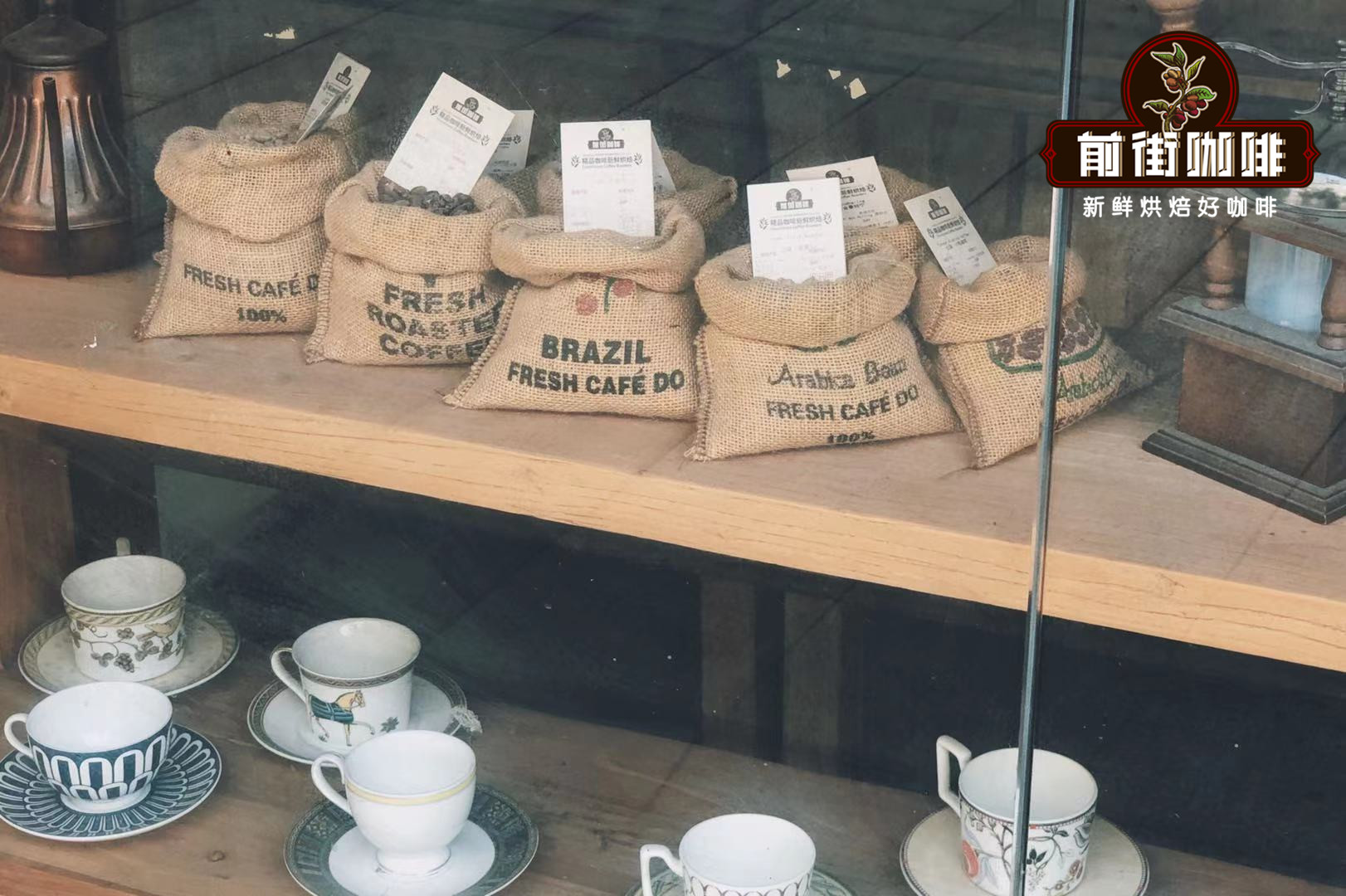
How should you choose coffee, and what is the coffee brand ranking? People new to coffee often start from brand rankings, assuming that a high rank means good coffee. In fact it does not. FrontStreet Coffee believes that freshness matters most — for single-origin beans, look at origin, altitude and processing method; for espresso beans, look at the blend recipe. Brand rankings are a reference, not a rule. Everyone's taste differs: someone else's No. 1 may not suit you, a high rank does not guarantee a good brand, and missing from a list does not make a brand bad. That much is worth understanding before going deeper.
The world's coffee divides into three broad regions: Africa, Asia and Latin America. Many guests at FrontStreet Coffee, faced with the 30-plus beans on display, suffer choice paralysis. The key to picking beans you will enjoy is knowing your own flavor preferences. FrontStreet Coffee usually carries over 50 single-origin brands covering growing regions worldwide. Varieties shift with the seasons, just as our current drip bags use the seasonal Brazilian Red Fruit beans — so whether a bean tastes good also depends on the season. Recommending by the three major regions is a sound approach. Today FrontStreet Coffee recommends by region, introducing ten brands with distinct flavors, also the ten most popular beans in the shop. Let's see what makes them special.
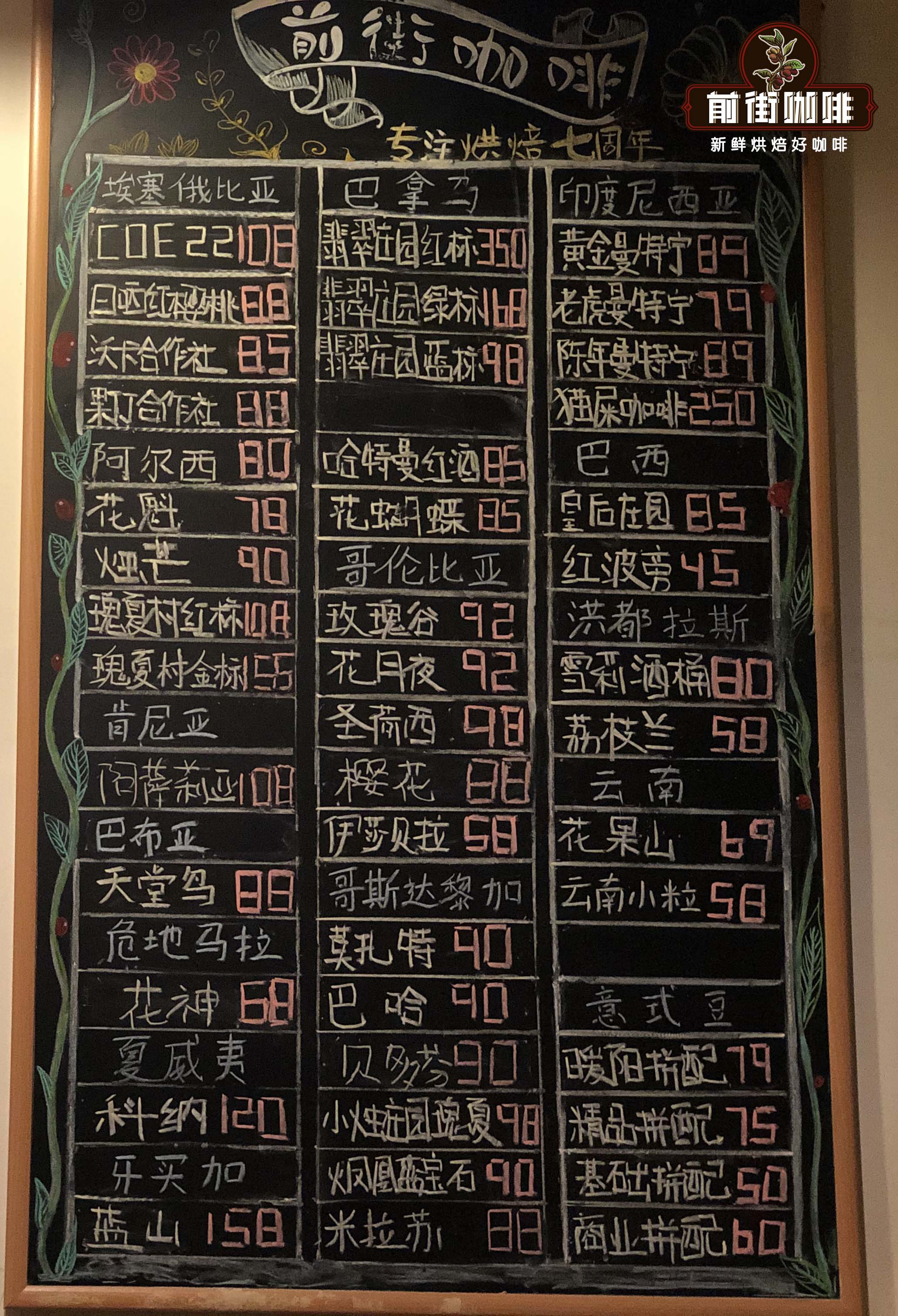
FrontStreet Coffee's Top Ten Coffee Bean Recommendations
African Region
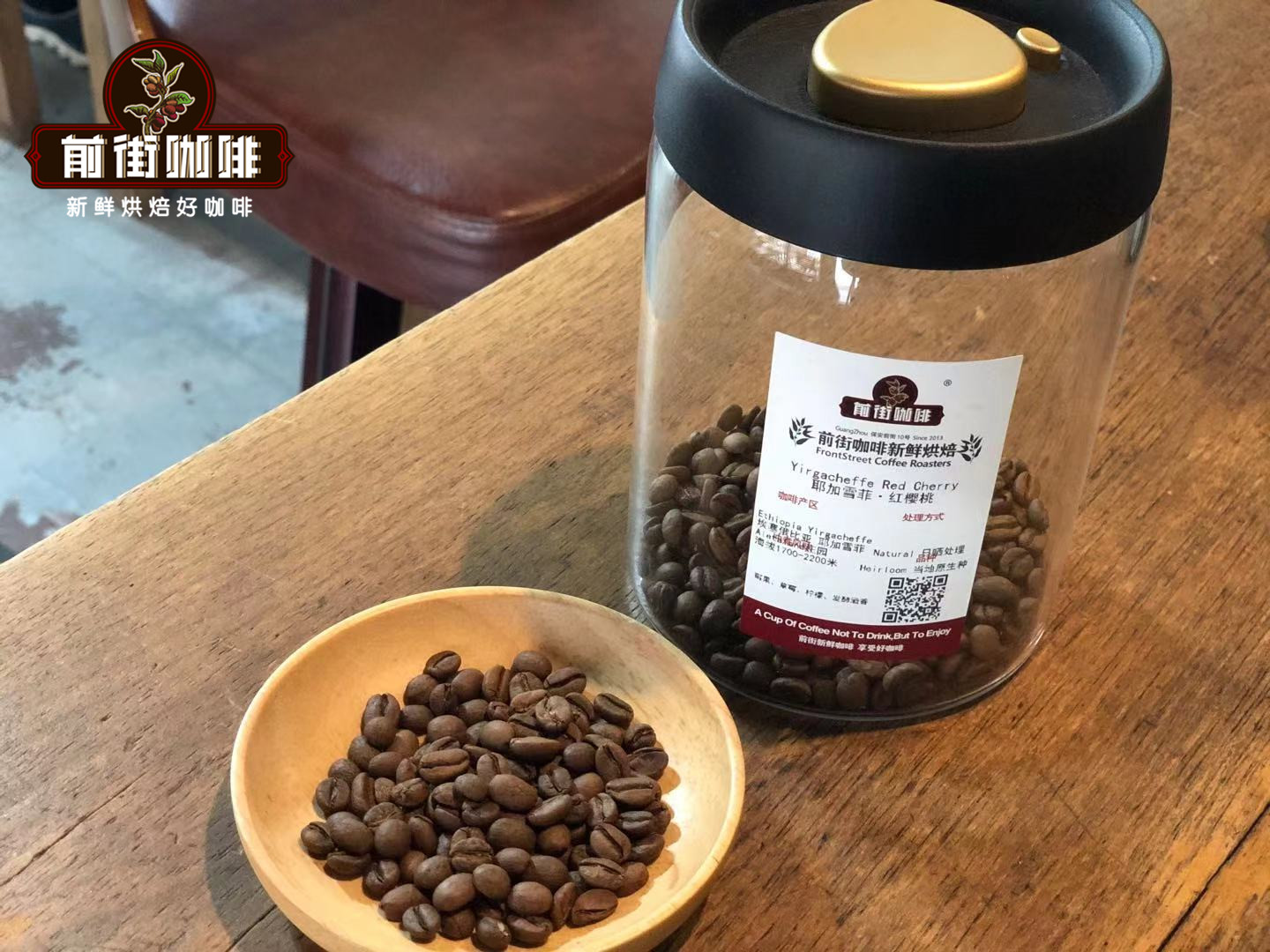
1. FrontStreet Coffee · Ethiopia Yirgacheffe Red Cherry
Region: Yirgacheffe, Ardentland Estate
Altitude: 1700-2200m
Grade: G1
Variety: Heirloom
Processing: Natural
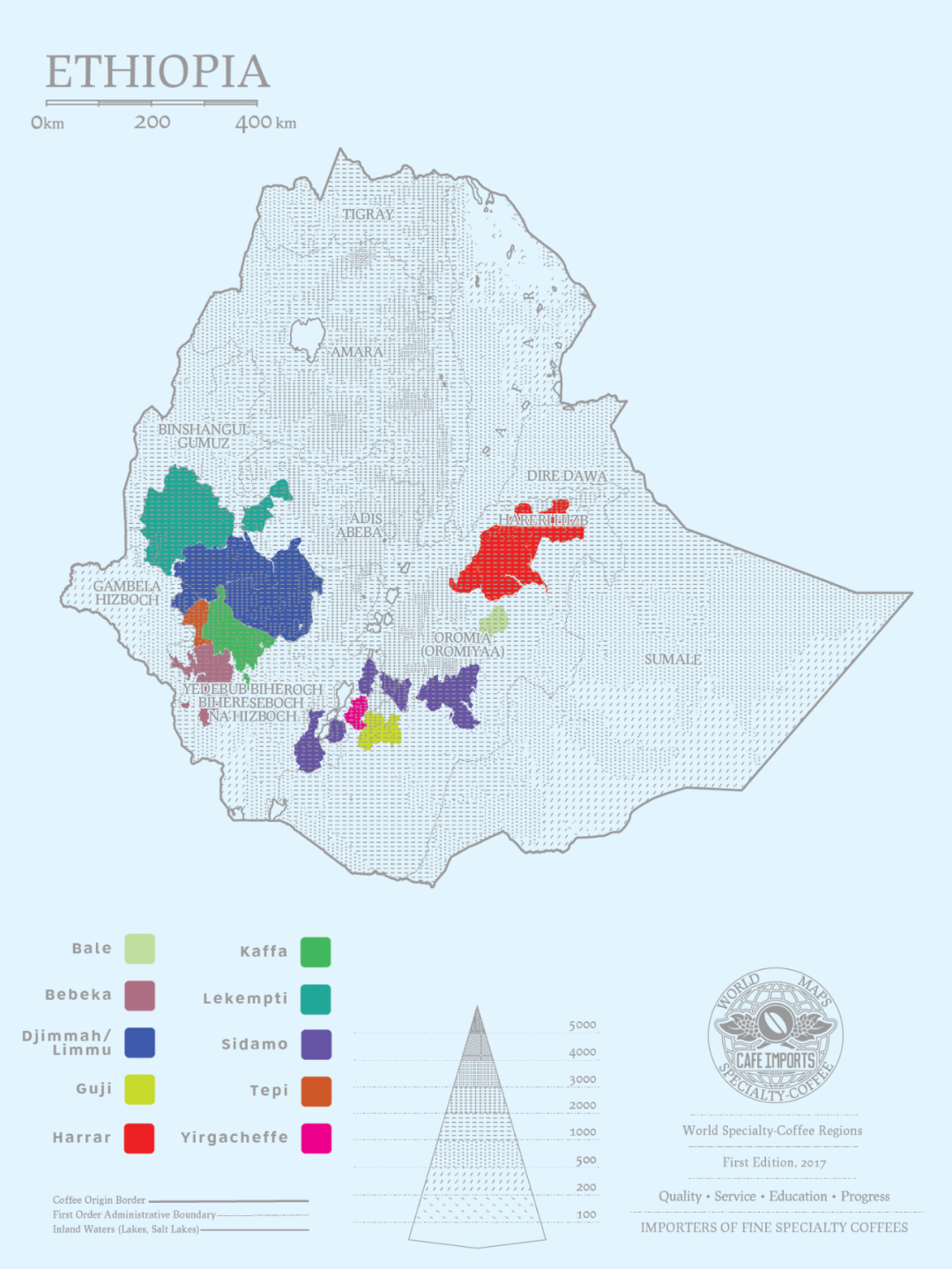
Ethiopia lies on the eastern side of the African continent. The "Gedeo zone" to which Yirgacheffe belongs sits in Ethiopia's southwestern Southern Nations, Nationalities, and Peoples' Region.
Yirgacheffe is a small Ethiopian town at an altitude of 1700-2100 meters. It is one of the world's highest coffee-growing regions and a byword for Ethiopian specialty coffee. Lakes Turkana, Abaya and Chamo bring abundant water vapor to the area.
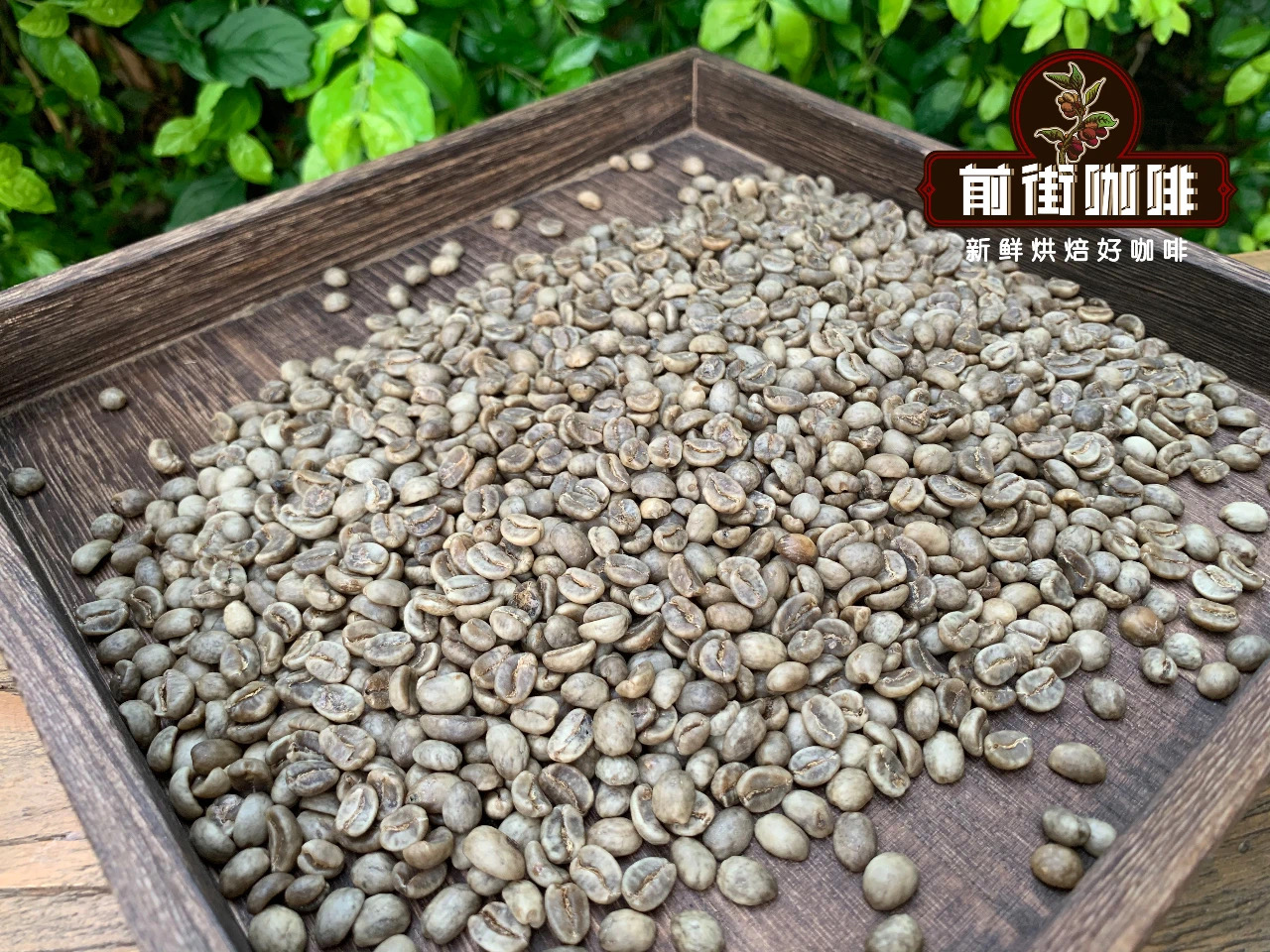
Yirgacheffe Red Cherry Coffee Grade
The ECX (Ethiopian Commodity Exchange) defines grades by defect rate: G1 and G2. G1 allows no more than 3 defective beans per 300g of green coffee, while G2 allows 4-12 per 300g. Besides Red Cherry, many other G1 FrontStreet Coffee Yirgacheffe beans appear on our list, including FrontStreet Coffee Kochere, FrontStreet Coffee Gedeb and FrontStreet Coffee Konga.
Coffee Bean Varieties
On FrontStreet Coffee's labels this bean's variety reads Heirloom, which differs from the variety naming used in many regions. Ethiopia simply has too many coffee varieties — a natural gene bank for Arabica. On one hand they are too numerous to classify; on the other, the Ethiopian government, for protection, is unwilling or unable to disclose the information. FrontStreet Coffee has noticed, however, that in this year's COE competition in Ethiopia, Ethiopian beans have begun using different variety names, all numbered.
Natural Processing Method
Natural processing, also called dry processing, places hand-picked, high-sugar cherries on raised beds or open ground to sun-dry. During drying they must be turned and mixed to avoid uneven drying or over-fermentation. After 2-4 weeks of complete drying, until moisture reaches 12%, the husker removes the pulp and skin. FrontStreet Coffee also offers a Red Cherry bean using the honey process; after selection, roasting and cupping, a FrontStreet Coffee Honey Red Cherry was chosen and put on the shelf, to good customer feedback.
When cupped by FrontStreet Coffee, this Honey Red Cherry shows citrus, lemon and fruit-candy flavors, with overall sweetness slightly higher than the FrontStreet Coffee Natural Red Cherry.
The Red Cherry Project
Red Cherry actually refers to the Red Cherry Project, jointly initiated by the Dutch trader Trabocca and local farmers to improve the quality of small farms. Picking requires not only selecting fully red, high-maturity fruit but harvesting entirely by hand, and there are corresponding requirements for processing. FrontStreet Coffee observes that today essentially every bean that qualifies as specialty coffee can be called Red Cherry coffee, because beans from these regions are all picked and processed under the Red Cherry Project approach.
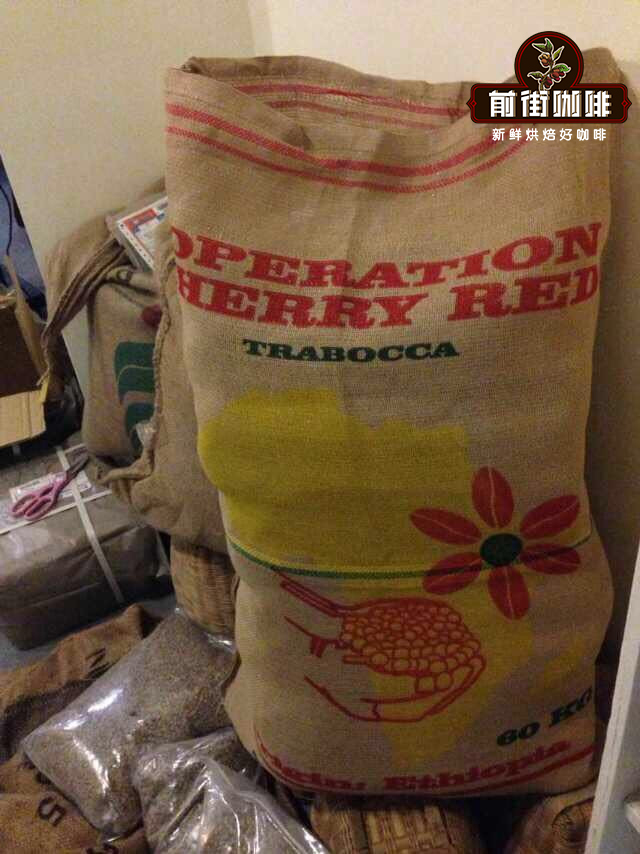
Ardentland Estate
Each smallholder at Ardentland Estate farms an average of about 0.6 hectares, and together they number in the hundreds. Cultivation sits at nearly 2000 meters, with wide temperature swings and fertile soil — excellent growing conditions. The green beans themselves carry rich raisin and fermented wine aromas.
FrontStreet Coffee Yirgacheffe Red Cherry Coffee Flavor Description
Lemon, licorice, citrus, berries, sweet orange, with high overall sweetness, caramel and cream in the aftertaste and a black tea aroma in the finish.
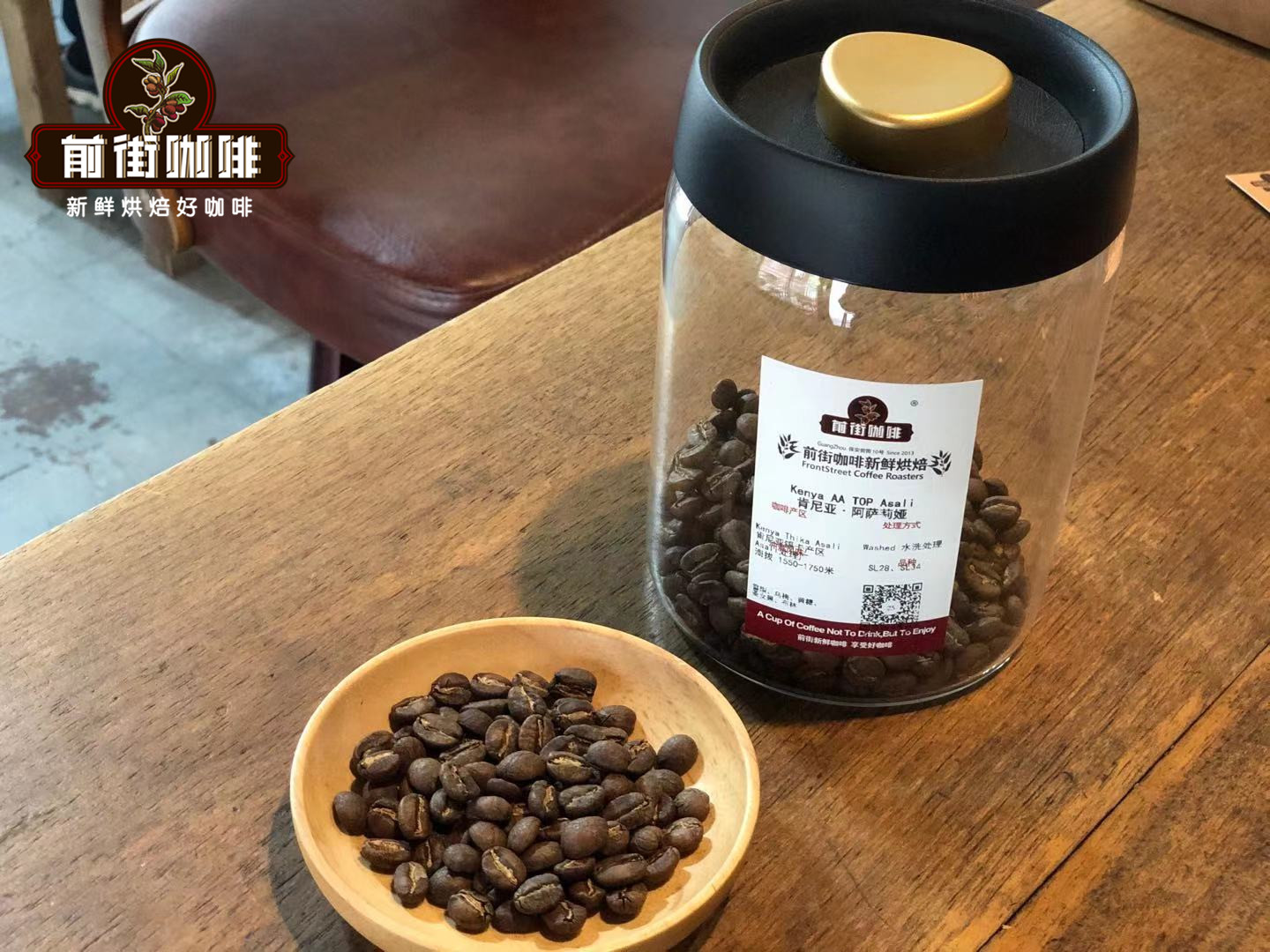
2. FrontStreet Coffee · Kenya Asalia
Region: Asalia Honey Processing Station, Thika
Altitude: 1550-1750m
Grade: AA TOP
Variety: SL28, SL34
Processing: K72 Washed
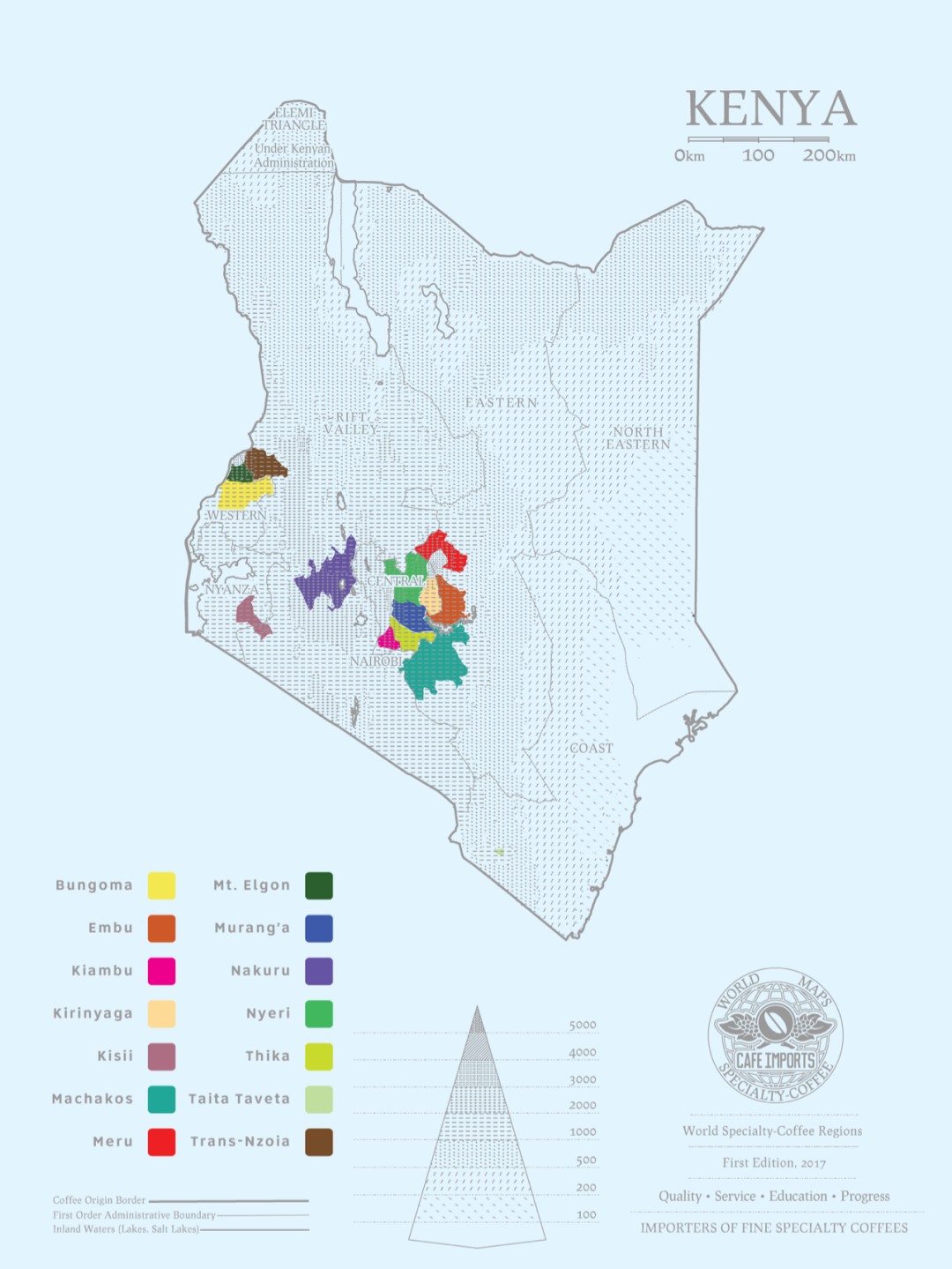
Kenya also lies in East Africa, bordering Ethiopia. Kenya only introduced coffee in the early 20th century, and unlike Ethiopia it came through the colonial power, Britain. During the colonial period Kenya built up its coffee economy, tilting the whole system toward fine management. Its breeding, grading and processing were far ahead of many producing countries at the time. It was decades before others saw the value of that fine management and began to copy it, gradually eroding Kenya's unique position.
Kenya Coffee Grades
Kenya grades coffee by bean size and cupping results. By size, shape and hardness, from highest to lowest: E, AA or AA+, AB, PB, C, TT, T. For AA and AB green beans, special grading by cupping result (not officially recognized by the Kenyan authorities but established by exporters), from highest to lowest: TOP, PLUS (+), FAQ.
Kenya's grading is clearly finer than Ethiopia's. FrontStreet Coffee often explains to customers why Ethiopian beans vary in size — the grading systems make it obvious. FrontStreet Coffee finds this is also Ethiopia's most distinctive trait: you can usually tell an Ethiopian bean just by looking.
Coffee Bean Varieties
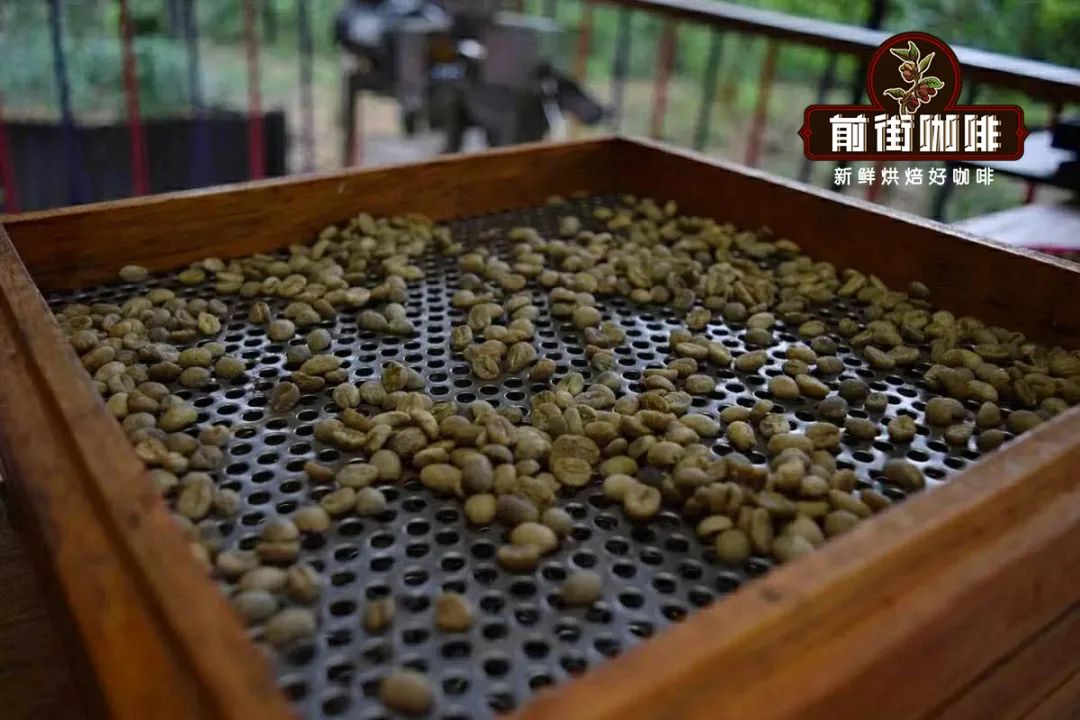
In 1922 Kenya established the Scott Agricultural Laboratory to research coffee cultivation. In the decade-plus that followed, the lab selected SL28 and SL34 as best suited to the region from 42 coffee varieties, giving the industry a strong start. SL28 belongs to the Bourbon genetic group, with original Bourbon's bright, rich acidity. SL34's lineage is closer to Typica, with a milder acidity than SL28.
K72 Washed Processing Method
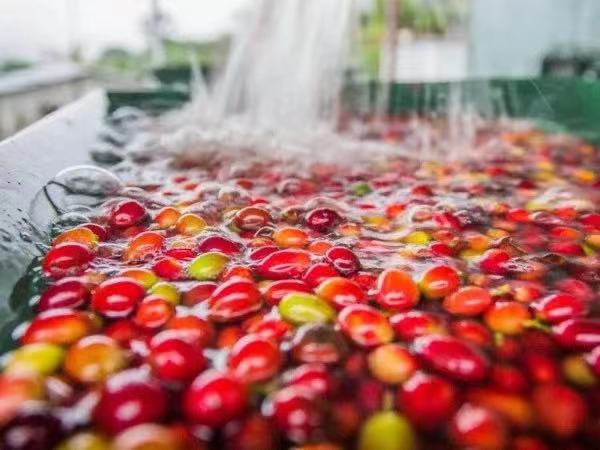
Kenya's washed processing is world-famous but differs from ordinary washing. The K72 method refers to a washed fermentation lasting up to 72 hours; ordinary washed processing rarely exceeds 36 hours. That ultra-long fermentation creates Kenyan specialty coffee's distinctive acidity. The process selects high-maturity fruit, removes the pulp and flesh, then soaks the beans in fermentation tanks to ferment and remove mucilage. This takes 72 hours, after which the beans are dried until moisture reaches 12%.
FrontStreet Coffee Kenya Asalia Coffee Flavor Description
Cherry tomato and berry aromas, with noticeable acidity on entry, a juicy mouthfeel, prominent mid-palate sweetness and a tea-like finish.
3. FrontStreet Coffee · Rwanda Gisakura
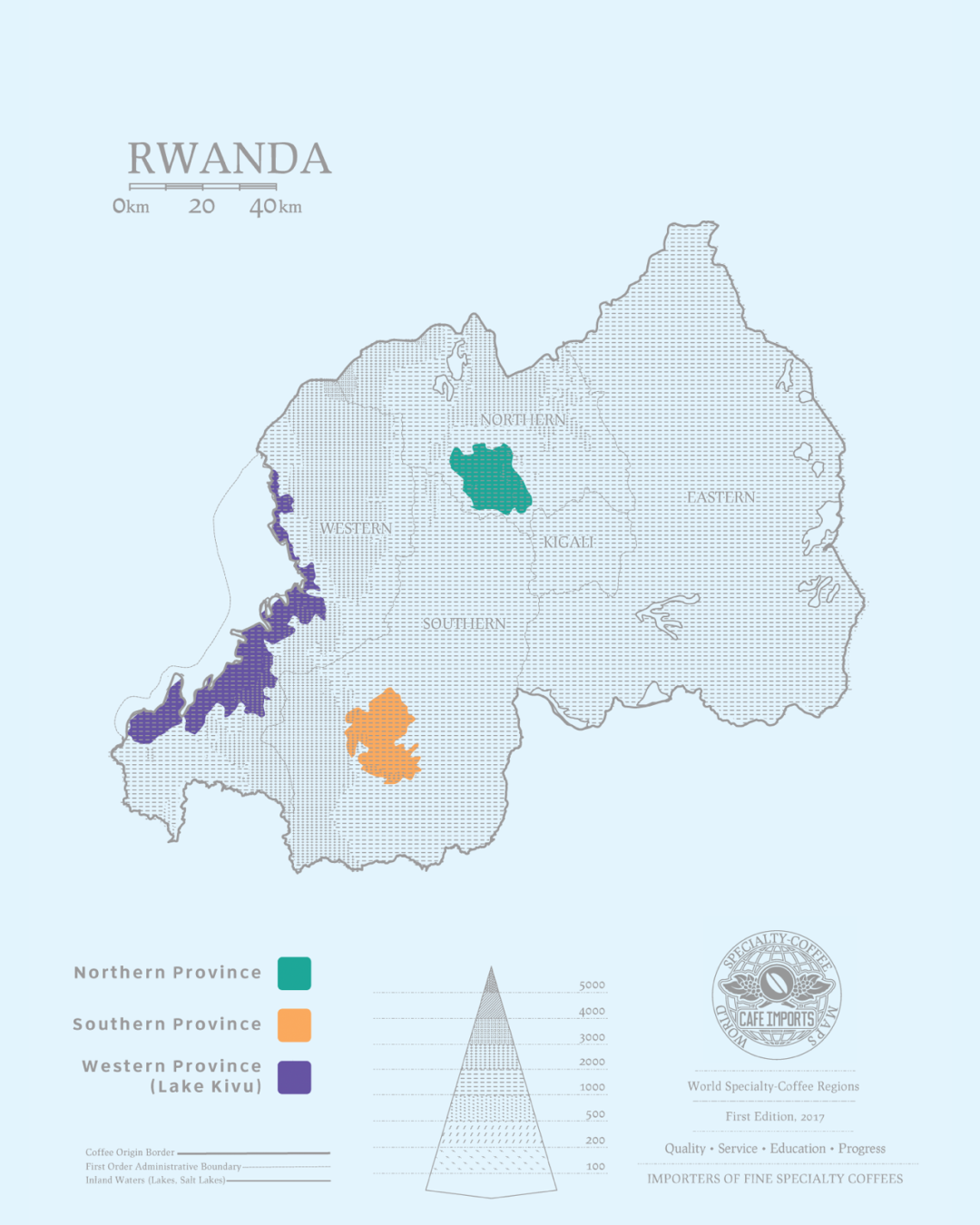
Region: Nyamasheke District, Western Province
Processing Station: Gisakura
Altitude: 1500m
Variety: Caturra, Catuai, Bourbon
Processing: Washed
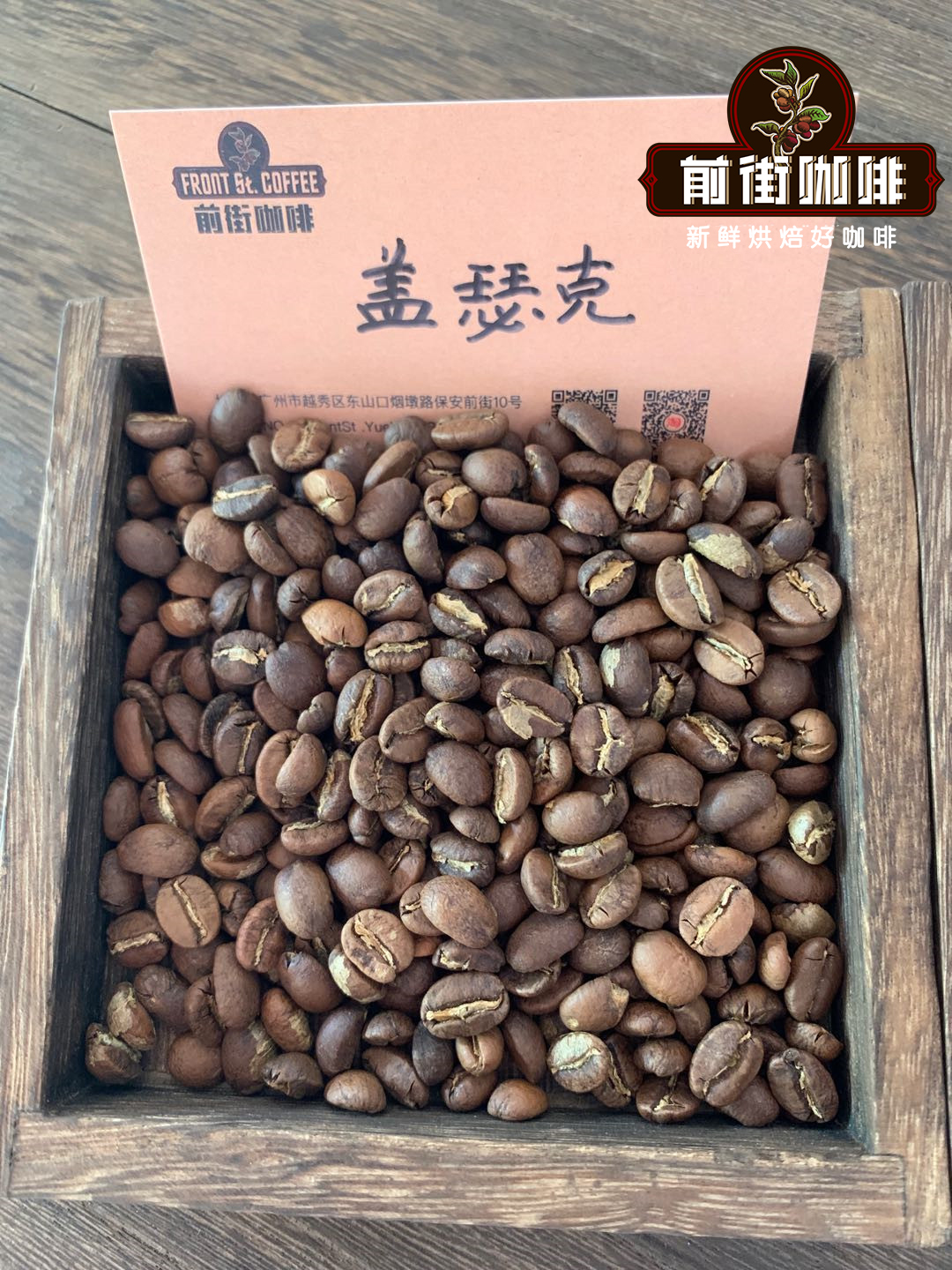
Rwanda is one of today's most closely watched coffee-producing countries. FrontStreet Coffee finds its beans no less impressive than Ethiopia's, so we roasted and cupped repeatedly before settling on a FrontStreet Coffee Rwanda bean with outstanding flavor.
Rwanda has ideal coffee conditions: high altitude, stable rainfall, volcanic soil and an organic environment. The variety is predominantly flourishing Bourbon. Rwandan coffee generally uses no chemical fertilizer or pesticide; soil nutrients come from natural ground cover and traditional fertilization. The vast majority is produced by smallholders — about 500,000 farming households, each owning less than one hectare. Although Rwanda has a long coffee history, quality only improved significantly in recent years.
Gisakura Washing Station
Fidele Ndagijmana is a young trader in the Nyamasheke region who saw the potential of Rwandan specialty washed coffee. He applied to the government to build the Gisakura washing station, successfully producing 170 tons of coffee cherries in its first year. He uses the off-season to improve and expand equipment, so the next harvest brings better machines and superior storage. He has also secured more land near the plant for cultivation.
Coffee Bean Varieties
Bourbon is a subspecies that mutated from Typica. Generally, Bourbon defaults to Red Bourbon, named for ripening red. Its characteristics: distinct dark chocolate, cocoa, nut and caramel flavors, smooth acidity and lower bitterness. FrontStreet Coffee carries several Bourbon beans, such as FrontStreet Coffee Brazil Red Bourbon and FrontStreet Coffee Queen's Manor Yellow Bourbon; while keeping Bourbon's character, they also carry regional differences, which we cover later.
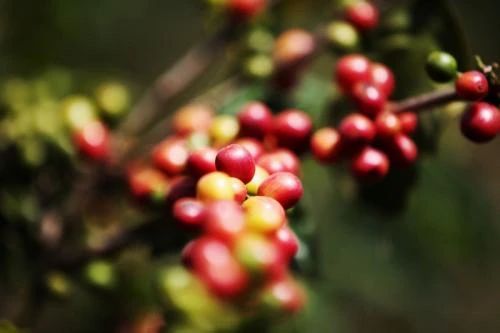
Caturra is a natural dwarf mutation of Bourbon, higher-yielding than its parent. It was first found in Brazil and began commercial cultivation there. An altitude of 1500-1700m suits it. Caturra's traits are bright acidity and low to medium body, with less clarity and sweetness than Bourbon. When FrontStreet Coffee cupped it, we found lemon or citrus acidity, but sweetness inferior to Typica and Bourbon.
Catuai is a hybrid of Mundo Novo and Caturra. It inherits Caturra's low stature and makes up for Arabica's weak disease resistance. It sets fruit solidly and does not drop easily in strong wind. Its greatest shortcoming is a flavor slightly more monotonous than Caturra.
Washed Processing Method
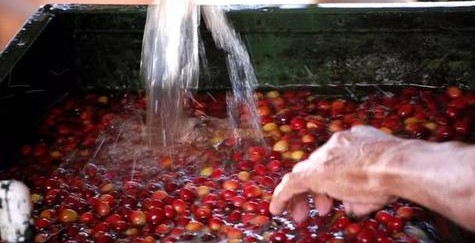
Rwandan beans mainly use washed processing. Each harvest, farmers pick ripe cherries and concentrate them at washing stations. First, manual selection keeps unripe or damaged fruit out. Then the pulp is removed and a 12-18 hour washed fermentation runs in a cool, low-temperature environment, cleaning the attached mucilage in channels. During drying on raised beds, station members turn the beans by hand, carefully ensuring that under sufficient sun the parchment doesn't lose moisture too fast or dry unevenly, until green bean moisture stabilizes below 14%.
FrontStreet Coffee Rwanda Gisakura Coffee Flavor Description
Cherry tomato and citrus aromas, with distinct citrus, berries and plum on entry, nuts in the middle and honey sweetness in the finish.
Latin American Region
4. FrontStreet Coffee · Panama Mariposa
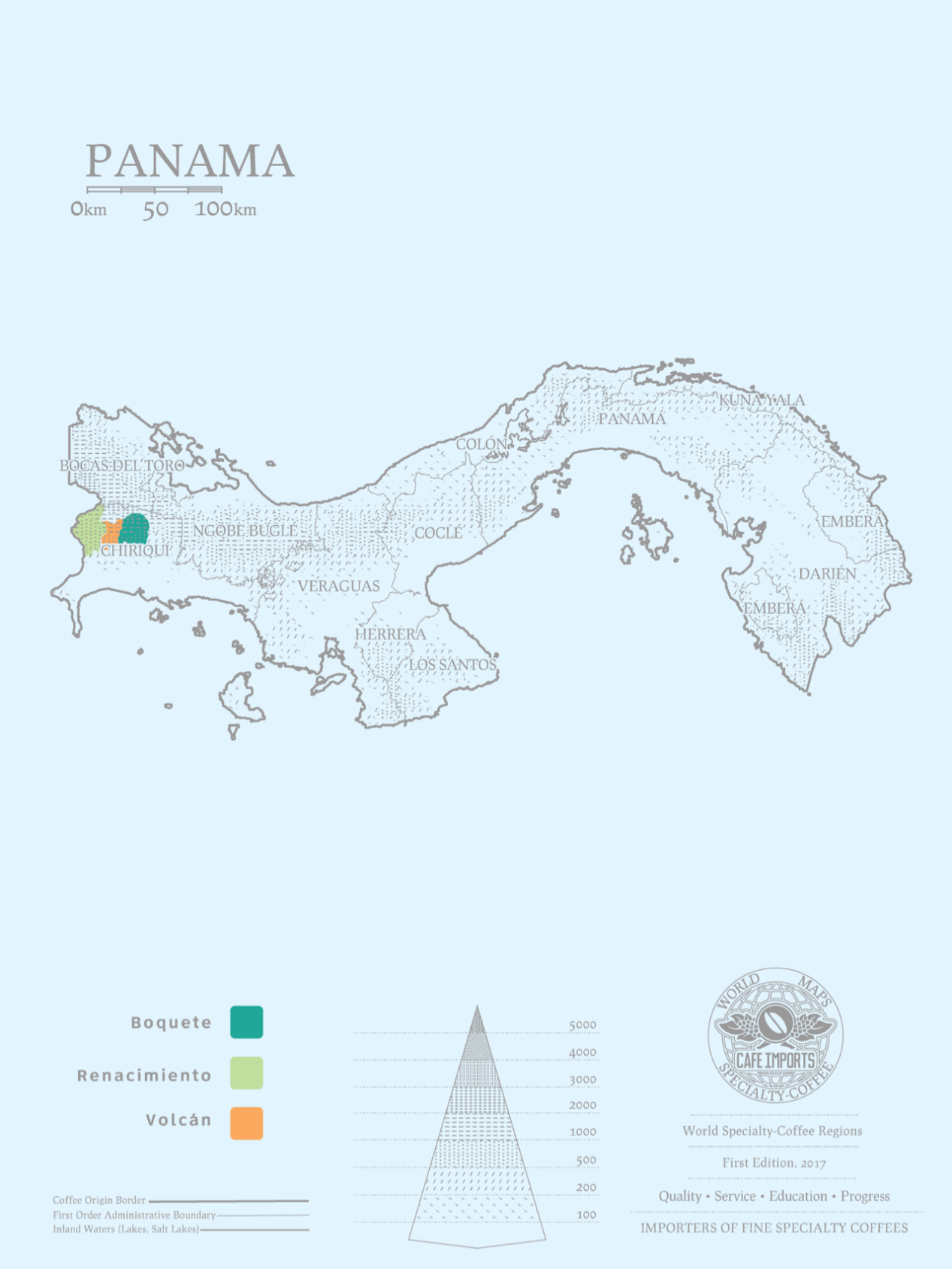
Region: Boquete
Altitude: 1600-1650m
Grade: SHG
Variety: Geisha (70%), Caturra, Catuai
Processing: Washed
Panama is a Central American country, bordering Costa Rica to the west and Colombia to the east. Coffee arrived with European immigrants in the 19th century. At the time, Panama had been independent from Spain for about 50 years, but as an agricultural product, Panama coffee only truly established itself in the last 20 years.
In climate, Panama sits near the equator with a tropical maritime climate — humid by day, cool at night. The annual average temperature is 23-27°C, with distinct dry and rainy seasons and annual precipitation of 1500-2500 millimeters.
Panama Coffee Grades
SHG: Strictly High Grown, above 1200 meters
HG: High Grown, 900-1200 meters
CS: Central Standard, 600-900 meters
Coffee Bean Varieties
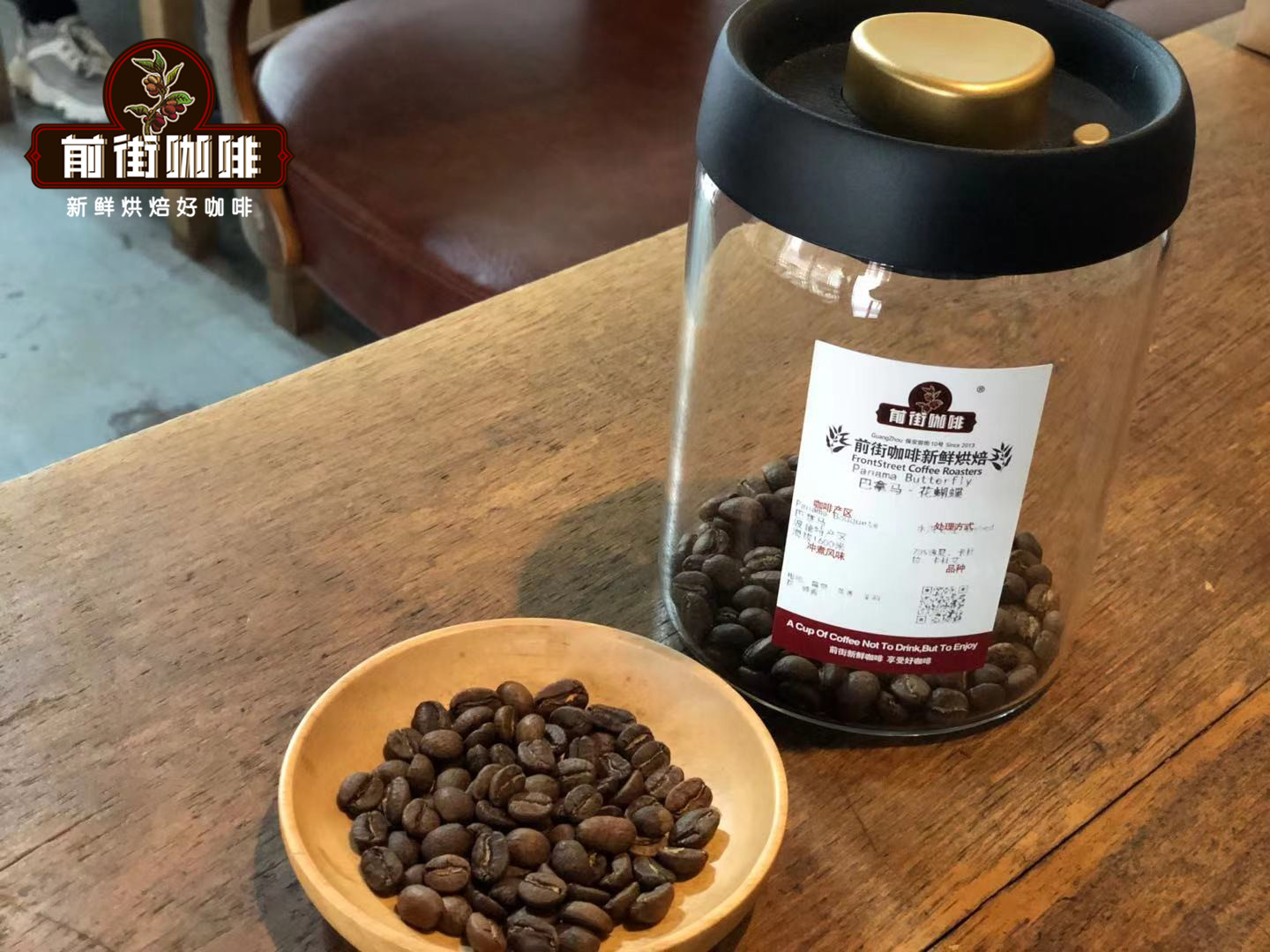
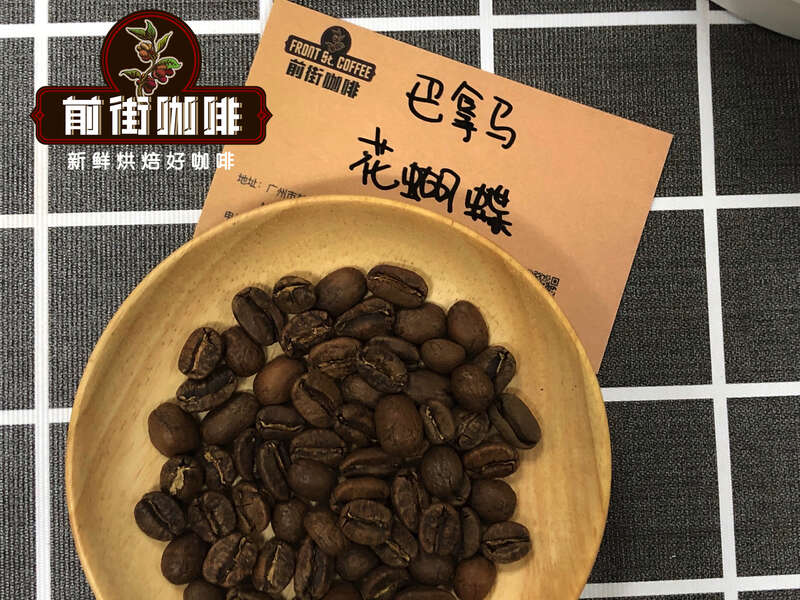
FrontStreet Coffee Panama Mariposa is 70% Geisha, the rest Caturra and Catuai. Remarkably, on top of excellent quality, its very approachable price makes it outstanding value.
Washed Processing Method
After picking, floating beans are removed, pulp and flesh are removed, and the beans are soaked in fermentation tanks. Enzymes in the water soften the mucilage and natural yeast breaks down its sugars — this is fermentation. Once complete, the beans are moved to drying grounds. During drying they need constant turning to ensure evenness until moisture reaches 12%.
Many customers ask about the difference between washed and natural. FrontStreet Coffee's answer is simple: washing highlights acidity, natural highlights sweetness. The essential operational difference is whether the fruit flesh is retained — natural keeps its flavor, washed does not. It is also easy to see: FrontStreet Coffee has a display area in the shop for beans of different processing methods. Washed beans show a silver line in the middle, residual silver skin, while natural beans do not.
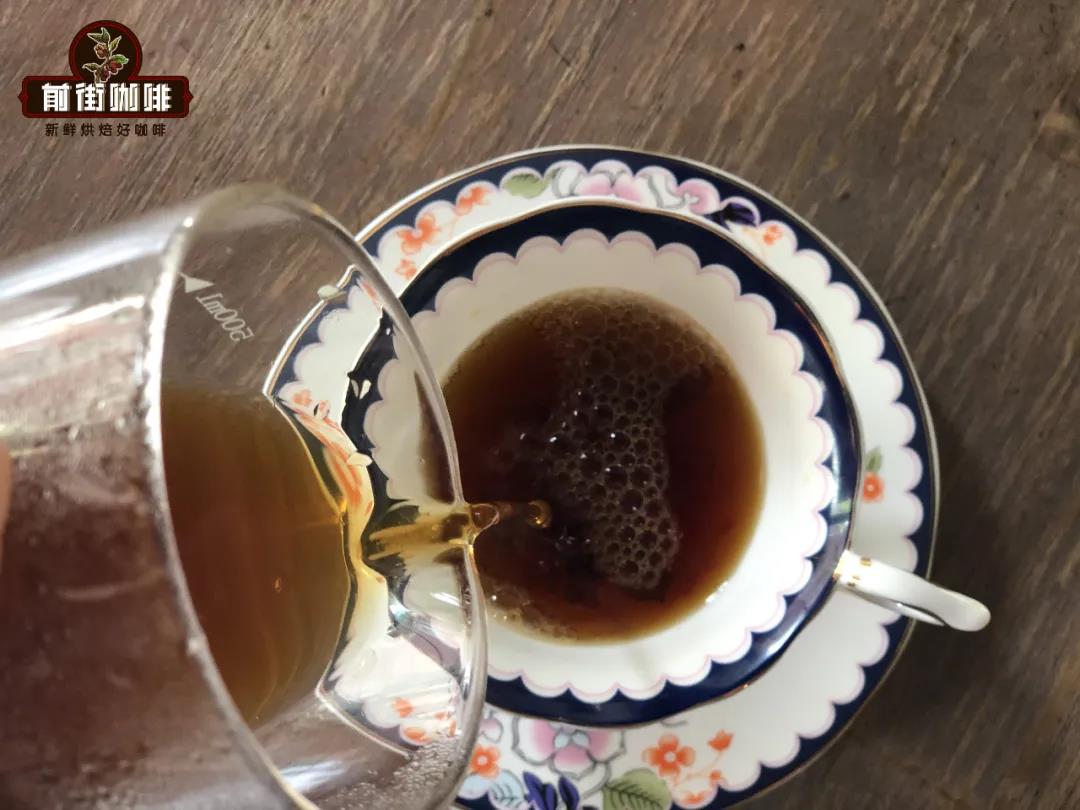
FrontStreet Coffee Panama Mariposa Coffee Flavor Description
Floral, black tea, berries, citrus, with slight nuts in the finish, a smooth mouthfeel, low bitterness, moderate acidity and a medium finish.
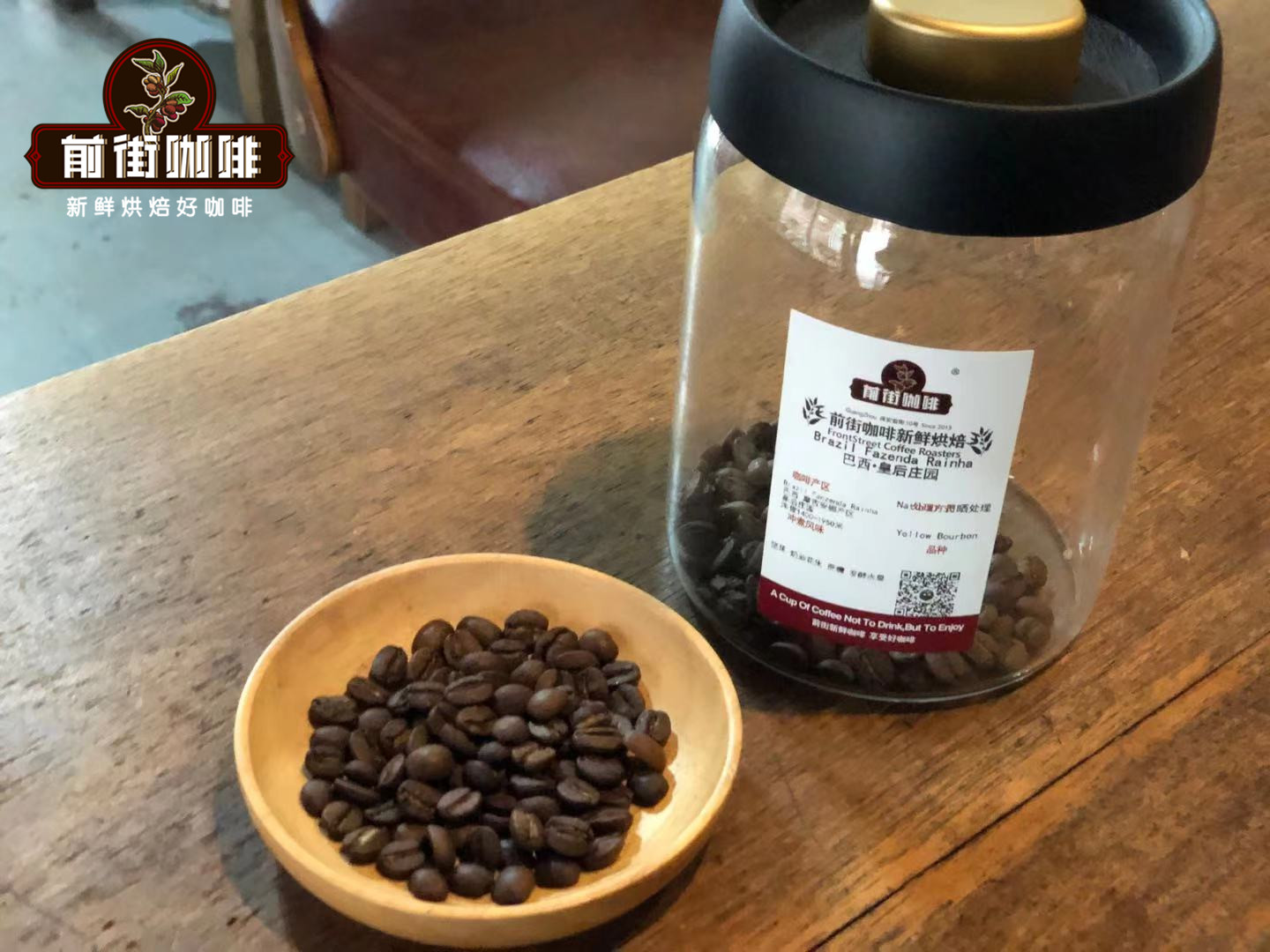
5. FrontStreet Coffee · Brazil Queen's Manor
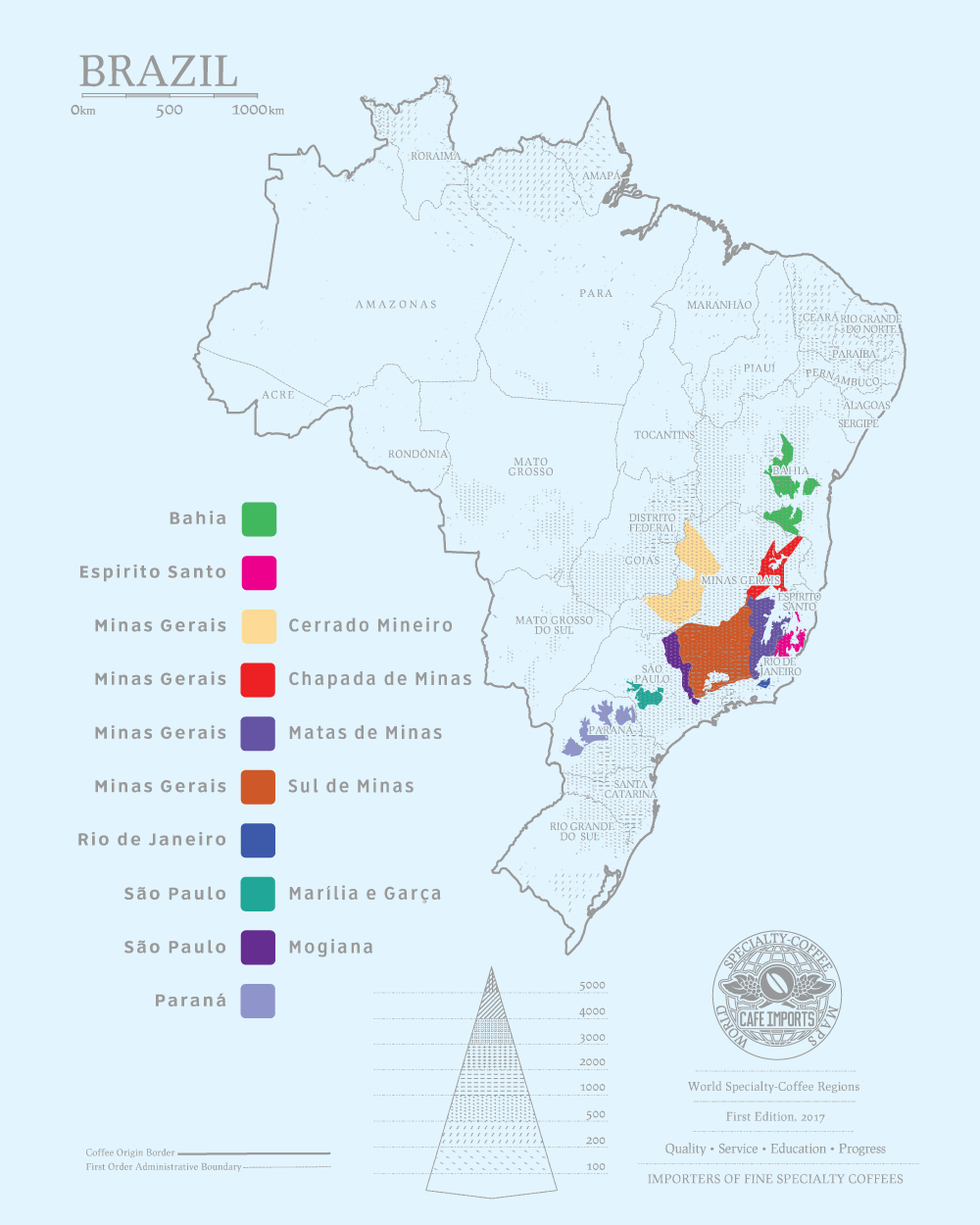
Region: Mogiana Estate, Queen's Manor, São Paulo State
Altitude: 1400-1950m
Variety: Yellow Bourbon
Processing: Pulped Natural
Brazilian coffee was introduced from French Guiana in 1720. Brazil was then a Portuguese colony, while many other South American countries were Spanish colonies — which is why most of South America speaks Spanish while Brazil speaks Portuguese.
The Portuguese officer stationed in Brazil, seeking to bring Guiana's coffee to Brazil (export was strictly prohibited at the time), won the heart of the Guiana governor's wife and succeeded in smuggling coffee seeds in. Coffee then adapted quickly, spreading from the north to southeastern São Paulo state. By 1845, Brazilian coffee accounted for 45% of the world's total and became São Paulo's main economic source.
Top Ten Brazilian Coffee Brands
Brazilian Coffee Grades
Among the coffee-growing countries of Central and South America, Brazil's altitude is relatively low. So, unlike Colombia, Brazil does not emphasize hard beans that only grow at altitude. Instead it grades beans on four criteria: bean size, defect rate, cupping score and flavor.
Flavor grade (high to low): Strictly Soft (very smooth), Soft (smooth), Softish (slightly smooth), Hardish (harsh), Rioy (iodine taste).
Defect rate grading: by number of defective beans, with 6 per 300g of green coffee being NY.2. Only completely defect-free beans reach NY.1, but such beans are rare and cannot be supplied in stable volume, so the best grade among Brazilian green coffee is NY.2.
| Type | Defective Beans (per 300g) |
|---|---|
| NY.2 | 6 |
| NY.2/3 | 9 |
| NY.3 | 13 |
| NY.3/4 | 21 |
| NY.4 | 30 |
| NY.4/5 | 45 |
| NY.5 | 60 |
| NY.5/6 | >60 |
Cupping quality grading (high to low): Fine Cup, Fine, Good Cup, Fair Cup, Poor Cup, Bad Cup. FC (Fine Cup) and GC (Good Cup) are the most common.
Bean size grading: the largest screen for Brazilian beans is 19, but supply is limited, so 17 and 18 screens are considered the highest grade.
Top Ten Brazilian Coffee Brands
| Type | Quality |
|---|---|
| NY.2 | 17-18 screen FC |
| NY.2/3 | 14-16 screen FC |
| NY.3/4 | DD Quality |
| NY.4/5 | 14-16 screen GC |
Top Ten Brazilian Coffee Brands
Coffee Bean Varieties
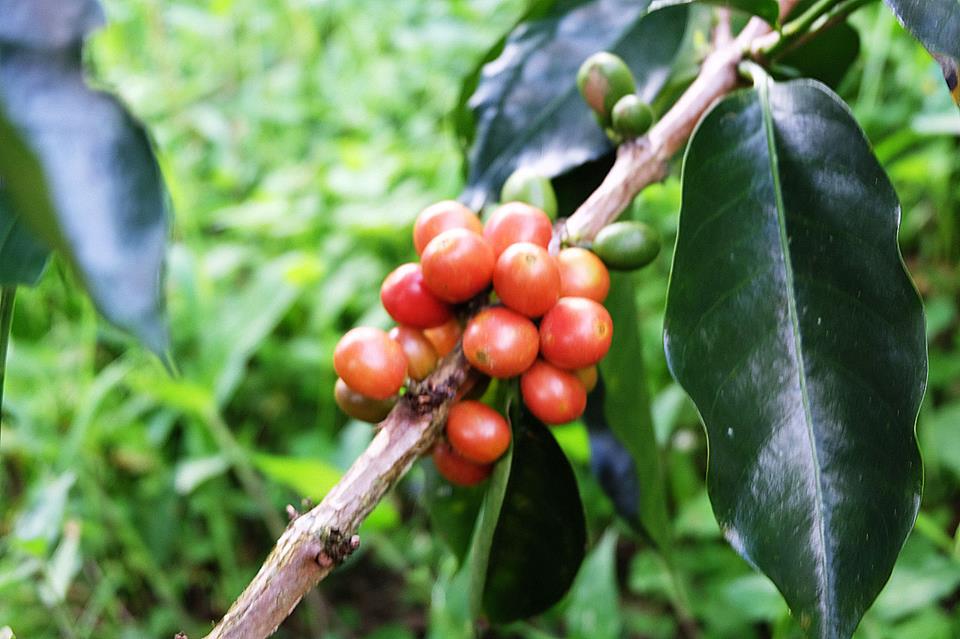
Bourbon is a subspecies that mutated from Typica, generally defaulting to Red Bourbon, named for ripening red. Yellow Bourbon does not mean unripe Red Bourbon: it is a hybrid of Bourbon with a yellow-fruiting Typica variety, so it ripens yellow. Because it yields less and resists wind and rain poorly, it has not been widely planted.
Pulped Natural Processing Method
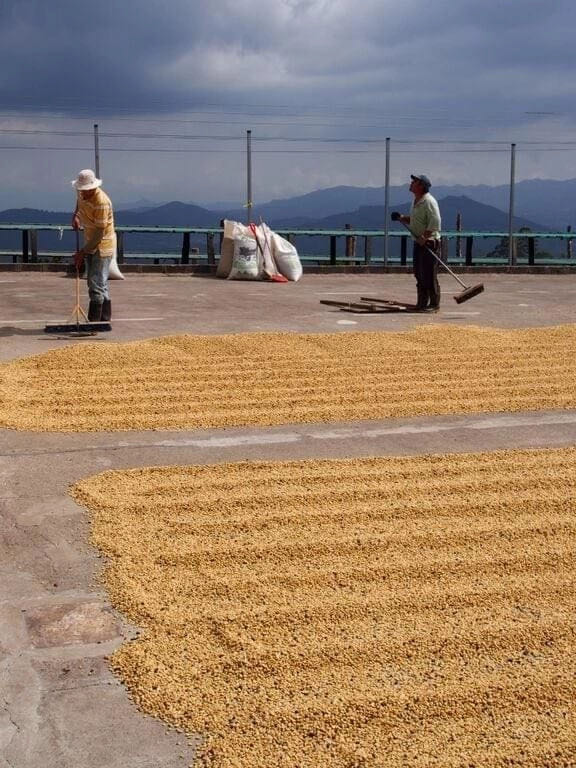
Pulped natural processing selects suitable cherries, removes the pulp, flesh and part of the mucilage, then dries with a small amount of mucilage remaining until moisture reaches 12%.
FrontStreet Coffee Brazil Queen's Manor Coffee Flavor Description
Rich nut and dark chocolate flavors, fermented fruit, with noticeable sweetness, a light lemon aroma and an overall mellow impression.
Top Ten Brazilian Coffee Brands
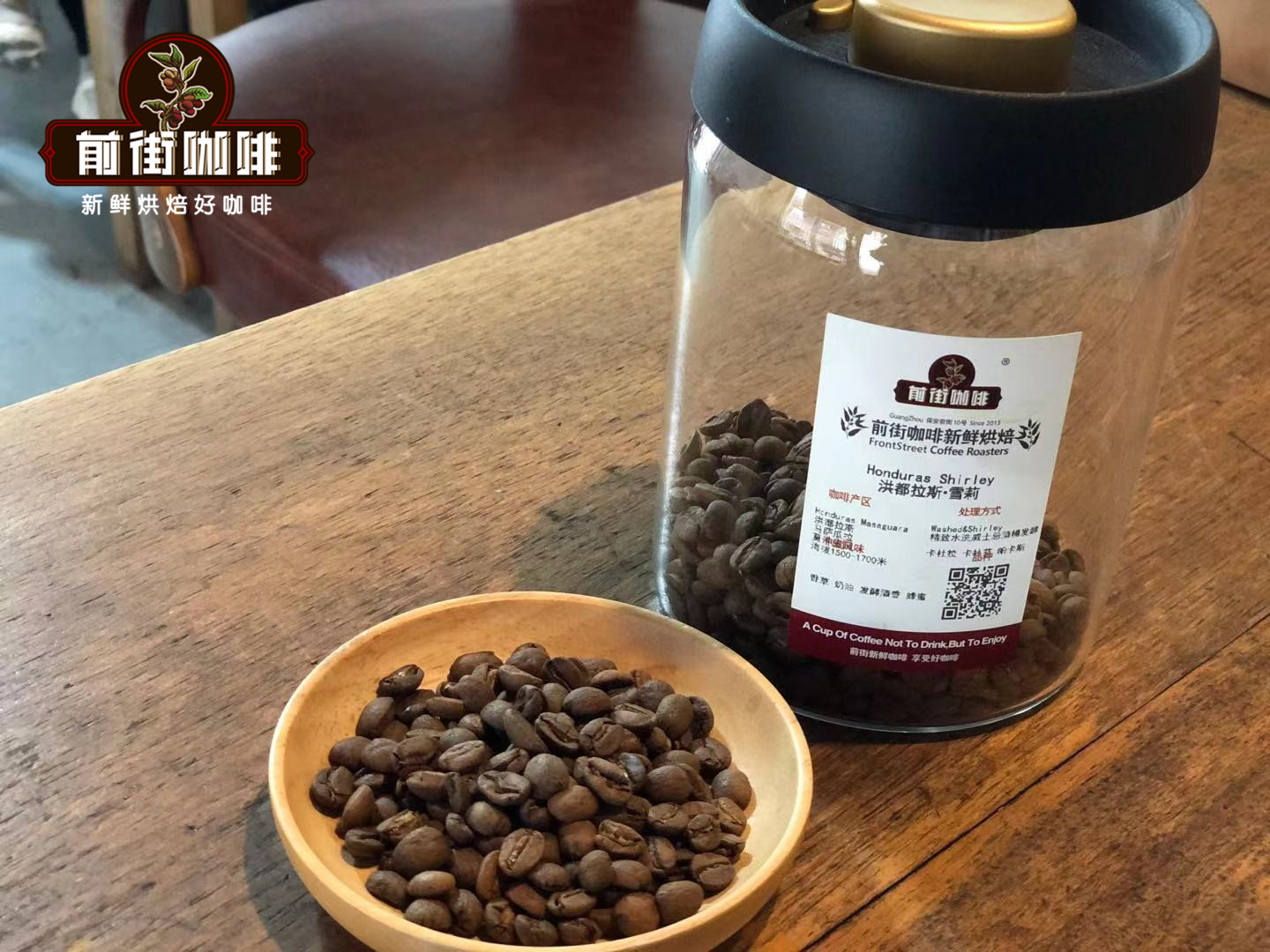
6. FrontStreet Coffee · Honduras Sherry
Region: Moca Estate, Masaguara, Intibucá Province
Altitude: 1500-1700m
Variety: Caturra, Catuai, Pacas
Processing: Refined Washed Whiskey Sherry Barrel Fermentation
Honduras lies in northern Central America, bordered by the Caribbean Sea to the north and the Gulf of Fonseca to the south, with Nicaragua and El Salvador to the east and south and Guatemala to the west. It is mostly mountainous and plateau, with a tropical climate, mild temperatures and abundant rainfall — ideal for coffee.
Honduras has 280,000 hectares of coffee plantations, mainly small farms, most under 3.5 hectares. These account for sixty percent of Honduras's total coffee production.
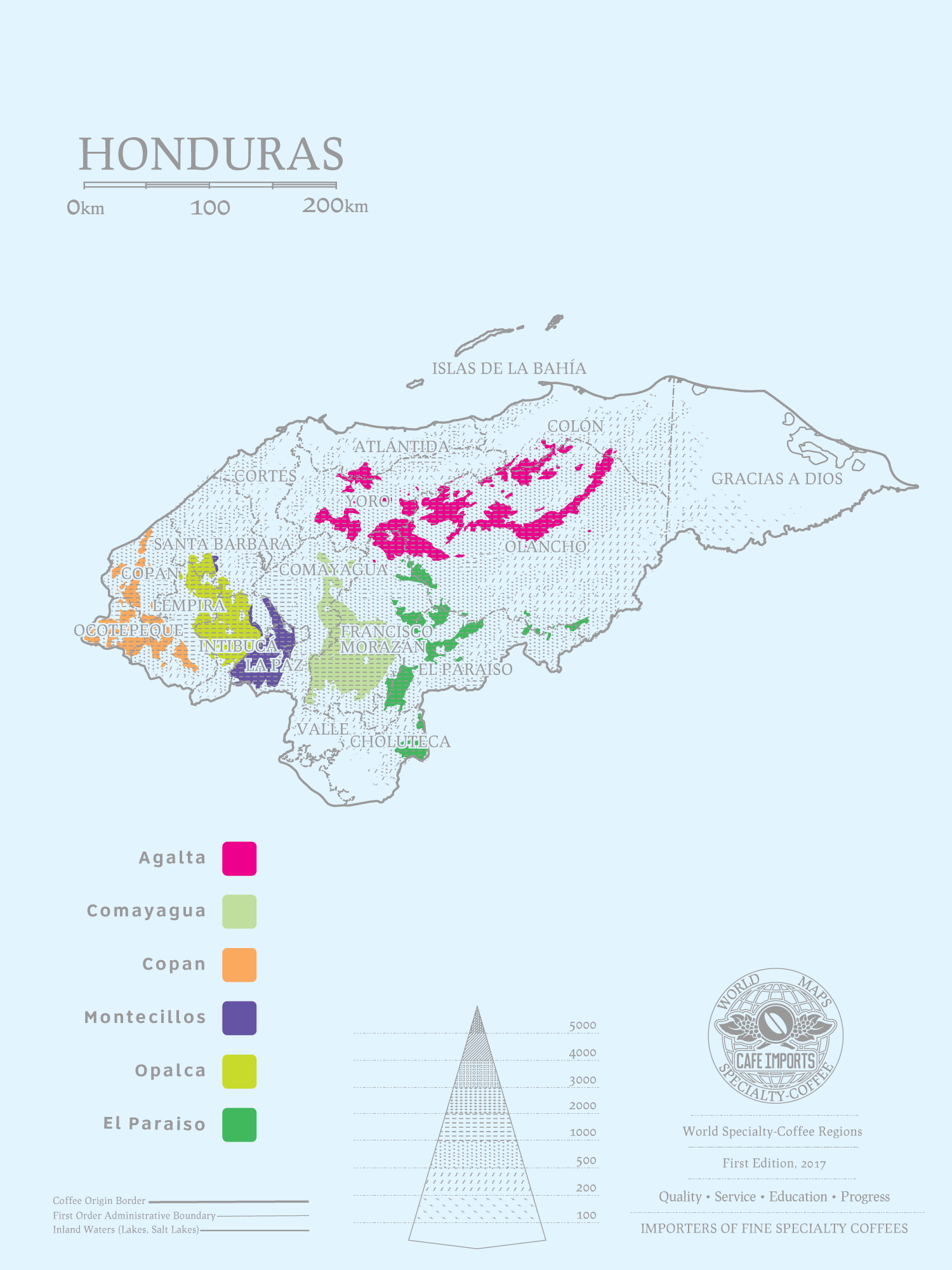
Honduras has six main coffee regions: Copán, El Paraiso, Comayagua, Opalaca, Montecillos and Agalta. Average cultivation altitude is 1000-1600m, with main varieties including Bourbon, Caturra, Typica, Catuai and Pacas.
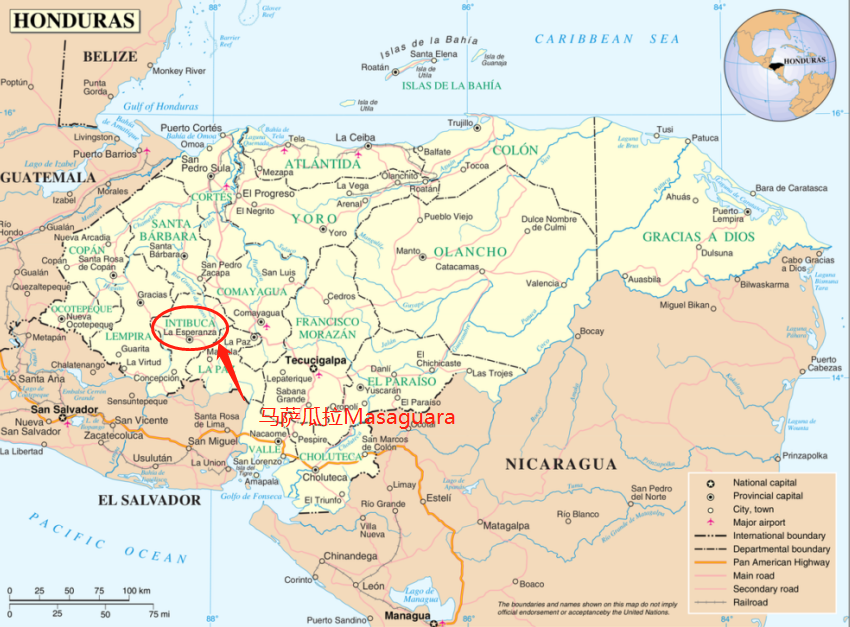
Moca Estate is not among those six but lies in Masaguara city, Intibucá province, in southwestern Honduras.
Coffee Bean Varieties
Sherry beans consist of Caturra, Catuai and Pacas. Caturra and Catuai were covered with Rwanda earlier, so FrontStreet Coffee will not elaborate here.
Pacas is a natural mutation of Bourbon discovered in El Salvador. In 1935 Salvadoran farmers planted selected San Ramón Bourbon on their estate. By 1956 the Pacas family noticed a few trees producing significantly higher yields than most, and invited Professor Gwell of the University of Florida to identify them. It proved to be a Bourbon gene mutation and was named after the farmer Pacas. Pacas is high-yielding and good quality, and very popular in Central America.
Refined Washed Whiskey Sherry Barrel Fermentation
Barrel fermentation draws inspiration from winemaking. Its greatest effect on wine is that the wine gains structural stability through moderate oxidation and takes on barrel aromas. In coffee it plays a similar role.
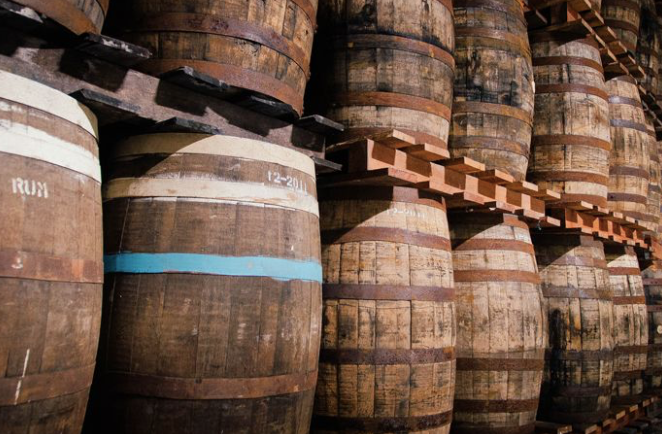
This bean uses refined washed whiskey sherry barrel fermentation. Freshly picked cherries first undergo refined washed processing, then rest in sherry-aged barrels for low-temperature fermentation over 30-40 days (about 15-20°C), followed by shade drying.
Sherry barrels are those used by sherry producers in the whiskey industry for aging. Sherry production undergoes the Solera System aging process — mixing and aging sherry of different vintages after fortification, which is what creates sherry's unique flavor.
This year, specially processed beans have been very popular. Several barrel-fermented beans on FrontStreet Coffee's list are also well liked, such as the FrontStreet Coffee Lychee Lan with brandy-like flavors, the FrontStreet Coffee Hartmann with red-wine flavors and the FrontStreet Coffee San Jose with rum-like flavors.
FrontStreet Coffee Honduras Sherry Coffee Flavor Description
Noticeable wine aroma, vanilla, cream, balanced, cocoa finish, moderate acidity.
7. FrontStreet Coffee · Jamaica Blue Mountain
Region: Newcastle Region, Clifton Manor Estate
Altitude: 1310m
Grade: Blue Mountain No. 1
Variety: Typica
Processing: Washed
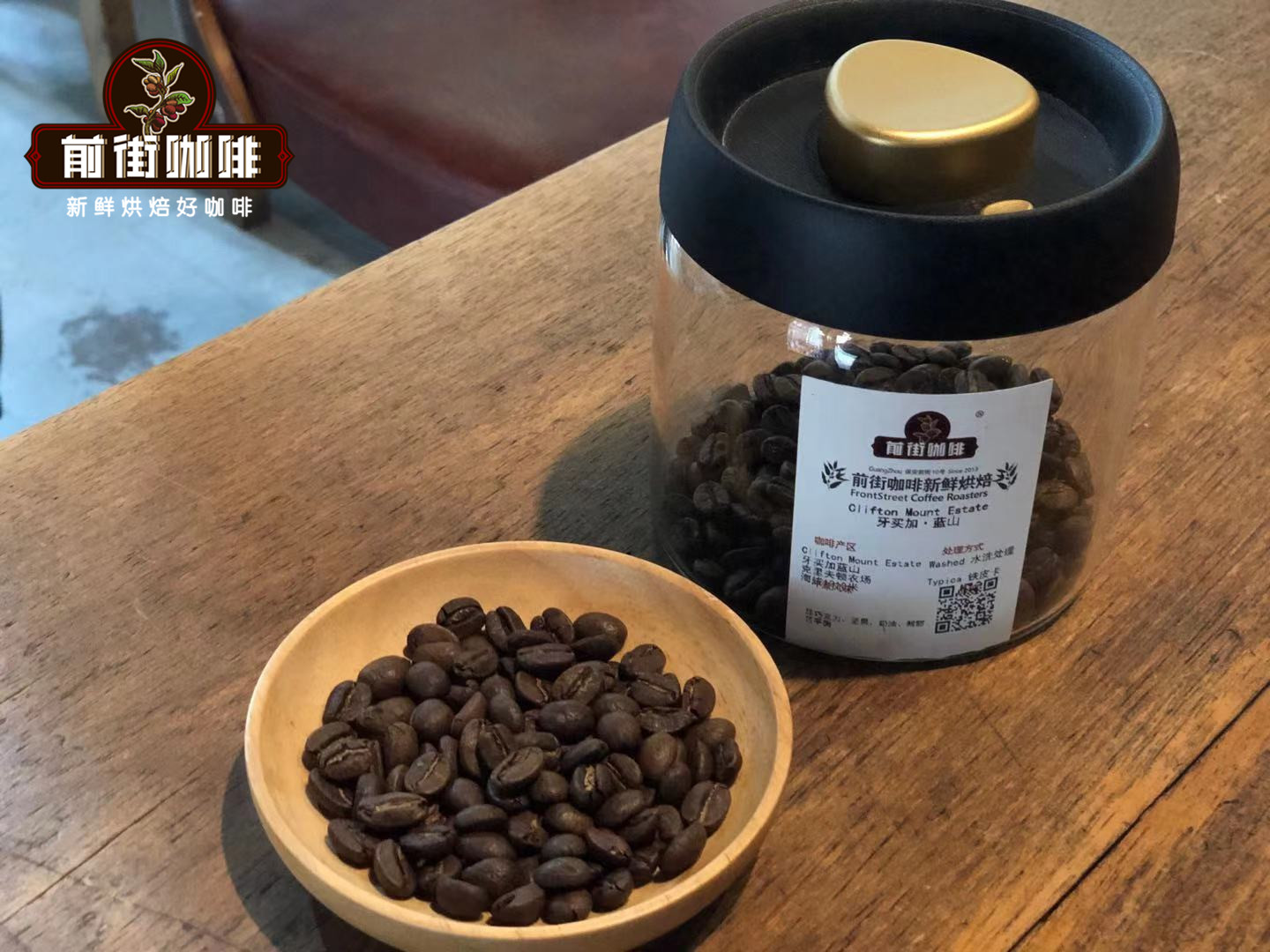
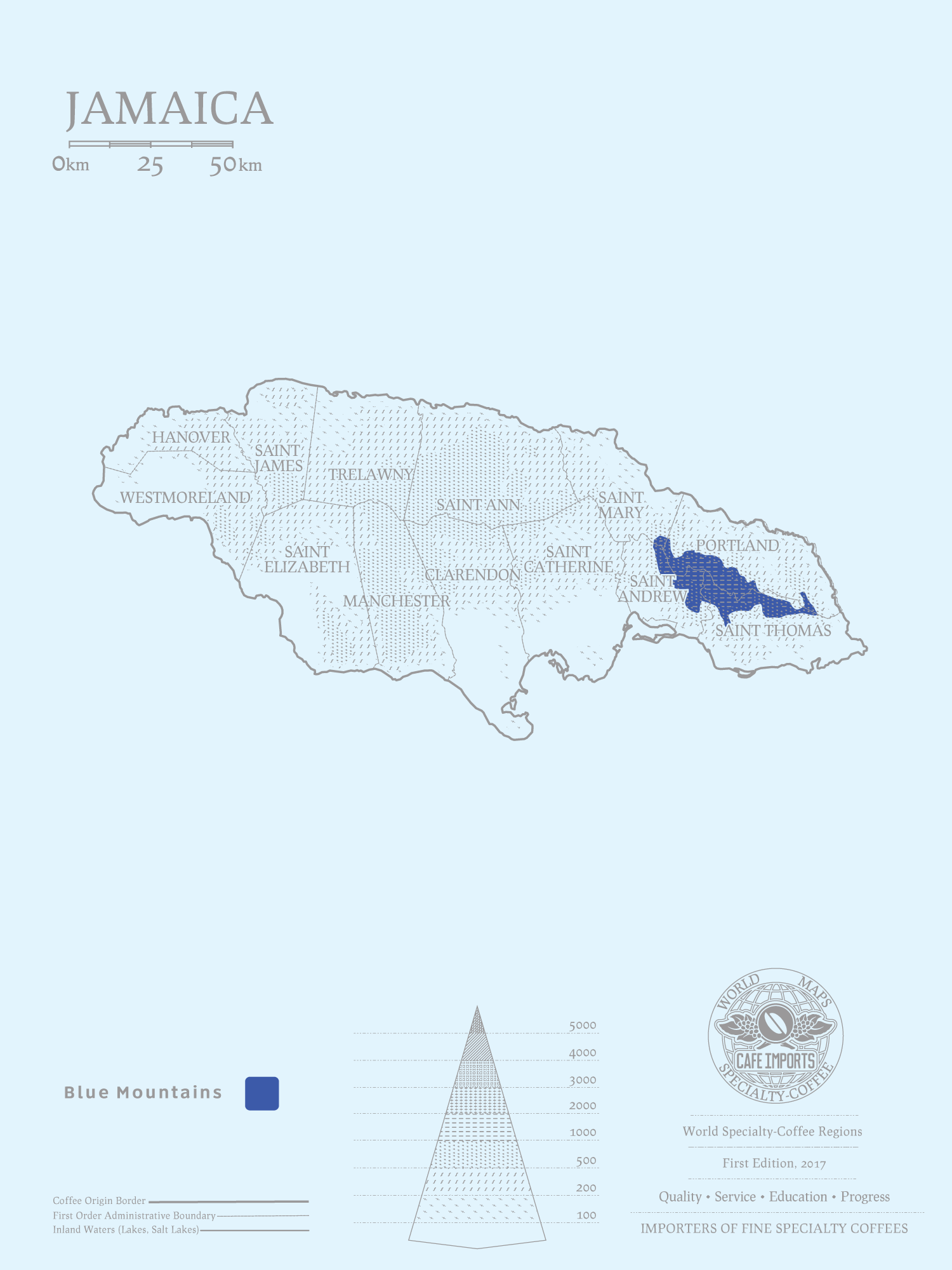
Jamaica is an island in the Caribbean. Its Blue Mountains are the highest in the western Caribbean at 2256 meters. Blue Mountain coffee's unique flavor is tied to the mountains' location and climate.
The Blue Mountains sit in the coffee belt at 25 degrees north latitude, with fertile young volcanic soil, unpolluted fresh air, year-round rainfall, high humidity and wide day-night temperature swings. The soil is rich in nitrogen and phosphorus, very suitable for coffee. Fertile volcanic soil, regular rainfall and the island's hazy clouds that screen out harsh sun all combine to create FrontStreet Coffee Blue Mountain coffee.
Jamaica Blue Mountain Coffee Grades
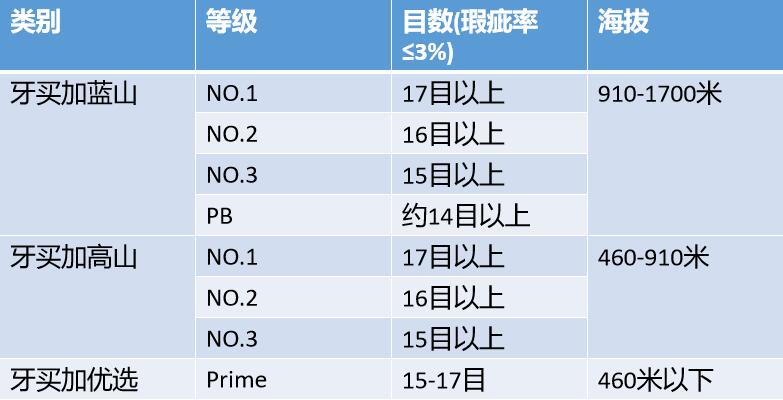
Jamaica's Blue Mountain region has three grades: Blue Mountain Coffee, Jamaica High Mountain Supreme Coffee Beans and Jamaica Prime Coffee Beans.
Blue Mountain Coffee and High Mountain Coffee each split into two further grades. From highest to lowest quality: Blue Mountain No. 1, Blue Mountain No. 2, High Mountain No. 1, High Mountain No. 2, Jamaica Prime. FrontStreet Coffee's selected Blue Mountain is the highest grade, Blue Mountain No. 1.
From highest to lowest quality: NO.1, NO.2, NO.3 and PB (PB refers to peaberries). According to CIB standards, NO.1 Blue Mountain green beans must be above 17 screen size, with defect rate below 3% and moisture content around 13%.
Coffee Bean Varieties
Typica originates from southeastern Ethiopia and Sudan, one of the oldest varieties among many Arabica species. Its top leaves are bronze-colored, so it is called red-topped coffee, also known as old-variety small-grain coffee. Low-yielding and difficult to cultivate, it costs far more than ordinary small-grain coffee. But its flavor is excellent, and it is recognized as a specialty coffee variety.
Washed Processing Method
After picking, floating beans are removed, pulp and flesh are removed, and the beans soak in fermentation tanks to soften the mucilage and are constantly washed and rinsed to remove it, then moved to drying grounds. During drying they need constant turning for evenness until moisture reaches 12%.
Clifton Manor Estate
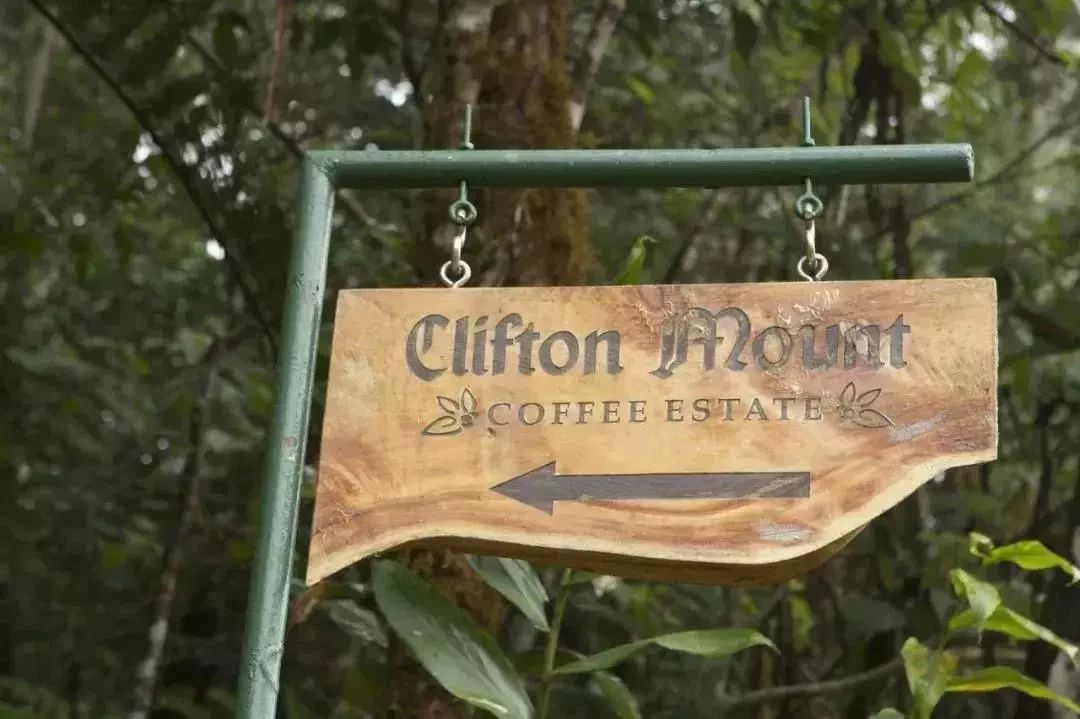
The Blue Mountain region is small, with only 6000 hectares of cultivation, so it is impossible for all coffee labeled "Blue Mountain" to be grown there.
Today's Clifton Manor Estate is the largest in the area. By international standards it is still small-scale, with many owners being smallholders whose families have worked the land for two centuries.
Clifton Mountain is Jamaica's oldest coffee area still in normal operation, and only Clifton Farm in Jamaica holds the Rainforest Alliance certification. That certification can only be earned by meeting Sustainable Agriculture System Standards, and its Rainforest logo appears on its wooden barrels.
As early as the mid-18th century (around 1750), Clifton Manor Estate began planting and producing coffee. Its cultivation and processing areas sit at an average of 4300 feet (1310.64 meters). Sufficient altitude, gentle afternoon cloud lingering in the mountain forests for shade, ample sunlight and mineral-rich soil give the trees good growing conditions and also extend the ripening of the cherries.
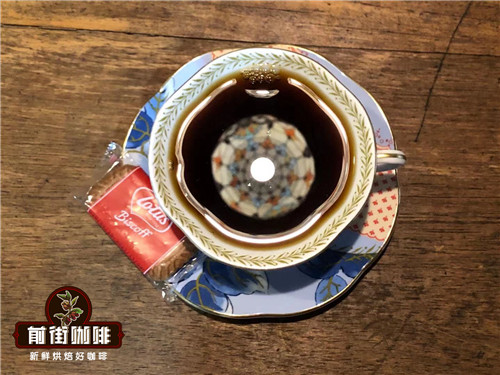
FrontStreet Coffee Jamaica Blue Mountain Coffee Flavor Description
Rich and mellow, with a perfect balance of sweet, sour and bitter, and a very strong body.
Asian Region
8. FrontStreet Coffee · Indonesia Gold Mandheling
Region: Sumatra, PWN Company
Altitude: 1100-1600m
Grade: G1
Variety: Typica
Processing: Wet-Hulled
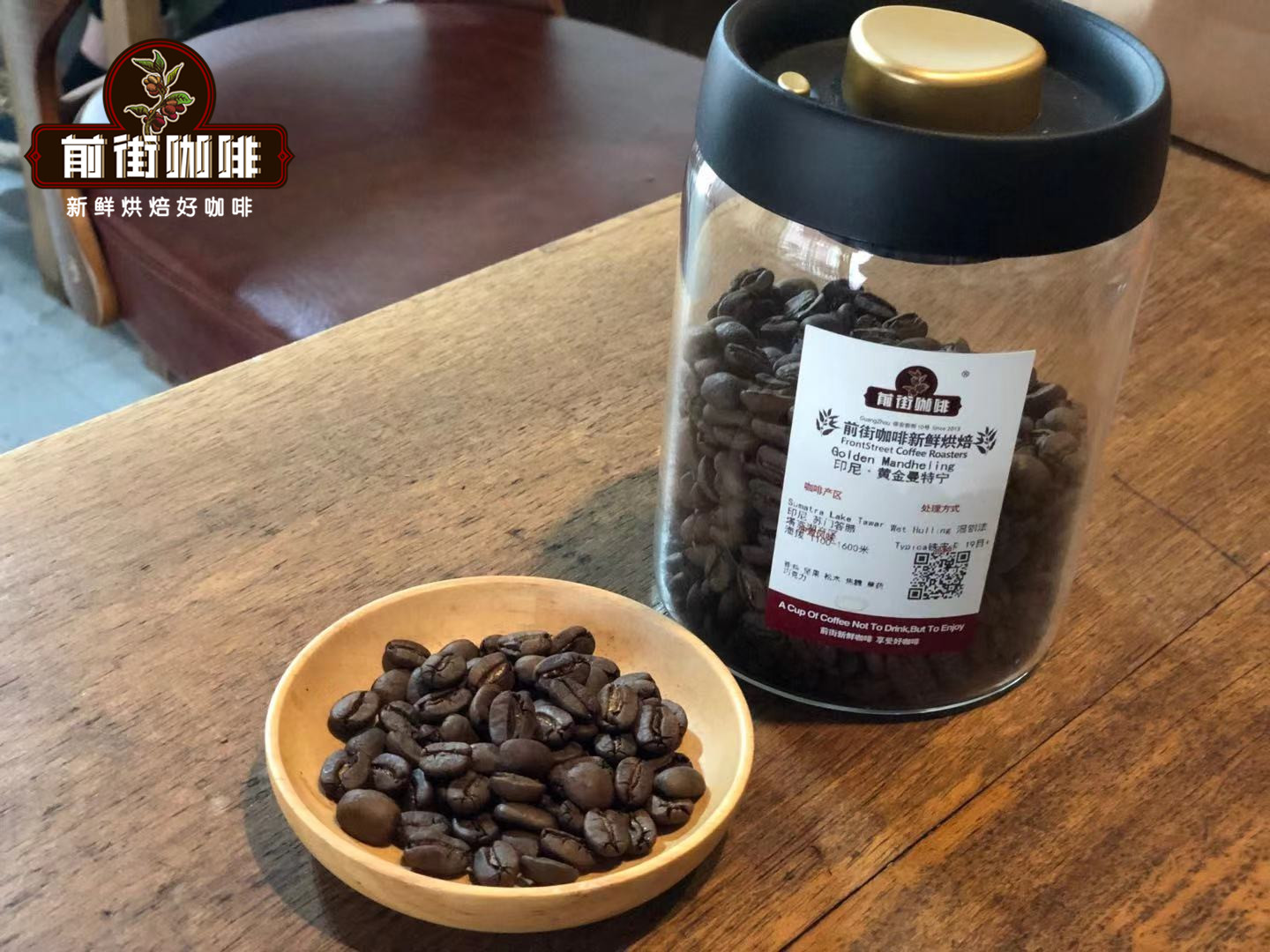
Indonesia lies in southeastern Asia, with a coffee history reaching back to 1696. Dutch farm owners sought broader growing areas and, after wide exploration, settled on Indonesia's Java. Within 30 years Indonesia had built a solid footing in the coffee market.
Today, however, Indonesia's coffee representative is Mandheling, which is not surprising: most of the Java coffee originally exported to Europe came from the Sumatra region, and Mandheling comes from Sumatra. Sumatra can therefore be called an important coffee area in Indonesia.
Indonesia Coffee Grades
Indonesian beans use a grading system based on defect-bean ratio, divided into six grades, G1-G6. Fewer than 3 defective beans in a 300g green coffee sample earns the highest grade, G1.
Coffee Bean Varieties
Typica originates from southeastern Ethiopia and Sudan, one of the oldest varieties among many Arabica species. Its top leaves are bronze-colored, so it is called red-topped coffee, also known as old-variety small-grain coffee. Low-yielding and difficult to cultivate, it costs far more than ordinary small-grain coffee. But its flavor is excellent, and it is recognized as a specialty coffee variety.
Wet-Hulled Processing Method
Most Mandheling uses Sumatra's unique processing method — wet-hulling. Because the local weather is often rainy with constant typhoons, sun-drying is impossible, and because the local economy is poor and cannot afford the pricier washed method, the region developed its own wet-hulled method.
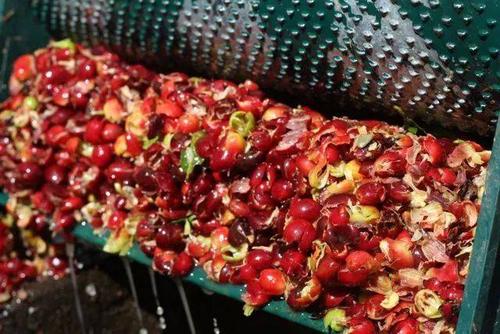
First stage: use a wooden peeler to remove the peel and pulp, ferment for 3 hours, then dry until moisture reaches a semi-dry, semi-wet state of 30-50%.
Second stage: remove the mucilage and parchment layer and continue drying in the later stage. Drying takes 2-4 days, bringing moisture down to 12-13%.
FrontStreet Coffee Gold Mandheling increases the number of screenings on this basis, with three or more manual screenings, giving it uniform size and a low defect rate.
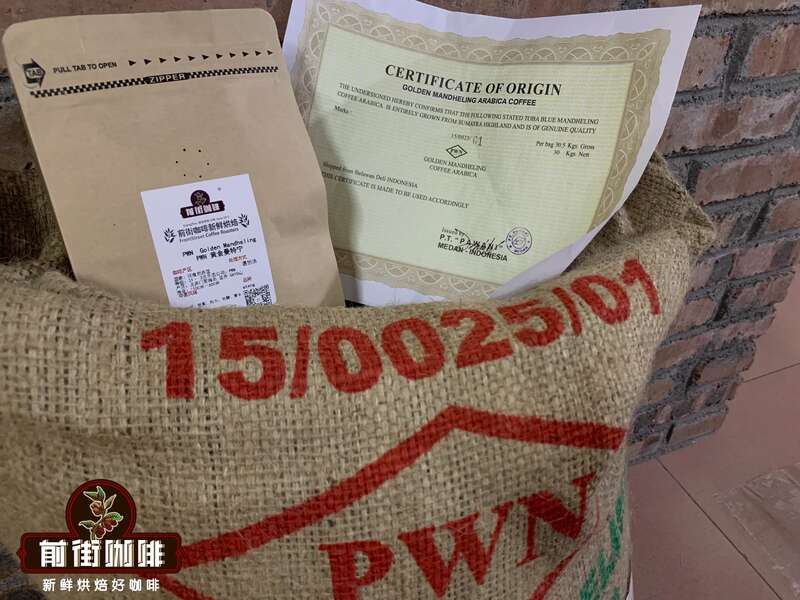
PWN
PWN Company (Pwani Coffee Company) registered Gold Mandheling, while a Japanese company registered "Gold Top Mandheling." In flavor the two are not very different; different brands and marketing strategies may have shifted public opinion, so which is better is subjective. PWN was the first company to export Gold Mandheling to Japan, and FrontStreet Coffee also purchases PWN's Gold Mandheling.
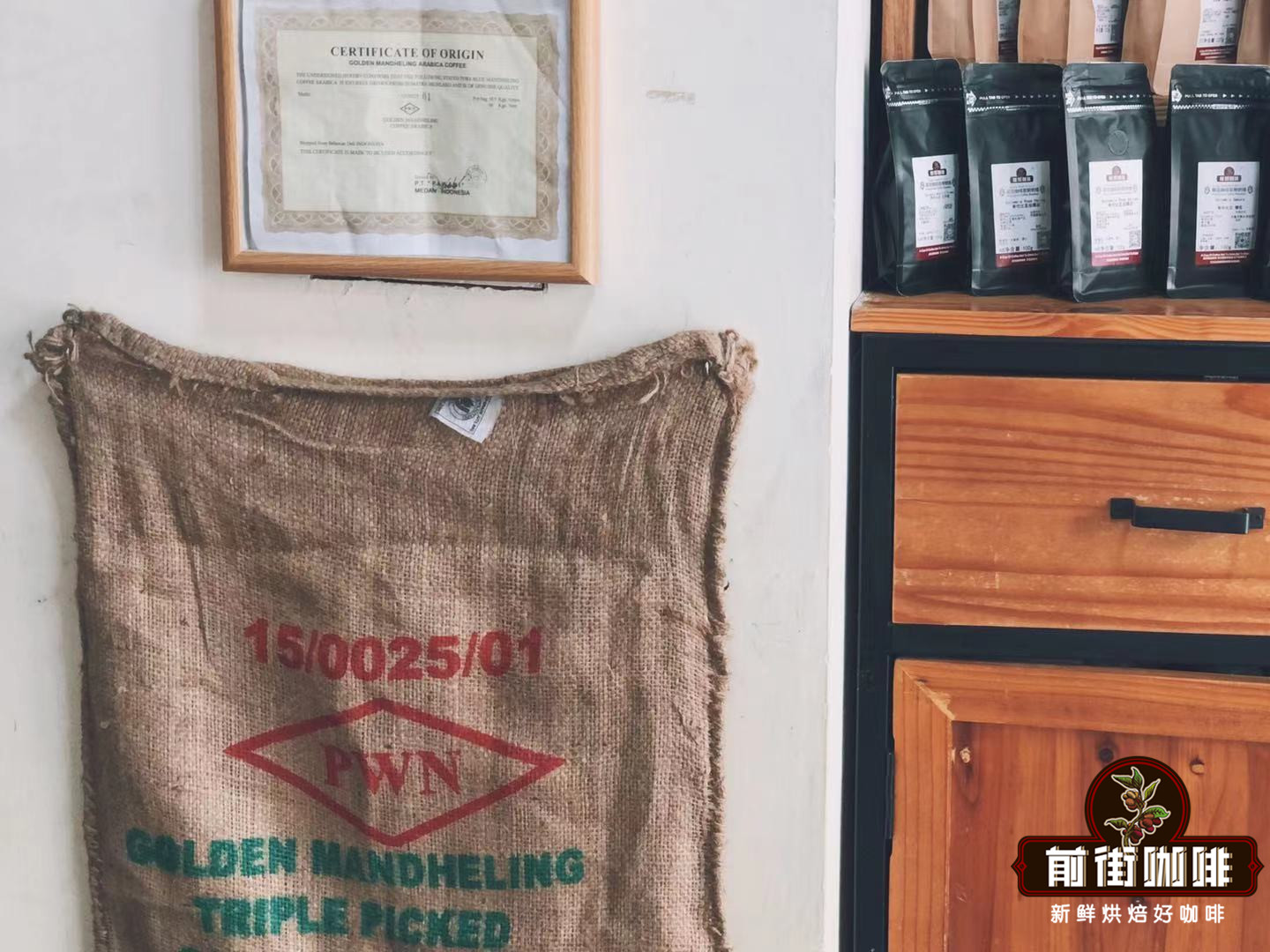
FrontStreet Coffee Indonesia Gold Mandheling Coffee Flavor Description
Layered and evolving, rich and clean, highly balanced, with intense nut and caramel aroma, chocolate notes and a persistent finish.
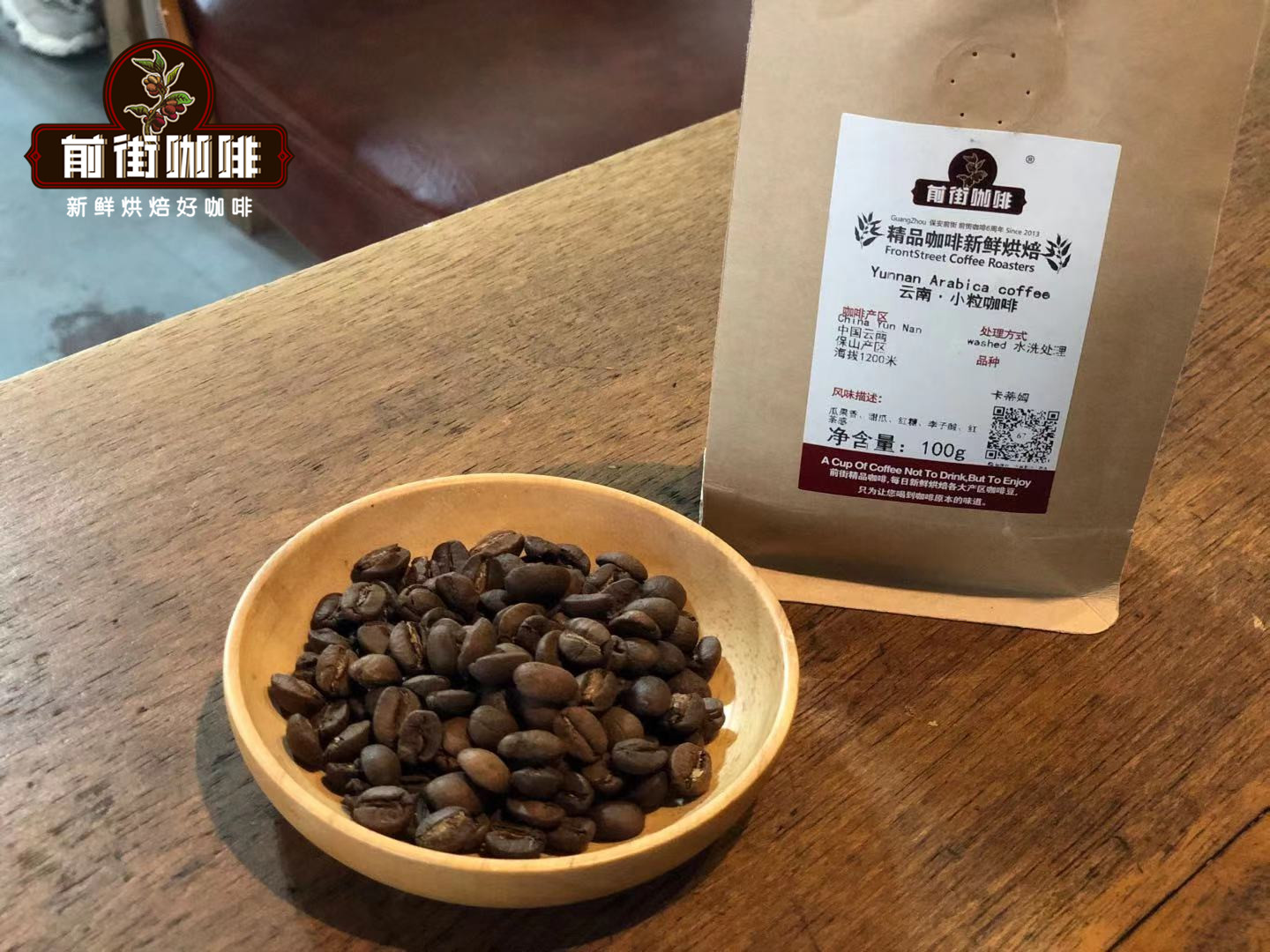
9. FrontStreet Coffee · China Yunnan Small Bean
Region: Baoshan, Yunnan
Altitude: 1200m
Variety: Catimor
Processing: Washed Method
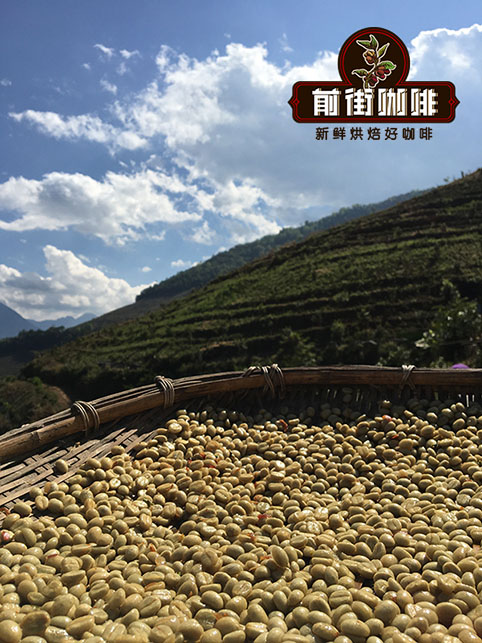
Yunnan's coffee cultivation is mainly distributed across Lincang, Baoshan, Pu'er and Dehong, which share the natural advantages of low latitude, high altitude and wide day-night temperature swings.
Yunnan has no four seasons, only dry and rainy ones. Most coffee areas share similar conditions, which is also the fundamental reason some regions use natural processing. June marks the start of the rainy season, and the next three to four months of rain are the most favorable period for coffee cultivation. Only seedlings planted at this time can develop extensive roots through months of rain and survive the first six-month dry season.
Coffee Bean Varieties
Baoshan City introduced Typica and Bourbon as early as the 1950s, locally called "old varieties." Because old varieties resist disease and pests relatively poorly, yield less and need more labor to manage, and because market procurement prices offer little advantage, farmers have switched to the newer Catimor in recent years.
Catimor is a hybrid of Timor and Caturra. In 1959 it was developed by CIFC, the Portuguese Coffee Leaf Rust Research Center, with research focused on disease resistance and high yield. Catimor inherits Robusta's advantages (Timor is itself a hybrid of Arabica and Robusta), letting it resist coffee berry disease and leaf rust better, with stronger disease and pest resistance overall. This is also what it is often criticized for in the cup. Observing recent Yunnan production, FrontStreet Coffee finds more emphasis on processing methods, even Yunnan beans with flavors very similar to Yirgacheffe. That follows the market, but FrontStreet Coffee believes it is ridiculous to give Yunnan Catimor varieties all kinds of grand titles. Variety already determines much of flavor, and this year's Yunnan green bean competition results did not even mention varieties.
Washed Processing Method
Harvested cherries are separated from most of the flesh with a depulper, then the parchment beans are placed in a clean water tank and soaked to ferment, completely removing the remaining flesh layer.
Through washing, unripe and defective beans are selected out by buoyancy differences. Fermentation is also easier to control, so the flavor rarely carries the impurities natural beans can, instead showing clear fruit acidity, slightly greater complexity and cleaner cupping characteristics.
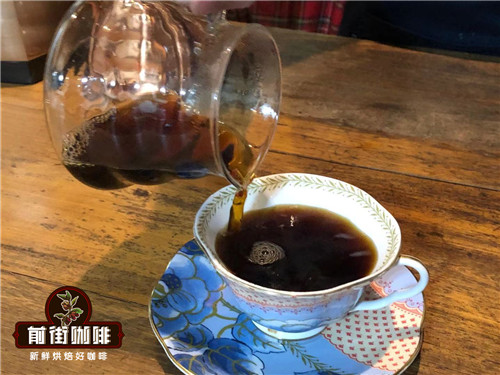
FrontStreet Coffee Yunnan Small Bean Coffee Flavor Description
Smells of strong nut aroma, with herbs, chocolate and caramel on entry and a hint of light fruit acidity in the finish.
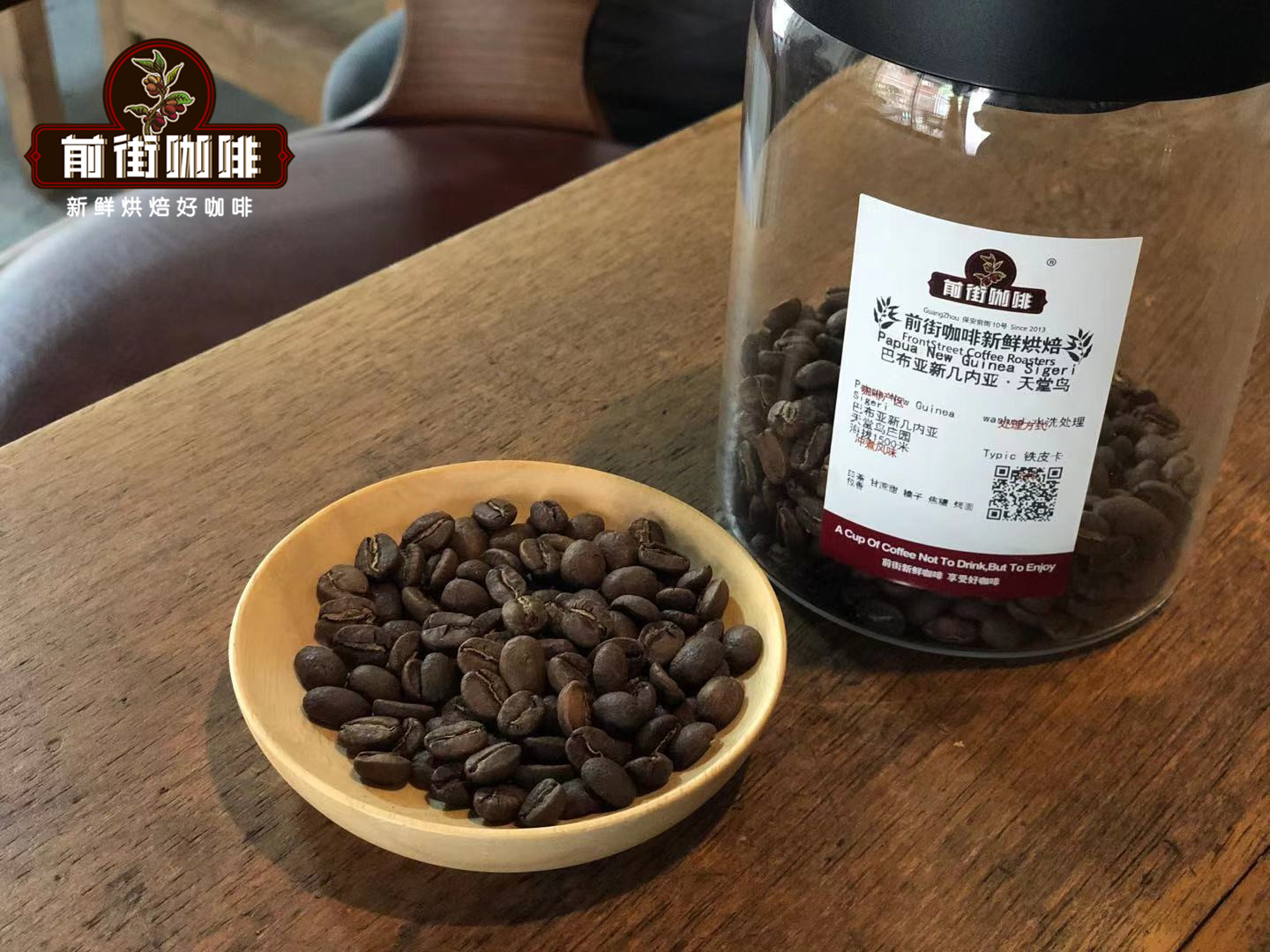
10. FrontStreet Coffee · Papua New Guinea Bird of Paradise
Estate: Bird of Paradise Estate
Grade: AA
Altitude: 1600-1800m
Variety: Typica
Processing: Washed Method
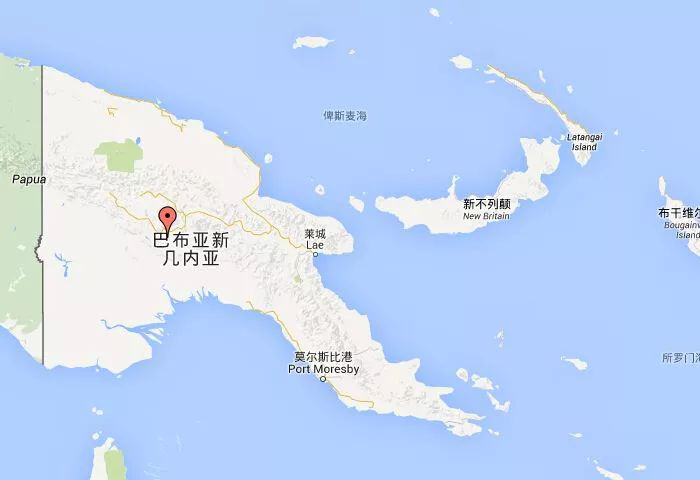
Papua New Guinea (Independent State of Papua New Guinea, abbreviated PNG) has two parts: New Guinea in the north and Papua in the south, east of Indonesia. Southern PNG consists of plains and lowlands along the southeastern coast, with the central mountain range in the middle and several separate ranges in the north.
Most PNG coffee is grown in the mountainous areas. The highlands divide into two main provinces, including Eastern Province and Western Province.
Papua New Guinea Coffee Grades
Named with country + cultivation type + grade. In PNG there are three cultivation types: plantations, large estates, and small to medium-sized farms. Plantations and large estates account for 25% of national production; small to medium-sized farms of 10-20 hectares (Holdings or Blocks) account for 10%.
Grade classification as follows:
| Grade | Screen Size |
|---|---|
| AA | >18 |
| A | 17 |
| AB | >16 (50%) >17 (50%) |
| B | >16 |
| C | >15 |
| PB | 11-14S |
| X | mixed |
| E | >19 |
| PSC | >15mm |
| Y1 | mixed |
| Y2 | mixed |
| T | mixed |
FrontStreet Coffee will use the two most noteworthy specialty grades, AA and A, as examples:
AA and A grade coffees belong to the specialty grades, mainly from larger estates. AA grade beans are larger than 18 screen, oval and flat. Defects: at most 10 per kilogram. Green bean appearance is greenish-blue. Flavor must be clean, and the roasted flavor clean and smooth. Cupping quality must be excellent (Fine Cup).
A grade is larger than 17 screen, and cupping must reach at least GTF level (Good to Fine), meaning a good to excellent mouthfeel. Other defect counts and green bean conditions are the same as AA.
Coffee Bean Varieties
Typica originates from southeastern Ethiopia and Sudan, one of the oldest varieties among many Arabica species. Its top leaves are bronze-colored, so it is called red-topped coffee, also known as old-variety small-grain coffee. Low-yielding and difficult to cultivate, it costs far more than ordinary small-grain coffee. But its flavor is excellent, and it is recognized as a specialty coffee variety.
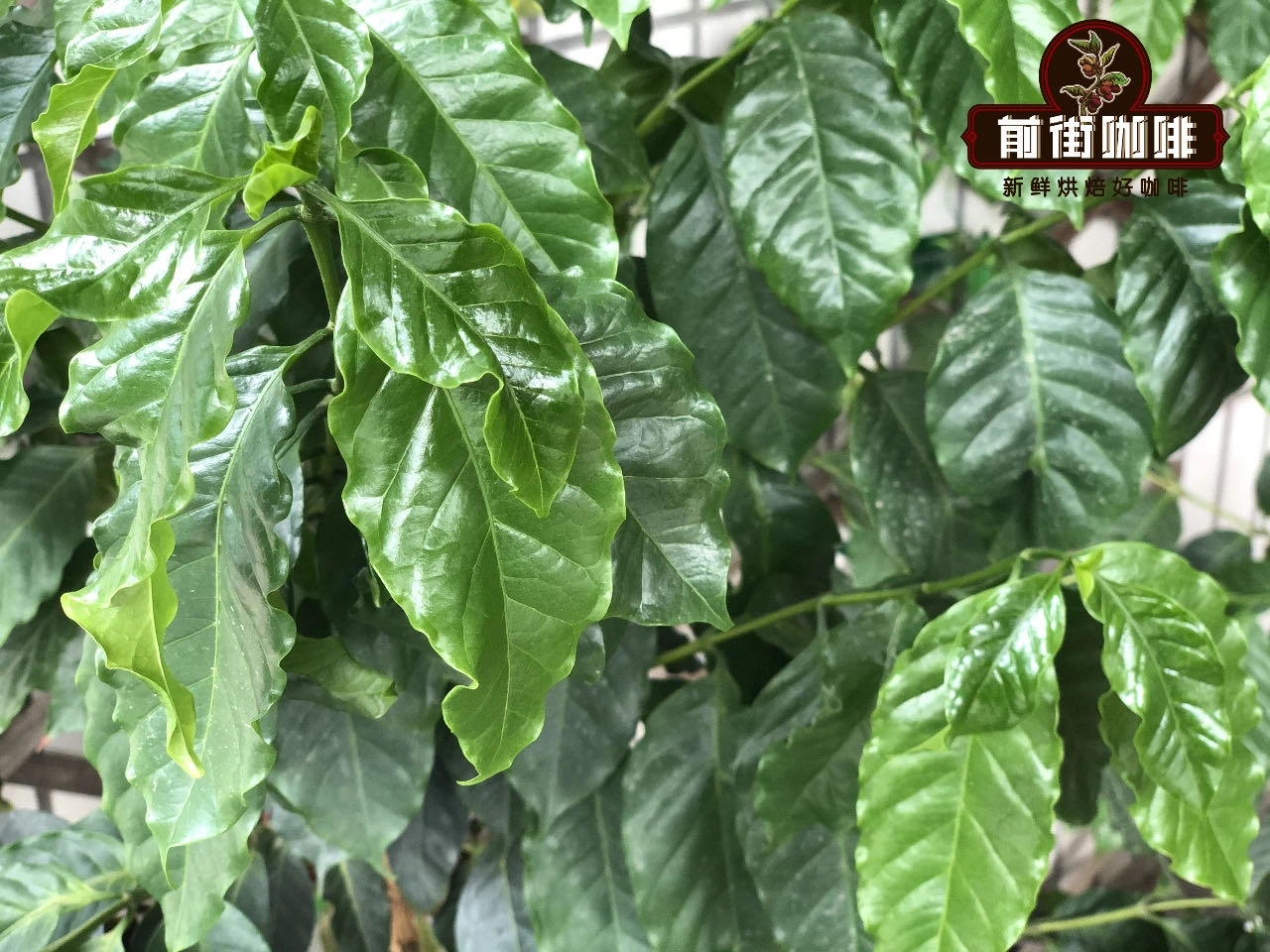
In 1931, Typica was introduced to Papua New Guinea from Jamaica. At the time Britain had occupied Jamaica for nearly 300 years, and Jamaica's most representative coffee is Typica-variety Blue Mountain. Since Australia had friendly relations with Britain, it was reasonable for PNG to introduce Typica. FrontStreet Coffee often uses the name "Little Blue Mountain" when introducing PNG coffee to customers — the historical reasons are sound, and "Little Blue Mountain" is indeed much easier to remember than Papua New Guinea.
FrontStreet Coffee Papua New Guinea Bird of Paradise Coffee Flavor Description
Layered and evolving, rich and clean, highly balanced, with intense nut and caramel aroma, chocolate notes and a persistent finish.
Those are FrontStreet Coffee's ten recommended beans, with three to four from each of the world's three major coffee regions. The top ten are in no particular order. We recommend enthusiasts choose beans that suit their own taste.
FrontStreet Coffee Recommendation
Brazil is the world's largest coffee producer, and its beans — moderate in acidity and well balanced between sweetness, bitterness and body — take naturally to a medium roast that draws out a nutty aroma. They work both as single-origin and in blends. The FrontStreet Brazil Cerrado Red Bourbon is a classic single-origin: a red Bourbon from the well-known Cerrado region, roasted medium to reveal creamy peanut, toast, caramel and hazelnut, with a rounded, low-acid cup and a light bitter note, suited to pour-over, moka pot, espresso SOE, siphon and French press.
For the rarer Yellow Bourbon, the FrontStreet Brazil Queen's Manor comes from Mogiana near southern Minas, where fertile red volcanic soil feeds the fruit. This yellow Bourbon — a red Bourbon mutation with a cleaner fruit character — shows a sugar-cane sweetness other regions rarely match, alongside fruit and chocolate, whether brewed as pour-over, in a moka pot or on a home espresso machine.
Brazil also anchors FrontStreet Coffee's espresso blends. Its low acidity, balance and friendly price make it the base of many recipes: the oil-rich FrontStreet Classic Blend, the nut-forward FrontStreet Premium Blend, the balanced FrontStreet Black Cocoa Blend recommended by many baristas and the FrontStreet Commercial Blend built for cafes all contain Brazilian coffee, which supplies chocolate and cream notes, a soft sweet-sour-bitter profile and the balance that keeps extraction stable.
Important Notice :
FrontStreet Coffee is a long-established specialty coffee roaster in Guangzhou China, selling freshly roasted beans from its own farm in Yunnan as well as dozens of carefully selected single-origin beans from around the world for both pour-over and espresso. The products deliver consistently excellent quality and great value, with shipping within 24 hours. Guangzhou's FrontStreet Coffee shop is recommended by many coffee lovers, and the beans are now available online at the Tmall 。
FrontStreet Coffee has moved to a new address:
FrontStreet Coffee Address: 315,Donghua East Road,GuangZhou
Tel:020 38364473
 Scan and follow the En Gafei WeChat official account. Please indicate that the reprint comes from "En Gafei".