Jamaican Authentic Blue Mountain No.1 Coffee Beans Flavor Profile Characteristics Blue Mountain Coffee Brewing Temperature and Grind Size

Blue Mountain coffee is famous before you ever taste it. Most people know it as a mellow, beautifully balanced black coffee—and a very expensive one—so much so that it became the benchmark by which a whole generation defined "good coffee." Plenty of beans on the market are labeled "Blue Mountain flavor" or "Blue Mountain blend," but none of those are actually Blue Mountain.
FrontStreet Coffee's Blue Mountain No. 1 beans come from Clifton Mountain Estate, Jamaica's oldest coffee estate. They are CIB-designated export beans, packed in wooden barrels for green coffee, and carry Rainforest Alliance certification. This article takes a close look at the real thing.
The Growing Region

The Blue Mountain range occupies eastern Jamaica. The name comes from clear days when sunlight on the azure Caribbean Sea throws a brilliant blue glow over the peaks. The mountains sit squarely in the coffee belt, with fertile volcanic soil, fresh unpolluted air, and a humid climate of year-round fog and rain—average precipitation of 1980mm and temperatures around 27°C. Those conditions built the worldwide reputation of Jamaica Blue Mountain.
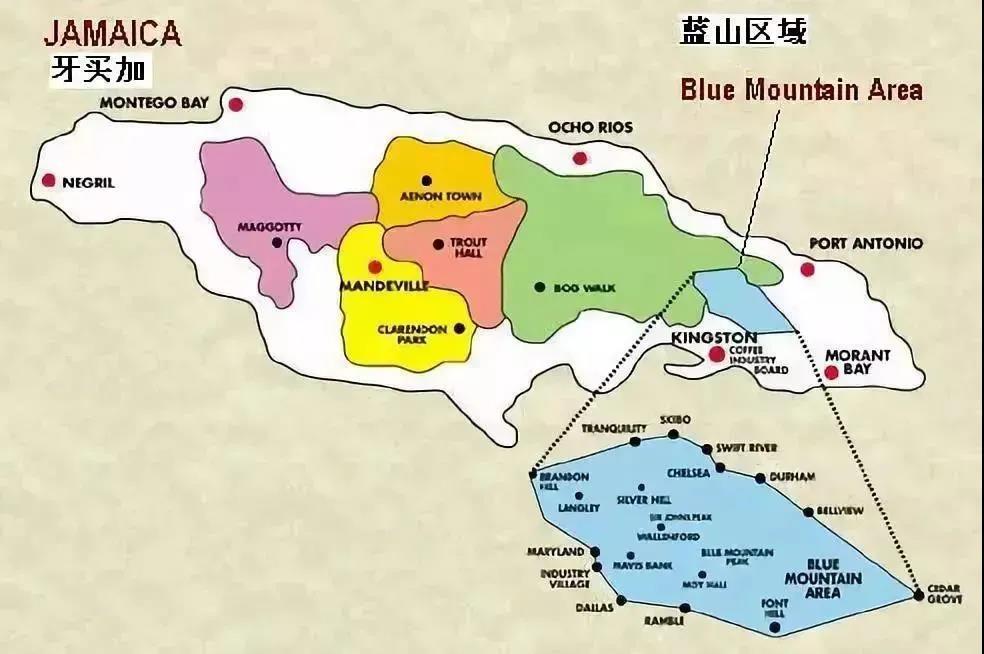
Genuine Jamaica Blue Mountain can only be grown in the Blue Mountain area east-northeast of Kingston. The ridge running across Jamaica extends to the island's eastern end, where the Blue Mountains rise over 2100 meters. Farmers use mixed cultivation, planting coffee alongside banana and avocado trees on terraces. The rugged terrain—every tree planted on steep slopes—makes harvesting brutally hard work that only skilled local pickers can manage, and picking at just the right ripeness matters enormously: under- or over-ripe beans compromise the quality.
Clifton Mountain Estate
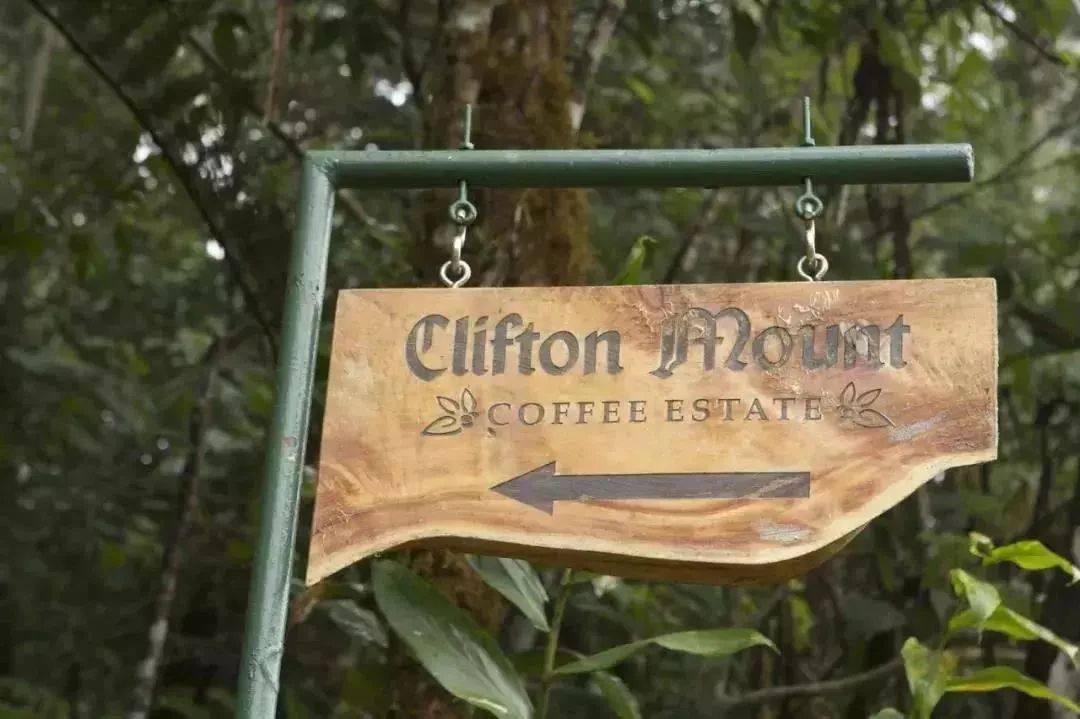
The two FrontStreet Coffee Blue Mountain coffees come from Clifton Mountain Estate, Jamaica's oldest producing area still in operation and the island's only Rainforest Alliance certified farm. The estate has grown and processed coffee since the mid-18th century (around 1750). Its cultivation and processing areas sit at an average altitude of 4300 feet (1310.64 meters). That altitude, the gentle afternoon clouds shading the mountains, ample sunlight, and mineral-rich soil give the trees excellent growing conditions and stretch out the cherries' ripening period.
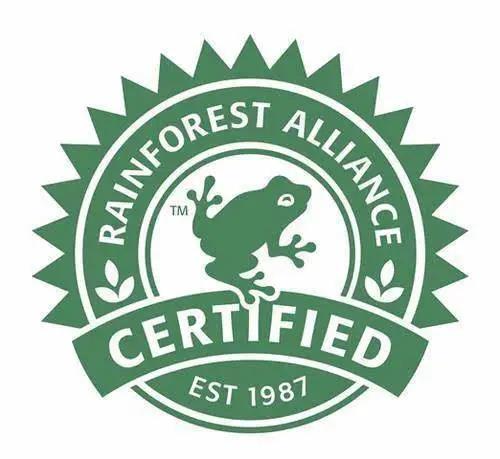
What is Rainforest Alliance Certification?
Farms that meet the Rainforest Alliance's standards receive protection for the farm and its surrounding ecosystem, restrictions on pesticide use, and evaluation of benchmarks such as waste management. Only coffee that passes assessment may be called "Rainforest Alliance Certified." For coffee, the standards call for traditional cultivation under native forest shade, which protects the ecosystem, and part of the alliance's revenue funds wildlife protection in tropical rainforest reserves and improved living conditions for workers.
The Variety
FrontStreet Coffee's Blue Mountain is Typica: bronze-tinted young leaves, long oval leaves with smooth surfaces, tall trees with slightly angled branches—and an elegant cup. The flip side is a delicate constitution and poor disease resistance, with low yields and sparse fruit per tree. Typica grows long terminal branches with few laterals; its white flowers cluster where the leaf stems meet the branch. Mature cherries are bright red and cherry-like, and the beans are oval or slender-pointed.

Processing
Before 2019, FrontStreet Coffee's Blue Mountain from Clifton Mountain Estate was always washed. The skin and pulp are removed first, then the beans ferment for 12-18 hours. They are then moved back and forth in washing channels, the friction of the beans and the flow of the water scrubbing them smooth and clean. After washing, the beans still sit inside parchment at about 50% moisture and must be sun-dried down to 12-14%—any more and they keep fermenting, molding, and spoiling. Afterward the beans are screened and stored in dedicated warehouses.
Washing is what secures Blue Mountain's character: rich aroma and balanced taste, with no single flavor dominating or missing. In 2019, Clifton Mountain Estate broke with tradition and produced its first natural process—a fundamental change to Blue Mountain's established flavor structure. When FrontStreet Coffee introduces customers to any region, it always recommends washed lots first, since washing best expresses a region's true character; the natural Blue Mountain is, above all, a response to market demand.

How to Spot Genuine Blue Mountain
The CIB stipulates that only beans grown in Jamaica's Blue Mountain region above 2200 feet may be called Jamaica Blue Mountain. Grades run by bean size: NO.1, NO.2, NO.3, and hand-selected PB (Peaberry). The baseline standards for NO.1 green beans are screen size above 17, a defect rate below 3%, and moisture around 13%. The Jamaica Coffee Industry Board can issue certificates for all exported Blue Mountain coffee.
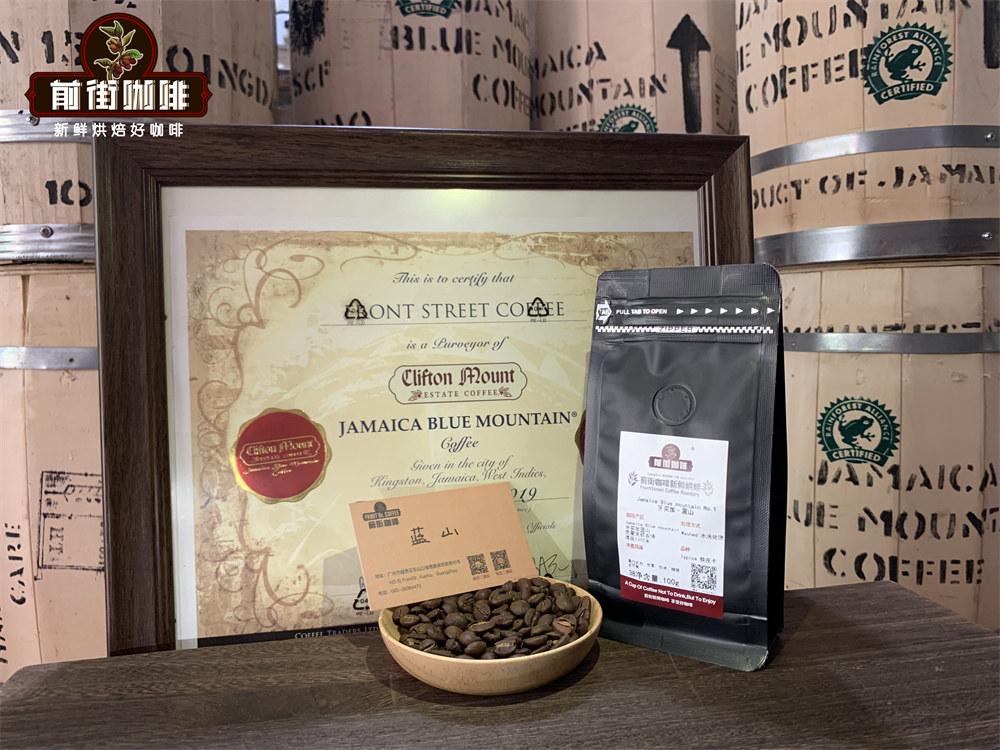
Certificates come in three types: (1) A quality certification certificate issued by the Jamaica Coffee Industry Board (2) An authorized sales certificate issued by Blue Mountain coffee manufacturers (Blue Mountain coffee is distributed by 4 government-licensed processing producers and exported by 16 licensed exporters) (3) A Jamaica Blue Mountain coffee origin certificate
FrontStreet Coffee's Jamaica Blue Mountain No. 1 is CIB-designated export coffee, packed in wooden barrels, and Rainforest Alliance certified. The barrels themselves are another tell: traditional Blue Mountain ships in 15, 45, and 70kg wooden barrels printed with batch details, and genuine green beans are plump, even, slightly upturned at both ends, and green in color.

Blue Mountain Grading
Blue Mountain No. 1: 96% of beans must be screen size 17/18, with no more than 2% defects.
Blue Mountain No. 2: 96% of beans must be screen size 16, with no more than 2% defects.
Blue Mountain No. 3: 96% of beans must be screen size 15, with no more than 2% defects.
Blue Mountain Peaberry: 96% must be single round beans of screen size 10, with no more than 2% defects.
Blue Mountain Triage: a blend of No. 1, 2, and 3 beans with a small amount of minor defects that do not affect cup quality.
Blue Mountain Fine Beans: beans below screen size 15, with no more than 2% defects—sold only on a sample basis, priced by demand.
Blue Mountain Triage Peaberry: mixed peaberries with minor defects but good cup quality, no more than 4% defects.
The Blue Mountain beans on FrontStreet Coffee's menu are Blue Mountain No. 1.
How to Brew It: Natural vs. Washed
FrontStreet Coffee recommends freshly roasted beans to capture the fullest flavor. All FrontStreet Coffee beans are roasted within 5 days of shipping, because freshness drives flavor; the resting period is about 4-7 days from roast, so the coffee arrives at its peak.

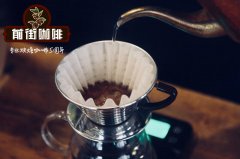
FrontStreet Coffee brews its Blue Mountain with a KONO dripper, which draws out a rounder, mellower taste and more direct flavor expression. The KONO exhausts poorly by design—its straight ribs extend only a quarter of the way up the wall, above which the walls seal. That restricted exhaust is exactly why FrontStreet Coffee chose it: once the water level rises past the ribbed zone, water accumulates and the water column's weight creates pressure. The relatively small outlet extends contact time between water and coffee particles and lets the flow carry soluble material more effectively, achieving the high body customers expect.
Coffee: 15g
Coffee-to-water ratio: 1:13
Water temperature: 88-89°C
Grind size: medium-coarse (60% pass-through on a No. 20 standard sieve)

FrontStreet Coffee's segmented technique: bloom with 30g of water, wait 30 seconds, then pour slowly in a small stream, spiraling from the center outward to 100g (130g total on the scale). Once the bed drops to half its height, pour 65g in a heavier stream up to 195g total. Remove the dripper once all the coffee has drained. Total brew time: 1 minute 50 seconds.

Flavor Comparison
[FrontStreet Coffee Natural Blue Mountain] Brown-sugar sweetness on entry with berry acidity, nut and cocoa through the middle and late stages, a creamy mouthfeel, rich and clearly layered, finishing on walnut aromas.
[FrontStreet Coffee Washed Blue Mountain] Dark chocolate and nut flavors on entry, high cleanliness, very bright, good body, with sweetness, acidity, and bitterness in balance.
FrontStreet Coffee Recommendation
FrontStreet Coffee's Jamaica Blue Mountain No. 1 is the grade to seek out: the top tier of Jamaica Blue Mountain, from the historic Clifton Mountain Estate, with complete origin certification and original shipping barrels on display for full traceability. Roasted medium-dark, it unfolds in layers—nuts, dark chocolate, cream caramel, and gentle sweetness, with acidity, bitterness, and aroma in perfect accord. It is Blue Mountain No. 1's balance—no harsh fruit acid, no heavy roast bitterness, just clean, round sweetness with a long finish—that has kept this coffee legendary for decades.
Prefer a slightly different approach? A 1:15 ratio at 87-88°C with a white-sugar grind makes the cup cleaner and more transparent and shows the delicate layers best, while a moka pot leans into the chocolate, caramel, and nut side—equally impressive with milk as a latte or flat white.
Important Notice :
FrontStreet Coffee is a long-established specialty coffee roaster in Guangzhou China, selling freshly roasted beans from its own farm in Yunnan as well as dozens of carefully selected single-origin beans from around the world for both pour-over and espresso. The products deliver consistently excellent quality and great value, with shipping within 24 hours. Guangzhou's FrontStreet Coffee shop is recommended by many coffee lovers, and the beans are now available online at the Tmall 。
FrontStreet Coffee has moved to a new address:
FrontStreet Coffee Address: 315,Donghua East Road,GuangZhou
Tel:020 38364473
 Scan and follow the En Gafei WeChat official account. Please indicate that the reprint comes from "En Gafei".