How to Brew Coffee Grounds - Can You Brew Coffee Grounds Directly? Key Points for Making a Delicious Cup of Coffee
Professional coffee knowledge exchange and more coffee bean information; follow Coffee Workshop (WeChat public account: cafe_style).
Want to brew coffee at home? Grasp a few basic points and making a delicious cup is actually not difficult.
Key Point 1: A Proper Coffee-to-Water Ratio
We recommend a ratio of about 1:10, which means 18 grams of coffee grounds to 180 milliliters of brewed coffee.
Key Point 2: Grind Coarseness
If the grounds will stay in contact with water longer, grind them coarser. French press grounds, for example, sit in hot water longer than they would in a moka pot, so they should be coarser.
Key Point 3: A Suitable Brewing Temperature
The ideal brewing water temperature is about 88-92°C. Hotter water more easily extracts aromatic compounds but also tends to pull out bitter, woody flavors. So when the coffee tastes bitter, try lowering the temperature and brewing again.
Key Point 4: Proper Stirring
Proper stirring extracts more aromatic compounds, but do not over-stir, which can lead to over-extraction.
Lighter-roasted beans also have a tighter structure and are harder to extract. You can use more rigorous methods—higher temperatures, higher extraction pressure (9 atmospheres from an espresso machine), and finer grinding.
The following figures for various brewing tools are ideal values FrontStreet Coffee's team obtained through continuous testing and tasting. If you own any of these tools at home, try brewing by these steps.
Pour-over Brewing Tools
Coffee Grounds Amount: 18g
Grind Setting: Medium grind
Water Temperature: 90°C
Water Amount: 210ml
Coffee Amount: 180ml
Stirring Times: None
Pre-infusion Time: 30 seconds
Total Time: 2 minutes
Preparation Phase
Step 1: Prepare a pot of hot water at about 90°C, roughly 400ml.
Step 2: Place the filter holder on a mug, fold the filter paper, and set it inside the holder.
Step 3: Pour about half the hot water in a circular motion along the filter paper to rinse it once. This removes the paper taste and pre-warms your mug.
Step 4: Grind fresh beans to a medium grind, about the size of fine sugar particles.
Step 5: Discard the rinse water and pour the ground coffee into the filter paper.
Brewing Phase
Step 1: For the bloom, inject 30ml of water from the center of the grounds, then let it bloom for about 30 seconds. During this time the grounds absorb water and expand into a small mound.
Step 2: For the second pour, start from the center and pour in a clockwise spiral. Be careful not to let the water touch the filter paper directly, since hot water will run straight down the sides without passing through the coffee bed.
Step 3: The whole brew takes about 2 to 2.5 minutes. When the mug is full, remove the filter paper and start enjoying your coffee.
FrontStreet Coffee Recommendation
Good brewing starts with good beans. Three FrontStreet coffees cover a range of profiles for pour-over and beyond.
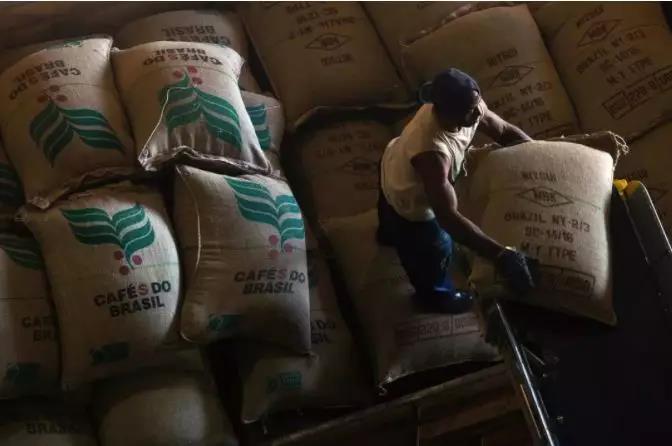
FrontStreet PWN Indonesia Golden Mandheling is deep-roasted for very low acidity and a mellow, lingering body, full of herbal and dark chocolate aromas with a faint earthy note—richly layered and ideal for anyone who likes a bold cup without acidity. It is also a pioneer in presenting PWN's dedicated sacks and certificates right in the product listing, so quality is easy to verify from the green bean packaging and accompanying certificate.
FrontStreet Brazil Queen Estate has very low acidity and a balanced body, with dense nut and cocoa aromas and a clear caramel sweetness. It is smooth and never astringent, and suits pour-over, espresso, and moka pot alike.
FrontStreet Colombia Papayo comes from the Finca La Divisa in Colombia, a competition-winning variety grown at 1,650-1,800 meters. Using double anaerobic natural processing and medium-light roasting to preserve the native fruit, its dry aroma carries jasmine and citrus; the cup shows passion fruit, blueberry, grape, and apricot in a dense juice-like body, with a bright but soft fruit acidity, a touch of spice mid-palate, and a lasting cocoa finish. It suits pour-over, espresso SOE, and cold drip—and an iced pour-over highlights an especially fresh, smooth grape-juice character.
Important Notice :
FrontStreet Coffee is a long-established specialty coffee roaster in Guangzhou China, selling freshly roasted beans from its own farm in Yunnan as well as dozens of carefully selected single-origin beans from around the world for both pour-over and espresso. The products deliver consistently excellent quality and great value, with shipping within 24 hours. Guangzhou's FrontStreet Coffee shop is recommended by many coffee lovers, and the beans are now available online at the Tmall 。
FrontStreet Coffee has moved to a new address:
FrontStreet Coffee Address: 315,Donghua East Road,GuangZhou
Tel:020 38364473
 Scan and follow the En Gafei WeChat official account. Please indicate that the reprint comes from "En Gafei".