Siphon Coffee Brewing Tips | A Coffee Lover's Guide to Siphon Pot Equipment Types

To anyone watching a siphon brewer in action today, it looks like coffee equipment from another era. Many cafes have stopped making siphon coffee altogether, or keep it on the menu as an occasional specialty rather than a main offering. As a long-time fan of the siphon, though, the answer is simple: if you cannot find it outside, make it yourself. In this article, FrontStreet Coffee walks through siphon brewing in the plainest language possible.
How a Siphon Brewer Is Built
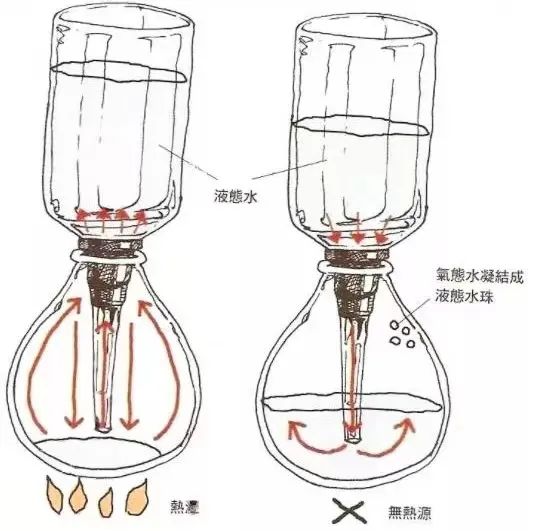
A siphon brewer breaks down into three basic parts: the upper chamber, the lower chamber, and the stand. The stand attaches to the lower chamber and holds it steady. The lower chamber is roughly spherical so that it heats evenly during brewing. The upper chamber is cylindrical, tapering at the bottom into a long, thin tube, with a rubber gasket sitting at the tapered section.
When you seat the upper chamber onto the lower chamber, the rubber gasket forms a seal. Heating the lower chamber turns water into steam, and the resulting pressure pushes the water up into the upper chamber, where it meets the coffee grounds. Once the heat source is removed, the coffee liquid falls back into the lower chamber, and the brew is complete.
Filter Cloth or Filter Paper
Nobody wants a mouthful of grounds, so you need a filter to separate them from the liquid. The two most common options are a flannel cloth and a circular paper filter. Flannel is the more traditional siphon material. Its strength is that it lets the coffee's oils through, but the trade-off is that it takes more effort to use and clean.
Filter paper is the modern choice. It filters more cleanly and holds back fine particles, including but not limited to the oils. If you are brewing just for yourself and not too often, FrontStreet Coffee suggests a flannel filter, so you can experience the full flavor profile of siphon coffee.

Heat Sources
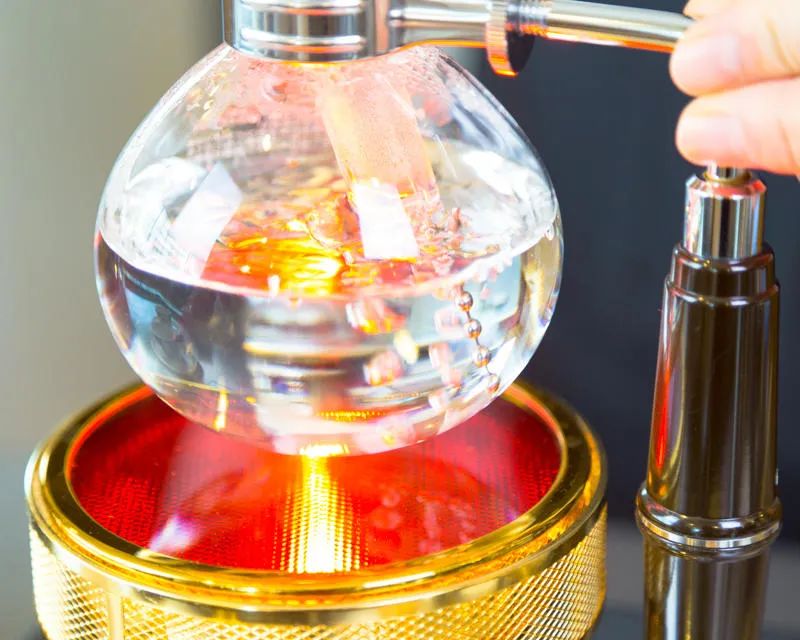
The heat sources in common use are gas burners, induction cookers, and alcohol lamps. Gas and induction let you adjust the intensity and bring the temperature up quickly and steadily; the only drawback is the slightly higher cost. Alcohol lamps are cheap to run, but the heat is less stable and takes longer.
In FrontStreet Coffee's view, all of these can make excellent coffee. What matters is adjusting to the heating characteristics of the source you have. That said, if your setup allows it, a gas burner or induction cooker is still the better bet.
Add the Grounds Before or After the Water Rises?
There are two schools of thought on when to add coffee to a siphon. The traditional school adds the grounds first. The other side insists on waiting until all the water has risen into the upper chamber, because grounds added early touch water during the rise, allowing part of the coffee to "sneak in" some extraction and risking an uneven result. It is much like the pour-over debate over whether to start the clock at the first pour or once pouring and timing begin together.
FrontStreet Coffee's advice for beginners is to add the grounds after the water rises. It is the more reliable approach, with fewer variables that can throw the brew off than adding them first.

Grind Size
Siphon coffee needs a finer grind than pour-over. By FrontStreet Coffee's measurements, the grind should pass through a #20 sieve at roughly 90%. On the EK43s grinder used in our shop, that corresponds to setting 9; on a Comandante C40 hand grinder, it is 20 clicks.

Coffee-to-Water Ratio
Siphon coffee generally runs between 1:10 and 1:12, with 1:12 being the more popular choice. For a single serving at home, you might follow FrontStreet Coffee's usual parameters: 18 grams of grounds to 200 milliliters of water.

Stirring Methods
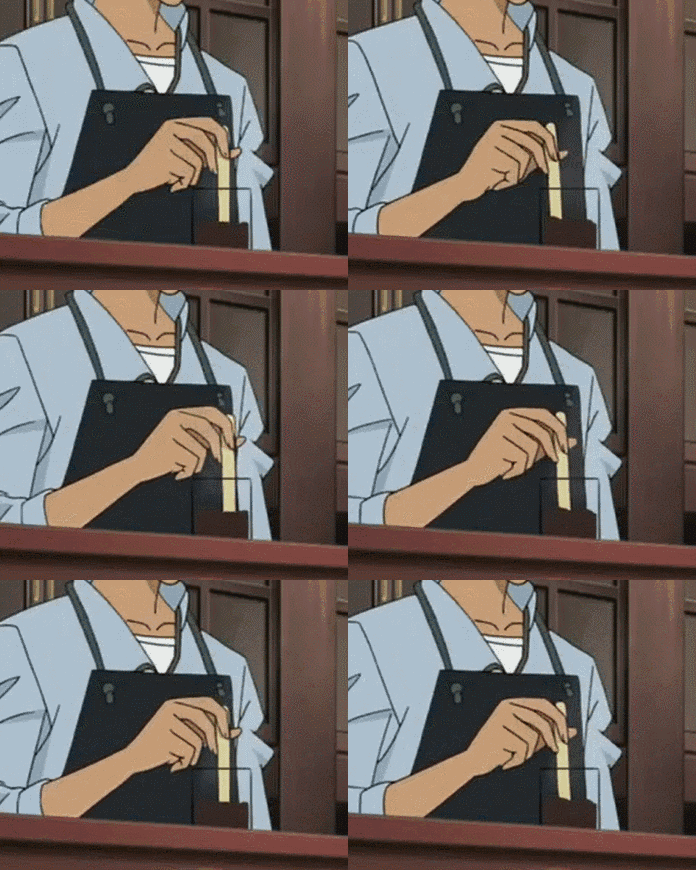
There is no shortage of stirring techniques: rotational stirring, cross-stirring, Z-shaped stirring, infinity-shaped stirring, and even a patting method.
FrontStreet Coffee suggests beginners start with the patting method, patting the bed of grounds along the path shown in the image below. Use the center as a pivot and move both ends back and forth in a staggered rhythm.
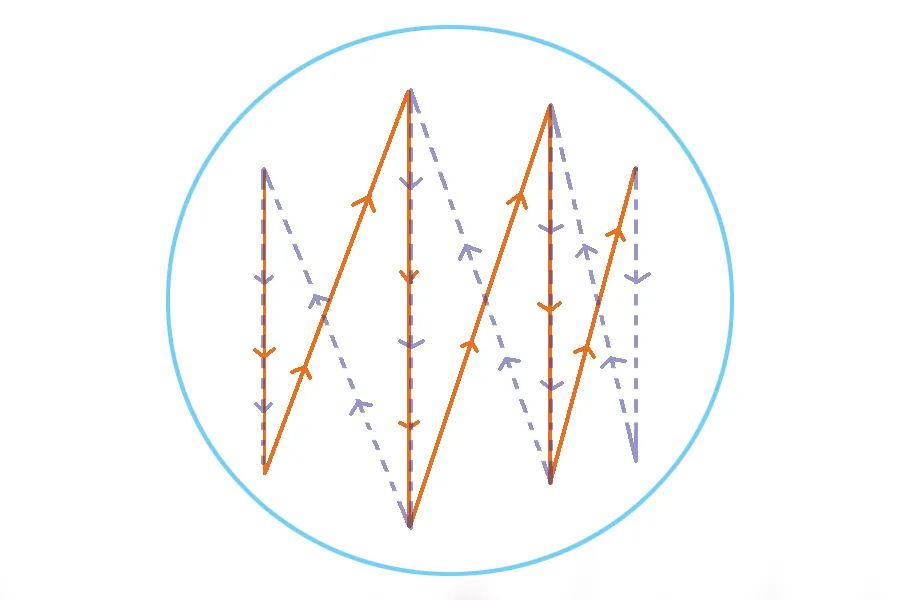
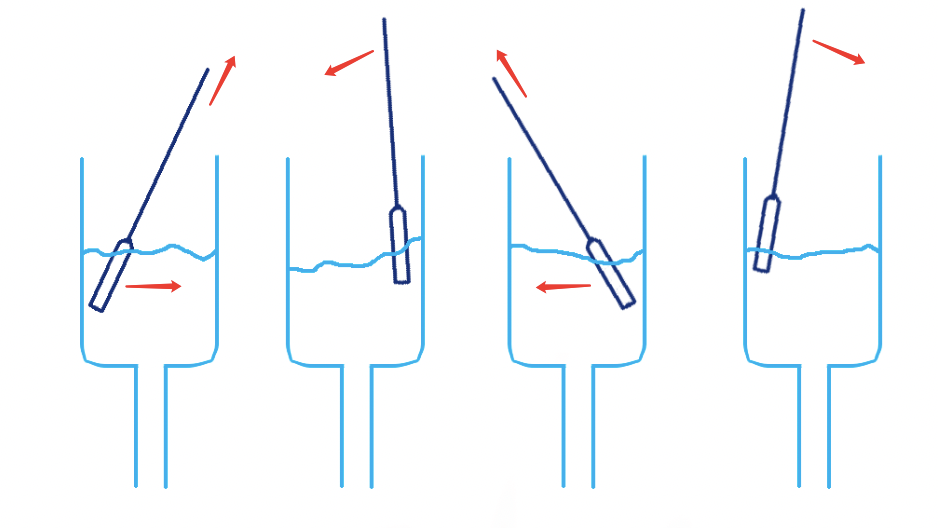
It is not the only way, but FrontStreet Coffee finds it relatively easy to control and friendly to beginners.
When to End the Brew
When should you turn off the heat? Some people go by aroma, which takes a good deal of skill and is hard to put into words. FrontStreet Coffee therefore recommends that beginners go by the clock. If you add the grounds after the water rises, start timing when you add them; if you add them first, start timing when you are ready to stir. Turn off the heat within roughly 50 to 70 seconds.

A Concrete Brewing Routine
Taking FrontStreet Coffee's usual method as the example:

1. Pour in 200 milliliters of hot water, wipe the lower chamber dry, and turn on the heat source.

2. Insert the upper chamber into the lower chamber at an angle, making sure the explosion-proof bead touches the bottom of the lower chamber.

3. Once continuous small droplets appear in the lower chamber, straighten the upper chamber and press it down firmly. Wait for the water to be drawn up from the lower chamber.

4. Add the grounds and start the clock. In the first stage, use the stirring rod to pat all the grounds into the water so they saturate evenly.

5. In the second stage, at 25 seconds, begin stirring with the method FrontStreet Coffee recommends, until the coffee separates clearly into three layers: liquid, grounds, and foam.

6. In the final stage, at 50 seconds, begin stirring in the same direction. At 60 seconds, remove the heat source and wait for the coffee to fall back down.


Brewed this way, siphon coffee is aromatic and rich. It is not as clean and clear as pour-over, but the oils floating on its surface add considerable body and depth.

In FrontStreet Coffee's view, the siphon is clearly more trouble than pour-over. You have to prepare a heat source before you start, you cannot let your attention wander during extraction, and afterward you need to clean up promptly, including washing the flannel filter used to separate the grounds. In a busy shop with high volume, offering siphon service would be even more of a hassle.
FrontStreet Coffee Recommendation
Siphon brewing rewards beans with body and balance, and FrontStreet Coffee's Jamaica Blue Mountain No. 1 is a natural fit. Authentic Blue Mountain is neither as sharply fruity as some African coffees nor as heavily bitter as a dark roast; instead it strikes a fine balance across acidity, sweetness, bitterness, and aroma. Expect a layered cup of cream, caramel, chocolate, nuts, honey, and a light fruit note, soft on entry with a rich mid-palate and a clean, lingering finish.
For something richer, reach for FrontStreet Coffee's PWN Indonesian Golden Mandheling. Roasted dark, it shows very low acidity and a thick, lingering body, opening with herbal and dark chocolate aromas and a faint earthy note that many drinkers find appealing. It suits anyone who likes a full-flavored cup and dislikes bright acidity.
And if you want a floral, delicate showcase, FrontStreet Coffee's Panama Emerald Estate Red Label Geisha is the classic choice, with elegant jasmine aromas and fine citrus, bergamot, and black tea notes. It is cleaner and more transparent than a Mandheling, with a long, layered finish that a siphon can bring out beautifully.
Important Notice :
FrontStreet Coffee is a long-established specialty coffee roaster in Guangzhou China, selling freshly roasted beans from its own farm in Yunnan as well as dozens of carefully selected single-origin beans from around the world for both pour-over and espresso. The products deliver consistently excellent quality and great value, with shipping within 24 hours. Guangzhou's FrontStreet Coffee shop is recommended by many coffee lovers, and the beans are now available online at the Tmall 。
FrontStreet Coffee has moved to a new address:
FrontStreet Coffee Address: 315,Donghua East Road,GuangZhou
Tel:020 38364473
 Scan and follow the En Gafei WeChat official account. Please indicate that the reprint comes from "En Gafei".